<?xml version="1.0" encoding="UTF-8"?>
<rss version="2.0"
	xmlns:content="http://purl.org/rss/1.0/modules/content/"
	xmlns:wfw="http://wellformedweb.org/CommentAPI/"
	xmlns:dc="http://purl.org/dc/elements/1.1/"
	xmlns:atom="http://www.w3.org/2005/Atom"
	xmlns:sy="http://purl.org/rss/1.0/modules/syndication/"
	xmlns:slash="http://purl.org/rss/1.0/modules/slash/"
	>

<channel>
	<title>The Rumpus.net &#187; Scott Challener</title>
	<atom:link href="http://therumpus.net/author/scott-challener/feed/" rel="self" type="application/rss+xml" />
	<link>http://therumpus.net</link>
	<description>Books, Music, Movies, Art, Politics, Sex, Other</description>
	<lastBuildDate>Fri, 25 May 2012 22:00:31 +0000</lastBuildDate>
	<language>en</language>
	<sy:updatePeriod>hourly</sy:updatePeriod>
	<sy:updateFrequency>1</sy:updateFrequency>
	<generator>http://wordpress.org/?v=3.3.2</generator>
		<item>
		<title>How to Catch a Falling Knife</title>
		<link>http://therumpus.net/2010/06/how-to-catch-a-falling-knife/</link>
		<comments>http://therumpus.net/2010/06/how-to-catch-a-falling-knife/#comments</comments>
		<pubDate>Fri, 18 Jun 2010 14:00:27 +0000</pubDate>
		<dc:creator>Scott Challener</dc:creator>
				<category><![CDATA[books]]></category>
		<category><![CDATA[reviews]]></category>
		<category><![CDATA[rumpus original]]></category>
		<category><![CDATA[Daniel Johnson]]></category>
		<category><![CDATA[poetry]]></category>
		<category><![CDATA[Rumpus Reviews]]></category>
		<category><![CDATA[Scott Challener]]></category>

		<guid isPermaLink="false">http://therumpus.net/?p=54877</guid>
		<description><![CDATA[It is not easy to make interesting poems, yet How to Catch a Falling Knife is full of them. Part of the interest is apparent in the work the title performs: instead of shying from danger, these poems surprise by imagining their way fearlessly toward it.Two epigraphs announce Daniel Johnson’s first book’s approach: “After what [...]]]></description>
			<content:encoded><![CDATA[<h4><a href="http://powells.com/biblio/9781882295791?&amp;PID=33625"><img class="alignleft" src="http://farm2.static.flickr.com/1284/4709107584_7cbef2546a_o.jpg" alt="" width="79" height="123" /></a>It is not easy to make interesting poems, yet <a href="http://powells.com/biblio/9781882295791?&amp;PID=33625"><em>How to Catch a Falling Knife</em></a> is full of them. Part of the interest is apparent in the work the title performs: instead of shying from danger, these poems surprise by imagining their way fearlessly toward it.<span id="more-54877"></span></h4><p>Two epigraphs announce Daniel Johnson’s first book’s approach: “After what one isn’t is taken away is what one is,” wrote Diane Arbus in her notebook in 1959. “I’m easy to define,” Fernando Pessoa proclaimed, adding: “Seeing devoured me.” To borrow from the photographer of the strange and the Portuguese inventor of “heteronymns” is to carve out a certain aesthetic and artistic territory, one concerned with sharpness and clarity of vision, with differentness and danger. This is a book preoccupied with seeing deeply what one is. One of its important discoveries is that when we practice this kind of perceiving, we find we are always becoming; another is that what we take away—what we refuse to be or to imagine being—is just as important to who we are as what we embrace or accept.</p><p>In “A Dirty Pair of Glasses,” we look through a pair of glasses resting on a table and realize “the end won’t come, it seems, into focus exactly.” This problem of focus becomes an opportunity for vision: opacity yields clarity, the impossibility of seeing becomes the possibility of imagining:</p><blockquote><p>Inches<br />from the glasses, an ashtray blurs. Or is it</p><p>a dead man’s wallet? The lenses, I forgot to mention,<br />are milky almost and I don’t see anything</p><p>except for a plastic tree in the corner and under it<br />a shape cowering, knees drawn up, face unwashed,</p><p>but I can’t make out these things for sure<br />so I make them up—like the great bright squares of sunlight</p><p>opening slowly now on the ceiling above me.</p></blockquote><p>In many of Johnson’s poems, what obscures one way of looking (smudges, dust, grime, and in one memorable phrase, a “filthy nimbus”—the messy evidence of having lived) frees us to see and to experience what we see in other ways. The problem of knowing, to put it another way, becomes the opportunity of not knowing.</p><p>I wonder if with Arbus and Johnson in mind we might be able to believe that after the unsayable and the unsaid of one’s life are taken away one is left with what one is. The unsayable and the unsaid exert tremendous power in these poems. “A Dirty Pair of Glasses” doesn’t refuse the disturbing image of that destitute human shape trembling beneath a plastic tree. That figure isn’t lost on us or cancelled; it remains in the generous undue sunlight, like a part of the truth, another possible version of what one is or might become, deserving of attention.</p><p>A significant part of the power of Johnson’s poems derives from the feeling of loss and grief that resonates within them: What if we could say what we wanted to say, rightly, to those who are most important to us? What if we could hear, listen, respond, change? What if we could be other than we are? What have we lost of who we could have become?</p><p>Yet “all we have lost is brightly lost,” one wavering line assures us.  Paradoxically, often what in Johnson’s poems is brightly lost is what is brightly named: the two actions, in fact, are one and the same. “One Hand Knows Not What the Other Does,” for instance, asks: “Who named the bones / of the hand // triquetrum, scaphoid— / as if he were ranking, // late at night, / his mistakes as a man—// Spiritus Sancti?” Triquetrum: three-cornered. Scaphoid: from the Greek meaning “boat” and “form”. Spiritus Sancti: holy spirit. The hand, made for work, love, prayer, made of bones, blood, flesh, and nerve, is also made of names, which are the palpable evidence of mistakes, and “mistakes,” Joyce claimed, “are portals of discovery.” Like the dirt on the glasses, mistake becomes opportunity in Johnson’s hands, a vessel capable of grace and possibility, “a map / of ruins already / open, soft.”</p><p>To name a thing rightly is a way to see and be seen; it’s an act not of seizing power but of surrendering to it. Each name—each relinquishment—acknowledges a mistake, since every name—for a poet, at least—is a mistake, an approximation. And what is the power of a name, weighing, as “When it’s Time”, the collection’s final poem, observes, “no more than sunlight”?</p><p>“I’m not these words, though / you think I am,” Johnson writes in “After Words.” By itself, this declaration might be too easy or too knowing—do we really tend to think what we say is who we are?—but in context, this declaration appears between a dizzying series of transformations—first the speaker becomes a hatchet, then the person he addresses becomes a gasp, then damp smoke, then crying, then whiskey; and by the end the speaker has become “taillights disappearing” and, finally, in the same sentence, mysteriously, “what’s hanging still / from a tree in brown light.” To find out what’s hanging from that tree in sepia, you’ll have to read the poem. I promise you’ll be surprised and gratified by what you discover.</p><p>It is not easy to make interesting poems, yet <a href="http://powells.com/biblio/9781882295791?&amp;PID=33625"><em>How to Catch a Falling Knife</em></a> is full of them. Part of the interest is apparent in the work the title performs: instead of shying from danger, these poems surprise by imagining their way fearlessly toward it. They continually establish and upend our expectations in delightful, humorous, and often moving ways: “Do Unto Others,” perhaps Johnson’s most well known poem—it appeared in <em>Best American Poetry 2007</em>—flips the golden rule on its head: “How many rocks would I stack / on my brother’s chest?” it begins, and starts counting. Another poem, “Description of a Badly Drawn Horse,” invites us to imagine a child’s crooked drawing (not a Hopper or a Picasso). Characteristically, Johnson writes: “This was a horse to shoot, but I sharpened my pencil instead, / and returned to my seat.” And that is what Johnson’s poems do so marvelously: they refuse the easy kill. They return. They move closer. They look again, as if for the first time. And what they discover in their compassionate, big-hearted regard is our reward.<br /><h3 class='related_post_title'>Related Posts:</h3><ul class='related_post'><li><a href='http://therumpus.net/2010/12/hammer-is-the-prayer-of-the-poor-and-the-dying/' title='Hammer Is the Prayer of the Poor and the Dying'>Hammer Is the Prayer of the Poor and the Dying</a></li><li><a href='http://therumpus.net/2010/12/68810/' title='From Exuberant Hanging Gardens'>From Exuberant Hanging Gardens</a></li><li><a href='http://therumpus.net/2010/12/monkey-bars/' title='Monkey Bars'>Monkey Bars</a></li><li><a href='http://therumpus.net/2010/11/i-know-my-brother-in-the-mirror/' title='I Know My Brother In the Mirror'>I Know My Brother In the Mirror</a></li><li><a href='http://therumpus.net/2010/11/things-that-work-are-muffled-and-mute/' title='Things That Work Are Muffled and Mute'>Things That Work Are Muffled and Mute</a></li></ul>]]></content:encoded>
			<wfw:commentRss>http://therumpus.net/2010/06/how-to-catch-a-falling-knife/feed/</wfw:commentRss>
		<slash:comments>0</slash:comments>
		</item>
		<item>
		<title>The Return of Sweetness</title>
		<link>http://therumpus.net/2009/02/the-return-of-sweetness/</link>
		<comments>http://therumpus.net/2009/02/the-return-of-sweetness/#comments</comments>
		<pubDate>Mon, 23 Feb 2009 20:00:34 +0000</pubDate>
		<dc:creator>Scott Challener</dc:creator>
				<category><![CDATA[books]]></category>
		<category><![CDATA[Original Content]]></category>
		<category><![CDATA[reviews]]></category>
		<category><![CDATA[rumpus original]]></category>
		<category><![CDATA[Frank Bidart]]></category>
		<category><![CDATA[Frank O'Hara]]></category>
		<category><![CDATA[Louise Glück]]></category>
		<category><![CDATA[sweetness]]></category>

		<guid isPermaLink="false">http://therumpus.net/?p=8633</guid>
		<description><![CDATA[For Dante, Heaven sweetened souls; for Frank Bidart, who does not believe in Heaven, sweetness comes haggard, if it comes at all.A Review of Frank Bidart&#8217;s Watching The Spring FestivalIn her 1993 review of Frank Bidart’s In the Western Night, Louise Glück identified what the best poems of our best contemporary poets have in common: [...]]]></description>
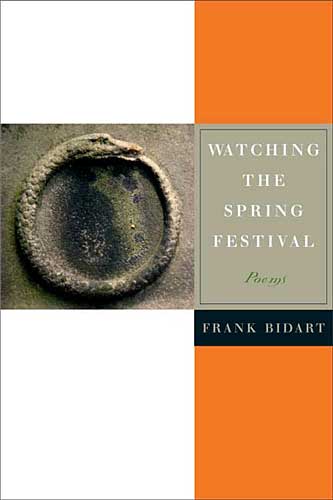
			<content:encoded><![CDATA[<p><a href="http://www.powells.com/partner/33625/biblio/0374286035 "><img class="alignleft size-full wp-image-8635" title="bidart" src="http://therumpus.wpengine.netdna-cdn.com/wp-content/uploads/2009/02/bidart.jpg" alt="bidart" width="87" height="131" /><br /></a></p><p><em>For Dante, Heaven sweetened souls; for Frank Bidart, who does not believe in Heaven, sweetness comes haggard, if it comes at all.<span id="more-8633"></span></em></p><p><strong>A Review of Frank Bidart&#8217;s Watching The Spring Festival</strong></p><p>In her 1993 review of Frank Bidart’s <em>In the Western Night</em>, Louise Glück identified what the best poems of our best contemporary poets have in common: fierceness.</p><p>Whatever their subject, Bidart’s poems do not compromise­—the mind at work will not turn away for a lesser story, an appeasement, a more comfortable way of facing what it is to be alive. Bidart’s poems, in Glück’s words, “give lie to the overwhelming seriousness of, the reality of, his perception.”</p><p>The reader who encounters a Bidart poem will likely be changed for it. The change may at first seem slight—an unsettling new implication, for example, in a word as common as “because.” Bidart knows how we gild the word with meanings it cannot possibly encompass; his poetry makes us more aware of the making of sense itself, allowing us to glimpse “the fleeting illusion of logic and cause” (“An American in Hollywood”).</p><p>“Pain always produces logic, which is very bad for you,” Frank O’Hara wrote in “Meditations in an Emergency,” If it seems strange to put these two side by side, Bidart invited the comparison himself, in a 1999 interview: “I wish there was more play in my own work,” he told Andrew Rathmann and Danielle Allen. “I adore Frank O’Hara’s work. It has a marvelous sense of the unpredictability of the moment, the enthusiasm and sweetness of the moment. I don’t know how to do that. I mean, I could imitate Frank O’Hara, but that would just be an imitation of Frank O’Hara.”</p><p>The poems of <a href="http://www.powells.com/partner/33625/biblio/0374286035 "><em>Watching the Spring Festival</em></a>, Bidart’s most recent collection, do not discover how to “do that”; but you will find here both the uncompromising fierceness and severity that marks Bidart’s six earlier collections, as well as “the sweetness of the moment.” In <a href="http://www.powells.com/partner/33625/biblio/0374269734"><em>Star Dust</em></a> (2005), Bidart’s last collection, there is a flicker of this sweetness— “When you said I was not wrong with gravity and weird/sweetness I felt not anger not woe but weird calm sweetness” (“Music Like Dirt”)—and the new poems are uncompromising about it:<img class="alignright size-thumbnail wp-image-8636" title="bidartphoto" src="http://therumpus.wpengine.netdna-cdn.com/wp-content/uploads/2009/02/bidartphoto-150x150.jpg" alt="bidartphoto" width="195" height="195" /></p><p><strong>Under Julian, c362 A.D.</strong></p><blockquote><p>[ ] or full feeling return to my legs.</p><p>My jealous, arrogant, offended by existence<br />soul, as the body allowing you breath</p><p>erodes under you, you are changed—</p><p>the fewer the gestures that can, in the future,<br />be, the sweeter those left to you to make.</p></blockquote><p>This is not the sweetness of nostalgia, nor that of his early poem, “Ellen West” (“heaven / would be dying on a bed of vanilla ice cream”)—this is something more like the bittersweetness essential to Sappho, the basic sweetness of the world, the air, the light and the stars (“sweet things”) Dante is careful to remind us of as we descend into Hell:</p><p>Whenever Ray Charles sings “I Can’t Stop Loving You”</p><blockquote><p>I can’t stop loving you. Whenever the unstained-by-guilt<br />cheerful chorus belts out the title, as his voice, sweet</p><p>and haggard reminder of what can never be remedied,</p><p>answers, correcting the children with “It’s useless to say,”<br />the irreparable enters me again, again me it twists.<br />(“Poem Ending with Three Lines from ‘Home on the Range’”)</p></blockquote><p><em>Watching the Spring Festival</em> returns us to the sweetness of the inutility of art. When so much of daily experience depends upon a thing’s usefulness, sweet is the freedom from the search for something useable, to hear instead a cheerful chorus. Yet this poem, like all of Bidart’s work, unsentimentally attends to a vision of the past as irreparable and unavailable: “The red man was pressed from this part of the West—/‘tis unlikely he’ll ever return to the banks of Red River[…]” The red man was pressed—made in the image of, and forced out from—the West; an apt metaphor for the violence in the experience of making that exists at the heart of Bidart’s work. What has that chorus become by the end of the poem? What has home become?</p><p>In Bidart, nothing is purely sweet: violent sweetness, or perhaps sweet violence, pervades <a href="http://www.powells.com/partner/33625/biblio/0374286035"><em>Watching the Spring Festival.</em></a> It is the sweetness of the lyre, and the pluck. Of ecstasy, and of music—of the baritone in Mahler’s “Ulricht,” of Ray Charles’s voice in “I Can’t Stop Loving You.” For Dante, Heaven sweetened souls; for Bidart, who does not believe in Heaven, sweetness comes haggard, if it comes at all. It comes between guilt and what can never be remedied. It comes useless and partial, which is to say, tragic.</p><p>At the end of “The Second Hour of the Night,” in Desire (1997), Bidart writes: “I tasted a sweet taste, I found nothing sweeter.” Open <em>Watching the Spring Festival</em> and you will discover such a taste. What Bidart says about the world in his interview with Rathmann and Allen is true of these poems: there is a sweetness here “You can’t live…without.”<br /><h3 class='related_post_title'>Related Posts:</h3><ul class='related_post'><li><a href='http://therumpus.net/2011/07/albums-of-our-lives-amy-winehouses-back-to-black/' title='Albums of Our Lives: Amy Winehouse&#8217;s Back to Black'>Albums of Our Lives: Amy Winehouse&#8217;s Back to Black</a></li><li><a href='http://therumpus.net/2010/09/brian-miles-the-last-poetry-book-i-loved-star-dust-by-frank-bidart/' title='Brian Miles: The Last (Poetry) Book I Loved, &lt;em&gt;Star Dust&lt;/em&gt; by Frank Bidart'>Brian Miles: The Last (Poetry) Book I Loved, <em>Star Dust</em> by Frank Bidart</a></li><li><a href='http://therumpus.net/2009/11/the-rumpus-sunday-book-review-supplement-23/' title='The Rumpus Sunday Book Review Supplement'>The Rumpus Sunday Book Review Supplement</a></li><li><a href='http://therumpus.net/2009/10/a-squared-off-landscape-representing-the-world/' title='A Squared-Off Landscape Representing the World'>A Squared-Off Landscape Representing the World</a></li><li><a href='http://therumpus.net/2009/05/lucy-corin-a-poem-i-love/' title='Lucy Corin: A Poem I Love'>Lucy Corin: A Poem I Love</a></li></ul>]]></content:encoded>
			<wfw:commentRss>http://therumpus.net/2009/02/the-return-of-sweetness/feed/</wfw:commentRss>
		<slash:comments>0</slash:comments>
		</item>
	</channel>
</rss>