
Posts by tag
David Peak
14 posts


Cunt Norton by Dodie Bellamy
David Peak reviews Dodie Bellamy's Cunt Norton today in Rumpus Poetry.
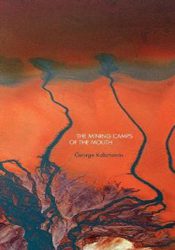
The Mining Camps of the Mouth by George Kalamaras
David Peak reviews George Kalamaras's The Mining Camps of the Mouth today in Rumpus Poetry.

Eyelid Lick by Donald Dunbar
David Peak reviews Donald Dunbar's Eyelid Lick today in Rumpus Poetry.

the body | of space | in the shape of the human by Andrew Allport
David Peak reviews Andrew Allport's the body | of space | in the shape of the human today in Rumpus Poetry.
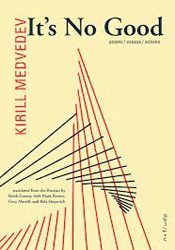
It’s No Good by Kirill Medvedev
David Peak reviews Kirill Medvedev's It's No Good today in Rumpus Poetry.

Messages by Piotr Gwiazda
When I was young and soft and I couldn’t fall asleep at night, I’d just lie there in bed, swallowing lumps of dread whose shape and taste I had no…

“50 American Plays” by Matthew and Michael Dickman
I’ve visited exactly half of the states that make up our federal constitutional republic. I’m counting states that I’ve lived in, vacationed in, or merely driven through. Some of the…
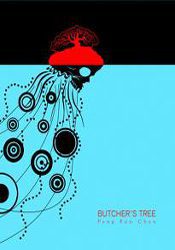
Butcher’s Tree by Feng Sun Chen
Take the omniscience and time-weary voice of myths, add in the best parts of fables, namely the anthropomorphic language and the supernatural weirdness, ground it in some extremely compelling poetry, and you’re still nowhere near what’s happening in this book.
Enigma and Light, by David Mutschleener
Every once in a while, when I’m reading something, sorting through the words in a half-daze, my brain will just click. I’ll get it. I’ll take on an understanding of…
David Peak: The Last Book I Loved, Birch Hills at World’s End
Every high school has a kid like Erik. He’s sharp, dark, and charming. Add in the fact that he has his own car and impeccable taste in Scandinavian metal, and who better…
Blizzard Over Bosphorous
A Fire-Proof Box is a porous work, languages overlapped, breathing, an English translation that manages to capture the icy weight of classically “Russian” sensibilities.