<?xml version="1.0" encoding="UTF-8"?>
<rss version="2.0"
	xmlns:content="http://purl.org/rss/1.0/modules/content/"
	xmlns:wfw="http://wellformedweb.org/CommentAPI/"
	xmlns:dc="http://purl.org/dc/elements/1.1/"
	xmlns:atom="http://www.w3.org/2005/Atom"
	xmlns:sy="http://purl.org/rss/1.0/modules/syndication/"
	xmlns:slash="http://purl.org/rss/1.0/modules/slash/"
	>

<channel>
	<title>The Rumpus.net &#187; immigration</title>
	<atom:link href="http://therumpus.net/topics/immigration/feed/" rel="self" type="application/rss+xml" />
	<link>http://therumpus.net</link>
	<description>Books, Music, Movies, Art, Politics, Sex, Other</description>
	<lastBuildDate>Sun, 19 May 2013 07:01:04 +0000</lastBuildDate>
	<language>en-US</language>
	<sy:updatePeriod>hourly</sy:updatePeriod>
	<sy:updateFrequency>1</sy:updateFrequency>
	<generator>http://wordpress.org/?v=3.5.1</generator>
		<item>
		<title>Boaters</title>
		<link>http://therumpus.net/2013/04/boaters/</link>
		<comments>http://therumpus.net/2013/04/boaters/#comments</comments>
		<pubDate>Mon, 22 Apr 2013 07:01:13 +0000</pubDate>
		<dc:creator>Randa Jarrar</dc:creator>
				<category><![CDATA[rumpus original]]></category>
		<category><![CDATA[arab-american]]></category>
		<category><![CDATA[boaters]]></category>
		<category><![CDATA[Boston]]></category>
		<category><![CDATA[citizenship]]></category>
		<category><![CDATA[immigration]]></category>

		<guid isPermaLink="false">http://therumpus.net/?p=113494</guid>
		<description><![CDATA[<p style="text-align: left;" align="center">For the longest time, I intensely disliked the word <i>naturalized</i>. It made me feel as if my family’s very existence was unnatural, and would only change once they became citizens.<span id="more-113494"></span> I looked up the word to avail myself of this feeling, and enjoyed the biological definition—that to naturalize a plant was to make sure it could live wild in a land where it was not indigenous.</p>]]></description>
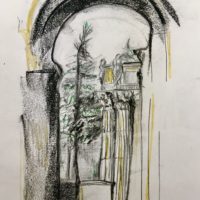
				<content:encoded><![CDATA[<p style="text-align: left;" align="center">For the longest time, I intensely disliked the word <i>naturalized</i>. It made me feel as if my family’s very existence was unnatural, and would only change once they became citizens.<span id="more-113494"></span> I looked up the word to avail myself of this feeling, and enjoyed the biological definition—that to naturalize a plant was to make sure it could live wild in a land where it was not indigenous. The wild part was the part I adored. We were living wild in America. Until we were not.</p><p align="center">*</p><p>I’m still trying to sort out my feelings after last week’s Boston bomber manhunt. The feelings about the bombing itself have been sorted—sadness, anger, all the stages of grief for the dead and wounded. The image that later surfaced, of the eight-year-old who died, holding a sign that says, <i>no more hurting people</i>, is seared indelibly on my memory.</p><p align="center">*</p><p>“He looks like our son,” my husband said, when they released a photo of the younger Boston bomber. I looked at the photo. My son is darker skinned, but yes, there is a slight resemblance. The eyes, for one. The nose, too.</p><p align="center">*</p><p>Walking with the Palestinian poet S. once through Jersey City, we talked about our historical and present uprootings. She was being kicked out of her apartment after over a decade and a half of living there. In her kitchen, she pointed out of her windows at where the towers used to be. She had seen them burn from where we stood. I have recurring dreams that I will be forced to move from my house. Just last night, I dreamt that people came for me, that I didn’t have time to pack, that I moved to a room with flooded sewage. My mother showed up in the dream in one of her nylon nighties and helped me clean up.</p><p align="center">*</p><p>I am an American, Chicago-born. Just like Bellow said. I left with my family 6 weeks after my birth, and we returned thirteen years later. My brother is still a Jordanian citizen—because he cannot be a citizen of Palestine, since there is no such state—and a legal US resident. My parents left my brother and I behind a few years after our immigration and went back to the Middle East. My entire family is awful with paperwork, so much so that my brother never filed the paperwork he was supposed to file or showed up to the places he was supposed to show up when it was time for him to become a citizen. Consequently, he and I are the only ones in our family who were not naturalized.</p><p align="center">*</p><p>S said that all of us children of immigrants are terrible with paperwork. I told S that our friend L, who died of breast cancer a few years ago, was good with paperwork. I clarified that L told me she had become better with paperwork after she survived the first bout of cancer. “That’s why she made peace with paperwork,” S says. “She knew she was going to die.”</p><p align="center">*</p><p>“But Boston isn’t a war zone,” I hear people say when they are asked to have empathy with Syrians, Palestinians, victims of drone strikes. “Have you been to Boston?” my friend J. says. “Every corner of that place is historically a war zone.”</p><p align="center">*</p><p>I’m filing back taxes and looking through my old receipts. I moved to TX briefly before moving to California three years ago, and I used Mayflower to move. That was the only time anyone in my family has had anything to do with anything named Mayflower. We didn’t move to America on the Mayflower, we moved to America on Egyptair.</p><p align="center">*</p><p>The last time I took my son to Egypt, he was only eight. I left him for two nights with my mother and went to Cairo to hang out with some writers. One of those writers, a graphic novelist, was arrested last week during a protest. I found out on my twitter feed in between updates about the Boston bombing. He was my driver during those two days in Cairo, and we commiserated over our children’s other parents, over the awfulness of divorce. I became angry with him later, at a coffee shop, when I’d taken my hair out of a ponytail and he’d said that my hair looked better down. I was hot, I’d shouted at him, and you don’t know me. He was released on bail today.</p><p align="center">*</p><p>In 1999, a pilot of an Egyptair flight let go of the controls and left God to be pilot.</p><p>But since God doesn’t know how to fly a 767, everyone on board perished. I was living in Texas, in a family housing unit with my son, then 3 years old. We were hanging out on the playground with dozens of friends, all of us from different backgrounds. It was the America I had always thought I would live in. When she found out about the flight, a fellow mother, a Latina from a border town, said, “God, those people who cover their heads.” I had stopped sleeping with a man the previous week because he’d said that this woman and her husband were having babies young because they were from Brownsville.</p><p align="center">*</p><p>My brother was in INS jail for two months, when the government tried to deport him in 2005. He had left the country for the first time since 9/11, and on his way back, was interrogated by Homeland Security and, when they found out he’d sold weed a few years before —a crime of “moral turpitude”—they told him he had two weeks to get out of the country. In the jail in Virginia, they let him and other Muslims pray in a taped off area, inside a yellow line. He said the lights were always on and he slept with a towel on his face. My father called me in a panic, saying my brother was turning into a fundamentalist.</p><p align="center">*</p><p>My brother lives in New Jersey and participates in body building competitions. The last time we talked, I complained about how much money I spend when I travel. “I spent five thousand dollars in Miami last weekend,” he said, and we laughed.</p><p align="center">*</p><p>In August of 2001, I moved with my son into a trailer on a little piece of property in a small Texas town outside of Austin. On 9/11, our White landlord came by and strung up a giant American flag. “This is for your protection,” he said, because I’d told some neighbors I was Arab-American. Those first nights, I made my son, then almost five, sleep in my room, not in his, which was closer to the main road.</p><p align="center">*</p><p>Last night, my son dreamed that he was in a classroom full of people, and his Chemistry teacher asked all the Black, Latino, Asian, and White students to stand off to one side, and everyone else to stand on the other.</p><p align="center">*</p><p>I watched the interview with the bombers’ uncle; the uncle’s insistence that they were losers who couldn’t assimilate. My heart breaks for this uncle, and even for the younger brother, and I feel guilty for feeling this way. I think of the younger brother and his older brother. My sister is ten years younger than me. There was a time when she would have followed me to the ends of the earth. Once, when she was eight, she invited a friend of hers, a girl named Heather, over. I’d hurriedly greeted them, saying, “Hey, Heth!” The next day, when I looked out the window, my sister had drawn, with sidewalk chalk, in giant letters, “Hey, Heth!” It was a single White female moment, except we weren’t White, and the stalkery weirdness was coming from my eight-year-old sister. It was adulation, plain and simple.</p><p><a href="http://therumpus.wpengine.netdna-cdn.com/wp-content/uploads/2013/05/boat-sketch1-1-e1366623386828.jpg"><img class="alignnone size-full wp-image-113502" alt="boat sketch1-1" src="http://therumpus.wpengine.netdna-cdn.com/wp-content/uploads/2013/05/boat-sketch1-1-e1366623386828.jpg" width="600" height="380" /></a></p><p>After hanging out with Egyptian writers for two days, my mother brought my son out to Cairo from Alexandria on the train, and we all went to dinner near the Nile. My son and I took a ride in a small canoe after the sun set, a man rowing us through the water. My son asked me if he could leave a wish in the water. I gave him a piece of paper and he scrawled, <i>happiness for everyone</i>, folded the piece of paper, and released it in the river.</p><p align="center">*</p><p> “Boaters,” I’ve heard young Arab-Americans call their parents and their parents’ friends in Dearborn, Michigan. “Ten years in America,” the younger Boston bomber had once tweeted, “I want out.”</p><p>When they finally found him, out of all the places he could have hidden in Boston, he was curled up inside a boat.<span style="font-size: 13px; line-height: 19px;"> </span></p><p>***</p><p><em>Image by Margaret Ramsay.</em><br /><h3 class='related_post_title'>Related Posts:</h3><ul class='related_post'><li><a href='http://therumpus.net/2013/04/the-sunday-rumpus-essay-spill/' title='The Sunday Rumpus Essay: Spill'>The Sunday Rumpus Essay: Spill</a></li><li><a href='http://therumpus.net/2013/04/letter-from-boston/' title='Letter From Boston'>Letter From Boston</a></li><li><a href='http://therumpus.net/2013/04/david-biespiels-poetry-wire-boston-stands-in-a-sahara-of-blood/' title='David Biespiel&#8217;s Poetry Wire: Boston Stands in a Sahara of Blood '>David Biespiel&#8217;s Poetry Wire: Boston Stands in a Sahara of Blood </a></li><li><a href='http://therumpus.net/2013/04/stunned-silence/' title='Stunned Silence'>Stunned Silence</a></li><li><a href='http://therumpus.net/2012/11/the-rumpus-interview-with-kitzia-esteva/' title='The Rumpus Interview with Kitzia Esteva'>The Rumpus Interview with Kitzia Esteva</a></li></ul>]]></content:encoded>
			<wfw:commentRss>http://therumpus.net/2013/04/boaters/feed/</wfw:commentRss>
		<slash:comments>0</slash:comments>
		</item>
		<item>
		<title>The Rumpus Interview with Kitzia Esteva</title>
		<link>http://therumpus.net/2012/11/the-rumpus-interview-with-kitzia-esteva/</link>
		<comments>http://therumpus.net/2012/11/the-rumpus-interview-with-kitzia-esteva/#comments</comments>
		<pubDate>Wed, 28 Nov 2012 20:01:24 +0000</pubDate>
		<dc:creator>Julie Morse</dc:creator>
				<category><![CDATA[politics]]></category>
		<category><![CDATA[rumpus original]]></category>
		<category><![CDATA[activism]]></category>
		<category><![CDATA[immigration]]></category>
		<category><![CDATA[Julie Morse]]></category>
		<category><![CDATA[Kitzia Esteva]]></category>
		<category><![CDATA[UndocuBus]]></category>
		<category><![CDATA[undocumented workers]]></category>

		<guid isPermaLink="false">http://therumpus.net/?p=108278</guid>
		<description><![CDATA[A champion for immigrant rights, Kitzia Esteva talks about the fear and empowerment she embraced while on the UndocuBus, her work as a community organizer, and what Obama’s immigration policies mean to her.]]></description>
				<content:encoded><![CDATA[<p>Kitzia Esteva is a community organizer based in Los Angeles. She was born in Mexico, and left when she was sixteen to live in the Bay Area. She and her family have devoted their lives to the struggle for immigrant rights.</p><p>This past summer, she, her mother, and her aunt were passengers on the <a title="No Papers, No Fear: The UndocuBus" href="http://nopapersnofear.org/" target="_blank">UndocuBus</a>, a revolutionary campaign that was organized and comprised of undocumented people around the country. The five-week journey began in Phoenix, Arizona and made its final stop at the Democratic National Convention in Charlotte, North Carolina.</p><p>I recently talked to Kitzia about the fear and empowerment she embraced while on the UndocuBus, her work as a community organizer, and what Obama’s immigration policies mean to her.</p><p style="text-align: center;">***</p><p><strong>The Rumpus:</strong> The story of how you and your family came to live in the U.S. is pretty powerful. Could you tell us about it?</p><p><strong>Kitzia Esteva:</strong> So, my family actually came to the U.S. before I did. My mom, my two nephews, and my sister came to the U.S. seeking treatment for my older nephew, Chuy, who was diagnosed with leukemia in Mexico. We know now that it was the environmental degradation that was at fault. At the hospital, the doctors didn’t know what was wrong. Said it could have happened to anybody. We did some research much later when we learned about environmental racism through community organizing, and realized that it had to do with the factory we lived near by. Every once in a while there were toxic chemicals that were released into the air, and they said it was accidental. This factory actually belonged to a U.S. company—I don’t remember the name of it, but it was located in Cosoleacaque, Veracruz, where my nephew lived. And we now we know that it was the cause of his leukemia. It was a big deal, especially for my mom, who was doing social justice work in Mexico, and for her to know that it was the U.S. who was responsible for my nephew being poisoned.</p><p><a class="lightbox" title="kitziaandmom2" href="http://therumpus.net/?attachment_id=108283"><img class="alignright  wp-image-108283" title="kitziaandmom2" src="http://therumpus.wpengine.netdna-cdn.com/wp-content/uploads/2012/11/kitziaandmom2.jpg" alt="" width="300" height="400" /></a>My family came to the U.S., and I came two years later. We all had a really hard time finding treatment for Chuy here, and most of my sister’s time was spent in the hospital. It was a really hard battle for five years. Now that we know that his leukemia was really the responsibility of the U.S., it’s one of the reasons why we went on the UndocuBus. We wanted to really challenge this idea that &#8220;we’re criminals&#8221; or that &#8220;we’re crossing boarders because we’re adventurers, or just like to break the U.S. law,&#8221; when in reality we’re escaping a lot of bad things like disease and death. We have to escape terrible conditions that the U.S. has contributed to, if not caused.</p><p>Most of us are still undocumented in the country. For me, there are a lot of things to say about the idea of the American dream and what that means. When I first got here, we lived in Oakland in a really small apartment. I was used to a bigger home and more of a safe community in Mexico. I came to a community that was ridden by police brutality and poverty. Our apartment had such small living quarters. Four months after I arrived, my mom lost her job and we landed up at a shelter. So we didn’t have this ideal situation where immigrants come and they find fortune and get rich, and buy a house and get dogs. That’s really a fantasy for most people. For us it was definitely rougher than we had it in Mexico. Yet, the only reason why we had to go through this and move to the U.S. is that we wanted my nephew to get better, and we wouldn’t have been able to get that treatment in Mexico.</p><p><strong>Rumpus: </strong>What was the experience of your nephew getting help? Do you reflect upon it as a positive one, or a struggle?</p><p><strong>Esteva:</strong> Actually, my family hasn’t told me everything that they went through. I think they wanted to spare me a little of the difficulty and the pain. But I do know that it was hard to find an insurance that would cover for my nephew’s treatment. We had to get him chemotherapy and radiation, plus all the other medicine and drugs that he had to take because of the side effects. It was really expensive, and we had no money when we got here. We spent all the money we had in getting up here from Mexico. So, it was a bit of a rough time trying to find an insurance.  But, we did have luck that he did have doctors that were compassionate and really tried to help. Which speaks to the resources that the U.S. is able to accumulate, and provide something like that—whereas in Mexico, you’d have to have three houses to pay for such serious health care.</p><p><strong>Rumpus: </strong>The No Papers, No Fear UndocuBus is a super, amazingly brave and revolutionary endeavor. You were a passenger for two weeks—what was that experience like, being there with your mom and aunt? And what were your goals for the mission?</p><p><strong>Esteva:</strong> My mom was on the UndocuBus for three-and-a-half weeks, and my aunt was on there for five days. So, I didn’t overlap with my aunt, Manuela, but I did overlap with my mom for two of those weeks. I’m very grateful that I have a very political family that has a lot of fire for fighting back against injustice and against things that are at the core of our oppression in this country, as well as against things that might not be necessarily at the core, but are solidarity work.</p><p>Specifically, my mom has been a huge influence in my life, my worldview, my willingness to fight, and my commitment to the struggle. So, I have to start from there and give her props. She is really one of the people who introduced me to social justice from when I was little. Being on the bus with her was a reunion for us. Since I had been going to school at UC-Santa Barbara for the last four years, and then I moved to in L.A.—I hadn’t spent much time with my mom in close quarters in about five years. I had little breaks where I would go visit my family, but they were never together that long—a week tops, and we don’t see each other that frequently. The bus was a very hopeful space, and I definitely saw my mom heal in my different ways. She had been dealing with a recent diagnosis of diabetes and a bunch of other health issues. I saw a lot of improvement in her health just by her participation on the bus. When it brings hope—when it’s building something—it can also be healing for the builders of that hope and struggle. I can say that I learned from her and the adults on the bus that we’re fighting.</p><p><a class="lightbox" title="kitziaandmom" href="http://therumpus.net/?attachment_id=108284"><img class="alignleft size-medium wp-image-108284" title="kitziaandmom" src="http://therumpus.wpengine.netdna-cdn.com/wp-content/uploads/2012/11/kitziaandmom-300x200.jpg" alt="" width="300" height="200" /></a>One of the intentions of the UndocuBus was to highlight the stories of those people who are not the “chosen ones.” President Obama made an announcement about Deferred Action and the youth—how great they are, how much they’re fighting for this country, how much they want the American Dream and how hard they’re fighting for it. Yet, he didn’t mention the reality, which is these youth have parents behind them every step of the way. That’s the case with my mom, anyway. He is kind of blaming the parents for their families being here, as opposed to really giving respect to the parents who fought hard to send their kids to college, provide for them, and make the really hard decision to bring them to this country. So, another one of the reasons why I wanted to join the UndocuBus is to highlight that story of my mom. I owe her a lot of my ability to survive. It was good to be there with her, and share our story together. I need to give my respects, gratitude, and, really, credit to my mom’s struggle in this country, and try to create change not just for her, but all of the adults that are being viewed as criminals and viewed as not worthy of getting documentation, or getting deferred action. That conversation needs to change to one about dignity, where we are raised to confront the atrocities this country has imposed upon immigrants.</p><p>I think that as I was on the ride with my mom this became more and more clear. I think that maybe the roughest moment was when we decided to do the civil disobedience. It was really nerve-wracking to know that my mom was going to get arrested. It felt very powerful to know that I was going to be there with her and that we’re going to do it together, and that we have a powerful story to tell and share with other people. Also, that we have a powerful campaign to really support the struggle and show other communities and other groups that we can rise together, and show how powerful we can be. It was challenging at times, because I had my own doubts about doing the civil disobedience and especially the risks it held for my mom.</p><p><strong>Rumpus:</strong> What were those doubts or fears?</p><p><strong>Esteva: </strong>The fear of being arrested and not just being deported but detained. People end up in detention centers for months and months, sometimes even years. It’s not just about putting yourself in the position to be incarcerated, but there are horror stories of people dying because they’re not getting medical treatment. So, there might not be a guarantee that my mom would get her diabetes treatment. There’s so many doubts beyond the fear: <em>am I going to be removed from this country?</em> We live with that every day. But what can happen to a person inside the detention center? It’s not just a question about deportation, but about criminalization and what it means for our community to be criminalized, which is to be imprisoned for trying to survive. Removal is a huge deal to undocumented folk, because it separates families and creates a lot of hardship. A lot of people are also placed in detention centers for a long time, which is also a hardship. These detention centers reflect a culture and a way of life in this country. We have two million people in prison and they look like us, too. They’re black and brown, so getting arrested embodies all of that criminalization and re-enslavement. I think I had a lot of questions and anxiety about what it would look like if we were arrested and detained for a while—for my mom’s safety and wellbeing.</p><p><strong>Rumpus: </strong>And did your mom have similar doubts that reflected yours?</p><p><strong>Esteva:</strong> I take leadership from my mom. I think she had a position where she was really hopeful. She knew if we did get detained, the community was going to fight back and get us out. That’s one of the things we were trying to accomplish there. If people see we’re organized and have the numbers on their side, then they definitely can fight back, win, and get out of a detention center and get out of harm’s way. Because when an arrest becomes public, the public eye can actually save people from I.C.E. and deportation. So, my mom was on the hopeful side. She knew that she wasn’t going to stay inside for a long time.</p><p>For me, after hearing all the horror stories, I was a little on the freaked-out side. I was worried: <em>what’s going to happen if we’re inside for a while? </em>Or:<em> what’s going to happen if I was able to stay in the country because of Deferred Action and she doesn’t get to stay?</em> We knew all of those risks, and we had a huge, super-brilliant group of lawyers that were fighting the legal battle. We had an amazing community throughout the country that was organizing itself to get us out. I didn’t share most of my anxieties with my mom, but she did share her hope and it was contagious. So, in that sense, my mom had a more in-depth understanding of what was going to happen, and understood the legal and organizing tactic would work together to get us out, as it did.</p><p><strong>Rumpus: </strong>I’m sure that memory of being at the Democratic National Convention this September is still very vivid. Could you illuminate your experience of staging a civil disobedience at the DNC and being arrested?</p><p><strong>Esteva:</strong> So, there were ten of us who were committed to being arrested on the second day of the Democratic National Convention. It was a very diverse group of people. It actually kind of happened organically how we decided to participate. We had youth, we had elders. I believe my mom was the oldest within the people of the group, and there were domestic workers, day laborers, I think five of us were queer, there were two families. It was a very diverse group and really represented the diversity of the immigrant community in many ways. We were not just representing the UndocuBus as a whole, but the groups of people who are being criminalized and attacked.</p><p><a class="lightbox" title="kitziaarrested" href="http://therumpus.net/?attachment_id=108280"><img class="alignright size-medium wp-image-108280" title="kitziaarrested" src="http://therumpus.wpengine.netdna-cdn.com/wp-content/uploads/2012/11/kitziaarrested-300x200.jpg" alt="" width="300" height="200" /></a>We went to the convention with the idea that the action was going to happen pretty quickly. If you know about conventions, they always have a ton of police force. They bring police from out of state—police officers from all over just to have “enough” police presence at the convention to repress the activism. I guess they’re always expecting that there’s going to be some sort of marches and people protesting, so they’re ready for it. When we arrived at the intersection, there were already police there. As soon as we put up our banner, down the police proceeded to block the street right behind us. I don’t know if I could count how many police officers there were on bicycles; my focus was on my comrades who were chanting with us, who were also there. I was centered on the struggle we were in together and not necessarily on the police. At some point, I forgot that they [the police] were there, because we were expecting to get arrested right away. It actually took a little over an hour of the demonstration before they proceeded to arrest us. One thing I thought was amazing is that there was a lot of media there. We had a really successful media team. We had a team of artists who were creating the beautiful art that we displayed throughout the campaign, and the media team was basically making sure that we were getting a national level of attention. I don’t know how many media outlets were there, but I could count with my eyes that there was about one hundred different media outlets that showed up to the action.</p><p>I remember feeling a nervousness walking to the demonstration, but once I got there I felt a little bit more relaxed. I felt [a] huge sense of liberation and empowerment with the people who were there with me, and specifically holding my mom’s hand. It was really the power we have as a family, and two women who are committed to the fight for the long term, and with all the other comrades who were being arrested. We were speaking out our stories. We were on point about what we were arguing about and why we were there. I think it was an important step to go to the DNC; to make that space outside ours when we are always excluded from it. We used that space to speak to the President and his administration in the middle of the election, and really talk about what he has done to our communities. You know, he has been the president who has deported the most people in the history of the U.S. We were bringing the demand to stop deportation and stop the criminalization of our communities. We were demanding that the Obama Administration stop the terror and attacks from the police and other racist forces. It felt like a really powerful, strong moment in history. I think I’m always going to look back with very different eyes every time I’m learning from it. And, I feel twenty times more powerful because I was holding my mom’s hand and I could feel the connection of generations of people struggling to end injustice.</p><p><strong>Rumpus:</strong> I am in very much awe of what the UndocuBus did. The <a title="No Papers, No Fear" href="http://nopapersnofear.org/" target="_blank">videos</a> documenting the efforts of the UndocuBus are extremely powerful and inspiring. You were talking about Obama and how he has deported nearly 1.2 million immigrants, more than Bush or any other president. What do his DREAM Act and Deferred Action mean to you?</p><p><strong>Esteva:</strong> There are a lot of people fighting for the DREAM Act. I have a lot of respect for people who are fighting for the struggle, and the youth that is staging civil disobediences and engaging in a more militant way. I definitely think that it’s an important act to have, but I think that a lot of people have a delusion as to what Deferred Action means. I think that on the one hand, people who are able to apply for it feel that they have a little more of a leeway. They think it’s really the right thing for our community, but it really doesn’t help a lot of our family members. It doesn’t help my mom, nor my sister. It’s really not enough. For myself, it gives me the opportunity to work legally in this country if I’m able to get it, and I’m still in the process of getting my paperwork together; I’m not even sure if I will get it. But I feel like it’s only a small step for so many of the small things that need to happen.</p><p>However, I need to remember that Deferred Action would not even be an option if people hadn’t been fighting for it and fighting for something even bigger. So, I think that in a broader scope, our demands have to be bigger and our struggle has to be bigger, too. I think that our power is the responsibility of the community and the people fighting—not the other way around. To say that the Obama Administration has done anything really great by enacting it, I think that the real credit goes to the people fighting. Yet, it’s not enough, it’s really not enough. We need comprehensive immigration reform; we need to stop the attacks on our communities; we need to stop criminalization and all the really racist attacks on our civil rights coming from a lot of places in the South but also a lot in California. And so that goes beyond Deferred Action or the opportunity that people might get through the DREAM Act if it passes. Perhaps a little more than a few thousand people will benefit from these opportunities. It’s a small minority, and the majority of us are not criminal in any way or form—we are just struggling to survive.</p><p><strong>Rumpus: </strong>So you think the majority of immigrants can’t benefit from Deferred Action or the DREAM Act?</p><p><strong>Esteva:</strong> I think that a good amount of youth will benefit from it, but the discourse of who’s <em>deserving</em> of staying in the country is not helpful. To say that I deserve to be here, and then turn around and say that my mom doesn’t deserve to be here, is a disservice to me and a disservice to my mom and our struggle as a people. Maybe some people feel like it’s some negotiation, or it’s something where you have to take the good with the bad. However, I think that this country has already attacked Mexico and the rest of the Third World so much, and the repercussions are the reason why we are here. We are at least owed our dignity and our ability to survive in a way that’s legal so that we can actually defend ourselves.</p><p>There are just so many abuses that workers receive because they don’t have documents. For example, there are the day laborers that don’t get paid after working weeks for a few weeks, because their boss has decided that because they don’t have documents they can just call I.C.E. on them. It leaves people vulnerable to not have documents, and it’s really hypocritical because everybody’s really benefitting from the labor and the resources we as immigrants provide. The discourse about who deserves to be here and who is criminal gets really blurry. How do you even figure out who’s who? We’re all in the same family. To say that the blame is on the parents—I don’t blame my mom, and I don’t think most people would blame their parents for being here in the country and being undocumented.</p><p><strong>Rumpus: </strong>I agree—there are a great many reparations that still haven’t been delivered on behalf of the U.S. to Mexico. <em>The New York Times</em> ran a <a title="Is Getting on The UndocuBus A Good Idea: A First Step to Understanding the Challenges of Illegal Immigrants" href="http://www.nytimes.com/roomfordebate/2012/08/01/is-getting-on-the-undocubus-a-good-idea/a-first-step-to-understanding-the-challenges-of-illegal-immigrants" target="_blank">debate piece</a> that compared the struggle of immigrant rights to the struggle of the LGBTQ community for civil rights. What are your thoughts and feelings about that comparison?</p><p><strong>Esteva:</strong> I think that there is some room for comparison, and I don’t want to get too much into comparison, but just to say that queer people are also undocumented. On the UndocuBus, a third—if not more—of the riders were queer, and I include myself in that group. So, when we talk about civil rights as immigrants, we talk about the ability to even become a legal resident. Marriage is one of the ways to become documented. If you’re in a committed relationship with someone of the same sex, what does that mean? It means you’re aren’t able to qualify for relief, because we don’t have marriage equality in the country. I think that the queer community experiences similar levels of criminalization and the distinctions in the law that says that some people are outside the law. In most states, if you’re transgendered, you’re not protected by anti-discrimination laws, and that’s the case for undocumented people, as well. That’s an exclusion from the law.</p><p><a class="lightbox" title="kitziadnc" href="http://therumpus.net/?attachment_id=108285"><img class="alignleft size-medium wp-image-108285" title="kitziadnc" src="http://therumpus.wpengine.netdna-cdn.com/wp-content/uploads/2012/11/kitziadnc-300x200.jpg" alt="" width="300" height="200" /></a>Exclusion hurts everybody, not just a specific group. That’s a similarity I would bring up. Also, when you allow somebody to be discriminated [against], that means that there’s other groups that are going to follow. There are a lot of queer people who are undocumented and are fighting for just immigration reform and anti-criminalization for the undocumented, but also for queer people. Our struggles are not seen as being connected, they’re seen as two different things we have to fight for. But, in our case as &#8220;undocu-queer,&#8221; they come together. One of my favorite people on the UndocuBus, Angel, used to boast about how when he got arrested and ended up at a detention center, he was in drag. He was just coming out of a show that he did at a bar. He’s a drag queen artist and super-involved in the queer community, and to him it was a funny, exciting thing that he was still in drag when they took him to a detention center. Our communities are very diverse, and even though it’s funny and an exciting thing that he was able to express his queerness while as an undocumented person, at the same time there’s a lot of vulnerability that queer people have in detention centers. We see transwomen that have been killed at the hands of I.C.E. in detention centers, because they were not provided AIDS medication, for example. There are so many vulnerabilities that queer people can have in detention centers and through the immigration process.</p><p><strong>Rumpus: </strong>Do you feel that being undocumented is a status or an identity?</p><p><strong>Esteva:</strong> I had a conversation about this on the UndocuBus with a few folks there, and specifically people that came to the U.S. when they were younger. I think it’s both a status and an identity. For some of us it’s an identity, because it’s the only identity we’ve known for most of our lives. It becomes an identity when you present it and introduce yourself with it at every point during your struggle because of what you’re fighting with. It becomes an armor of really representing yourself with a fierceness of what it takes to be who we are. On the UndocuBus we’d introduce ourselves as, &#8220;My name is Kitzia Esteva. I’m undocumented, I’m queer, and unafraid.&#8221; To say &#8220;undocumented&#8221; and &#8220;unafraid&#8221; and is a part of our identity. The undocumented part might not be our choice, but we’re not afraid of saying it. It’s something that we’re struggling with, but it’s also something that we shouldn’t be struggling with.</p><p>On the other hand, when we talk about it, it’s to bring about pride and to say we’re proud to be in this struggle, even though it’s a difficult struggle. Even though those labels mean a lot and might mean a lot of pain, they also mean a lot of learning, growth, and the fire to fight. So, I think that it’s both. Being undocumented is definitely a status that creates a lot of limitations and difficulties for our communities. While we were on the UndocuBus struggling with that fear to speak out and fight and change the conditions we’re facing. It’s a status of vulnerability and exclusion for a lot of us who are learning to cope with it, and come out in some ways, and talk about the parallels of being queer and undocumented. To talk about it as a source of strength and really confronting the state who put us in this position without fear—that’s the message that we’re putting out.</p><p><strong>Rumpus: </strong>Would you say that vulnerability is a big theme in being political?</p><p><strong>Esteva:</strong> I think that issue of criminalization is something that I’m really committed to fighting. Not just in the realm of immigration, because it goes beyond that. The U.S. has the biggest prison industrial complex in the world. That means a lot of people are pushed to criminal acts because of poverty. A lot of people are criminalized for things that shouldn’t even be considered crimes. One of the organizations that I participate here in L.A. is fighting back against the criminalization of black and brown youth who are getting ticketed and having to go to court for arriving late to school, something that shouldn’t even be considered a crime. There’s a lot of other ways to solve that, but it’s not through the police state and not through the courts. It has a lot to do with the students’ economic background, with the resources they have in school, and with the transportation in L.A. (which sucks, but people are also fighting to make better). A lot of youth and communities are fighting to make this better, but the state is not really responding to the problem. It’s causing a lot of issues, including students leaving school. It’s criminalization, and it’s also an issue on how the system is abandoning black and brown communities. It’s about fighting for resources that are also needed.</p><p><strong>Rumpus: </strong>Can you go into detail on the fight against truancy tickets in L.A. public schools?</p><p><strong>Esteva: </strong>Yeah, sure. There’s a coalition of different community organizations that were fighting the truancy tickets and one of them is the Labor and Strategy Center. They were fighting for the Commuter Rights Campaign. It’s one of the biggest campaigns fighting truancy tickets here in L.A. Truancy tickets were when high school students were getting ticketed on their way to school a few minutes late. These are $250 tickets and are usually given to very low-income students. It’s a fine and a citation to appear in court. It’s an economic hardship, but it’s also having to miss school, the difficulties of being in court, and the intimidation from the police when they’re stopped for “truancy”—which is actually just lateness for any reason that could cause a person to be late. I know that when I was as in school, I was late a bunch of times because either the bus was late or I had to take one of my nephews to school before I went to school. So, I related to these students. Ninety-five percent of those students were black and brown, and certain high schools were getting more targeted than others, where there the population is more black, brown, and low-income. So, the Community Rights Campaign, along with other organizations that are also fighting against criminalization, fought to change the law and were able to amend it. The Truancy Law is a city code that says students should be ticketed. So, now thanks to the campaign, the new law is they get a warning the first two times, and then only the third time can they get a ticket, which can never exceed $200, including court fees.</p><p>So from $250 each time that you’re late, to $200 total after three strikes is a huge jump. The $250 didn’t even include court fees. It could have been up to a thousand dollars. It might be a student that was late because they couldn’t pay their monthly pass, and so they had to walk to school instead of the bus—they already have a huge economic hardship. Instead of finding a way to provide that student with resources so that they can succeed in school, and get to school on time, they [the state] are creating more economic hardship. At the end of the day, it’s really favoring the police state over the welfare state. We need more counselors and teachers, yet teachers are getting laid off  left and right, and we have more cops taking over space in the school and intimidating youth. Our communities don’t really have a good relationship with the police, because we are under attack from police brutality every day. So, truancy tickets are not really an answer for the youth.</p><p><strong>Rumpus: </strong>There’s a major lack of political theater in this country. I know that as a community organizer you’ve been involved in political street theatre. What are your feelings on the impact it had on you and the community you were reaching out to?</p><p><strong><a class="lightbox" title="kitziadnc2" href="http://therumpus.net/?attachment_id=108281"><img class="alignright size-medium wp-image-108281" title="kitziadnc2" src="http://therumpus.wpengine.netdna-cdn.com/wp-content/uploads/2012/11/kitziadnc2-300x200.jpg" alt="" width="300" height="200" /></a>Esteva:</strong> I think that art and theatre are really great tools to both bring people out, and agitate the community and raise consciousness. But it’s also a tool for fighting. My first experience with political theatre was when I was seventeen, back in high school in San Francisco. I participated in a youth program called the Mime Troupe. Everybody thought it was silent theatre, but it was actually acting satire. It was a political space in the way that we learned to create plays was through using satire in combination with the Theatre of the Oppressed. We created our own skits and performed on two different weekends. The first play I was in was about immigration and gangs in San Francisco. It was about connecting immigration and racism, and the question of who gets involved in gangs and why. It was the background story of people who are involved in gangs. The point we were raising is that we could have been gang members because of the conditions we face in the city as immigrant and poor working class youth with little opportunity.</p><p>When I was living in San Francisco, I was a part of PODER (People Organized to Demand Environmental and Economical Rights), an organization where I was in charge of building the theatre component in the summer. With the youth, we presented a theatre piece based on difference sites of pollution in San Francisco, and who is being affected by it and side effects, like workers and residents in the Bay View Hunters Point who are being poisoned from the hazardous waste coming out of the PG&amp;E plant. The plant used to be a navy base where they were testing nuclear power. There’s still leftover toxic chemicals, and the community is being contaminated with radiation. It’s the only black community left in San Francisco, right, and our performance was about the conditions of environmental racism, and focusing on the side effects of how it affects people’s health and their psyche.</p><p>The last performance I was involved in was with the Bus Riders Union. It was a piece about Measure J, which was just defeated. If it went through, it was going to put a lot of money on the MTA to continue building rail and freeway, thus contributing greatly to the already very polluted area. It was also an issue of environmental racism and pushing away the already-gentrified black and brown communities here [in L.A.] to bring in transit-oriented development. So, we staged also a street theatre performance as a tool for education, and to expose Measure J. I was actually the &#8220;J Monster,&#8221; who accelerated gentrification and pollution—the evil things that our communities are facing, and are yet being asked to pay for. To me, street theatre is a didactic way of presenting information. It’s a way of personifying the attacks on our communities and demonstrating the ways of how we can fight back.</p><p>&nbsp;<br /><h3 class='related_post_title'>Related Posts:</h3><ul class='related_post'><li><a href='http://therumpus.net/2013/05/david-biespiels-poetry-wire-syrias-poets-under-threat/' title='David Biespiel&#8217;s Poetry Wire: Syria&#8217;s Poets Under Threat'>David Biespiel&#8217;s Poetry Wire: Syria&#8217;s Poets Under Threat</a></li><li><a href='http://therumpus.net/2013/04/boaters/' title='Boaters'>Boaters</a></li><li><a href='http://therumpus.net/2013/02/the-rumpus-interview-with-joy-harjo/' title='The Rumpus Interview with Joy Harjo'>The Rumpus Interview with Joy Harjo</a></li><li><a href='http://therumpus.net/2012/12/the-last-poem-i-loved-she-had-some-horses-by-joy-harjo/' title='The Last Poem I Loved: She Had Some Horses by Joy Harjo'>The Last Poem I Loved: She Had Some Horses by Joy Harjo</a></li><li><a href='http://therumpus.net/2012/12/the-rumpus-interview-with-nataly-kelly/' title='The Rumpus Interview with Nataly Kelly'>The Rumpus Interview with Nataly Kelly</a></li></ul>]]></content:encoded>
			<wfw:commentRss>http://therumpus.net/2012/11/the-rumpus-interview-with-kitzia-esteva/feed/</wfw:commentRss>
		<slash:comments>0</slash:comments>
		</item>
		<item>
		<title>&#8220;This is a police state. This is Arizona&#8230;&#8221;</title>
		<link>http://therumpus.net/2011/09/this-is-a-police-state-this-is-arizona/</link>
		<comments>http://therumpus.net/2011/09/this-is-a-police-state-this-is-arizona/#comments</comments>
		<pubDate>Sun, 04 Sep 2011 21:45:18 +0000</pubDate>
		<dc:creator>Seth Fischer</dc:creator>
				<category><![CDATA[politics]]></category>
		<category><![CDATA[Arizona]]></category>
		<category><![CDATA[immigration]]></category>
		<category><![CDATA[No More Deaths]]></category>
		<category><![CDATA[Xochitl-Julisa Bermejo]]></category>

		<guid isPermaLink="false">http://therumpus.net/?p=86718</guid>
		<description><![CDATA[<p><a class="lightbox" title="jar" href="http://therumpus.wpengine.netdna-cdn.com/wp-content/uploads/2011/09/jar.jpg"><img class="size-medium wp-image-86719 alignright" title="jar" src="http://therumpus.wpengine.netdna-cdn.com/wp-content/uploads/2011/09/jar-260x300.jpg" alt="" width="117" height="134" /></a>&#8220;This is a police state. This is Arizona, and worse, this is my country. I must remember this moment. I must not forget even if I want, even if, when I’m back home in bed, the whole scene seems impossible.&#8221;</p><p>— <a href="http://xochitljulisa.blogspot.com/2011/09/9-days-in-desert-day-5_02.html">From Day 5 of Xochitl-Julisa Bermejo&#8217;s trip to the Arizona-Mexico border</a>.</p>]]></description>
				<content:encoded><![CDATA[<p><a class="lightbox" title="jar" href="http://therumpus.wpengine.netdna-cdn.com/wp-content/uploads/2011/09/jar.jpg"><img class="size-medium wp-image-86719 alignright" title="jar" src="http://therumpus.wpengine.netdna-cdn.com/wp-content/uploads/2011/09/jar-260x300.jpg" alt="" width="117" height="134" /></a>&#8220;This is a police state. This is Arizona, and worse, this is my country. I must remember this moment. I must not forget even if I want, even if, when I’m back home in bed, the whole scene seems impossible.&#8221;</p><p>— <a href="http://xochitljulisa.blogspot.com/2011/09/9-days-in-desert-day-5_02.html">From Day 5 of Xochitl-Julisa Bermejo&#8217;s trip to the Arizona-Mexico border</a>. You can check out everything she wrote about the trip <a href="http://xochitljulisa.blogspot.com/">on her blog</a>. She went there to volunteer with <a href="http://www.nomoredeaths.org/">No More Deaths</a>, a group devoted to ensuring that migrants don&#8217;t die of thirst and other serious health issues in the desert.</p><p>These are really fascinating accounts and a must-read for anyone even remotely interested in what&#8217;s happening on our border. Her blogs are horrifying and real and human and sad.</p><p>Photo of a water bottle left for migrants by No More Deaths, slashed by a Border Patrol Agent.<br /><h3 class='related_post_title'>Related Posts:</h3><ul class='related_post'><li><a href='http://therumpus.net/2010/05/papers-please-arizona-news-links-4/' title='&#8220;Papers, Please.&#8221; Arizona News Links #4'>&#8220;Papers, Please.&#8221; Arizona News Links #4</a></li><li><a href='http://therumpus.net/2013/04/boaters/' title='Boaters'>Boaters</a></li><li><a href='http://therumpus.net/2012/11/the-rumpus-interview-with-kitzia-esteva/' title='The Rumpus Interview with Kitzia Esteva'>The Rumpus Interview with Kitzia Esteva</a></li><li><a href='http://therumpus.net/2012/03/book-smuggling/' title='Book Smuggling'>Book Smuggling</a></li><li><a href='http://therumpus.net/2012/02/soccer-to-the-rescue/' title='Soccer to the Rescue?'>Soccer to the Rescue?</a></li></ul>]]></content:encoded>
			<wfw:commentRss>http://therumpus.net/2011/09/this-is-a-police-state-this-is-arizona/feed/</wfw:commentRss>
		<slash:comments>0</slash:comments>
		</item>
		<item>
		<title>On Perfect Immigrants and Imperfect Stories</title>
		<link>http://therumpus.net/2011/01/on-perfect-immigrants-and-imperfect-stories/</link>
		<comments>http://therumpus.net/2011/01/on-perfect-immigrants-and-imperfect-stories/#comments</comments>
		<pubDate>Sat, 15 Jan 2011 18:00:14 +0000</pubDate>
		<dc:creator>Brian Spears</dc:creator>
				<category><![CDATA[Other]]></category>
		<category><![CDATA[immigration]]></category>
		<category><![CDATA[JUlianne Hing]]></category>

		<guid isPermaLink="false">http://therumpus.net/?p=70835</guid>
		<description><![CDATA[<p>Over at <em>The Atlantic</em>, Julianne Hing writes about <a href="http://www.theatlantic.com/national/archive/2011/01/on-perfect-immigrants-and-imperfect-stories/69602/">some tragic immigration stories</a>, from the Border Patrol officer who was charged with giving shelter to an undocumented immigrant (his father) to a kid from Oregon who didn&#8217;t even know he was undocumented until ICE agents arrested him.</p>]]></description>
				<content:encoded><![CDATA[<p>Over at <em>The Atlantic</em>, Julianne Hing writes about <a href="http://www.theatlantic.com/national/archive/2011/01/on-perfect-immigrants-and-imperfect-stories/69602/">some tragic immigration stories</a>, from the Border Patrol officer who was charged with giving shelter to an undocumented immigrant (his father) to a kid from Oregon who didn&#8217;t even know he was undocumented until ICE agents arrested him. Read the whole thing.<br /><h3 class='related_post_title'>Related Posts:</h3><ul class='related_post'><li><a href='http://therumpus.net/2013/04/boaters/' title='Boaters'>Boaters</a></li><li><a href='http://therumpus.net/2012/11/the-rumpus-interview-with-kitzia-esteva/' title='The Rumpus Interview with Kitzia Esteva'>The Rumpus Interview with Kitzia Esteva</a></li><li><a href='http://therumpus.net/2011/09/this-is-a-police-state-this-is-arizona/' title='&#8220;This is a police state. This is Arizona&#8230;&#8221;'>&#8220;This is a police state. This is Arizona&#8230;&#8221;</a></li><li><a href='http://therumpus.net/2010/12/the-way-we-live-now/' title='The Way We Live Now'>The Way We Live Now</a></li><li><a href='http://therumpus.net/2010/06/the-madonnas-of-echo-park/' title='The Madonnas of Echo Park '>The Madonnas of Echo Park </a></li></ul>]]></content:encoded>
			<wfw:commentRss>http://therumpus.net/2011/01/on-perfect-immigrants-and-imperfect-stories/feed/</wfw:commentRss>
		<slash:comments>0</slash:comments>
		</item>
		<item>
		<title>The Way We Live Now</title>
		<link>http://therumpus.net/2010/12/the-way-we-live-now/</link>
		<comments>http://therumpus.net/2010/12/the-way-we-live-now/#comments</comments>
		<pubDate>Mon, 06 Dec 2010 14:00:18 +0000</pubDate>
		<dc:creator>Shawna Yang Ryan</dc:creator>
				<category><![CDATA[books]]></category>
		<category><![CDATA[reviews]]></category>
		<category><![CDATA[rumpus original]]></category>
		<category><![CDATA[Angie Chau]]></category>
		<category><![CDATA[Brian Leung]]></category>
		<category><![CDATA[Chinese Exclusion Act]]></category>
		<category><![CDATA[immigration]]></category>
		<category><![CDATA[jonathan franzen]]></category>
		<category><![CDATA[Quiet As They Come]]></category>
		<category><![CDATA[Take Me Home]]></category>

		<guid isPermaLink="false">http://therumpus.net/?p=67852</guid>
		<description><![CDATA[<h4><a href="http://www.booksmith.com/book/9781935439189"><img class="alignleft size-full wp-image-67853" title="quiet-as-they-come" src="http://therumpus.wpengine.netdna-cdn.com/wp-content/uploads/2010/12/quiet-as-they-come.jpg" alt="" width="90" height="133" /></a>Two recent books by Asian American writers confront stereotypes while exploring the rich interiority of the characters’ lives.<span id="more-67852"></span></h4><p>Recently, I was thinking about an irritating quote from Lev Grossman’s <em>Time</em> profile of Jonathan Franzen:</p><p style="padding-left: 30px;">After the literary megafauna of the 1990s—like David Foster Wallace&#8217;s <em>Infinite Jest </em>and Don DeLillo&#8217;s <em>Underworld</em>—the novels of the aughts embraced quirkiness and uniqueness.</p>]]></description>
				<content:encoded><![CDATA[<h4><a href="http://www.booksmith.com/book/9781935439189"><img class="alignleft size-full wp-image-67853" title="quiet-as-they-come" src="http://therumpus.wpengine.netdna-cdn.com/wp-content/uploads/2010/12/quiet-as-they-come.jpg" alt="" width="90" height="133" /></a>Two recent books by Asian American writers confront stereotypes while exploring the rich interiority of the characters’ lives.<span id="more-67852"></span></h4><p>Recently, I was thinking about an irritating quote from Lev Grossman’s <em>Time</em> profile of Jonathan Franzen:</p><p style="padding-left: 30px;">After the literary megafauna of the 1990s—like David Foster Wallace&#8217;s <em>Infinite Jest </em>and Don DeLillo&#8217;s <em>Underworld</em>—the novels of the aughts embraced quirkiness and uniqueness. They zoomed deep in, exploring subcultures, individual voices, specific ethnic communities.</p><p style="padding-left: 30px;">Franzen skipped that trend. He remains a devotee of the wide shot, the all-embracing, way-we-live-now novel.</p><p>The “way-we-live-now” novel. Who is this mysterious “we,” this implied audience that confers greatness on a writer? Frank Chin, in his infamous critique of Maxine Hong Kingston, had an idea about the implied “we”—or perhaps, more accurately, “you”—in her work when he wrote</p><p style="padding-left: 30px;">What seems to hold Asian American literature together is <em>the popularity among whites </em>of Maxine Hong Kingston’s <em>Woman Warrior</em>; David Henry Hwang’s <em>F.O.B</em>. and <em>M. Butterfly</em>; and Amy Tan’s <em>The Joy Luck Club</em>. These works are held up before us as icons of our pride, symbols of our freedom from the icky- gooey evil of… Chinese culture… Maxine Hong Kingston has defended her revision of Chinese history, culture, and childhood literature and myth by restating a white racist stereotype. (Emphasis mine.)</p><p>For Chin, the implied white audience in these works diminished the stories and made them less “authentic.” For Grossman, it’s what makes a work great. None of that icky-gooey quirky subculture stuff.</p><p><em> </em></p><p>The question of audience and its relationship to authenticity is a longstanding one in work by people of color, and it is Angie Chau&#8217;s subtle work with audience in the recent <a href="http://www.booksmith.com/book/9781935439189"><em>Quiet As They Come</em></a> that makes the book special among a wide field of books about immigration and assimilation. <em>Quiet As They Come</em>, a collection of linked stories, is set in San Francisco. The stories follow a family of Vietnamese immigrants from the 1980s to the present as they navigate a new life in America. Each story depicts a different member of the family; the combined effect is a deep, multi-angled look at the merging and clashing of cultures.</p><p>On the surface, <em>Quiet </em>sounds like a set of typical immigration stories, but Chau’s rendering, and her sophisticated play with point-of-view sets her book apart. To steal Grossman’s line, I felt she was telling a story of how “we” live now, and for the first time, I felt that the “we” included me.</p><div id="attachment_67854" class="wp-caption alignright" style="width: 235px"><a href="http://therumpus.wpengine.netdna-cdn.com/wp-content/uploads/2010/12/122703-Angie-Chau400.jpg"><img class="size-medium wp-image-67854" title="122703-Angie-Chau400" src="http://therumpus.wpengine.netdna-cdn.com/wp-content/uploads/2010/12/122703-Angie-Chau400-240x300.jpg" alt="" width="225" height="282" /></a><p class="wp-caption-text">Angie Chau</p></div><p>Chau’s stories pivot on moments when the familiar suddenly becomes unfamiliar. Each story begins within a particular character’s close third-person point of view. We are so intimate with the character that when Chau pulls back just enough to allow us to see the impending American misinterpretation,  the result is a feeling of inevitability and surprise. In “Everything Forbidden,” Huong, a young mother, is searching Golden Gate Park for sticks to cure her oldest daughter’s illness. After a small humiliation at the playground, where she is reprimanded by a pregnant woman for being there without a child (her youngest daughter is in the bathroom), she returns home with just the right stick. With the stick, a coin, and menthol, she works on “pulling the wind” from her sick daughter, Elle:</p><p style="padding-left: 30px;">Outside, the city buses were loading and unloading passengers below. Huong dotted drops of the menthol oil on Elle’s back. She scraped with the coin and followed her map of green markings like roadside reflectors in the night. Her strokes were gentle without being so soft that the effects of the medicine wouldn’t absorb. She worked from the spine outward, careful to place the coin at an angle and only along the edge of each rib. The blood rose to the surface and pink dots streaked across the girl’s skin. In the areas where Elle had stored the most wind, it immediately turned the purplish yellow shade of deep bruising.</p><p>The day after Elle returns to school, Huong is home alone when the doorbell rings. The woman at the door asks Huong if she is Elle’s mother. Huong is instantly alarmed: “Is my daughter okay?” The woman responds, “I’m from Child Protective Services, Mrs. Le. That’s what I’m here to talk to you about.”</p><p>Chau avoids cultural tour-guiding or explanation. She takes what may be unfamiliar—in this case, Huong’s cure—renders it in a way that makes it familiar, binding character and reader, then in a moment, flips it back into the realm of unfamiliar. Huong suddenly sees her culture through the eyes of American culture, and the reader is given the gift of doubled vision.</p><p>The title story also offers the theme that holds the collection together. Viet Tran works in a post office. One day, his adolescent daughter comes by to deliver food. After she leaves, his male co-workers make suggestive comments about her. One, Melvin, remarks, “That Elle, wouldn’t mind having baby in bed….Who would’ve thought? Fine little thing coming outta…” Their unashamed vulgarity reveals their dismissive attitude toward Viet, who is in the room. At that moment he is the “invisible and inscrutable” Asian. But Viet is highly conscious of the entire dynamic, and aware of how they view him:</p><p style="padding-left: 30px;">Viet didn’t talk much because his English embarrassed him. His co-workers didn’t ask much of him either. They told stories amongst themselves and whispered secrets he pretended he was oblivious to. He once heard a co-worker describe him by saying he was as “quiet as they come.” They were talking in general terms about the droves of Asians they noticed arriving in San Francisco over the past few years. They noted how passive they were and quiet too and how Viet topped them all by being the quietest of all, practically invisible.</p><p>His rage grows and, finally, he confronts his co-worker. Chau’s skill, exemplified in this story but present throughout the book, is in presenting both the surface stereotypes that surround these “quiet” immigrants and the rich interiority of their lives. Rather than merely reifying those stereotypes, or reacting to them, Chau acknowledges and disrupts them, in a beautiful reclamation of Asian American subjectivity. While many works depicting Asian Americans seem highly conscious of stereotypes, and oftentimes create characters that implicitly (or even explicitly) respond to them, Chau’s characters carve their own space.</p><p><a href="http://www.booksmith.com/book/9780061769078"><img class="alignleft size-full wp-image-67856" title="9780062002310" src="http://therumpus.wpengine.netdna-cdn.com/wp-content/uploads/2010/12/9780062002310.jpg" alt="" width="101" height="150" /></a>A similar reclamation takes place in Brian Leung’s recent novel, <a href="http://www.booksmith.com/book/9780061769078"><em>Take Me Home</em></a>, a love story between a white woman and a Chinese man set in an 1880s Wyoming mining town. Over the course of the novel, they slowly become friends, and then lovers, until a clash between the whites and Chinese ends in a massacre that drives out the Chinese and destroys their community. Leung begins the novel in the head of Adele “Addie” Maine, a young woman from Kentucky who joins her brother on his homestead in Wyoming. In Addie’s point-of-view, much is unfamiliar, including the Chinese. A woman on the train describes them with “eyes like cats and tails that grow out the back of their heads and down the length of their bodies. Front teeth like rats and skin so yellow and oily if you ever got hold of one, he’d slip right through your fingers.” Later, when Addie glimpses her first “coolie,” she says his queue “wasn’t exactly a tail, like the woman on the train said, but it was close.”</p><p>Leung complicates the question of who is looking at whom by alternating Addie’s point-of-view with that of her lover, Wing Lee. Unlike the monster Addie initially envisions, Wing is hard-working, educated, eloquent. He describes Addie’s hair as “not brown or blond but the reddish color of thoroughly ripe lychee skin. Where the sun struck it, there was a shine like the quiet embers of an extinct fire.” And though he pretends not to understand English, he later reveals that he can not only speak, but also read and write (in contrast to the semi-literate Addie). Wing’s point-of-view provides a counterbalance to Addie’s gaze, and gives him, a Chinese male, a voice in this story and this history.</p><div id="attachment_67858" class="wp-caption alignright" style="width: 235px"><a href="http://therumpus.wpengine.netdna-cdn.com/wp-content/uploads/2010/12/BrianLeungcreditJohnNation.jpg"><img class="size-large wp-image-67858 " title="BrianLeungcreditJohnNation" src="http://therumpus.wpengine.netdna-cdn.com/wp-content/uploads/2010/12/BrianLeungcreditJohnNation-680x1024.jpg" alt="" width="225" height="337" /></a><p class="wp-caption-text">Brian Leung</p></div><p>The beauty of Leung’s novel lies in the author’s respectful handling of the burgeoning romance between Addie and Wing, as difference dissipates in the face of common humanity. An interracial love story set against the backdrop of one of America’s most strident immigration laws—the Chinese Exclusion Act—<em>Take Me Home</em> presents a subtle, even sweet, love story and uses a light touch with the issues of race, though they clearly determine the foundation and unfolding of the plot. Leung’s graceful way with the material elevates the novel.</p><p>After I finished <em>Take Me Home</em> and <em>Quiet As They Come</em>, the opening line of Don DeLillo’s <em>Underworld</em> kept coming back to me: “He speaks in your voice, American.” I thought of “your voice,” of “we,” of the importance of having these stories and not reducing them to mere “subcultures, individual voices, specific ethnic communities.”<em> </em>As Leung writes in a scene in which Wing debates whether or not to reveal to Addie that he both understands her and can speak her language:</p><p>“Wing ached to say, I do understand, and I know why you’re speaking. Because you’re as hungry for someone to hear you as I am.”<br /><h3 class='related_post_title'>Related Posts:</h3><ul class='related_post'><li><a href='http://therumpus.net/2013/04/boaters/' title='Boaters'>Boaters</a></li><li><a href='http://therumpus.net/2012/12/writing-in-the-margins/' title='Writing in the Margins'>Writing in the Margins</a></li><li><a href='http://therumpus.net/2012/11/the-rumpus-interview-with-kitzia-esteva/' title='The Rumpus Interview with Kitzia Esteva'>The Rumpus Interview with Kitzia Esteva</a></li><li><a href='http://therumpus.net/2012/06/the-death-and-rebirth-of-the-book-review/' title='The Death (and Rebirth?) of the Book Review'>The Death (and Rebirth?) of the Book Review</a></li><li><a href='http://therumpus.net/2012/06/101722/' title='&lt;i&gt;Farther Away&lt;/i&gt;, by Jonathan Franzen'><i>Farther Away</i>, by Jonathan Franzen</a></li></ul>]]></content:encoded>
			<wfw:commentRss>http://therumpus.net/2010/12/the-way-we-live-now/feed/</wfw:commentRss>
		<slash:comments>0</slash:comments>
		</item>
		<item>
		<title>The Madonnas of Echo Park</title>
		<link>http://therumpus.net/2010/06/the-madonnas-of-echo-park/</link>
		<comments>http://therumpus.net/2010/06/the-madonnas-of-echo-park/#comments</comments>
		<pubDate>Tue, 08 Jun 2010 14:00:50 +0000</pubDate>
		<dc:creator>Glenn Lester</dc:creator>
				<category><![CDATA[books]]></category>
		<category><![CDATA[reviews]]></category>
		<category><![CDATA[rumpus original]]></category>
		<category><![CDATA[Brando Skyhorse]]></category>
		<category><![CDATA[drive-by shooting]]></category>
		<category><![CDATA[immigration]]></category>
		<category><![CDATA[jacaranda]]></category>
		<category><![CDATA[los angeles]]></category>
		<category><![CDATA[Madonnas of Echo Park]]></category>

		<guid isPermaLink="false">http://therumpus.net/?p=54039</guid>
		<description><![CDATA[<h4><a href="http://www.booksmith.com/book/9781439170809"><img class="alignleft size-full wp-image-54041" title="Picture 1" src="http://therumpus.wpengine.netdna-cdn.com/wp-content/uploads/2010/06/Picture-11.png" alt="" width="90" height="141" /></a>“The border disappears, and in a finger snap we are running to cook your food, to clean your houses, to cut your grass…”<span id="more-54039"></span></h4><p>We&#8217;re each the hero of our own story. We walk the sidewalks of Echo Park, which were once dirt paths meandering between tin shacks, as jacaranda blooms &#8220;shudder&#8221; and fall and we repeat our stories under our breaths.</p>]]></description>
				<content:encoded><![CDATA[<h4><a href="http://www.booksmith.com/book/9781439170809"><img class="alignleft size-full wp-image-54041" title="Picture 1" src="http://therumpus.wpengine.netdna-cdn.com/wp-content/uploads/2010/06/Picture-11.png" alt="" width="90" height="141" /></a>“The border disappears, and in a finger snap we are running to cook your food, to clean your houses, to cut your grass…”<span id="more-54039"></span></h4><p>We&#8217;re each the hero of our own story. We walk the sidewalks of Echo Park, which were once dirt paths meandering between tin shacks, as jacaranda blooms &#8220;shudder&#8221; and fall and we repeat our stories under our breaths. As we tell ourselves about ourselves we unwittingly bump past our mothers, fathers, daughters, grandmothers, the Virgin, the Lord, Madonna, and maybe Morrissey. The invisibility of everyone else&#8217;s story—the <em>existence</em> of everyone else&#8217;s story: This is what Brando Skyhorse&#8217;s stellar new novel, <a href="http://www.booksmith.com/book/9781439170809"><em>The Madonnas of Echo Park</em></a>, is about.</p><p>The Madonnas are a group of young girls and mothers who gather weekly in front of the Los Angeles <em>mercado</em> featured in Madonna&#8217;s &#8220;Borderline&#8221; video. In that video, &#8220;dressed as a classic &#8216;Low Rider&#8217; <em>chola</em>,&#8221; the real Madonna dances with a group of Hispanic kids and &#8220;refuse[s] to abandon… her <em>chicas</em> or her &#8216;hood.&#8221; For that reason, Madonna is a hero to the girls of Echo Park. As these fake-Madonnas, the authentic <em>chicas</em> that Madonna pretends to be, pose for a photograph in front of the store, a car slowly approaches, there is a gunshot, and a three-year-old child is killed. At the scene is a young woman named Aurora, who, according to a fictional &#8220;Author&#8217;s Note,&#8221; Brando Skyhorse insulted in the sixth grade; the novel is partly framed as a search for Aurora, but this is no metafictional detective story. Skyhorse&#8217;s control and capability as a storyteller make the story clear, compelling, and meaningful. His theme is connection, and how connections are paved over by lust, fear, jobs, divorce, age, resentment, religion, immigration status, gentrification, and taste in pop music. Above all, <em>The Madonnas of Echo Park</em> is about people trying to understand why their world is changing.</p><p>There is much to marvel at, beginning with Skyhorse’s excellent writing. Many of the nonchronological chapters open with lyrical prologues in the present tense, where the narrators—who change with each chapter—introduce their landscapes and worldviews:</p><blockquote><p>Before the sun rises on this famished desert, stretching from the fiercest undertow in the Pacific to the steepest flint-tipped crest in the San Gabriel Mountains, the temperature drops to an icy chill, the border disappears, and in a finger snap of a blink of an eye, we are running, carried on the breath of a morning frost into hot kitchens to cook your food, waltzing across miles of tile floor to clean your houses, settling like dew on shaggy front lawns to cut your grass.</p></blockquote><div id="attachment_54042" class="wp-caption alignright" style="width: 176px"><a href="http://therumpus.wpengine.netdna-cdn.com/wp-content/uploads/2010/06/66513643.jpg"><img class="size-full wp-image-54042" title="66513643" src="http://therumpus.wpengine.netdna-cdn.com/wp-content/uploads/2010/06/66513643.jpg" alt="" width="166" height="250" /></a><p class="wp-caption-text">Brando Skyhorse</p></div><p>Sometimes the prose suggests that these narrators are speaking to the author; but more often these prologues function like the openings of Richard Ford&#8217;s stories in <em>Rock Springs</em>: as demonstrations of voice, wisdom, and insight, a way of setting the stakes before the events of the story really occur. Occasionally the self-consciousness of these prologues can grate, but more often they introduce us to one of the novel’s refreshing tendencies: The narrators believe that actions have consequences, and that their decisions matter.</p><p>Which is important. Skyhorse puts his narrators in classic moral dilemmas. Should a day laborer risk exposing his immigration status to turn in his murderous boss? During a fight on a bus in a black neighborhood, who should the Mexican anti-immigrant driver kick off: the Hispanic who started it, who would surely be beat up, or the young black man hustling Skittle packets? Facing a suicidal boss, what should a worker do? These chapters are about serious decisions—and the narrators <em>know</em> they are serious.</p><p><em>The Madonnas</em> is labeled a novel-in-stories, but it is more a novel than discrete stories. Though they tell distinct tales, Skyhorse’s chapters rely, like a novel, on information the reader understands from what has gone before. One exception is the masterful &#8220;The Blossoms of Los Feliz,&#8221; which has a classic short story structure and uses symbolism—those &#8220;shuddering&#8221; jacaranda blooms—to illustrate emotions and idea. After the drive-by, Aurora&#8217;s mother begins working as a maid. But the house she&#8217;s hired to clean is spotless. Why has she been hired? Her search is depicted in clear prose, powerful because of what it doesn&#8217;t say:</p><blockquote><p>Three of the five beds were never slept in, but I stripped and remade every one of them. The six bathrooms were the most trouble. Each had dried stalactites of vomit and blood around the rims and on the bases of the toilets. To get these clean you need to scrub and scratch with your fingertips whiles the rest of your body&#8217;s crouched in a runner&#8217;s starting hunch, motionless above.</p></blockquote><p>She befriends her employer and soon learns of a possible cause for the woman’s suffering—a husband with a predilection for young Hispanic men—all while reflecting on the jacaranda bloom she believed would save her childhood home from gentrification. The end of the chapter explodes with symbolism, surprising yet inevitable, in the tradition of Fitzgerald, Hemingway, and O&#8217;Connor. &#8220;The Blossoms of Los Feliz&#8221; could stand alone in any anthology of short fiction.</p><p>And yet it gains power in context. Those jacaranda blooms continue to shudder and fall throughout the novel, and Aurora&#8217;s mother shows up several more times, reminding us each time of the friendship she made and lost. There&#8217;s a pattern here: While most of these narrators couldn’t care less who they bump into on the street, the reader understands that all of these people—even those not afforded chapters of their own—have stories shot through with struggle, beauty, and redemption.</p><p>The risk with a book that depends on interlaced stories—Colum McCann&#8217;s <em>Let the Great World Spin</em> is another recent example—is that characters&#8217; relationships can seem contrived or hokey, the story subservient to the theme. Yet <em>The Madonnas</em> is anything but artificial. Its structure, repeated descriptions, interlocked plot elements, even that metafictional &#8220;Author&#8217;s Note,&#8221; all work to do the most important thing fiction can do: create a complex world in which readers can practice empathy.<br /><h3 class='related_post_title'>Related Posts:</h3><ul class='related_post'><li><a href='http://therumpus.net/2013/04/boaters/' title='Boaters'>Boaters</a></li><li><a href='http://therumpus.net/2013/03/the-rumpus-interview-with-jim-gavin/' title='The Rumpus Interview with Jim Gavin'>The Rumpus Interview with Jim Gavin</a></li><li><a href='http://therumpus.net/2013/03/weekend-rumpus-roundup-18/' title='Weekend Rumpus Roundup'>Weekend Rumpus Roundup</a></li><li><a href='http://therumpus.net/2013/03/the-last-city-i-loved-los-angeles-or-how-i-travelled-the-ny-la-fault-line-and-got-home/' title='The Last City I Loved: Los Angeles (or How I Traveled the NY-LA Fault Line and Got Home)'>The Last City I Loved: Los Angeles (or How I Traveled the NY-LA Fault Line and Got Home)</a></li><li><a href='http://therumpus.net/2012/11/the-rumpus-interview-with-kitzia-esteva/' title='The Rumpus Interview with Kitzia Esteva'>The Rumpus Interview with Kitzia Esteva</a></li></ul>]]></content:encoded>
			<wfw:commentRss>http://therumpus.net/2010/06/the-madonnas-of-echo-park/feed/</wfw:commentRss>
		<slash:comments>0</slash:comments>
		</item>
		<item>
		<title>&#8220;Papers, Please.&#8221; Arizona News Links #4</title>
		<link>http://therumpus.net/2010/05/papers-please-arizona-news-links-4/</link>
		<comments>http://therumpus.net/2010/05/papers-please-arizona-news-links-4/#comments</comments>
		<pubDate>Sat, 01 May 2010 19:00:51 +0000</pubDate>
		<dc:creator>Brian Spears</dc:creator>
				<category><![CDATA[Media]]></category>
		<category><![CDATA[Other]]></category>
		<category><![CDATA[politics]]></category>
		<category><![CDATA[Arizona]]></category>
		<category><![CDATA[Duncan Hunter]]></category>
		<category><![CDATA[immigration]]></category>
		<category><![CDATA[Jan Brewer]]></category>
		<category><![CDATA[Major League Baseball]]></category>
		<category><![CDATA[Rick perry]]></category>

		<guid isPermaLink="false">http://therumpus.net/?p=51221</guid>
		<description><![CDATA[<p>Rep. Duncan D. Hunter of California&#8211;a guy who owes his career to his father and the population of the Congressional district who continually re-elected him&#8211;thinks that <a href="http://www.salon.com/life/this_week_in_crazy/index.html?story=/news/feature/2010/04/30/this_week_in_crazy_duncan_hunter">being born in the US shouldn&#8217;t be all it takes to become a citizen</a>.</p>]]></description>
				<content:encoded><![CDATA[<p>Rep. Duncan D. Hunter of California&#8211;a guy who owes his career to his father and the population of the Congressional district who continually re-elected him&#8211;thinks that <a href="http://www.salon.com/life/this_week_in_crazy/index.html?story=/news/feature/2010/04/30/this_week_in_crazy_duncan_hunter">being born in the US shouldn&#8217;t be all it takes to become a citizen</a>. Why? &#8220;It takes more than just walking across the border to become an American citizen. It&#8217;s what&#8217;s in our souls.&#8221; California District 52, this is your guy. Do something.</p><p>The Major League Baseball Players Association <a href="http://www.latimes.com/sports/la-sp-arizona-players-union-20100501,0,7332125.story">wants the law repealed</a>. More than a quarter of the players on opening day rosters are foreign-born. There&#8217;s also pressure for MLB to move the 2011 All-Star Game from Phoenix if the law isn&#8217;t repealed. More on MLB&#8217;s reaction <a href="http://thinkprogress.org/2010/04/30/mlbpa-statement/">from Think Progress</a>.</p><p>Just how crazy is the new law? Texas Governor Rick Perry, who recently claimed <a href="http://www.huffingtonpost.com/2010/04/27/rick-perry-shoots-and-kil_n_554397.html">to have shot and killed a coyote</a> while on a morning jog, <a href="http://www.foxnews.com/politics/2010/04/29/texas-governor-arizona-immigration-law-right-texas/">thinks the law goes too far</a>.</p><p>Arizona Governor Jan Brewer <a href="http://thinkprogress.org/2010/04/30/brewer-terrorist-attacks/">thinks illegal immigration is the same as a terrorist attack</a>.<br /><h3 class='related_post_title'>Related Posts:</h3><ul class='related_post'><li><a href='http://therumpus.net/2011/09/this-is-a-police-state-this-is-arizona/' title='&#8220;This is a police state. This is Arizona&#8230;&#8221;'>&#8220;This is a police state. This is Arizona&#8230;&#8221;</a></li><li><a href='http://therumpus.net/2013/04/boaters/' title='Boaters'>Boaters</a></li><li><a href='http://therumpus.net/2012/11/the-rumpus-interview-with-kitzia-esteva/' title='The Rumpus Interview with Kitzia Esteva'>The Rumpus Interview with Kitzia Esteva</a></li><li><a href='http://therumpus.net/2012/03/book-smuggling/' title='Book Smuggling'>Book Smuggling</a></li><li><a href='http://therumpus.net/2012/02/soccer-to-the-rescue/' title='Soccer to the Rescue?'>Soccer to the Rescue?</a></li></ul>]]></content:encoded>
			<wfw:commentRss>http://therumpus.net/2010/05/papers-please-arizona-news-links-4/feed/</wfw:commentRss>
		<slash:comments>3</slash:comments>
		</item>
		<item>
		<title>Over at the Splinter Generation</title>
		<link>http://therumpus.net/2009/08/over-at-the-splinter-generation/</link>
		<comments>http://therumpus.net/2009/08/over-at-the-splinter-generation/#comments</comments>
		<pubDate>Mon, 03 Aug 2009 19:35:34 +0000</pubDate>
		<dc:creator>Michael Berger</dc:creator>
				<category><![CDATA[Other]]></category>
		<category><![CDATA[politics]]></category>
		<category><![CDATA[immigration]]></category>
		<category><![CDATA[splinter generation]]></category>

		<guid isPermaLink="false">http://therumpus.net/?p=28205</guid>
		<description><![CDATA[<p>&#8220;It starts to put the world in perspective. You start meeting real people. You meet moms, and you meet children, and you meet dads, and uncles, and grandpas, and you know, the people that I consider to be heroes. I mean these people are basically saying, “I refuse to raise my children in poverty, or I refuse to live in a situation where I can’t get a job that is dignified.</p>]]></description>
				<content:encoded><![CDATA[<p>&#8220;It starts to put the world in perspective. You start meeting real people. You meet moms, and you meet children, and you meet dads, and uncles, and grandpas, and you know, the people that I consider to be heroes. I mean these people are basically saying, “I refuse to raise my children in poverty, or I refuse to live in a situation where I can’t get a job that is dignified. I can’t live with dignity, so I’m moving.&#8217; &#8221;</p><p>At <a href="http://www.splintergeneration.com/">Splinter Generation</a> Xochitl-Julisa Bermejo <a href="http://www.splintergeneration.com/2009/08/03/an-interview-with-walt-staton/">talks to Walt Staton</a>, a volunteer for <a href="http://www.nomoredeaths.org/">No More Deaths</a>, about his humanitarian work with immigrants in Arizona and beyond.</p><p>In June, Staton was slapped with a $175 ticket by Fish and Wildlife for leaving jugs of water in the Arizona desert for immigrants to drink on the migrant trails. Refusing to pay it,  Staton now faces potential jail time and a $10,000 fine.<br /><h3 class='related_post_title'>Related Posts:</h3><ul class='related_post'><li><a href='http://therumpus.net/2013/04/boaters/' title='Boaters'>Boaters</a></li><li><a href='http://therumpus.net/2012/11/the-rumpus-interview-with-kitzia-esteva/' title='The Rumpus Interview with Kitzia Esteva'>The Rumpus Interview with Kitzia Esteva</a></li><li><a href='http://therumpus.net/2011/09/this-is-a-police-state-this-is-arizona/' title='&#8220;This is a police state. This is Arizona&#8230;&#8221;'>&#8220;This is a police state. This is Arizona&#8230;&#8221;</a></li><li><a href='http://therumpus.net/2011/01/on-perfect-immigrants-and-imperfect-stories/' title='On Perfect Immigrants and Imperfect Stories'>On Perfect Immigrants and Imperfect Stories</a></li><li><a href='http://therumpus.net/2010/12/the-way-we-live-now/' title='The Way We Live Now'>The Way We Live Now</a></li></ul>]]></content:encoded>
			<wfw:commentRss>http://therumpus.net/2009/08/over-at-the-splinter-generation/feed/</wfw:commentRss>
		<slash:comments>0</slash:comments>
		</item>
	</channel>
</rss>