
<?xml version="1.0" encoding="UTF-8"?>
<rss version="2.0"
	xmlns:content="http://purl.org/rss/1.0/modules/content/"
	xmlns:wfw="http://wellformedweb.org/CommentAPI/"
	xmlns:dc="http://purl.org/dc/elements/1.1/"
	xmlns:atom="http://www.w3.org/2005/Atom"
	xmlns:sy="http://purl.org/rss/1.0/modules/syndication/"
	xmlns:slash="http://purl.org/rss/1.0/modules/slash/"
	>

<channel>
	<title>The Rumpus.net &#187; Whip Smart</title>
	<atom:link href="http://therumpus.net/topics/whip-smart/feed/" rel="self" type="application/rss+xml" />
	<link>http://therumpus.net</link>
	<description>Books, Music, Movies, Art, Politics, Sex, Other</description>
	<lastBuildDate>Wed, 19 Jun 2013 07:01:57 +0000</lastBuildDate>
	<language>en-US</language>
	<sy:updatePeriod>hourly</sy:updatePeriod>
	<sy:updateFrequency>1</sy:updateFrequency>
	<generator>http://wordpress.org/?v=3.5.1</generator>
		<item>
		<title>Conversations With Writers Braver Than Me #15: Melissa Febos</title>
		<link>http://therumpus.net/2013/02/conversations-with-writers-braver-than-me-15-melissa-febos/</link>
		<comments>http://therumpus.net/2013/02/conversations-with-writers-braver-than-me-15-melissa-febos/#comments</comments>
		<pubDate>Mon, 11 Feb 2013 08:01:38 +0000</pubDate>
		<dc:creator>Sari Botton</dc:creator>
				<category><![CDATA[books]]></category>
		<category><![CDATA[rumpus original]]></category>
		<category><![CDATA[Sari Botton]]></category>
		<category><![CDATA[Conversations With Writers Braver Than Me]]></category>
		<category><![CDATA[Melissa Febos]]></category>
		<category><![CDATA[Whip Smart]]></category>
		<category><![CDATA[writing]]></category>

		<guid isPermaLink="false">http://therumpus.net/?p=110826</guid>
		<description><![CDATA[In <em>Whip Smart</em>, Melissa Febos unflinchingly chronicles five years in her early twenties when she was a dominatrix and heroin user. But the book is about so much more than those details.]]></description>
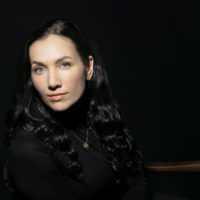
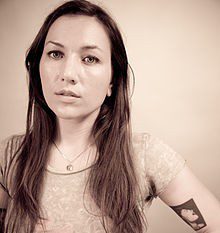
				<content:encoded><![CDATA[<p>If you attended Stephen Elliott’s <a title="The Literary Community Presents: Let's Make A Movie!" href="http://therumpus.net/2012/11/the-literary-community-present-lets-make-a-movie-nyc/" target="_blank">Let’s Make A Movie</a> fundraiser for the <em>Happy Baby</em> movie in November, then you got to <a href="http://firstpersonsingular.tumblr.com/post/37055300891/itll-be-a-little-while-before-i-have-a-chance-to">hear me interview Melissa Febos</a> live, onstage, about writing her memoir, <a title="Whip Smart: The True Story of a Secret Life" href="http://www.indiebound.org/book/9780312583781" target="_blank"><em>Whip Smart: The True Story of a Secret Life</em></a>. I got to have an other longer conversation with Melissa at a restaurant in Williamsburg, too, where we covered more. So even if you were at the <em>Happy Baby</em> event, read on…</p><p>In <em>Whip Smart</em>, Febos unflinchingly chronicles five years in her early twenties when she was a dominatrix and heroin user. But the book is about so much more than those details. It’s about living a lie—sometimes many lies at once. It’s about lying to yourself. And it’s about discovering truths about yourself in places you never expected.</p><p>I’m always interested in how writers’ parents react to secrets revealed in their memoirs—especially when, like me, the writers project fairly clean images to their parents. As far as Febos’s parents knew, her focus those years was on her studies as a creative writing major at the New School, and then at Sarah Lawrence. They knew nothing of her work at the dungeon, nor her drug addiction, until toward the end of the book, when she tells them.</p><p>Over dinner, we got to talk about her parents’ reactions to the book—which goes into much greater detail about her work and her drug use than she had when she revealed those things to her parents in person—and much more.</p><p style="text-align: center;">***</p><p><strong>The Rumpus:</strong>  It might sound cliché or fawning to say that I loved your book, but what I want to convey is that I loved not only the story but also the <em>writing</em>.</p><p><strong>Melissa Febos:</strong> Thank you!</p><p><strong>Rumpus:</strong> A memoir like about your years as a dominatrix, in someone else’s hands, might be one of those where you have to trudge laboriously through the exposition until you get to the exciting or tawdry parts. But your writing is so beautiful. I was studying it, going back and back over it. The sentence construction is so great.</p><p><strong>Febos:</strong> Oh, thank you. I’m sure we’d be hard up to think of a writer who wouldn’t love to hear that, but I like to think that I particularly like to hear that because of the sort of sensational content of it, which could so overshadow the actual writing. Which is not to say that I think it’s genius or anything, but nobody ever talks to me about my writing. They always just talk to me about my spanking.</p><p><strong>Rumpus:</strong> You studied creative writing undergrad at the New School and then you got an MFA at Sarah Lawrence. Did you know while you were studying that the first book you would publish would be a memoir?</p><p><strong>Febos:</strong> Oh, my god, no! The thought never crossed my little, drug-addled mind.</p><p><strong>Rumpus:</strong> What were you thinking it would be that you would publish?</p><p><strong><a class="lightbox" title="Whip Smart" href="http://therumpus.net/?attachment_id=110837"><img class="alignright  wp-image-110837" title="Whip Smart" src="http://therumpus.wpengine.netdna-cdn.com/wp-content/uploads/2013/02/Whip-Smart-682x1024.jpg" alt="" width="300" height="450" /></a>Febos:</strong> I started off calling myself a writer when I was five. The hubris started very early. Novels were my bibles. I’m not sure I knew what memoir was, although I probably read some memoirs as a little girl. It’s just that they were indistinguishable to me at that point. Even though novels were the love of my life, I started off writing poetry. I think because I had a knack for image and lyricism, even though I didn’t really have anything to write about, or I didn’t know what to write about. I could just couple words together that pleased me and so poetry seemed sort of natural. When I was in college I started writing prose, because a very smart professor asked me what I like to read and I said, “Novels,” and she said, “You should be writing them then.” Memoir never even occurred to me. I think I was afraid of nonfiction and I was afraid of navel-gazing, and of being seen.</p><p><strong>Rumpus:</strong> Yeah, being seen. I’m as conflicted about that as I am about writing about other people.</p><p><strong>Febos:</strong> When I was in graduate school for fiction it didn’t occur to me to write memoir until I was doing it.</p><p><strong>Rumpus:</strong> A lot of people, especially with material that’s dicey, go with autobiographical fiction. It gives you a veil. Did it ever occur to you to go that route?</p><p><strong>Febos:</strong> It did. I more seriously considered publishing it under a pseudonym than I considered publishing it as fiction. I think the decision to write it as nonfiction happened at the very outset of the process, because the overwhelming impetus for writing this book was to understand what the experience meant, and to override my own reductions and rationalizations, whatever story I had that was not true.  It didn’t sit well with me and I needed to answer that. That’s sort of the reason I write everything. That subject matter is so knotted that I think the veil of fiction that would have protected me from the public also would have obscured what I was trying to get a closer look it. It was hard enough. I already couldn’t see my subject matter clearly, and to further obscure it and give myself that freedom—I’m a hustler, the book is largely about that—if I give myself that trap door to avoid my own experience, I’ll take it every time. I had to pen myself in so that I could really just wrangle the subject matter in a way that was honest.</p><p><strong>Rumpus:</strong> So you did consider a pseudonym.</p><p><strong>Febos:</strong> I did. The other reason I didn’t want to fictionalize it is because one of the main points of publishing a memoir in nonfiction was that I wanted to write about what had been a very lonely experience. The books that most saved my life as a kid were the ones that articulated lonely experiences that I had thought were mine alone. I’m always writing to a younger version of myself, or a young woman who is like I was. I want that girl to know that I really existed and that it all went down that way. You know what I mean?</p><p><strong>Rumpus:</strong> A few writers I know are very against mining their life for material as they are going along. I personally feel like I was sent here by aliens to get it all down, so I am taking mental notes through everything. As you were going about your life as a dominatrix and later attending twelve-step meetings, did it ever occur to you, <em>This would be great material. I’m going to write about this</em>?</p><p><strong>Febos:</strong> Honestly, no. I don’t think people believe me when I say that sometimes. I understand that, but part of it is dissociation. Being a dominatrix, sticking my foot up people’s asses for money, necessitated that I divorce myself from any sort of objective perspective on what I was doing. In order to think about things as a writer you have to objectify your experience. I couldn’t have been enacting that experience if I was objectifying it. I was in the fantasy. I was selling myself on the fantasy as I was doing it. It never occurred to me. I did take notes, but just because I am a writer. I’ve been a writer since I was five. You don’t have any sort of outlandish, shocking, extraordinary, horrifying experience without writing it down, because I know and knew that you forget things. No matter how outrageous and amazing and extraordinary and seemingly unforgettable an experience is, it’s kind of like a dream. It will erode inevitably, for me.</p><p><strong>Rumpus:</strong> I remember you writing in the book that you kept a journal.</p><p><strong>Febos:</strong> Yeah. I saved letters from my boss. There are things in there that are directly transcribed. I was so glad I did that. Sometimes when I was writing the book I wondered if some little writer hobbit part of my brain was back there puppeteering that action. But it really never, on any conscious level, occurred to me that I would write about it. I will say, I thought probably some day there would be an ancillary character in some novel—not in the one I was currently writing—that would be a dominatrix or something.</p><p><strong>Rumpus:</strong> So you were working on a novel.</p><p><strong>Febos:</strong> Yeah, I was working on novels as an undergrad.</p><p><strong>Rumpus:</strong> My number one obstacle is the fear of upsetting and offending my parents by revealing things about me they’d rather not know, or by revealing things about them, my father in particular. I get the sense in the book that your father wasn’t too affected by your admission about what you’d been up to, at the dungeon and with drugs. How did he react to the book?</p><p><strong>Febos:</strong> My dad had a very hard time with the book in completely unexpected ways. And then I wrote about him having a hard time.</p><p><strong>Rumpus:</strong> Where’d you write about it?</p><p><strong>Febos:</strong> I actually wrote about it for <em>Sarah Lawrence Magazine</em>. It was a small venue, so I could choose not to show it to him if I didn’t want to. I ended up showing it to him and it was really meaningful. It’s funny, because he had this incredibly difficult time with the book and then we sort of moved beyond it but not completely, and then I actually set about wanting to very consciously make it up to him. <em>I’m going to write a really nice essay about my dad</em>, I thought. Then of course that didn’t happen. Instead I just told the truth of what was happening in our relationship, which was not at all what I had set out to do.</p><p><strong>Rumpus:</strong> Oh, I so related to that desire to just write something that flatters your parents, and pleases them. I have that fantasy all the time. For about five minutes. So, you couldn’t fake it.</p><p><strong>Febos:</strong> I guess the writer in me has more clout than the daughter in me. It wins every fucking time.</p><p><strong>Rumpus:</strong> I need to choose between being a writer and a daughter. I know that I’m eventually going to be the writer and not the daughter. I’m hoping that I won’t get disowned or I won’t my father’s heart.</p><p><strong>Febos:</strong> Wow. You probably don’t want more advice.</p><p><strong>Rumpus:</strong> No, I do!</p><p><strong>Febos:</strong> <a title="Conversations with Writers Braver Than Me #13: Cheryl Strayed" href="http://therumpus.net/2012/07/conversations-with-writers-braver-than-me-13-cheryl-strayed/" target="_blank">Cheryl</a> gave you great advice. I would echo what she said to you: you don’t know how people are going to respond. But I would add to that, that getting your heart broken is not the worst thing and it’s actually quite unavoidable. I think in some ways I had to break my father’s heart and then face that in order to have a real relationship with him.</p><p><strong>Rumpus:</strong> Right. I don’t have a <em>real</em> relationship with my dad.</p><p><strong>Febos:</strong> No, and I didn’t either before I published this book. We were okay, meaning I placated him and then resented him for not really knowing me for twenty years. And he resented me and took personally my sluttiness in junior high school. Our relationship was us talking about movies on the surface, and these sort of seething wounds underneath the surface that motored our decisions. When the book came out, it was OUT. I didn’t write about our relationship directly, but I revealed things, I didn’t lie and I didn’t placate him with the narrative.</p><p><strong>Rumpus:</strong> What about your mother? I love the scene where you try to present your work as a dominatrix to her in psychological terms, because she’s a therapist.</p><p><strong>Febos:</strong> Yeah, I presented it as, like, this feminist, sociology experiment.</p><p><strong>Rumpus:</strong> Right, and also as therapy. In the book, she and your dad don’t really react in a big way when you tell them these things. Is that how it really happened? Or was it a choice, to keep your parents’ roles small? And if so, was that to protect them, or because it woudn’t have moved the story forward in an important way?</p><p><strong>Febos:</strong> You mean why I didn’t include more of how it affected my relationship with them?</p><p><strong>Rumpus:</strong> Yeah.</p><p><strong>Febos:</strong> Honestly, I included in the book most of our interactions around the subject, because we avoided it like crazy. I did <em>not</em> talk to them about it. That was it. I think what more I could have said in regard to how it affected our relationships would have come in the form of analysis of their reaction. I didn’t want to do that—to protect them, but also because I don’t think I needed to. I think it was also because that story wasn’t over yet. Me writing the book and the subsequent interactions that we had were actually the cap on that experience. We were still in this weird purgatory about it when I published the book. When I gave them the galleys and what ensued after that, then I understood a lot more about our relationships and what the experience meant to them. I’d never wanted to know what they thought about it at all.</p><p><strong>Rumpus:</strong> Did they know that you had this book deal?</p><p><strong>Febos:</strong> Oh yeah, they knew about the whole thing all along.</p><p><strong>Rumpus:</strong> You reveal a lot more in the book than you had revealed to them when you talked to them. How did they react to the galleys?</p><p><strong>Febos:</strong> My mother called me at 7am the morning after I had given it to her. I was walking the dog and I was like, “Why are you calling me? You’re not supposed to call me until you finish the book.” Oh, let me preface this by saying that when I gave her the book, I said, “Look Mom, fair warnings, there’s material in here that you don’t already know about that is going to be painful for you to read,” and she said, “Tell me what it is before I read it.” I said, “No, I wrote a book because I couldn’t say it out loud.” Then she insisted,“You have to tell me. I don’t want to be cringing the whole time I’m reading it.” And I thought, <em>Okay</em>. And I said very little but enough that she knew. I said, “The drug use is a lot worse than anything I’ve ever told you about, and there’s some really intense sexual material of me doing submissive sex.” In the end I was grateful to her for that because then it wasn’t the first time we talked about it after she read the book. I wasn’t cringing. She read it in one night.</p><p><a class="lightbox" title="Sari and Melissa" href="http://therumpus.net/?attachment_id=110839"><img class="alignleft size-medium wp-image-110839" title="Sari and Melissa" src="http://therumpus.wpengine.netdna-cdn.com/wp-content/uploads/2013/02/Sari-and-Melissa-300x296.png" alt="" width="300" height="296" /></a>So she called me the next morning and said, “I stayed up all night reading it. I haven’t slept.” And I said, “Are you sure you don’t want to just wait and talk to me after you’ve processed it a little bit?” But of course she didn’t. I get a little teary sometimes when I talk about this, but she said, “I kept closing the book and turning off the light, and then I had to turn it back on because I needed to know that you were okay.” I said, “I’m okay, I’m right here!” And she said, “I know but the &#8216;you&#8217; in the book,” which was really sort of raw for me to hear because there is so much that I experienced for the first time through the process of writing the book, because I was so dissociated the whole time.</p><p>I think that conversation highlighted the desolation that I experienced. No one had known. That was really painful for a lot people in my life, to know what had been going on when I was in regular contact with them and they had no idea. Then my mom started crying on the phone, and I asked, “What do you think?” And she said, “It’s the hardest thing I’ve ever read in my life. I think it’s a masterpiece and I’m so proud of you,” which is amazing; the testament. She’s an amazing woman. We had other awkward conversations about it but—she’s a pretty great lady. My dad was not as easy.</p><p><strong>Rumpus:</strong> Yeah, what was your dad’s reaction?</p><p><strong>Febos:</strong> I tried to warn him and he scoffed at me and was insulted that I thought he needed a warning. His line is always, and I think I quoted him saying this in the book, but again he was like, “I’m the cool parent. Of course I can handle it.” I sent him the book and then I didn’t hear from him for like a month. I talked to my mom and I said, “What’s going on?” and she was like, “You should give him some space.”</p><p><strong>Rumpus:</strong> Are they together? No? They’re friends?</p><p><strong>Febos:</strong> They’re friends. It was kind of obvious to assume that it was the drugs and the sex that upset him. I wrote about a lot of things that no parent honestly should ever have to read about their kid. If I could have given them an abridged version, I really would have, but they’re not those kinds of parents.</p><p><strong>Rumpus:</strong> I fortunately don’t have anything even vaguely along those lines to write about; it’s just about my perceptions of things, which are different from those of my parents, and those of a lot of other people in the world I grew up in. Oh, and cheating on my first husband.</p><p><strong>Febos:</strong> It’s largely the same material I think. Actually, in terms of what mattered to my parents, it wasn’t the drugs or the sex for either of them. More for my mother, but that wasn’t it at all it turned out with my father. It was much more about him. He was so profoundly hurt by my portrayal of him which came as a surprise to me because I commented not at all; he’s barely in it, which he may have also found insulting.</p><p><a title="Stephen Elliott" href="http://stephenelliott.com" target="_blank">Stephen</a> said something really smart to me over the summer while we were talking about this phenomenon as a writer: he said that even when people tell you “write about whatever you want,” they are never saying “write about the parts of me that I don’t know about.” I think that’s what happened with my dad. He had one narrative in his mind about our relationship during that time, and his role in my life; I didn’t write any judgments of him but I just presented my own experience of it and it conflicted pretty dramatically with his version. I think he felt like I had stolen his memories and revised them. I sort of ruined those memories for him and he had thought that we had this really candid, close, easy, intimate relationship, and I basically shat all over it and said, “You didn’t know anything.” I was writing this story of how I tailored a version of my experience for other people to protect them and to hide behind and then sort of the devastating loneliness of that kind of hiding. What he heard was, “You didn’t see me.”</p><p><strong>Rumpus:</strong> When you were writing, were you ever thinking, <em>Oh shit, my parents are going to read this</em>? And if you did, did it ever stop you?</p><p><strong>Febos:</strong> No. It didn’t stop me and I think for a couple of reasons. I mean, one—and I’m kind of embarrassed to admit this, because I feel like it makes me sound like an arrogant asshole—but I really think that early on in life, I made a decision to let the writer win, you know?</p><p><strong>Rumpus:</strong> That’s amazing.</p><p><strong>Febos:</strong> And to always pick that. I don’t know, it’s funny because there are so many ways in life—and I think it’s true of a lot of writers and certainly true of a lot of women—that we just put ourselves last in line for the things that we want. And I do that in many other ways. I don’t attend tenderly to any of my needs, but I do pick writing over other people, over my hygiene, over dinner. I just made that decision early on and have managed to stick with it. Knock on wood.</p><p>So that is one thing. But I think that more so, my wonderful skill of dissociation came in very handy. I care very much what other people think. I’m a total pleaser. I want everyone to like me all the time. I feel like people who don’t feel that way on some level are lying, but particularly female memoirists. We want to be seen and we want to be forgiven. So that occurred to me very early on. I didn’t know enough as a writer to understand why I needed to do this, but I understood in a very gut way that I could not entertain those thoughts of pleasing people and write this book—that it would be a very different book. Without really sort of investigating that instinct, which I’m glad for, I just made a conscious decision to put blinders on and not think about anything and put it all in. And I did. I put everything in. I had to look at the whole picture to see what I needed.</p><p>I couldn’t have articulated this process at the time; I just sort of did it instinctually. But now when I talk about this with my students all the time, it’s one of the first things I address in memoir classes—that you have to put it all in because you’re writing your way into the ending of your own story. Even if you think you know what the story is, you don’t until you write it. If you start leaving things out you could leave out vital organs and not know it.</p><p><strong>Rumpus:</strong> One of the things <a title="Conversations with Writers Braver Than Me #7: Nick Flynn" href="http://therumpus.net/2011/01/conversations-with-writers-braver-than-me-7-nick-flynn/" target="_blank">Nick Flynn</a> said, actually on stage here, was, “You have to get it out and get it on paper before you can know if you need it. Wrestling with it in your brain is not useful.”</p><p><strong>Febos:</strong> I never think about anything in my brain. I think in very small repetitive circles inside my own brain. That’s why I’m a writer. It’s the only way I get any sort of conclusion or understanding about anything. Another thing that I tell my students all the time is, for better or worse, no publisher is going to come wrench your story out of your hands before you’re ready to let it go. You will have time to take stuff out. You don’t have to show it to anybody. That’s what I did. I wrote this story. I put everything in and I looked at it and saw what the story was. It was so vastly different from the story I had thought I was writing. Thank god. It was a much better story: interesting, painful, humiliating. Then what I did was I put my mom-goggles on, and I looked at it and said, “Okay, how much is this going to hurt?” and I took out everything that wasn’t necessary that was going to hurt. I did that for everyone, especially the people who I still have relationships with. I measured the potential pain versus its function in the story, and I took it out. I took a lot out. It may not seem like I censored it very much, but I took a lot out that I thought would hurt people that was just being clever or just adorning it, or anything that wasn’t really essential that would hurt people.</p><p><strong>Rumpus:</strong> In terms of your parents what were you more afraid of them reading about, the dominatrix stuff or the addiction stuff?</p><p><strong>Febos:</strong> I think the addiction stuff, because I was already sort of outed in my family as a sexual person: as a sexually-adventurous and sexually-conflicted person and sexually-driven person. They already knew that about me. They knew that about me when I was eleven. My parents very consciously tried to provide an environment that would protect me from becoming a drug addict. My father was raised by a violent alcoholic. There was alcoholism in my mother’s family.  I’m half-adopted, and my birth father was a drug addict and alcoholic. So, I think they very consciously made decisions and parented me in a way that was aimed to help save me from that. So, I knew it would be particularly painful and it was, especially for my father.</p><p><strong>Rumpus:</strong> What’s interesting to me is in a lot of places in the book you say to people that you are not doing sex work, and then there are scenes where there are men getting jerked off. Then there’s a scene where for $1,500 you’re fisting someone’s girlfriend. I’m thinking, <em>Kind of seems like sex work…</em> I wondered if you needed to tell yourself it wasn’t? How do you see it now?</p><p><strong>Febos:</strong> Oh god. It was absolutely sex work. I knew it then. I know it now. I knew it when I was writing the book. I remember when I was thirteen, I had this excruciating interaction with my mother that really was a precursor to every conversation I depicted in the memoir, where I got into her car—and I’m sure that supposedly I had been hanging out with a friend of mine when really I’d been getting finger-banged behind the mall—but I got in the car and my mother, without looking at me, said, “You smell like sex,” and I said, “I’ve never had sex.” She said, “Don’t kid yourself; you don’t have to have intercourse to be having sex.” I’ve never forgotten that interaction.</p><p><a class="lightbox" title="IMG_2834" href="http://therumpus.net/?attachment_id=110838"><img class="alignright  wp-image-110838" title="IMG_2834" src="http://therumpus.wpengine.netdna-cdn.com/wp-content/uploads/2013/02/Melissa-Febos-2-760x1024.jpg" alt="" width="300" height="425" /></a>I do think that was a narrative trick that I made with writing. The story of the memoir is a story of me creating certain narratives so that I could live with my own experience and with the uneasy relationship between what I was doing and what I believed in—or what I saw as an uneasy relationship between those two things. I made a conscious decision when I was writing that book to depict in real time how I treated it, and how I thought about it, and how I portrayed it to other people, because I wanted the story to be one of change from that to a more honest appraisal, a more accepting appraisal of myself and other people in that world. But I knew, and this turned out to be true, that when people read it, it was going to be very easy for them to think, <em>She’s kidding herself! Look at this cocky little bitch!</em> Because I was, or at least that was the pageantry of it. That I had a really good argument or a spin or I thought I did. But it was largely bullshit. It was for me.</p><p><strong>Rumpus: </strong>So, do you ever miss the dungeon or any of that?</p><p><strong>Febos:</strong> No. I mean it’s been a long time now. I missed it for a while. It was very hard to leave. It was a tremendous relief to leave, and I missed it. I think partly it was like flying any nest. You have to separate in a radical way in order to leave. Early on I really cut myself off from that world. Even sexually—those practices—I really just drew a hard line because I had to in order to leave the parts of it I needed to leave. I missed it a lot because I had separated myself from some things that were authentically connected to me and part of my personality. I ended up circling back around to some of that and acknowledging them in a more balanced way. But I dream about it a lot. I dream about it not as much as I dream about shooting heroin, but in a similar way, like really heavy-handed symbols.</p><p><strong>Rumpus:</strong> Do you think it is going to appear in future work?</p><p><strong>Febos:</strong> Not for a long time. I said most of what I have to say about it in the book, and then in subsequent discussions of the book, and in discussions about <em>Fifty Shades of Grey</em>, which then restarted the whole conversation. I’m sure my perspective on it will change, but I need more time to get to a new perspective. I just have other things I want to write about.<br /><h3 class='related_post_title'>Related Posts:</h3><ul class='related_post'><li><a href='http://therumpus.net/2013/01/conversations-with-writers-braver-than-me-14-marco-roth/' title='Conversations With Writers Braver Than Me #14: Marco Roth  '>Conversations With Writers Braver Than Me #14: Marco Roth  </a></li><li><a href='http://therumpus.net/2012/07/conversations-with-writers-braver-than-me-13-cheryl-strayed/' title='Conversations With Writers Braver Than Me #13: Cheryl Strayed'>Conversations With Writers Braver Than Me #13: Cheryl Strayed</a></li><li><a href='http://therumpus.net/2012/05/process-talk/' title='Process Talk'>Process Talk</a></li><li><a href='http://therumpus.net/2012/02/the-rumpus-interview-with-susie-deford/' title='The Rumpus Interview with Susie Deford'>The Rumpus Interview with Susie Deford</a></li><li><a href='http://therumpus.net/2011/05/conversations-with-writers-braver-than-me-9-elisa-albert/' title='Conversations With Writers Braver Than Me #9: Elisa Albert'>Conversations With Writers Braver Than Me #9: Elisa Albert</a></li></ul>]]></content:encoded>
			<wfw:commentRss>http://therumpus.net/2013/02/conversations-with-writers-braver-than-me-15-melissa-febos/feed/</wfw:commentRss>
		<slash:comments>3</slash:comments>
		</item>
		<item>
		<title>Process Talk</title>
		<link>http://therumpus.net/2012/05/process-talk/</link>
		<comments>http://therumpus.net/2012/05/process-talk/#comments</comments>
		<pubDate>Thu, 31 May 2012 17:41:45 +0000</pubDate>
		<dc:creator>Lisa Dusenbery</dc:creator>
				<category><![CDATA[music]]></category>
		<category><![CDATA[BOMBLOG]]></category>
		<category><![CDATA[feminism]]></category>
		<category><![CDATA[Kathleen Hanna]]></category>
		<category><![CDATA[Melissa Febos]]></category>
		<category><![CDATA[Whip Smart]]></category>

		<guid isPermaLink="false">http://therumpus.net/?p=101645</guid>
		<description><![CDATA[<p>At <em>Bomblog</em>, <a href="http://bombsite.com/issues/1000/articles/6583">writer Melissa Febos and musician Kathleen Hanna discuss</a> the creative process, collaboration versus doing it alone, writing about sex work, nasty online commenters, and more.</p><p>“Even while I was doing things I knew were provocative, and were meant to be provocative in certain ways, still it was so painful to think, Why don’t they understand?</p>]]></description>
				<content:encoded><![CDATA[<p>At <em>Bomblog</em>, <a href="http://bombsite.com/issues/1000/articles/6583">writer Melissa Febos and musician Kathleen Hanna discuss</a> the creative process, collaboration versus doing it alone, writing about sex work, nasty online commenters, and more.</p><p>“Even while I was doing things I knew were provocative, and were meant to be provocative in certain ways, still it was so painful to think, Why don’t they understand? They’re not reading. It’s like they don’t even want to understand, which is exactly right, sometimes.”<br /><h3 class='related_post_title'>Related Posts:</h3><ul class='related_post'><li><a href='http://therumpus.net/2013/02/conversations-with-writers-braver-than-me-15-melissa-febos/' title='Conversations With Writers Braver Than Me #15: Melissa Febos'>Conversations With Writers Braver Than Me #15: Melissa Febos</a></li><li><a href='http://therumpus.net/2012/02/the-rumpus-interview-with-susie-deford/' title='The Rumpus Interview with Susie Deford'>The Rumpus Interview with Susie Deford</a></li><li><a href='http://therumpus.net/2013/06/the-big-idea-4-eve-ensler/' title='The Big Idea #4: Eve Ensler'>The Big Idea #4: Eve Ensler</a></li><li><a href='http://therumpus.net/2013/06/reductress-womens-news-feminized/' title='Reductress: Women&#8217;s News. Feminized.'>Reductress: Women&#8217;s News. Feminized.</a></li><li><a href='http://therumpus.net/2013/06/go-ahead-feed-the-trolls/' title='Go Ahead, Feed the Trolls'>Go Ahead, Feed the Trolls</a></li></ul>]]></content:encoded>
			<wfw:commentRss>http://therumpus.net/2012/05/process-talk/feed/</wfw:commentRss>
		<slash:comments>0</slash:comments>
		</item>
		<item>
		<title>The Rumpus Interview with Susie Deford</title>
		<link>http://therumpus.net/2012/02/the-rumpus-interview-with-susie-deford/</link>
		<comments>http://therumpus.net/2012/02/the-rumpus-interview-with-susie-deford/#comments</comments>
		<pubDate>Tue, 07 Feb 2012 08:01:31 +0000</pubDate>
		<dc:creator>Melissa Febos</dc:creator>
				<category><![CDATA[books]]></category>
		<category><![CDATA[rumpus original]]></category>
		<category><![CDATA[Dogs of Brooklyn]]></category>
		<category><![CDATA[Melissa Febos]]></category>
		<category><![CDATA[Publishing]]></category>
		<category><![CDATA[Susie Deford]]></category>
		<category><![CDATA[Whip Smart]]></category>

		<guid isPermaLink="false">http://therumpus.net/?p=95729</guid>
		<description><![CDATA[<p><a title="susie_melissa" href="http://therumpus.wpengine.netdna-cdn.com/wp-content/uploads/2012/01/susie_melissa.jpg"><img class="alignleft" title="susie_melissa" src="http://therumpus.wpengine.netdna-cdn.com/wp-content/uploads/2012/01/susie_melissa-300x220.jpg" alt="Susie Deford &#38; Melissa Febos" width="120" height="97" /></a>Susie DeFord and I both finished drafts of our books in 2007. My former dog-trainer and I had labored together at café tables side by side, but after the writing process, our paths diverged. I quickly found an agent, and starting working on a book proposal, while Susie submitted her manuscript, <em>Dogs of Brooklyn</em>,<em> </em>to first-book competitions (the most common way to get a debut book of poems published), and worked on building a readership for her blog, <a href="http://dogpoetlaureate.wordpress.com/" target="_blank">Dog Poet Laureate</a>.</p>]]></description>
				<content:encoded><![CDATA[<p><a title="susie_melissa" href="http://therumpus.wpengine.netdna-cdn.com/wp-content/uploads/2012/01/susie_melissa.jpg"><img class="alignleft" title="susie_melissa" src="http://therumpus.wpengine.netdna-cdn.com/wp-content/uploads/2012/01/susie_melissa-300x220.jpg" alt="Susie Deford &amp; Melissa Febos" width="120" height="97" /></a>Susie DeFord and I both finished drafts of our books in 2007. My former dog-trainer and I had labored together at café tables side by side, but after the writing process, our paths diverged. I quickly found an agent, and starting working on a book proposal, while Susie submitted her manuscript, <em>Dogs of Brooklyn</em>,<em> </em>to first-book competitions (the most common way to get a debut book of poems published), and worked on building a readership for her blog, <a href="http://dogpoetlaureate.wordpress.com/" target="_blank">Dog Poet Laureate</a>.<span id="more-95729"></span></p><p>After an onslaught of rejection from editors unable to greenlight a literary memoir about spanking people, my book finally sold to an imprint of St. Martin’s Press. I couldn’t afford a bigger apartment, but the book enjoyed critical success, sold a respectable number of copies, and, most excitingly, I got to tell Terri Gross what it felt like to tie someone up. My childhood dream became real, and like most, felt nothing like I had imagined. But I knew I was lucky. Both mine and Susie’s work offered similar fare: accessible and thoughtful content that didn’t fit a commercial mold. Mine just happened to be in genre that publishers are more willing to take a risk on.</p><p>Susie kept editing her manuscript, and kept submitting to contests, but no dice. Eventually, she started investigating the option of self-publishing. We had many conversations about the grunt work it’d entail, the potential stigma associated with “vanity” publications, and why no one had yet offered to print her manuscript. Slowly, she started the process of editing and designing her own book, and about a year later I purchased <em>Dogs of Brooklyn </em>online. It just arrived.</p><p align="center"> ***</p><p><strong>The Rumpus: </strong>So, how does it feel to have the book out, finally?</p><p><strong>Susie Deford:</strong> Equal parts excitement and horror. Everyone keeps saying congratulations and it does feel good to have something tangible out there to show for all my work. However, I have this brain that just skips to the next thing I have to worry about, which is promoting and selling the book and all the work that entails. I’m sure you remember that and the anticlimactic moment of “I published my book and it didn’t fix everything!”</p><p><strong>Rumpus: </strong>Oh, yeah. As much as we intellectually know otherwise, I think a lot of writers privately suspect that everything will be just great as soon as they publish a book. All humans, maybe. “If I just ______, then I can take it easy for a while. Stop feeling so insecure.” We pick some point up ahead and decide that when we get there, we will have <em>arrived</em>. We think this about getting into the MFA program, about getting our first lit mag publication, about getting an agent, getting a book contract. Getting a nice apartment, an iPhone, a boyfriend. It never ends. There’s always more work, more people to compare yourself to, more ways to feel you haven’t quite gotten there yet. I wish I knew how to help people avoid learning the hard way that the writing part (the living part) <em>really </em>is the best part. I wish I could help myself remember it, on bad days.  Also, that there is more than one way to skin a cat. Speaking of which, can you talk about your decision to self-publish the book?  What were your hesitations? Was there a deciding moment?</p><p><strong>Deford</strong><strong>:</strong> I was sick of hearing myself whine about rejection and not feeling like I fit in to the literary community. I realized that I was going about this whole thing wrong. I grew up a punk rock zine-making riot girl championing Kathleen Hanna and crew so I don’t know why suddenly in my adulthood it seemed like I needed to be accepted by a major publisher? I guess I thought I’d be seen as a more legitimate writer if an established publisher published me. It’s easy to compare and despair in New York. There are so many famous writers and artists who live in your own neighborhood. I realized, though, that when I started writing poetry in middle school and playing in bands in college I wanted to reach the outsider kids in Jacksonville, Florida or Peoria, Illinois—not just the literary scene. Poetry and music helped me survive growing up in a place with very little culture by letting me know there were others out there who were sensitive outsiders and artists. Also I had a good friend, Kate Travers, who has worked in publishing for years and encouraged me to self-publish. In some ways having a few people who believed in what I was doing, particularly in the industry, gave me permission to self-publish.<a class="lightbox" title="DogsBrooklyncorrect cover" href="http://therumpus.wpengine.netdna-cdn.com/wp-content/uploads/2012/01/DogsBrooklyncorrect-cover.jpg"><img class="alignright size-medium wp-image-95731" title="DogsBrooklyncorrect cover" src="http://therumpus.wpengine.netdna-cdn.com/wp-content/uploads/2012/01/DogsBrooklyncorrect-cover-200x300.jpg" alt="" width="200" height="300" /></a></p><p><strong>Rumpus:</strong>  I know! I was such an anti-establishment kid, and somehow, ironically, being a professional artist can really easily funnel you into needing the approval of somewhat arbitrary authorities. I am so bothered by the overall mentality of scarcity among artists, this anxiety that there’s not enough to go around. I have to remind myself a lot that I write because writing saved my life, because books are the love of my life. Not because I crave the approval of any one person or industry.</p><p>So, once you decided to go for it, where did you begin?</p><p><strong>Deford</strong><strong>:</strong> Well at that point it was 2011. I had edited the manuscript to death and sent it out to so many first book contests in the back of <em>Poets &amp; Writers</em> over the years that I couldn’t bear to continue to <em>pay </em>them to reject me. It just seemed insane. I had been researching self-publishing options and Create Space on Amazon seemed the best deal royalty and distribution-wise.</p><p><strong>Rumpus:</strong> It does seem insane, doesn’t it? We all know early on that being a writer means girding oneself against an infinite onslaught of rejection, but not when is a good time to say enough. I think, <em>never, </em>though I guess everyone must have a limit. When we were sitting at that coffee shop, how did you imagine the publishing process eventually happening?</p><p><strong>Deford</strong><strong>:</strong> I thought at some point, from doing readings and sending out submissions, that someone would understand what I was doing and want to publish it. But the literary world was a little afraid of the whole “book about dogs” thing and the dog world was a little afraid of poetry (even narrative poetry which tells a story in addition to being linguistically fun). I was in this weird crevice. I knew, though, that this book had an audience, particularly when Dog Fancy magazine actually paid us [Susie &amp; photographer Dennis Riley] for a poem and photo. The editor Susan Chaney actually said in her email to me “Typically, I don’t get past the first line or two before marking an “x” for the assistant who sends out our reject letters. Couldn’t put yours down.” I also had a lot of clients and dog owners who loved my work. I really started to like the idea of appealing to people who normally hated poetry.</p><p><strong>Rumpus:</strong> I love that. I mean, isn&#8217;t that part of our job, to reach the unconverted? If not ours than whose? I hear a lot of writers despair about how people don&#8217;t read anymore, or don&#8217;t care about poetry, but sometimes there&#8217;s a tinge of preciousness to it. Writers are incessantly talking about how the publishing industry is fucked up and dying, all while trying to work the system at the same time. It’s like a bad parent whose love we still crave. What’s your perspective on this?</p><p><strong>Deford:</strong> I think it’s more important for me to write, not to think about publishing. Obsessing about publishing never does anything good for my brain; it only takes me to some very dark places. Publishing continues to change, yet very few writers actually make a living off publishing their books. Writers usually make money off teaching or some other profession. I think the best thing a writer can do is get a job that affords them time to write. That’s why I’m so grateful for dog walking and training. Dog training particularly is amazing because I get to help dogs and their people have better lives together. Hopefully, if one continues to write, publishing—self or otherwise—will follow.</p><p><strong>Rumpus:</strong> It seems like, with the decline of corporate publishing, and the rise of bloggers, self-publishing, and one-person presses, that the field is getting more even, and a lot bigger. I see it happening in all the arts. Well-known performers (like Louis CK) are streaming video from their personal websites, and making movies on their flip-cams. It seems both exciting and overwhelming to me. Do you see this as a good thing? Is self-publishing the future?</p><p><strong>Deford</strong><strong>: </strong>The internet and technology has done this really cool thing and made everyone all D.I.Y! Shit, even the actor James Franco who could probably get any major publisher to take his first novel just sold his book to Amazon publishing. I totally think it’s a good thing and that self-publishing is the future. I think readers should be able to decide what they want to read, not just a few people at publishing houses telling people what they can read. Blogs, self-publishing, etc. makes this possible.</p><p><strong>Rumpus:</strong> I agree, in that I don’t want my choices strained by people whose concerns aren’t congruent with mine, though I do have to admit that it helps to have <em>someone </em>straining all the dross. It just needs to be someone I trust. I guess that’s what social media is for, and the advantage of have a lot of friends who are committed readers. There’s just so much out there now; a part of me fears that some of the truly excellent work will get lost in the multitudes. I sort of have faith that what needs to find its way to the surface of our cultural consciousness ultimately will, but I also suspect that to some extent, that’s just wishful thinking.</p><p>The book looks <em>beautiful—</em>actually a lot more impressive than many of the books put out by small (and big) presses. Like a lot of authors, I often wished I had more control over the design of my book. How did the design process work for you?</p><p><strong>Deford</strong><strong>:</strong> I wanted the book to look as professional as possible so Kate Travers hooked me up with a great freelance book designer named Claudean Wheeler. I hired her and we started going back and forth with design ideas and edits. I had a few friends look over the manuscript and design elements to quadruple check everything. One of the things I went back and forth on a lot was whether to have photos in the book or not. Dennis Riley had collaborated with me taking copious amounts of photos of the dogs and Brooklyn. I wanted to make sure if we included them that it didn’t drive the cost up, but also that they looked good and like they belonged in the book. We wound up including only a few, the rest will be posted online on the <em>Dogs of Brooklyn</em> Facebook page and other places while promoting the book.</p><p><strong><a class="lightbox" title="Paperback cover" href="http://therumpus.wpengine.netdna-cdn.com/wp-content/uploads/2012/01/Paperback-cover.jpg"><img class="alignleft size-medium wp-image-95735" title="Paperback cover" src="http://therumpus.wpengine.netdna-cdn.com/wp-content/uploads/2012/01/Paperback-cover-200x300.jpg" alt="" width="200" height="300" /></a>Rumpus:</strong> I think the photos are a really great complement to the poems. That&#8217;s a great example of something a major publisher would most likely laugh at a writer suggesting. I was allowed a lot of input in the cover design for <em>Whip Smart</em>, and I think that that was more the exception than the rule. A major pro of having a traditional publisher, for me, was getting a kick-ass editor who helped me make the book better. For some people, however, it’s a disaster.  Do you feel like you got to choose your own editors, in peers?  Do you wish you had a single editor?</p><p><strong>Deford:</strong> I liked having an array of friends and family members, writers and non-writers look over everything and give feedback. My mentor, the poet Barbara Hamby, helped a lot with the layout of the book and gave it one of its first major edits. Towards the end of the process, Nathan Strobel, a brilliant young writer who works for me at my dog walking company helped a lot with editing. He laboriously went over every page. I cannot emphasize enough how important having a few people around you who support and encourage your work is.</p><p><strong>Rumpus:</strong> Agreed. I&#8217;ve had a lot of students who are fixated on getting an agent, and while an agent (sometimes) can be instrumental in getting your work ready for editors, as an editor can be in readying the manuscript for publication, your work will rarely reach the hands of those people unless it&#8217;s first been scoured by lots of other studied eyes. The most important thing any writer can cultivate, aside from diligent writing habits and a thick skin, is a stable of peers with whom to trade work.  I trust these people implicitly. And I trusted my editor, too, though it occurred to me early on in the process that it&#8217;d have been catastrophic otherwise. Being able to choose your own editors is definitely lower risk, because you also know what aesthetic taste you are choosing.</p><p>So, what are the main pros and cons of the experience so far?</p><p><strong>Deford:</strong> The huge advantage of self-publishing is complete control of the process, but with that comes a lot of responsibility. I had to pay for the design and initial copies of the book and postage to send to various reviewers etc. Thankfully, the book is print-on-demand so I don’t have tons of boxes of books in my apartment. The major disadvantage is that I don’t have a publicist or publishing house pushing the book for me. Distribution in bookstores may or may not be an issue. In addition to Amazon.com, Create Space has an extended distribution channel, which distributes through Ingram and Baker and Taylor after the title had been out for a few months. We’ll have to see how that plays out.</p><p><strong>Rumpus:</strong> It definitely sound like more out-of-pocket expenses, and fewer resources for publicity, although I know of so many writers whose major-publisher publicists couldn’t even remember their name. I had a pretty great publicist, but I also totally dogged him, and worked my own ass off to get the book out there. A lot of people hire private publicists in addition to their assigned publicists. I think that in most cases, the writer is going to have to bust ass to get any attention, publicist or no publicist. This might be one of the disadvantages to having such a crowded market. We are selling ourselves so much more these days than was required in the past. I’m not sure Hemingway’s agent was talking to the guy about making himself a brand.</p><p>Overall, what’s the best advice you would give someone considering self-publishing?</p><p><strong>Deford</strong><strong>:</strong> There is no deadline, so just make the book as well written, designed, and edited as possible before you put it out there.</p><p><strong>Rumpus: </strong>Good advice all around; everyone is always in such a damn hurry to get their shit out there (myself included). What are you working on now?</p><p><strong>Deford</strong><strong>:</strong> I’m working on a Young Adult book about a punk rock alcoholic teenager who gets sober and has to deal with all of the changes that come along with that, good and bad. I felt like there were a lot of books out there glorifying teenagers drinking and drugging, but not really delving into the experience of being a sober teenager and how awkward, yet awesome that can be. So that and walking and training dogs—business as usual.<br /><h3 class='related_post_title'>Related Posts:</h3><ul class='related_post'><li><a href='http://therumpus.net/2013/02/conversations-with-writers-braver-than-me-15-melissa-febos/' title='Conversations With Writers Braver Than Me #15: Melissa Febos'>Conversations With Writers Braver Than Me #15: Melissa Febos</a></li><li><a href='http://therumpus.net/2012/05/process-talk/' title='Process Talk'>Process Talk</a></li><li><a href='http://therumpus.net/2013/04/what-vida-stats-mean-on-a-personal-level/' title='What VIDA Stats Mean on A Personal Level'>What VIDA Stats Mean on A Personal Level</a></li><li><a href='http://therumpus.net/2013/04/dont-worry-too-much-about-goodreads/' title='Don&#8217;t Worry Too Much About Goodreads, Says Steve Almond'>Don&#8217;t Worry Too Much About Goodreads, Says Steve Almond</a></li><li><a href='http://therumpus.net/2013/03/on-being-part-of-the-problem-a-personal-response-to-the-vida-report/' title='On Being Part of the Problem: A Personal Response to the VIDA Report'>On Being Part of the Problem: A Personal Response to the VIDA Report</a></li></ul>]]></content:encoded>
			<wfw:commentRss>http://therumpus.net/2012/02/the-rumpus-interview-with-susie-deford/feed/</wfw:commentRss>
		<slash:comments>6</slash:comments>
		</item>
	</channel>
</rss>