
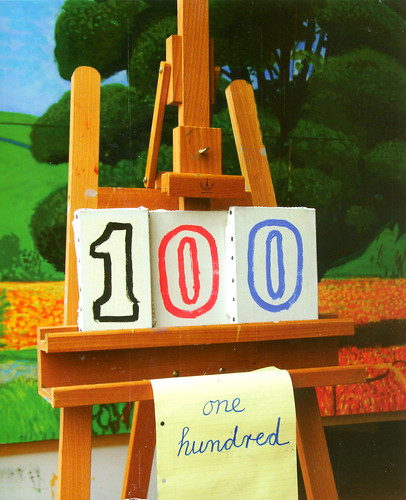
 “. . . This is a critical time not just for Granta but also for the future of the literary journal as an art form. It is no longer enough for a literary magazine to publish ‘good writing,’ or even ‘new writing.’ We’ve got the Internet now.”
So says Dan Crowe in his article “Publish and Be Damned,” which is part review of the 100th issue of Granta, a British “magazine of new writing,” and part call for a literary revolution.
“When Plimpton founded the Paris Review it was an act of rebellion; similarly for Bill Buford when he relaunched Granta in the 1970s. They wanted to shake things up a bit. With the new owner in place, it is time for another shake-up. . . . ”
If you want to start or revamp a literary magazine, here is some good advice I culled from Mr. Crowe:
– “[Granta or you or The Rumpus] must not only seek to publish good writing, but it must seek to become original again–original and broad-minded in the ways it communicates with its readers.”
– “But by far the best stuff I published was writing I commissioned from scratch.”
– “A big (and fun) part of the challenge [re: acquiring unpublished work from established authors] was seeing what I could get them to work for instead of money.”
– “The advantage small journals have over bigger institutions is that they run on enthusiasm, a limitless tank of zeal that tops up every time there is the slightest step forward.”
-Identify oneself. Where are you going to “shine”?; “What will be [your] trademark over the next decade?”
Fist pump.




3 responses
It’s not the magazines that need updating – it’s their guidelines. You know what I’m talking about “No pornography, no racial issues, no gender issues, -and I’m not making this up “Nothing in bad taste” – Seattle Review – What I call the William Dean Howells guidelines for fiction writing; guaranteed to insure vapid text with no conflict that only a ratapallax would care to read.
I’m not so sure about Harry’s point. I can’t think of any magazines that say “no gender issues, no racial issues.” Pornography is another story … if it’s simply porn, it doesn’t belong in a literary magazine; it belongs in a porn mag.
The problem I see is very different. I recently purchased 9 different literary magazines, some in multiple issues, including Granta. Speaking only in terms of the short stories I read (I didn’t sample nearly as much non-fiction) the real problem with literary magazines it seems to me, and the reason so many are struggling financially, is that they are BORING. Plain and simple. Boring. I’m a writer who enjoys exquisite writing–William Gass, Guy Davenport, Alice Munro, etc.–so I am not looking for Dickensian plots or action thrillers. But what I see being called “editorial vision” is actually narrow taste. In fact, take the names off of these stories and in very few cases will you be able to tell which author wrote what; so many generic beginnings, styles, domestic scenes, canned–utterly predictable–senses of humor, so much blandness. And that includes the Paris Review, which is a long way from the revolution it supposedly started. “Good” fiction, whatever that means, has to dazzle either by virtue of brilliant writing, a good narrative, or irresistible characters or some combination of all three. In all the magazines I bought, only one, The American Scholar, had published a story I found memorable. Oh, and one other critical point: after you’ve slogged through one of these stories without much narrative backbone, without particularly stellar writing, without characters that have much depth, you get an ending in which the payoff is so small–if there is a payoff at all–you can’t believe the piece was published.
Editors are always complaining they get thousands of manuscripts a month; with all those, you’d think they could pick some stories that could keep a reader from nodding off after a few pages. Some with a little impact, with some verve in the writing, with some vitality. So many of these authors look like they came out of the same writing workshop … the same one, it seems, the editors of the magazines have been teaching. If you want to know what inbreeding does, take a good look at the Amish. If you want to see what literary inbreeding looks like, take a look at just about any literary magazine being published today.
Vince, THANK YOU! I completely agree – I have read so many different literary magazines in the past few months, and they all seem to be the same … and all the stories in them are the same … and they are all, frankly, mediocre. At first I thought it was because that was all anyone was writing, but now I’m beginning to suspect it’s the editors’ fault and, as you said, literary inbreeding. I know you posted this two years ago, but it’s nice to see someone echo my own sentiments.
Click here to subscribe today and leave your comment, or log in if you’re already a paid subscriber.