
 When I was about ten years old, I hit my older brother in the mouth with a baseball bat. We were standing around in a field, hitting pebbles with the bat, and I got him on my backswing. There was a lot of blood.
Although the blow was technically a mistake, I’ve always felt that I was seeking revenge for his bullying. My brother remembers it differently. He was told not to step into the path of my swing, but ignored the warnings.
Memory is not a recording device. It’s the past as filtered through the emotional needs of the present. In this sense, memory can be thought of as a creative act, though, crucially, an unconscious one.
***
You will have heard, by now, of the curious case of Greg Mortenson, the author of Three Cups of Tea. As documented by the author Jon Krakauer, among others, Mortenson appears to have falsified vast swaths of his best-selling memoir, including a dramatic abduction by the Taliban.
Over the past decade, the fake memoir has become a genre unto itself. A few years ago, an Oregon writer named Margaret Seltzer wrote a fake memoir called Love and Consequences, about her years running drugs in South Central Los Angeles. Around the same time, Misha Defonseca wrote Misha: A Memoire of the Holocaust Years, in which she claimed to have lived with a pack of wolves, while wandering Europe in search of her parents. Defonseca was not even Jewish.
The list goes on.
***
 Every time one of these memoirs gets debunked, writers and critics debate what constitutes non-fiction. Often, there’s an argument put forward about something called “emotional truth,” which is supposed to provide moral cover for lying.
My definition of creative non-fiction is simple. It is a radically subjective account of events that objectively took place.
The moment you start making up events that you know did not take place, you’re doing another sort of work. It’s called fiction.
***
Fake memoirs are a symptom of the basic insecurity that plagues all writers: is my story worth telling?
It wasn’t enough for Mortenson that he tried and failed to climb a tall mountain, then met some villagers and decided to help build some schools for the local children. He had to gin up the truth.
I suspect he set about consciously refurbishing his story, and told himself he was doing so because a better story would bring in more donations for the kids. I’m willing grant that his motives for lying were, in part, noble.
***
Here’s what Margaret Seltzer told The New York Times, when she was confronted about her lies: “…I just felt that there was good that I could do and there was no other way that someone would listen to it.”
The italics are mine.
***
Is she making an excuse for lying? Yeah.
Is she also right? Probably.
Publishers have responded to declining readership by seeking books that include “author survivors,” inspirational figures the marketing people can dangle as interview bait. It’s not enough anymore to offer publishers a nuanced work of imagination. They’re looking for a pitch dramatic enough to resonate within the frantic metabolism of our news cycle.
***
Years ago, when I worked for a newspaper in El Paso, I wrote a story about the press in Juarez, Mexico. I spoke very little Spanish and had no business working on such a story in the first place.
The guy who translated for me worked for a leftist weekly. He told me that one of the biggest papers in Juarez was funded, in part, by drug money, an allegation I included in my story.
It was an inexcusable moral breach, and my paper was nearly sued.
We’re all subject to this impulse. We’re all constantly exaggerating, amending, confabulating – trying to make our given story more worthy of being heard. But we also know when we’re lying.
***
 I’m pretty sure Senator Scott Brown, of Massachusetts, knows he’s lying in his new memoir, Against All Odds.
Time and again, Brown portrays himself vanquishing the violent, sexual predators who terrorized him during his youth. Here he is doing battle with a knife-wielding thirteen-year-old:
“As he closed his eyes, I raised the rock high over my head, drove it down into his face and head, and took off … I heard him howl in pain but I never looked back.” When the kid shows up on his doorstep, Brown stares him down.
The future Senator was seven years old at the time of this alleged heroism.
***
There’s this funny thing that happens when we read a book, even one that bills itself as non-fiction. We suspend disbelief. We make this choice because we want from our stories a brand of heroism, of exalted possibility, that we don’t encounter in our actual lives.
What depresses me are the brands of heroism we choose to privilege. In all of these memoirs, the fake stuff is utterly, almost comically, cliché. It always involves lurid violence, which the protagonist valiantly withstands or transcends.
There’s a poverty of imagination in these works that reminds me of reality television, those contrived biospheres in which real people wind up assuming roles – the vixen, the cad, etc. – cribbed from a million yellowed scripts.
***
What about weakness? What about doubt and terror? Isn’t that where most of us spend our given hours? If we’re honest, I mean. What makes fake memoirs offensive isn’t that someone has lied to us, but that we consent to being lied to. We lie to ourselves.
***
Some view the Mortenson affair as another overblown literary scandal, one of those rituals by which the Fourth Estate both makes hay and cleanses its conscience.
I’ll buy that. But it’s part of something larger, too: a radical shift in our relationship to the truth.
Leaders have always lied to their people. The ones who tell the most extravagant lies tend to do the best. What’s changed is our access to the truth, and our corresponding capacity for denial. The case for war in Iraq was built on lies. We all knew this. We all went along.
Politicians think nothing of lying, because there is no real political consequence to lying. Oh sure, the late night comics might kick you around for a few minutes. But that’s about it. Nobody investigates you. Nobody even tries to impeach you, unless you’re a Democratic president and you lie about an extra-marital affair.
***
 In a sense, the internet has made us all memoirists. We spend more and more time in front of screens, constructing our identities. Rather than building small communities of friendship in the real world, we seek the adulation – or at least the attention – of a million strangers.
We tell the stories that make us seem heroic, and suppress the ones that reveal our cowardice and cruelty. Our rhetoric becomes more provocative, dismissive. We type things that common decency would forbid us from saying in person.
Our cultural habits of thought and feeling have begun to ape the tabloid news in which we marinade. Mankind has always needed myths. We invent beliefs to protect ourselves from unbearable truths. But I can’t think of an era in which clearly demonstrable lies of self-interest have been so richly rewarded.
***
I have no problem with David Sedaris goosing up his dialogue with a bit of drollery, as long as he’s making a good faith effort to reconstruct an exchange that actually took place. That’s his license as a humorist.
But writers who purport to be telling painful truths – like politicians speaking on the floor of the Senate – shouldn’t lie. And when they do, they should be held to account.
The problem isn’t that the truth is a slippery concept. The problem is that our cultural reverence for truth has eroded. It’s this erosion that has led us to ignore the scientific evidence of our own peril. It’s what allows an entire political party to subsist on innuendo and lies. And it’s what sends ambitious, insecure people such as Mortenson zooming into self-mythification.
He wanted to be heard. That meant turning away from the quieter, more terrifying province of truth.
***
When I was ten years old, I smashed my older brother in the mouth with a baseball bat. His memory says it was a mistake. My memory isn’t so sure. I was angry enough to want him dead. But I also worshipped him like a God. The truth isn’t one way or another. It’s not accidental or premeditated. It’s not evil or noble. The truth is I loved Dave but couldn’t make him love me back. That feeling never goes away. The truth is the blood.
***
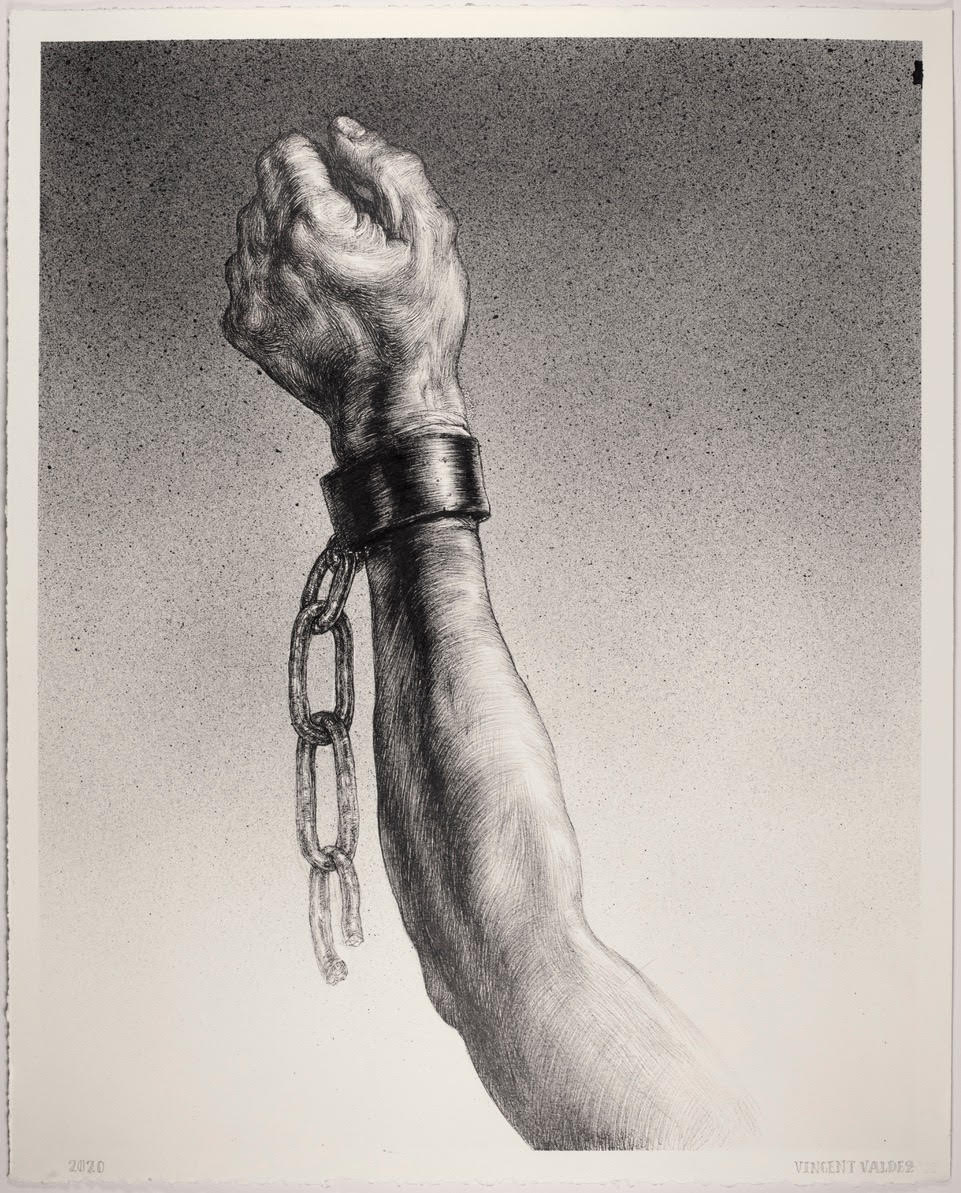
“You Lie” rat by Banksy.



45 responses
Amen. Interesting that at a time in our history when so many details can be (nearly) irrefutably documented, there is less adherence to the true hard facts of events. Incidentally, I was rejected as the ghostwriter for Herman Rosenblat’s “Angel at the Fence” because I hadn’t published fiction before; sure enough, that memoir turned out to be another fake.
Thanks for this, Steve. It echoes many of my own thoughts on the controversy and how I try to draw the line in my own literary nonfiction and memoir: http://blog.elizabethenslin.com/2011/04/truth-and-lies/ But I like how you push the issue further, towards how “our cultural reverence for truth has eroded.”
This morning I was thinking about the uptick in memoirs being published and how just by pure mathematics/probability alone X percentage will be untrue–or partial truths. I won’t comment on Mortenson specifically but when charity isn’t involved I could care less whether something is true or not–a good read is a good read. However, I could see how others would like some accuracy in the memoirs they read.
love it.
i don’t understand (or haven’t heard) the argument that it’s okay to straight-up make things up in a memoir to get across an emotional truth. it’s one thing if you can’t remember for sure the color of…wallpaper (you think it was yellow and write that it was yellow, though it might have been blue). it’s another thing to say you went to prison for three months when you went for one night.
The problem is that our cultural reverence for truth has eroded. It’s this erosion that has led us to ignore the scientific evidence of our own peril. It’s what allows an entire political party to subsist on innuendo and lies.
This is the only part of the piece that I have a problem with, and it’s because I don’t think we’ve ever really had a cultural relevance for the truth, not in the culture as a whole anyway. I think that if there’s any difference today, it’s that because of tools like the web, people now have to work a little harder to maintain their illusions, but even then, it’s not that hard, because people pick and choose their sources of information, and can cocoon themselves as easily today as they did a hundred years ago.
For example, the idea that skin color determines one’s intelligence is no less silly than the idea that humans aren’t affecting the climate by pumping pollutants into it, but the former was being argued as scientific fact during my lifetime, even when there was hard evidence refuting it. If our culture ever had a reverence for truth, it seems to me that the presenting of scientific evidence would mean that our culture would be willing to switch its views on matters pretty quickly, and yet it doesn’t–it never has. Change has always been painful and slow.
I have no business writing anything called “memoir,” so I stick to the lives of others. And I consider my duty to be to an honest truth of my subjects, even if I can’t always achieve an objective one.
My own life has been full of things like insecurity, fear, and self-aggrandized navel-gazing rather than adventure, heroism, selfless service. Even though my suspicions tell me that that’s how a lot of people live their lives, I just can’t see anyone wanting to be reminded of it for pages and pages (unless they are Facebook or Tumblr pages).
Brian… Wasn’t there a study that pessimists had a more objectively *realistic* view of reality than optimists? Could we argue that these authors (and many before them throughout all of history) are lying as a form of optimism–making this lying necessary somehow to us, culturally?
My take is you can mess with the letter but not the spirit of memory/story. Combining four events into one, no problem, taking multiple Afghani villages and making them one, or doing the same with characters, or even dramatizing dialogue…no problem. Portraying yourself as heroic when that’s not the case…problem.
My wife loved Three Cups (I haven’t read it yet), and the message of the book has merit. It’s full of “feel good” and “hope.” I’m not sure how gullible/culpable the public is, though perhaps there is fault in naively “wanting to believe,” still, Mortenson made a choice, and he earned this stain.
Yes, this is it, exactly, Steve. You expressed my thoughts on the matter perfectly. Thanks.
Virtually all memoirs would be more accurately classified as novels. They are classified as memoirs because it sells better.
I also love in addiction “memoirs” how addicts describe vivid events. I am a recovering addict and I cannot remember shit…
Amen to everything you said, Steve.
I happen to be reading David Shields’ “Reality Hunger” right now, and although the book can be provocative in a good way, I’ve been exasperated by the “there’s no difference at all between fact & fiction” idea that keeps getting repeated in it. And then this “Three Cups of Deceit” thing breaks. Kind of an interesting mental juxtaposition.
This is great. I love the facebook illustration.
That Brown line is pure pornography.
The beauty is that with all this careful evasion of something worthy of the memoir form, when one hits the real stuff, it feels special. If you’re brave enough to write the truth, it’s become easier and easier to set your work apart.
This is a great argument, but I think quick examination of history would reveal that this is not a modern problem. In fact, I think in many ways, the recent witch hunts against writers, digging into their truths to see the lies within, is a particularly modern kind of game. For a long time, until recently, we accepted many “truths”: Columbus discovered America. The Civil War was fought to free the slaves, and etc. Go read a biography penned in the 1930s and you’ll find liberal use of dialogue, clearly invented, that would never be tolerated now. Accepting hero stories as offered has a long and noble tradition. The fascination with ferreting out some kind of objective truth is much more recent.
How come nobody has mentioned James Frey? Curious what folks here think of that whole thing…
Aaron,
If you do a search through the archives, you’ll see that Frey has been discussed on this site a bunch in the past. It probably didn’t come up this time because the regulars figured we’d already done that enough.
There is nothing slippery about it except that INTENT is central to distinguishing a lie from a mistake, and we can’t really know what others’ intents are until they show their hands in some way, or until their account of things differs from a documented fact so drastically that we can no longer reasonably believe that it’s just “their version” of things.
The literary liar or bullshitter is trying to get away with something: they are not willing to accept the limitations of their own authority and experience, and so they try to dummy up some false authority and experience. It’s just plain more WORK to tell the story of someone else’s life on the run from the Nazis or dealing drugs in LA or getting kidnapped by the Taliban — it’s easier to pretend you’ve done it yourself. Then everyone will be so in awe of (or afraid of) you, they won’t question your bullshit.
And here’s the sad thing: every mildly autobiographical work of fiction published gets taken for fact by 90% of the people who read it. If you point out to them that it’s fiction, they smile and look at you like you’re a moron — “yes, but X and Y and Z are definitely taken from the author’s life, so that word ‘fiction’ is just a cover!”
Yet these authors aren’t willing to call their fictions “fiction.” Why? Because when we read fiction, knowing it is false, we hold it to a higher standard of communicating larger “truths.” Non-fiction doesn’t bear that burden. It only bears the burden of actually being true.
It’s easier to fake your experiences than it is to fake the wisdom you would have gained from those experiences.
Brian makes a great point above. Something to think about. Amy and Art, as well. I love how the comments in a Rumpus thread make me reassess what I’ve written. On other sites, they make me want to dig my heels in…
My brother will tell you I once savagely stabbed him in the hand with a pencil. I would say he was about to slap me and I blocked the blow…I just happened to be holding a pencil, which punctured the skin of his palm. The event occurred. Our intentions are subject to interpretation, memory.
Isn’t it strange, though, that the huge book contracts tend to go to the heroic versions of life? You have to look at independent publishers to find the stories of people being self-critical, telling their less-than-glorious moments, etc. So when people say “memoir” in bashing memoir as a genre, I think they’re bashing the front table at Barnes & Noble without knowing what else is out there.
Great essay.
The thing is, plenty of fiction is autobiographical, so there needs to be a reason to call a work a memoir. One reason is that you are borrowing your authority from the fact that the work is “true.” People place a high value on truth and will overlook poor writing if something is true. James Frey failing to sell his book as a novel but making boatloads as a memoir is a prime example. This is not, of course, to say there aren’t many brilliantly written memoirs. Many are. But if you borrow value from the fact your work is true, you have to expect to lose value when people learn it is false.
There are a lot of different issues (intent, memory, fiction/nonfiction, etc.) at play in this kind of discussion, but that doesn’t mean the issues aren’t real and I do find it disingenuous when people say “there’s no real distinction between fact and fiction, truth and lies, so anything goes!” When people argue this way I always get the feeling what they really mean is “let’s us writers and critics agree we can fictionalize memoirs all we want, but hopefully the reading public at large won’t realize this because it would hurt our book sales.”
I still think there’s something to Steve’s point about “the cultural reverence for truth eroding.” Of course, people have lied, and they lied to prop up horrors like slavery, manifest destiny, foreign interventions, the holocaust. And people believed the lies and acted on them because they believed in their truth. I do think there’s something different in these cynical, postmodern times where people flip off serious discussion of objective reality by saying there’s no distinction between fact and fiction, truth or lies; everything’s relative. Can’t quite get my head around what that difference is, but it’s worth pondering.
Well, as they say, customers vote with their feet (fingertips, etc). I very recently read Three Cups, feel I’ve been duped and disrespected as a reader, and likely will NEVER pick up another “memoir”, or whatever sheep’s clothing it chooses to hide itself in. I much prefer novels, esp. contemporary literature, as a start point, and will continue to enjoy them. Because, you see, in novels, the scope of judgement lies in the author’s creative skill and ability to connect to the reader. The only truth is whether you are moved or inspired or entertained. Such simplicity.
I agree. and certainly part of that lies in the creation of alternate media realities with the spread of the internet and media in general. It is very easy now for millions of people to get all of their news or information right wing echo chambers (or progressive echo chambers for that matter) and there is definitely something to the idea of “truthiness” in the modern day.
Yes, politicians have always lied to us. But it feels like in the past they had to try and get away with the lie. Now they can lie and if they get caught pretend the concept of fact and fiction can disappear when you want it to (“it was not intended as a factual statement”), claim that their lie is simply another truth (“teach the controversy!”), or simply shrug because they know that their supporters will accept the lie as truth (like how many Republicans believe we found WMDs in Iraq or that Obama wasn’t born in the US).
Oh, mike s, I feel so sad when someone who feels burned by a memoir they read decides to write off the whole genre as a result. Why does no one decide to never pick up another novel after reading a particularly crappy one? I suppose a lot has to do with the reader’s expectations for nonfiction, as discussed by other commenters.
I guess that’s the burden we as nonfiction writers carry, the burden of many minorities: we can reasonably expect that if one of does something wrong, we we ALL be punished (or disliked, or judged) for it. Very sad indeed.
Maggie,
Although I haven’t written off memoirs like Mike, I’m not sure your analogy with novels works. It isn’t writing off the genre because the books are bad, but because they aren’t actually what they are marketed as. If you read “novel” after “novel” that turned out to just be cooking books sold as novels, that might start to bother someone too.
And not only that, “Truth” is not an either/or, black and white. Rather, it’s shades of gray, though we want a simplified, simple, “true” answer.
That’s why I love fiction. Fiction, in my mind, is closer to the complex “Truth,” if there is such a thing.
(Or perhaps I’m just not brave enough for memoir.)
Fabulous, Steve, as always!
*hugs*
I tend to agree with Brian. The social contract is a literary document based on reality but built on a framework of mutually assumed fictions. There is no real change about a reverence for truth. The political landscape is more open because of 24 hour news but he-said, she-said steno journalism makes lying that much easier while grinding it into our face 24/7.
I think the best model for dealing with reality and the desire or need to embellish it for literary effect is The Things They Carried, which bills itself as “A Fiction” while the author routinely steps in to explain that all of this happened, more or less but now precisely as described. I think there is room for such fictions and that they need a name that is neither novel (which TTTC doesn’t claim) nor memoir.
Great discussion.
The Things They Carried claims to be fiction — which it is. The fact that it’s so heartily based upon the author’s life adds (from the point of view of the reader) much (the reader says, “cool!”) and detracts nothing. People who want to fictionalize their own lives already have a genre: fiction.
The whole truth in memoirs thing is overrated. How many fantastic memoirs throughout history are probably filled with lies? Travels with Charley has been debunked as mostly fiction. You think Twain was telling word for word truth in all his accounts and travelogues? Is every word gospel in A Moveable Feast? Do we believe all the outrageous exploits in Cassanova’s Histoire de Ma Vie? I could go on and on. These are all awesome books and I don’t really care if they are full of whoppers.
The whole slippery slope, one-day-we-are-reading-fake memoirs-the-next-we-are-believing-Republican-lies argument seems facile. I can tell the difference, thanks.
You want to draw a bright line between memoir and fiction? Why? So you can be absolutely certain of everything you read in a memoir? Do you want a legal disclaimer stamped onto the title page of all memoirs (“This memoir may or may not be fictional”)? Is that more “honest?”
Simple question for you Aaron. Why do you want to call it memoir when it is actually fiction? Is there any real artistic or interesting reason? Or just marketing?
I don’t know, why call it fiction? Damn, it’s like you guys are a bunch of lawyers or something. If I call it memoir and you like it for that reason but I am lying is that bad? If I call it fiction and you don’t like it but if it was a memoir it might have been interesting is that good? It’s just writing which means it is just art.
Hate to break it to you but writers, as a group, are a bunch of misunderstood, unruly, untrustworthy, truth-tellers, fabulists, con artists, saints, sinners, snake oil peddlers, prophets, and, yes, self-marketing salespeople. That’s what we love about them. They aren’t doctors or lawyers or cops or criminals or journalists or scientists. They are a crazy bunch of liars and exaggerators and it’s completely awesome and they are the only ones who tell the truth whether they intend so or not.
Probably the most interesting memoirs — at least, to me — are the ones that place the fallacy of the human memory and the often distorted way we recollect personal events at the forefront. I think that in memoir, one of the most compelling aspects is the vulnerability of the narrator/writer. True vulnerability (at least, for me as a reader) is truly approached when the writer begins to call him/herself into question, which leads to the juiciest part of the whole thing: How am I remembering this thing? Why am I remembering it this way? What would the way I’m remembering this memory say about me as a person? About my wants/desires?
That, for me, is the most rewarding part of reading well-told memoirs — the ones attempting a fearless, relentless interrogation of the self.
i love this it’s so fake!
“Isn’t it strange, though, that the huge book contracts tend to go to the heroic versions of life? You have to look at independent publishers to find the stories of people being self-critical, telling their less-than-glorious moments, etc. So when people say “memoir†in bashing memoir as a genre, I think they’re bashing the front table at Barnes & Noble without knowing what else is out there.”
^This!!! I am an editor, and I have worked on quite a few memoirs in my career. Most of them belonged to people who either self-published or published through vanity publishers or smaller houses. It wasn’t that they didn’t have good life stories or that they weren’t interesting people – it was a numbers game where they would never be able to sell enough books due to their niche or message not being “best-seller-ish enough.” It’s a shame too.
Steve, great points, beautifully executed, about the ethics of life writing.
Like commenter Ashley Brethard was saying, I think it’s necessary for a memoir writer to show introspection in the text, to address issues of: why am I writing this, who will believe me, etc. But the danger in that is that it tends to make the work distinguishable from fiction, trust that isn’t necessarily warranted.
Take your opening anecdote and the different perceptions of the event. I immediately trusted you because you showed an awareness of what influenced your perception of what happened and how it differed from another’s perception.
This great post inspired my own blog post about memory: https://therumpus.net/2011/04/the-heroic-lie-a-brief-inquiry-into-the-fake-memoir/
– Ashley
I came across this line in my Quotes file while I was adding Almond’s reference to memory as a creative act. Terrific essay by the way.
Every age is fed on illusions, lest men should renounce life early and the human race come to an end. Joseph Conrad
Steve, great points, beautifully executed, about the ethics of life writing.
Like commenter Ashley Brethard was saying, I think it’s necessary for a memoir writer to show introspection in the text, to address issues of: why am I writing this, who will believe me, etc. But the danger in that is that it tends to make the work distinguishable from fiction, trust that isn’t necessarily warranted.
Take your opening anecdote and the different perceptions of the event. I immediately trusted you because you showed an awareness of what influenced your perception of what happened and how it differed from another’s perception.
This great post inspired my own blog post about memory: Steve, great points, beautifully executed, about the ethics of life writing.
Like commenter Ashley Brethard was saying, I think it’s necessary for a memoir writer to show introspection in the text, to address issues of: why am I writing this, who will believe me, etc. But the danger in that is that it tends to make the work distinguishable from fiction, trust that isn’t necessarily warranted.
Take your opening anecdote and the different perceptions of the event. I immediately trusted you because you showed an awareness of what influenced your perception of what happened and how it differed from another’s perception.
This great post inspired my own blog post about memory: http://loveablehomebody.blogspot.com/2011/04/complicated-memory.html
– Ashley
This gent Aaron, above, argues that memoirs are traditionally fabulist.
He says, “How many fantastic memoirs throughout history are probably filled with lies?” He cites Travels with Charley, Twain, and A Moveable Feast.
All those came from fiction writers. One reason we expect more of memoir now is that memoir resembles modern literary journalism more than it resembles modern fiction.
Newspaper journalism is hurting, so journalists have regrouped in literature. We turn to books and New Yorker articles for journalism now. (If The Blind Side can be factual, why not Three Cups of Tea, which advocates action based on the events it depicts?) With newspapers failing, memoirs resemble our main sources of fact. So we expect them to be factual.
Or maybe it is that introspection bit. If it were introspective, it would resemble literature, and earn leeway. As a statement of fact demanding action (vote for me!) a memoir asks us to judge it on the standards of journalism.
Also, you could suspend disbelief and enjoy a Moveable Feast because the technology of the day made it more or less impossible to debunk. Modern technology does make it possible to debunk modern memoirs, so memoirs must increase their accuracy simply to operate in their new context.
Plus I totally believe a Moveable Feast is true.
I make it a point not to read non-fiction, because then I do not have to worry about the truth.
As I think back on it I did read one non-fiction many years ago, it was Benvenuto Cellini’s Autobiography, now I do not know if Cellini did some embellishing, but his Autobiography read like fiction as I recall?
As usual I enjoy Steve Almonds work.
Hi Steve,
You answered a lot of questions I have for me, thanks so much. I liked your post so much that I re-posted it on my own blog, I hope that was alright. Let me know if you’re not OK with it and I will remove it.
Johanna van Zanten
Hi Steve,
Loved the essay, I’m writing a paper about public perception of false memoirs for my MFA program. Your thoughts are quite helpful as I try to wrap my head around the issue of faking experiences and why it seems to be pretty much o.k. until it’s outed as false. If you have any other opinions in the matter or more writing in regards to the subject, please share if you have a moment or two.
Regardless, this was a helpful read. Thanks! Shannon
Click here to subscribe today and leave your comment, or log in if you’re already a paid subscriber.