
When I wrote a poem inspired by misplacing a fountain pen, it sounded so much like a Kay Ryan poem, I called it “Material Imitation,” and dedicated it to her.
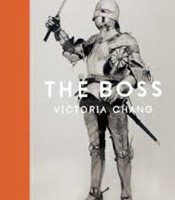
I couldn’t tell you all my other influences, and I wouldn’t bore you with a list if I could. But I was struck hard by this phenomenon when I read an unsigned obit in The Economist after Seamus Heaney died, and when I made my first, penned response to The Boss, by Victoria Chang. The piece about Heaney, though in prose (and Heaney himself wrote superb prose) had much of the meaty yet stately cadences and sure-footedness he was known for. I suspect the writer had some exceptional opportunities to absorb the same stimuli Heaney claimed,
It would be absurdly premature to suggest that Victoria Chang ‘s future can compare to Heaney’ s, even as her discipline, dedication and strong, unflinching music show a steady trajectory. I begin this way because my immediate, inked reaction after closing her book for the first time, sounded too much like her poetry, and that was fair neither to her nor to anyone who reads this piece. Part of this reason could be that I have been married to a Chinese-American for twenty five years, and though English is his native tongue, I have been exposed to large amounts of American vernacular with a Cantonese inflection. Notice the words “suspect” and “part” in my second and third paragraphs, as I acknowledge the oddly satisfying truth that completely defining influence is either a mystery or a task better left to neurologists and linguists.
Sometime I hear W. S. Merwin and Michelle Tea and others when I read Chang to myself or aloud, but her complete voice belongs to her alone. She often displays a discerning ear, as in “My Father Says”:
My father says the wrong things I say the wrong things
my father thinks he is 42 not 69 my father
was born in 1942 my father thinks his address
is 1942 my father sits in a hospitalhe thinks the year is 1942 that I am 1942 years old that his
knee is 1942 he thinks his name is 1942
he says he is in the hospital because of weight or maybe
he means weight or lean maybe he meanshe leaned on the toilet he was fixing and fell down
he doesn’t know where his nose is but he
knows 1942 when I was 19 I wanted to be a doctor
in a few years I will be 42 and I willbe afraid of doctors I can no longer think of the right
words to say my words come out
of my mouth twisted turned to spirals like a dancer
wrapping her leg around a poleon some days the boss takes our 1942 and turns it
into 2491 on other days she turns it into
1429 and on the worst days she smiles at us
and her smile looks like a 9 turnedon its side with a cat’s tongue sticking out when asked
to close his eyes my father points
to the white stack of papers when asked if his name
is Adam he points to the paper as ifto say ask the papers don’t ask me he no longer knows
that a Chinese man from Taiwan can’t
possibly be named Adam or Bill or Bob or John
or Gus maybe now he thinksa Chinese man from Taiwan can be a CEO can be
a boss in America maybe now
he thinks his name is Adam maybe that
is why he named me Victoria
You can’t abandon punctuation without conquering the grammar of speech, knowing when each word needs or doesn’t need help. Victoria Chang is not only the boss, she provides a new universe .This is why her Edward Hopper poems sing with undercurrents of his day and ours, as in “Edward Hopper’s Automat”:
The woman in the automat must work must
have a boss must walk
to work two legs red with heat two legs
pressed into each other as if onedepended on the other the woman in the automat
takes one glove off to hold
the cup to shake the hand of a boss one hand
free she looks down at the circleon the table looks down at the round reflection
of circular lights her boss circulates
memos her boss is the circle the circumference
circles her each day like a minnow
There is more in this poem and more on Hopper before and after these pages, proof that when you’re this good, what has been over-processed by others lives again, just as the helpless, confused father comes alive again in his daughter’s hands.
There is a compassionate, creative wisdom that is never overly labored , the voice of someone whose steadfast caring binds without choking, which is another reason her grammar is so well suited to the souls she reveals in “Today My Daughter”:
Today my daughter wants to be a waitress when she
grows up she doesn’t know that a waitress is
not a boss that a waitress takes orders from everyone
that a waitress must run to a bell to thephone to the customer to the supervisor who is super
bossy and wears a greasy visor
yesterday my daughter wanted to be a pet doctor
the Barbie book has fuzzy pets furry petscute pets with small noses Barbie doesn’t show her
missing finger from the cute pet that bit it off
the Barbie is not the boss the dog is the boss Ken is
the boss of the dog who likes the dog in apink outfit who like Barbie in little skirts with little hips
if a perfect woman like Barbie is not the boss then
who can ever be the boss even the man in HR the man
who can fire everyone cannot be the bossbecause he has a boss who hired him who can fire
him and even the man who hired the HR man
has a boss who can fire him there are fires all over
Japan right now the fire and water both wantto be the boss all the bosses in Japan lost their jobs
lost their limbs bob in water no longer care
about Bob the boss in America no longer
care about the cost.
THAT is one staggering tour de force. Personal and political. Local and urgently international. Victoria Chang faces calamity without losing a grain of necessary kindness, and while making a seamless garment of technique and sensation. May the sounds and shapes of her perceptions lead us toward where we need to go, even if we have to stop ourselves from feeble imitation along the way.