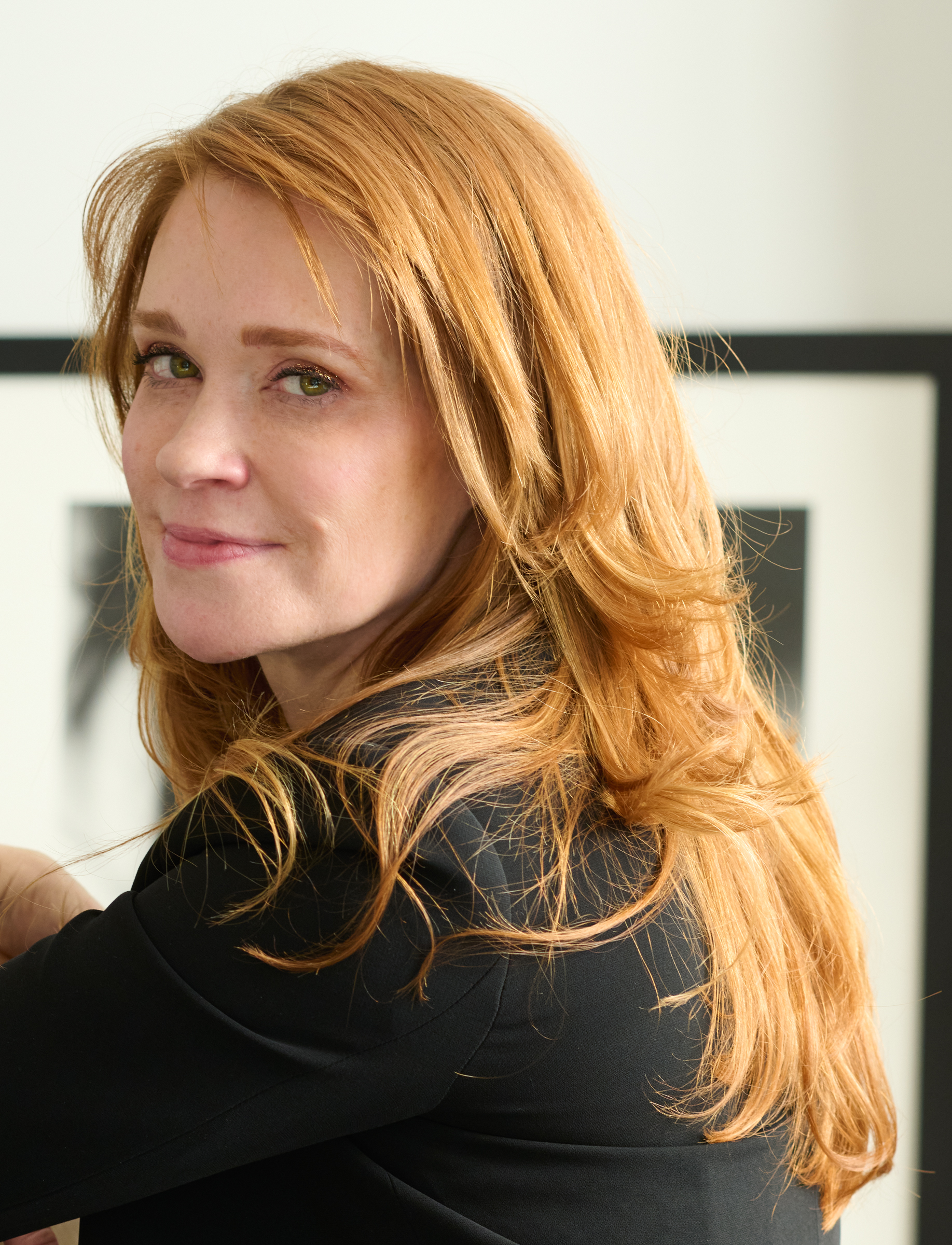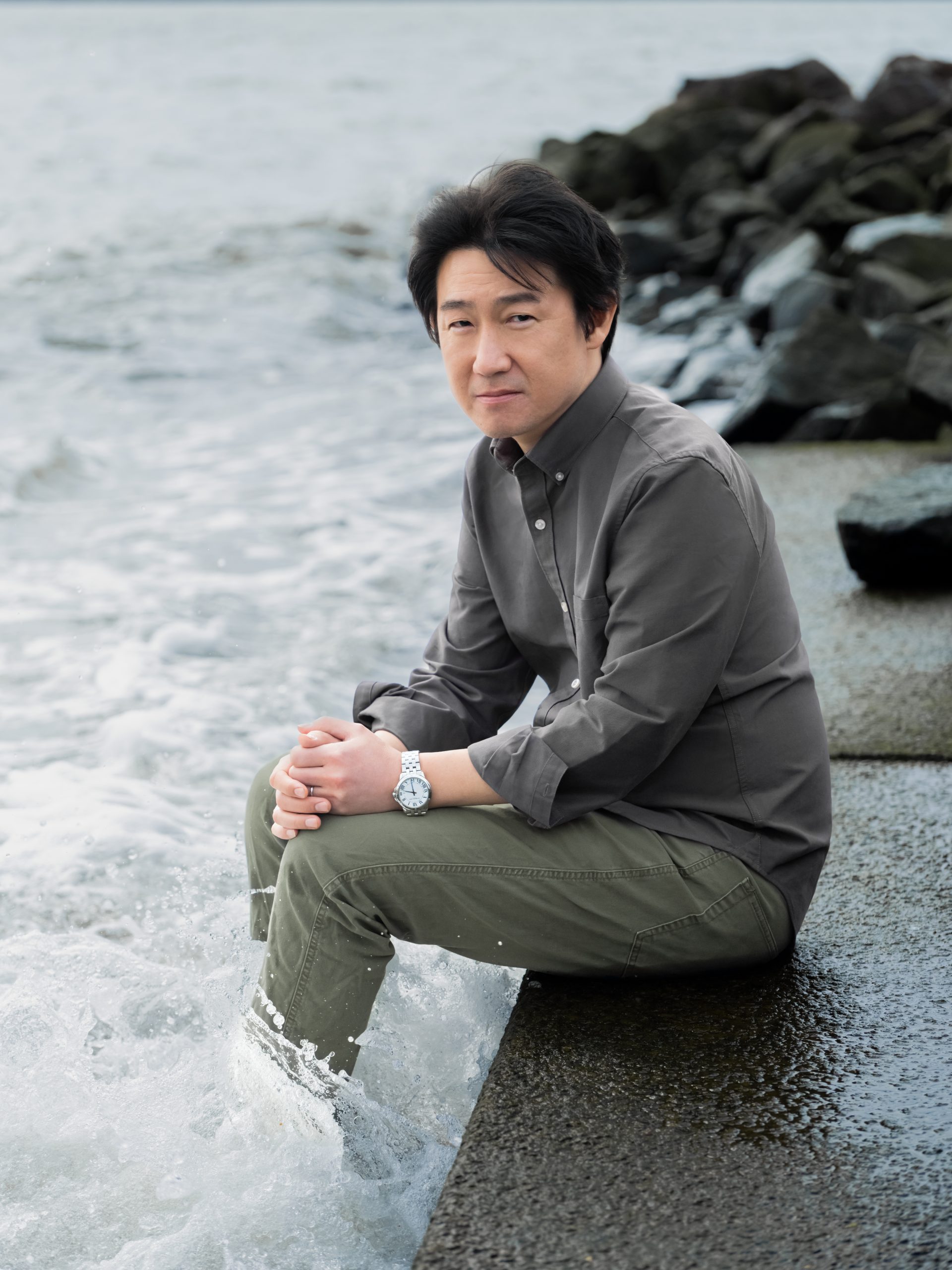
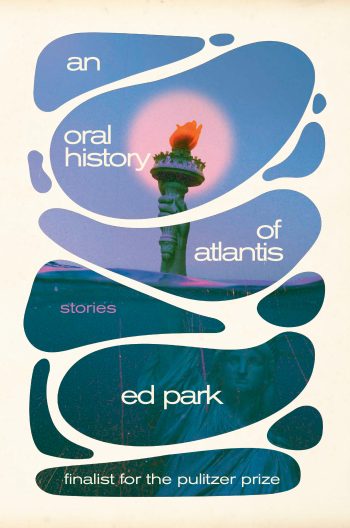
Told in a dry yet often startlingly exuberant register, the sixteen stories (some of which first appeared in The New Yorker and Harper’s) in Ed Park’s debut short story collection An Oral History Of Atlantis constitute a brilliant and much-anticipated addition to a body of work that began with the hilarious and timely novel Personal Days (a finalist for the PEN/Hemingway Award, Center for Fiction First Novel Award, Asian American Literary Award, and one of Time Magazine’s top ten works of fiction for 2008).
In that book, he captured the strangeness and alienation of corporatization and modern office life – along with the deep familiarity of personal rivalries, office romance, and pervasive dread experienced by employees subject to the whims of ‘powers that be.’ Using emails, diary entries, letter monologues and direct speech, Park makes us laugh in Personal Days even as he has us on the edge of our seats in nauseous sympathy.
Park then published his second novel, Same Bed Different Dreams in 2023, with the intervening fourteen years characterized by his major accomplishments in publishing (as a Little A and Penguin Press executive editor) and in journalism (ranging from The Village Voice, rumored to be the inspiration for the unnerving office setting of Personal Days, to his co-founding of The Believer magazine with Heidi Julavits and Vendela Vida in 2003, a magazine of essays and criticism that has been a National Magazine Award-finalist over a dozen times).
His 2023 novel won the LA Times Book Prize (2024) and was a finalist for the Pulitzer Prize, for its kaleidoscopic, wildly imaginative rendering of the revolutionary cause of Korean re-unification. Engaging moral and personal dilemmas posed by technology (as Personal Days, and as An Oral History Of Atlantis, also both engage) – Same Bed Different Dreams also vividly dramatizes espionage, revolution in exile, revisionist history, and shocking nuances of modern Korean identity. It is this larger, ‘world-historical’, often rollicking panorama, in his second, widely-lauded book, that is most akin to An Oral History Of Atlantis – though there are also the moments of claustrophobia, foreboding and deep sarcasm that so enlivened Personal Days,.
I read An Oral History Of Atlantis as a fan of The Believer, of short stories generally, and of the kind of humor I have found in Ed’s writing –humor that shares DNA with Thomas Pynchon’s in The Crying Of Lot 49, in the dead-on accuracy of its absurdities, its charm and weird innocence, and in the tone of desperation underneath the clever, often surprising jokes. The collection is a delight and Ed was kind enough to answer my questions about his new work.
***
The Rumpus: The first story, “A Note to My Translator” is told in a voice both hilarious and a little pathetic. It’s laugh out loud funny (I won’t spoil it here) but also somehow evokes the plight of being outside of a language, being vulnerable to being translated and re-interpreted in ways a writer often can’t control. Being outraged, yet bound to continue engaging with the perpetrator of the outrage(s). Can you tell us about how this story evolved, and more generally, how you approach writing humor in general.
Ed Park: Believe it or not, this story—the earliest in the book—stands more or less as I wrote it in 1997. I had seen a full-page newspaper ad for a new anthology called Virgin Fiction, seeking work by unpublished fiction writers. I imagined an overweening foreign author whose novel is being butchered by a translator. The concept and voice arrived all at once, and the story materialized in short order.
The exacting author, Hans de Krap (reading the surname backward is an amusing exercise) has something of the huffiness Nabokov displayed in the forewords to his translated books. VN’s playfulness left a mark on me—Pale Fire in particular I find genuinely hilarious, and thinking about “Note” now, it reads like a minor variation on that novel’s schema, with the original creator getting in the last word (for all the good that does him!). Without overanalyzing it, the humor might have to do with a snob being powerless against another’s ineptitude.
As for my approach to writing comic fiction in general, the simple answer is that I try to make myself laugh. Often it’s a pun (“Remembrance of Thongs Past” in Same Bed Different Dreams) or dialogue that takes off in a humorous direction. Sometimes the thing just sits there without sprouting tendrils or indicating a path forward, which is fine. (Occasionally they’ll get grafted onto a future project.)
The main thing is that the story or scene has to keep on being funny, the fifth or fiftieth (in the case of SBDD!) time that I look at it. I think of comic novels that never fail to make me smile, the ones I keep returning to, even for just a little prose pick-me-up. Charles Portis, Anthony Powell, Wodehouse…Nicholson Baker’s The Mezzanine, Mark Leyner’s Et Tu, Babe…It’s very therapeutic.
Rumpus: One of the achievements of the second story, “Bring on the Dancing Horses”, is how the narrator somehow conveys tenderness through the most mundane details and descriptions — an elderly parent’s reliance on E-Bay, another’s teaching of a subject he himself is deeply suspicious about. It also manages to poke fun at the publishing industry; while touching on a tender sweet spot for Gen Xers (yes I caught the reference!) since Echo and the Bunnymen a) was our jam (those black T-shirts the really cool kids wore!) and b) was featured prominently in the John Hughes movie Pretty in Pink. Specifically, this song. This might be a story where you can tell us about your use of fragment to tell a cohesive tale. Many stories use multiple tiny chapters (formalized fragments) — yet this story has a compelling, convincingly human flow and the fragments don’t seem as rigidly separate. You make us care about the narrator, Tabby, the parents, even FedEx the aspiring writer. How?
Park: Around 2010, as a way to trick myself into finishing a story, I would break it down into numbered sections. The first few sections could start anywhere, discuss anything, as long as it kept my interest. Every sentence had to be good, but it wasn’t intimidating. Rather than having to keep an entire story in mind, I could focus on making each short section as good as it could be. The connections would develop naturally, as the characters and situations deepened. Then I’d erase the numbers (or sometimes not)! If I made it to ten sections, I’d have a story.
I’ve written a number of pieces in this fashion—I call them “ten-fingered stories.” I don’t overthink it—I have faith in the method. A few other titles in this collection (“Thought and Memory,” “Two Laptops”) were composed in this manner. I also like to “break down” sections of my novels when I write them—the “Dream” segments in Same Bed Different Dreams also have short, numbered sections.
I’ll add that I wrote “BOTDH” for a reading in early 2010, and knowing that the audience would be encountering something for the first time, without any text before them—just my words in the air—made me fixate on capturing their attention. I was trying to get a laugh or an “ah” of recognition in every paragraph. Fragments can be your friend here, too. You give up long, complex scenes for instant comprehension.
Rumpus: “The Wife on Ambien” is a wonderful (again, fragment-using) depiction of what can be elusive in marriage, how a spouse can feel like a stranger — something I didn’t understand about the story until the very end. The sense of disorientation throughout also reminded me of a Stephen King story, “Harvey’s Dream” for the underlying, menacing sense of unpredictability and the possibility of things veering terribly and irreversibly out of control. Can you talk about how the idea for your story evolved? What is also so impressive about this story: the condensation. A very brief piece, but it makes us feel for the wife whose inadequacies, whose incapacity (while not on Ambien or any drug) the narrator is so exquisitely aware of and describes without pity. It’s almost like a Day-Glo take on the William Trevor story “A Day” but from the husband’s, and not the wife’s, perspective.
Park: I’ve never taken Ambien, but I knew that some people reportedly went into a fugue state under its influence, sleepwalking, sleepcooking, and so forth. As with “A Note to My Translator,” the title does half the work here. It nails the concept, so I can just have fun with it—perhaps a little like a Letterman top 10 list, each section ideally better (funnier, weirder, sadder) than the last. The ending took me by surprise.
Rumpus: “Machine City” manages to be a vivid microcosm of Yale in the early ’90s (a place dear and familiar to us both! those bleak but addictive weenie bins at CCL. I adored them). Yet there’s a very effective core to this story of unmet aspirations, and obscurity vs. success in opposition, and how when we’re young we really have no idea (and limited control) over which direction we’ll travel, which side we’ll land on. One of the most interesting aspects of this story’s structure is the sentence, “But back to meeting Bethany” and then (just as interesting) the sentence, “All of this is ancient history.” How did you think about backstory vs. ‘front story’ in this story about Bethany Blanket but also so much about who the narrator and his ‘cohort’ were at Yale during this time frame? And how did identity politics factor into the story (specifically, the various pressures on campus to identify with one of the many ‘ethnic clubs’ — for us, there was “SASA”, a hotbed of scandals, pick-ups and quasi-arranged marriages). Is Bethany both more able to, and less able to,get under the narrator’s skin because she’s outside that ethnic clique?
Park: In contrast to some of the briefer stories here, “Machine City” was one where time played a role, and the front/backstory play is a result of that. I’d had the title in my back pocket for a while, “Machine City” being the perfect nickname of a grungy subterranean lounge on campus. But I didn’t have a Yale-related story in mind until just a few years ago. I saw myself in the mirror of a dim elevator, and it looked like I had on makeup to look like an elderly person. I fantasized that I was in a movie.
Then I remembered: I was in a movie! A low-budget black-and-white student film at Yale. I hadn’t thought about it in many years. I was not at all an actor, in those undergrad days, but something possessed me to audition. The film was short, with a good Twilight Zone–like twist—nothing at all like the improvised nature of the production in “Machine City.” The director and my co-lead were both Asian-American women, though the theme of the movie didn’t directly acknowledge this.
Though Bethany Blanket has some vague Asian ancestry, she appears undefined by race, in contrast to the narrator and Yuna. I hadn’t thought about her as getting under his skin because she doesn’t scan as Asian, but you might be onto something. Overall in the collection, race isn’t explicitly mentioned (with a few exceptions), but in “Machine City,” it’s present from the start, moving from backstory to front by the end. There’s a messiness in the telling, as you point out—a series of framings and backtrackings—as the narrator stirs up emotions from his past, and perhaps race lies at the center of his confusion.
Rumpus: “An Accurate Account”, with its twists and turns, of course calls into question the narrator’s reliability — something you did in Personal Days using the epistolary mode as well. Can you talk about your use of letters, notes, memorabilia to create a sense of unreliability (inaccuracy, rather than accuracy) and why this might be a recurring theme in your work? There’s a very different use of epistolary writing in “The Gift”, which is one of the few stories written in letter form I think I’ve ever read that uses the collective first person.
Park: I love the letter as a literary format. The last section of Personal Days is one long email, and there are a number of letters inserted into Same Bed Different Dreams.
The epistolary form naturally brings the characters and action into focus. Who is the writer? Who is the recipient? What is compelling him or her to write?
The notion of unreliability is interesting—to me, letters feel more solid, because they are written artifacts that exist in the real world. (That is, people every day are writing or typing things to each other without any literary ambition—simply trying to communicate something, be it mundane, official, emotional, etc.) But of course when you use a letter as a story form, it’s much more fun to have all sorts of unconscious tensions and secrets play out underneath the surface.
“The Gift” was originally written as a straight-ahead first-person plural story. Then, when I was preparing it for the book, I wondered who, exactly, the “we” was addressing, and realized that it made a lot of sense as a letter to an alumni magazine, from former students of a beloved professor.
Rumpus: “The Air as Air” was a fairly traditionally structured story, but made me laugh (wait till you get to the lines about the chalk!) in the way that a Grace Paley story will make me laugh in the middle. (Just wait). LIke Paley, you go hard on dialogue in this one. Because of all the one-liners that land (“I was going to say yes but I didn’t. I didn’t know about fine. The concept needed to be explored.”) the lyrical moments, including this one that evokes the Atlantis image from the title of the collection as a whole, make all the more impact:
“I sit with the frozen images, their edges shimmering, like a view of something deep under the sea.”
This one also reminded me of the Nam Le story, “Love and Honor and Pity and Pride and Compassion and Sacrifice”, but I loved how in your story you illuminate but don’t take deadly seriously the power dynamic of intergenerational clashing. Can you talk about your approach to dialogue in this story told by the son of a Big Man? Also: what does the title of this story, “The Air as Air” mean? Is it like a “what is not yours, is not yours” kind of truism ala Oyeyemi?
Park: So pleased it made you laugh! That was my initial goal, starting with the uncomfortably comic meeting between the narrator and his father, aka the Big Man. The latter is annoying and entertaining in equal measure. I wanted the son to react but mostly get out of the way and let the Big Man riff. Looking at him now, I must have had in mind something like Dr. Reo Symes, from Charles Portis’s The Dog of the South. I like those setups a lot, where one character is verbose and the other listens, acting as the reader’s astonished stand-in.
I started the story after a trip to Taiwan in the summer of 2011, which explains the various references to that country. I wanted to satirize certain kinds of self-help gurus, too, but then found myself adding complexity to Karl Ababa and his breathwork practice. The title was originally “Silently, Deeply,” but James Yeh, when he took the story for McSweeney’s, convinced me to change the title to the less sinister “The Air as Air”—a quasi-mystical tautology that, in the end, actually sounds kind of comforting. The damaged narrator is doing his best, and he has all my sympathy.
The steakhouse they go to, by the way, is owned by a kindly faded film star who delivers one side of the dialogue in “Weird Menace.”
Rumpus: “Seven Women”, besides having its hilarious parts (a dead-on characterization of a silly, pun-loving, yet oddly insightful old psychoanalyst among the gems here) — makes an interesting turn in its 7th section to a completely different voice. This voice is earnest, journalistic, reporting on Korea and its contemporary as well as wartime history. Can you talk about your choice here, in moving from whimsy (including what struck me as a somewhat whimsical use of bold type for certain names) to gravity, even some degree of mild paranoia (but a paranoia that in this story, turns out to be justified)?
Park: Yes—“Seven Women” at #7. The title and format (with the boldfaced names) suggest a septet of profiles, but these pretty quickly deviate from anything you’d find in a standard magazine. They were pretty fun to write, allowing me in some cases to reach for strings too short to save: e.g., Emma Chew’s joke was really told to me, on the street, by a total stranger, who just seemed so happy to impart it. (I was happy to hear it!)
As I wrote these pieces, connections were brewing, and an “I” was emerging. I knew that the final section would be her own self-portrait, and that I’d have to find some way to connect Miriam’s story to the first one, the sketch of Hannah Hahn, enigmatic lit-mag editor. Miriam’s experience made me recall the time I spent in Korea after college in the early ’90s—and thank, twenty years later, the anonymous kind woman who offered to hold my bag on a busy city bus.
Rumpus: I found “Watch Your Step” seriously intriguing (not the least b/c of another Gen X musical reference — Elvis Costello! “Watching the Detectives!” “My Aim Is True!” That voice whose erotic command had nothing to do with how he physically presented himself, not at all! but we didn’t know that when we first heard it, including in that song “Watch Your Step.” The sexiest voice. But no hip gyrations). Can you talk about how you developed themes around spying, cross-culture, geopolitics involving North and South Korea? This is a completely different take on spying than, for example, Chang-rae Lee in NATIVE SPEAKER, yet “spy” is used both literally and metaphorically. Why does espionage attract you as a theme?
Park: This story grew out of the mood established in that Elvis Costello song—you nail the “erotic command” of his voice, his vibe—which I was playing on a loop for some reason: the flood of images both intimate and cryptic, the insinuating voice that never needs to shout (yet makes you hear every word). The “your” in the title also suggested that my narrator should be addressing a specific “you,” a bit like an epistolary story. I played the song over and over as I wrote. (The narrator is in fact Miriam from “Seven Women,” which I didn’t realize for many years—adapting the stories into book form has been fun.)
So it was the song that led me to the spy theme here—Elvis’s voice like that of someone with X-ray eyes, analyzing (even accusing) someone else. There’s a claustrophobia to the song that I wanted to import into the story, with enough local color (see above, about my memories of Korea) to keep things interesting. As to why Korea: I do remember standing out sometimes, in Seoul, ca. 1992-93, clumsy with the language, dressed a bit differently.
Rumpus: “Two Laptops” seems to link technology with intimate disintegration — the dissolution of relationships, identities, lives. It recapitulates the theme of loss that’s also kind of present in “The Wife on Ambien.” Was this part of your thought process — to engage the question of how technology can accelerate human loss, human effacement — and is this how you feel, overall about tech/ AI/ etc?
Park: This is another ten-fingered story, and though we have a single narrator, the cuts between the scenes should feel a little like jumping around online—the inner life is fragmented by technology. Don’t get me started about AI!
Rumpus: “Weird Menace” is breathtakingly experimental in form and to me, read like a provocative one-act play. Can you talk about your use of dramatic forms in the short story? Were you influenced by screenwriters in general (readers might want to check out your fascinating essay on Edward Gorey, “The Dream Life: Edward Gorey’s Silent Screenplay of an Unmade Film”).
Park: A one-act play! I’m likely more influenced by playwrights than screenwriters. In this case, though, I was directly influenced by the DVD commentary for Trilogy of Terror, with Karen Black. It was so entertaining, listening to her riff on something from the past, that I thought it would make a good scaffolding for a story. I wanted my heroine, Baby Moran, now the owner of a California steakhouse, to reminisce freely. Her words appear on the left side of the page, eventually joined by those of the director, Toner Low.
The titular movie they’re discussing, which they made in the ’80s, exists only in their words—we get scraps of a plot, memories of costars and behind-the-scenes antics. The whole thing is maybe closer to a radio play than a traditional short story.
Rumpus: “Thought and Memory” was a charming piece of auto-fiction? about the touring writer’s life, casting an interesting light on the different encounters with readers (and others) involved in going out into the world to hawk a book. It calls to mind the picaresque as a genre — OED def: “relating to an episodic style of fiction dealing with the adventures of a rough and dishonest but appealing hero.” Did you have the picaresque in mind as you wrote this? Or more like “Truth and Beauty”?
Park: When Personal Days came out in 2008, I did a tour, and there was a moment when I wasn’t sure where I was. I do love a good picaresque, and I wanted to convey that sense of narrative freedom and surprise—i.e., who knows what’s around the corner, in the next town? It’s also, in short-story form, a good fit for the ten-fingered-story style we discussed earlier.
Oh and the title comes from Odin’s two ravens: what great names, what perfect metaphors for the writer’s mind! (I like that you said the author is “hawking” a book.) This is also the first published appearance of Mercy Pang, who will later pop up in Same Bed Different Dreams.
Rumpus: The language of the final (and title) story “An Oral History of Atlantis” is just completely gorgeous — expansive, dense, inventive, so confident. It’s a tale, spanning late 19th century/ early 20th century words like lucubration (which appears in Lovecraft’s work for example). The story uses the high style in a fresh and gripping way and I won’t spoil the experience for the reader of quoting the final passage of it here but it’s just so lyrical and moving, in a vein with ‘the green light at the end of the dock’ kind of passage. How did you arrive at this language for the story — or to use Rebecca Makkai’s interesting concept, how did you find “the ear” for the story? I guess the story also calls up images of apocalypse and end times (like in an earlier story which repeated the phrase “end of line” in a way that made me wonder if you were referencing Battlestar Galactica, the reboot, but don’t get me started on that). Was the Atlantis reference meant to link end and beginning of civilization, in this story, and if so, why was it important to link mythic images with the mundane (sit-ups, Ovaltine?)
Park: I’m so glad you liked it! Thank you for pointing out the “high style.” I frequently wrote in this mode through about 2003—antique language, a sort of sepia atmosphere, a glimmer of steampunk (or in any case, dated technologies). I wonder why. Alienation from the modern world? This story was written in the summer of 2001, again for a reading. We all know what happened later in September. So it feels especially poignant to me, and for years I knew that if I ever came out with a story collection, its title would be An Oral History of Atlantis.
I have a whole shelf of books about the mythical Atlantis, which I just accumulate without reading too closely. “Atlantis” is a metaphor for a lost New York, for my own youth, for places and people that aren’t around anymore, for America writ large—for a whole lot of things. I wanted this “fringe” scholarship of Atlantis to sit inside a story that was itself speculative, and to see what would happen. I was young then, writing a lot, publishing little—still wondering what, if anything, the world would offer me. It wasn’t the end of civilization, but I wonder if writing about some erased Manhattan was a way of starting fresh, using whatever language I still had inside me. Before writing the story, I felt depleted; afterward, I knew I had arrived in another place.