
A classic trope in queer coming-of-age novels is a character’s coming out. James, the gay protagonist of Seán Hewitt’s Open, Heaven, is already out, and the novel’s focus shifts instead to his first love, a boy named Luke. The tension and question: Does he like me? gets overshadowed by James’s desire. An even stronger element of fantasy takes over as that desire for Luke consumes James and he can only see what he wants. When the novel opens two decades later the intensity of James’s feelings for Luke is so strong it is likely to blame for the end of his marriage to a man he could love but not desire.
Set in a pastoral village in England, place informs how these characters experience the events of the story—it allows for openness, lushness as a backdrop for the rapture of first love. But Open, Heaven deals with not only romantic love, but love in other forms: of self, friends, and especially family—examining how the different types of love can be stabilizing or a force that can upend us. Sixteen-year-old James lives in a stable home with loving parents and a younger brother who looks up to him. grounding him. Meeting Luke provides a contrast in home life and absent parents. Ultimately, the atmospheric meditation of a novel hones in on imagination, fantasy, love, and longing.
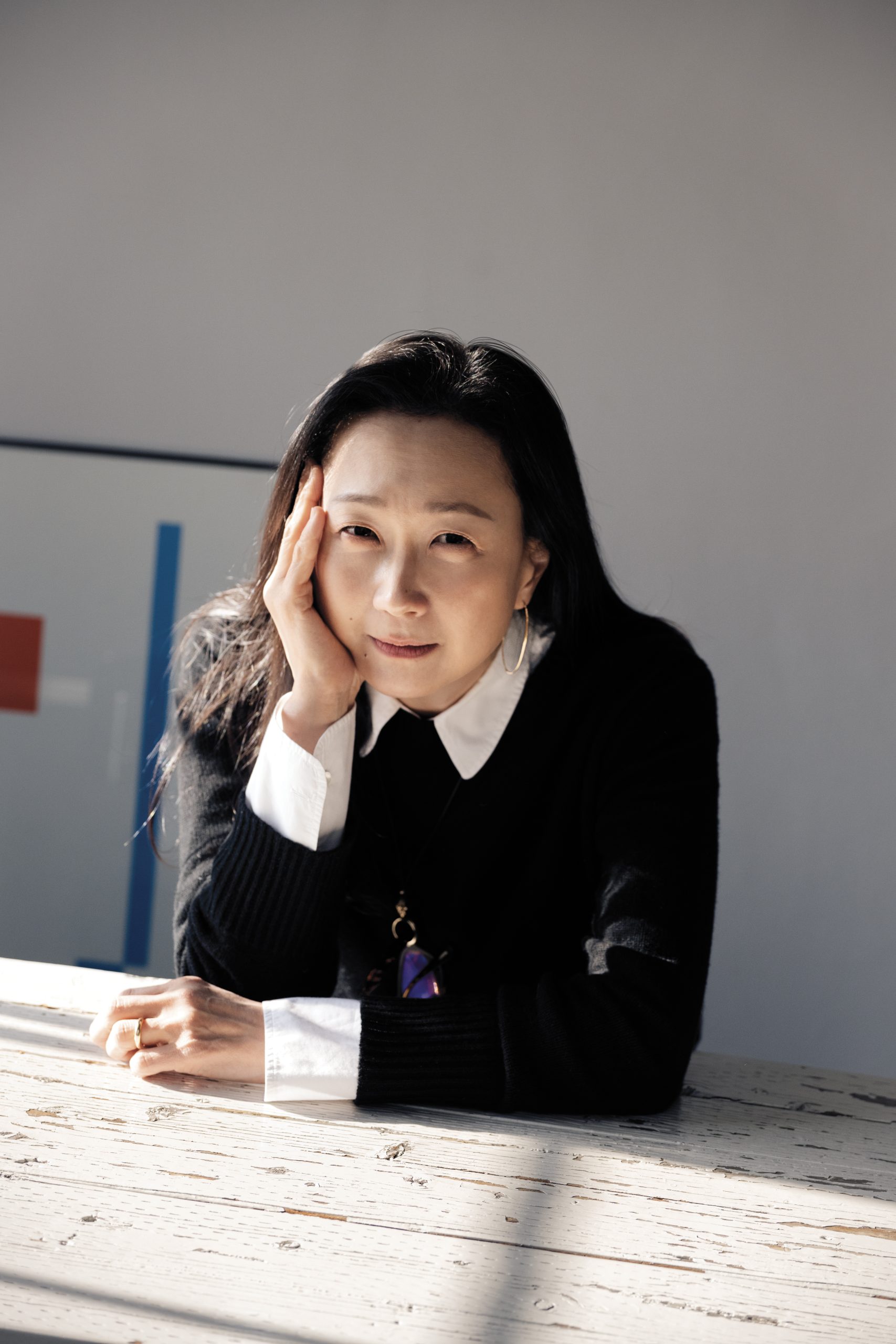
Seán Hewitt is the author of several books, including poetry collections, an academic text, and a memoir, All Down Darkness Wide (Penguin Press, 2022), which won the Rooney Prize for Irish Literature. Open, Heaven is his first novel.
I was delighted to talk to Seán Hewitt over Google Meet about the novel’s structure, tension in both fiction and poetry, and failing every time we begin writing something new. This interview has been edited for length and clarity.

The Rumpus: I typically interview authors prior to their books’ release, but Open, Heaven has been out for months. Could we start by talking about its life in the world? How do you feel about the novel’s reception and how readers are connecting with this story?
Seán Hewitt: I think it’s gone well. It’s always hard to tell. I’m one of those writers that when the book comes out, I do my best not to look too obsessively at how it’s going, because at that point it’s beyond my control. But it has been really lovely to meet so many new readers. I’ve written poetry and memoir before, and they were probably more niche in form and content. And this has seemed to have hit really well with all sorts of readers, and it’s just beginning to come out in translation as well. It’s just come out in Germany this week, so that’s been really cool.
It’s always nerve wracking with any debut, and especially because I hadn’t written a novel before, I didn’t know how it would go. I had perhaps less confidence in myself with the form than I had with poems or memoir. So it’s been very reassuring and lovely.
Rumpus: Congratulations on the translation. The book covers in the US and in the UK differ quite a bit. Book covers offer both a visual interpretation of written work, and an invitation that can influence how a reader comes to the book, so I’m curious about your thoughts on the two different artistic interpretations of this novel.
Hewitt: I never really imagine a book with a cover when I write it. So in some ways, it’s like seeing your baby for the first time. You don’t know what it’s going to look like when someone sends you the cover.
The US cover was the first one I saw. I loved the artist, Sarah, the designer of the US cover. Sketches are over the cover; they give a lovely sense of the village and the journey and key points in the story. I loved the brightness and the way in which the font looked handwritten. It felt personal and suited the first person narrative.
The UK one—I believe the word we were going for was “verdant.” We were hoping to get across, especially because the book came out in springtime, the natural world being a big part of it. I believe that the paperback in the US is going to have the UK hardback’s cover, so it will go green next year.
The German one has a completely different cover, and all the other ones have completely different covers as well. It’s pretty interesting. But the American cover is such a personal response from the designer to the book itself. It’s hand drawn and I think that it’s like getting your first interpretation or your first reading.
Rumpus: The novel’s structure divides into seasons, nodding to the natural world. (And I love the length of the winter section because winter can feel like the longest season.) Was the structure a concern?
Hewitt: The structure was probably one of the first things I decided on. I know that if you write a very plotty book, you might want short chapters. But anytime I’ve written prose, I’ve gone in quite long sections. So my memoir was in, I think, seven sections, but one was quite short. And with this one, what was important to me was a sense of time and seasonality and moving through a year. In a way, beginning in autumn and moving through to summer is a sort of plot in itself. It gave me this architecture: that we would begin in darkness and fall and move through isolation in winter and go through to sunshine and the expectation of freedom and the falling away of school. James’s life allowed him to be propelled somewhere else at the end of the book. It would have been a very different story if it began in summer and moved to winter—that kind of reverses the atmosphere. So that was really useful to me, and also I wanted this formal container to restrict the story in a way. There was a sense from the beginning that Luke had to leave at the end of the summer. So it is a way of adding tension or suspense onto the story by having that restriction.
Rumpus: Let’s talk about POV. I wondered if, as a poet and memoirist, first person felt easier to access. Did you ever consider writing from a different point of view, or playing around with point of view?
Hewitt: I didn’t in this novel, no. I knew from the very beginning that it would have to come from James’ perspective because I had to lock the reader out of Luke’s perspective. And if I had a third person narrator, that would be much more difficult. I knew very early on that the heart of the story would be not knowing, so the point of view had to come from James. I didn’t want a sixteen-year-old’s voice telling the story, so I decided to cast it as a backward glance. Initially, I began it with a backward glance just over that one year. James was at the end of 2003 looking back over the year. But I wanted some hindsight, and a sense of nostalgia and lament to run through the book as well. So having an older narrator was helpful.
From poetry and memoir, I’ve always written in first person, so it seems like the natural way to go. The difficult thing was distinguishing the character’s voice from my own—when you’re writing in first person, you can sometimes slip into your own voice in an unhelpful way.
Rumpus: First person allows you to inhabit James’s psyche in a way that feels central to the novel’s conceit, because so much of it is about the power of fantasy and imagination. James describes himself as a fantasist. How was it writing from a fantasist’s point of view?
Hewitt: I wasn’t sure when the book came out how much people would like James as a narrator. I didn’t set out to write a likable character. Sometimes we like to test our characters, and the test for James was this unspooling of fantasy and trying to see the reality underneath.
I wanted the reader to have a dramatic irony where they might catch glimpses of reality underneath James’s illusions—or delusions—and moments at which James couldn’t tell the difference between the drive to invention that falling in love can entail, which is projecting ideas onto people, hoping that they fit into your story, trying to read or misread their actions and words and the reality of what might be going on in Luke’s head. Telling it in the first person, I hoped, might situate the reader so closely alongside James, that they too might not be able to tell the reality of the story as it went.
It’s not a book in which plot is the central driver. What I was most interested in is how falling in love spurs James into increasing levels of hope or longing, or agony in some cases. It was a very internal conceit. It had to take place in his head. Because that’s the principal interest of the story: what goes on in his head and what can’t he articulate.
Rumpus: And that creates a lot of tension. I’m curious if, in writing fiction, you needed to learn how to write tension, or if being a poet, in fact, prepares one for writing tension?
Hewitt: There is certainly tension in poetry, but it’s a rhythmic tension. Maybe at the end of the line you want to find out what the next line is, because you have to complete the idea or a piece of rhythm, so you’re pulled through the poem. And there is tension in terms of contraction and release in the way I think about a poem. But narrative tension was something that I learned as I went with this book.
I read it through, as you do hundreds of times as you’re writing it, and I would isolate moments at which I thought there could be more tension. For example, as I wrote the character of Eddie, James’s younger brother, he became a more important character as I wrote, because he was a provider of tension to the story, because I wanted ways in which my character would be restricted—and things that he would have to make important, ethical or consequential decisions about.
In that way, the story grew around my desire for tension in the narrative. If something’s entirely in someone’s head, it’s hard to create tension. So there had to be this way in which a reader might be hoping that James is right, that perhaps this love story comes to fruition, but also aware of the gaps in James’s thinking, or the points at which he takes a risk that maybe they wouldn’t be comfortable with taking, like leaving his brother [Eddie] and running away. I wanted in the background of the reader’s mind to be what might be happening whilst James is off camping in a field.
Rumpus: I’m glad you brought up Eddie, because while the novel deals with how first love can shape a person’s life, it also deals with other kinds of love, including familial, and these different types of love become grounding or destabilizing forces in the novel. Did you ever feel the need to calibrate the rendering of the different kinds of love to make sure the romantic love stayed front and center?
Hewitt: That’s an interesting question. I was thinking about the ways in which romantic love can call into question or put demands upon these other sorts of love, and how familial love might put demands upon romantic love, maybe to come back to that question of impediments on romance and the course of true love not running smooth.
I wanted to add more complicated impediments or reflections for James. This book is about how we can sometimes mistake love given to us, or that we don’t recognize until too late. So I was interested in having moments at which these multiple sorts of love would appear through the narrative, but perhaps be brushed aside or pushed away in favor of romantic love. As I wrote, I became more ambivalent about James’s pursuit of romantic love above all other forms of love, and when I said earlier on that I didn’t know if people would like James or not, perhaps that was because the writing process entailed me seeing him make what I perceive as an adult to be mistakes of rejecting forms of love, like from his mother or towards his younger brother. James becomes quite tunnel visioned, and I wanted the reader to see the other forms of love available to James at any given time.
Rumpus: The writing in this novel is striking, but also lyrical, as novels written by poets tend to be, but with such clarity. In addition to poetry you write nonfiction—memoir, as well as academic text—I wondered if these forms also play a role in your writing?
Hewitt: I think when you sit down to write prose, you become inhabited by everything you’ve ever read before, and it spills out of you in either good or bad ways as you write. Writing prose, for me, is quite a different exercise to writing poetry, because poetry deals well with obscurity, partly because a poem might be so short that a reader could read it two or three times in order to get what you were saying—maybe it would reveal more of itself as you go—whereas you’re not going to ask a reader to do that for every paragraph of a novel, because they would be exhausted and throw the book.
So when you write prose, you have to pull away from a lot of the instincts of poetry, because you might be seeking clarity rather than obfuscation, whereas in poetry, sometimes creating a bit of mystery is a good thing. In fact, it works well in a poem. I’m quite used to adapting the way I write to different occasions. When I write critical work, which I do less and less now, the aim is often clarity to a degree that becomes tedious because you want not to be misunderstood, and you want to back up everything you say with evidence, which is not the way you approach the prose of a novel.
Some of the things I enjoy most about literature are rich texts. It can be quite fashionable nowadays for a sentence to be as clean as a bone—you know, sparse plain prose that have the ring of just being winnowed down to the barest amount of words you can use to say something. There are people who do that very well, but I am quite invested in reading a novel and feeling the richness of language and imagery come out in the sentences. I don’t find that I have the compulsion towards bareness that seems to be quite popular, like unadorned prose is often a compliment—I don’t think you could say that about my books.
Rumpus: Do you silo your writing projects? Like when you’re working on a novel, are you only working on your novel? Or do you weave between writing prose and poetry?
Hewitt: I’m always hoping for poems, and at any point when poems aren’t arriving, that’s where prose fits nicely in my life. When I used to only write poetry, I would spend six weeks not writing anything because a poem didn’t arrive. And I realized at a certain point that I could be using those six weeks writing other things. So no, I try not to silo them.
I’m a big believer in if an idea comes to you, or if you feel like writing, you should do it regardless of what it is you’re writing. So if I were halfway through a scene in a novel and a poem sprung into my head, I would stop, and I would write the poem. Maybe that would take a week of editing, and then I would go back to the novel. I’m skittish in that way, perhaps, so I’m not very regulated. I don’t have a lot of rules. There are a lot of writers for whom rules and timetables and word counts and getting up at 6:00 a.m. and not having breakfast until you’ve done 500 words is a good way of doing stuff. But I find myself very averse to rules and sacrifice. I like the idea of writing being a pleasure. And if I think that I will enjoy doing something, I will do it.
Rumpus: I heard you say on the Confessions of a Debut Novelist podcast that you’re working on your second novel. Does writing a novel prepare a writer for the next one, or is each novel its own puzzle? Did you learn any lessons while writing Open, Heaven?
Hewitt: I don’t believe that anything ever teaches you to do it again—perhaps that’s why I find poems so hard as well, because there’s no good way I know of starting one again. They all start and follow their own rules, and I think that’s what novels do as well, because I’m starting and restarting a novel right now. And you know those questions of point of view and form and the structure are things that I’m yet undecided on, which means that I’ve had to scrap certain bits and restart again.
I think if Open, Heaven taught me anything, it’s that we fail every time we begin something. My life is littered with terrible first drafts of books that turned out to be books that I stand by and enjoy. So one thing I always do when I write is I keep all of my drafts, and the first thing I do when I start another book is to go back to the bad first draft of something else that I wrote, because it reassures me that everything starts out badly and everything can get better.
So if I ever have a moment of doubt in the thing I’m working on, I read back the beginnings of other things that turned out well, and reassure myself that with work and persistence, things turn out okay, but they just never are great on a day to day basis.