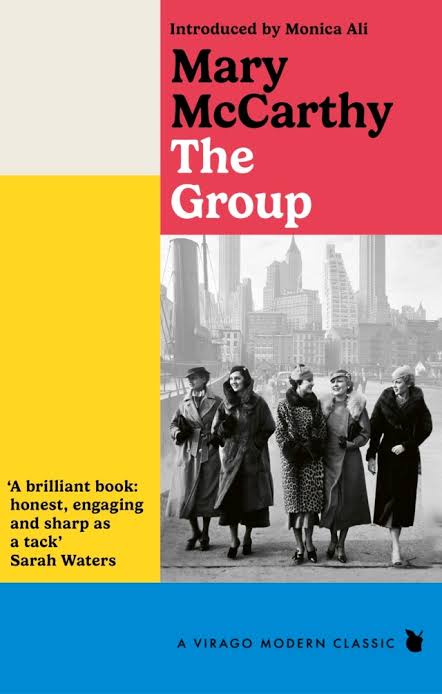
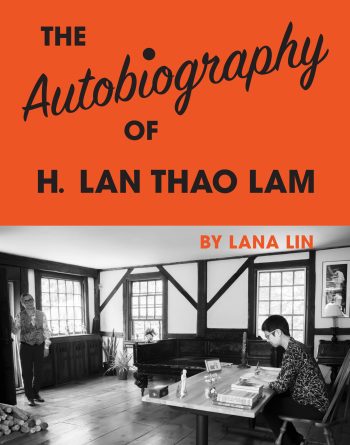
Lana Lin’s genre-bending new book, The Autobiography of H. Lan Thao Lam, both engages with and pushes back against Gertrude Stein’s The Autobiography of Alice B. Toklas—and adds a new voice to the discussion of what autobiography can be.
Out now from innovative small press Dorothy, a publishing project, Lin’s book reimagines Stein’s modernist experiment in voice across two intertwined lives: hers and that of her longtime partner, the artist H. Lan Thao Lam. Longlisted for the 2025 National Book Award for nonfiction, The Autobiography of H. Lan Thao Lam is both memoir and demystification, grappling with questions around Stein’s work, autobiography as a genre, and the fluidity of identity.
Lin is a writer, artist, professor, and filmmaker based in New York and Connecticut and the author of the book Freud’s Jaw and Other Lost Objects: Fractured Subjectivity in the Face of Cancer (Fordham University Press, 2017) as well as film and video-based works including The Cancer Journals Revisited. Her various works and collaborative projects (with H. Lan Thao Lam as “Lin + Lam”) have been exhibited internationally at festivals and art spaces worldwide, including at the MoMA and Whitney Museum in New York, the National Gallery of Art in Washington, D.C., Gasworks in London, the Taiwan International Documentary Festival in New Taipei City, and the Arko Art Center in Seoul.
I recently spoke with Lin over the phone about the book’s origins, its dialogue with Stein, the act of writing through another’s voice, and the intersection of literature and psychoanalysis in her creative life.
The Rumpus: How did this book come to be? And why did you choose the format of Stein’s The Autobiography of Alice B. Toklas, i.e. writing in your partner’s voice to tell the story of your relationship?
Lana Lin: The format is pretty unique and fascinating to me. Gertrude Stein uses her lifetime partner as a kind of mouthpiece for her own story. It was compelling to use this device for telling another person’s story, for telling my own story, but through another person, and through a person to whom I am intimately tied.
I’ve always been attracted, maybe even more than to Gertrude Stein’s writing, to her longtime partnership with Alice B. Toklas—it’s a legendary lesbian relationship that I mythologized. That attraction to their mythic relationship and this particular mode of narration was particularly appealing to me.
Rumpus: Would you call Stein’s book a memoir? Or a genre-bending memoir? And how does your own book fit into or expand that category?
Lin: Yes, I think hers would be considered a genre-bending memoir. And I think that mine is also, but it’s more of a double memoir, because I give a little more space to my partner Lan Thao. I’ve been calling it an “autobiomythography,” borrowing from Audre Lorde’s “biomythography,” as originated in her book Zami: A New Spelling of My Name, and putting a twist on it by adding or highlighting the autobiographical aspect to underscore it, but also to put it into question. Lorde’s biomythography is a mode of survival for women of color. Autobiomythography, as I conceive of it, attends to what might be excised in conventional memoir: dreams, ghost stories, projections, the uncertain, speculative, and imagined.
Rumpus: How did it feel to write in that format? Was it strange at first?
Lin: It is actually really liberating to be able to step back and write about oneself in the third person. I wonder now if I can write about myself not in the third person! It gives a different kind of freedom, a distance, while still also remaining close. I’ve been thinking about the whole process as a weird self-analysis, sort of being both the analyst and the analysand.
I spent three years studying to be a psychoanalyst. In my author bio, I confess that I sometimes still dream of becoming one. I’m deeply interested in the narrative of people’s interior lives, including my own, but others’ as well, which is probably why I was attracted to writing a double memoir, because I could get inside the life of my partner’s mind and experience. I also wrote a book about psychoanalytic history and theory [Freud’s Jaw: Fractured Subjectivity in the Face of Cancer (Fordham University Press, 2017)]. I’m perpetually interested in psychic life.
Rumpus: Your interest in psychoanalysis definitely comes through in the book, especially the way you approach identity, visibility, and the desire to be seen versus to remain invisible and your reference to Emily Dickinson’s famous poem “I’m Nobody! Who are you?” How have these questions of identity played out in your life?
Lin: My struggle with these questions has evolved over time. As a child, it was a very present dilemma for me, as articulated in Dickinson’s poem. Now that I’m considerably older, I have a different perspective on it. I’ve come through a trajectory where at first, I felt anger at feeling invisible in the world, but then I began to recognize that I found some protection in that. So, it was a very conflicted feeling for me—going back to psychoanalysis—that I could both rage against my invisibility, but also feel like it was sheltering me in some way and offering something which, in psychoanalytic terms, makes it difficult to give up.
I also recognize this conflict as something that is symptomatic of an Asian American experience. In the book, I talk about having no people, because I’m neither “authentically Asian” nor am I regarded as a typical American, even though I’ve basically spent my entire life in the US—caught in this contradictory position of wanting to be seen, but also not even knowing how to grapple with that.
Rumpus: When did you first read The Autobiography of Alice B. Toklas, and what struck you about it?
Lin: I probably read it in my twenties. I know I was never assigned it in school. I remember I took a trip—like a pilgrimage—to the Gertrude Stein statue in Bryant Park; it was in 1992 or so, probably around that time when I first read it. I remember I was really struck by the form. And I was amused. It’s a very funny book, and I was touched by the relationship between Gertrude Stein and Alice B. Toklas. I think it was only sort of in retrospect that I started to feel suspicious about what was missing from that story. And then there’s Monique Truong’s book, The Book of Salt, which featured Gertude Stein and Alice B. Toklas and a fictionalization of their Asian servants in the figure of the Vietnamese cook Bình. It’s a novel, but it started me thinking about what was left out of this history Stein was putting forth and wanting to use that form to insert myself and my partner and the Asian diasporic narrative into a history she was not telling.
Rumpus: I actually read your book without having read The Autobiography of Alice B. Toklas first. How do you think a readers’ familiarity or lack thereof with Stein’s book affects how they experience the book?
Lin: The fact that you hadn’t read Stein, I think, is a good thing. In regard to my book, people can carry too much association with Stein and expect it to be about Stein, which it isn’t. There was a point in the editorial process that Danielle Dutton [Dorothy, a publishing project co-founder and editor] said, “Maybe you want to insert more of Stein periodically throughout the book.” And I tried a version of that, and then we all decided that it was best to pull it back out, that that wasn’t where the book was.
I would say it’s modeled on Stein, but it also pushes back against her Autobiography. It’s a departure point, a way to intervene and insert what I’ve been referring to as the “Asian understory,” and to bring that story to the surface. What I took from Stein’s book was its nonlinear progression and structure. The chapter headings transfer what Stein centered around Paris to New York, borrowing her structure and mimicking her language at the beginning and ending of the book. The penultimate chapter is devoted to the war, which in Stein is World War I, and which I transport to Lan Thao’s childhood in Vietnam and the US-Vietnam War.
Rumpus: Writing from your partner’s perspective takes a lot of trust and clearly speaks to the depth of your relationship with Lan Thao. Did they offer feedback along the way or mostly just allow you the freedom to write the story as you saw it?
Lin: My partner gave me blanket permission to write this book in this way many, many years prior to my actually doing it. Of course, it was necessary—I couldn’t have written it without that permission—that allowed me to take the first step.
So, yes, it was more the latter, because I would not have been able to do it with them looking over my shoulder. And they understood that because they’re an artist as well. Though we do collaborate, this was not a collaborative project; it was my idea. And despite knowing them and having spent decades with them and hearing their stories, I still had to sit down with them and have hours-long interviews, because as soon as I started writing, I discovered that even though I might have heard a story many times, I would immediately need to confirm certain facts to understand what the spatial situation was or the point of view. And then I did a full draft,maybe even beyond that—it had gone through some editing. When I thought it was pretty much what I wanted, then they read the whole thing and made minor corrections. But in general, it was a sign-off, yes.
Rumpus: With the artistic license necessarily involved, did you feel nervous writing from their perspective or comfortable since you had that original permission from them?
Lin: Yes, absolutely, there’s artistic license, but I did get nervous when I was writing it, even though I wasn’t claiming to write an authoritative account. The device I used, of speaking through another person immediately cues the reader that memory is tenuous, and so is perspective. I was hoping that formally I was cuing the reader to relate to the instability of identity and self. How do we really know ourselves and who are we? That is a central question of the book.
From time to time, I would say to Lan Thao, as I was writing, “I don’t know if this is right. I don’t know if you’ll feel like it’s true.” And they would say, “Don’t worry about it,” because it wasn’t about verisimilitude. While I tried to stay as true to the facts that I could gather, it was more important to me to adhere to the right feeling, to be true in spirit.
Rumpus: Since this project was yours alone, how did that experience compare to collaborating with your partner on past artistic projects?
Lin: We fight a lot, quibbling over small things, but I think that when we do our best work, we understand it’s about giving each other space, so that we can each maximize our own strengths. They are much more of a physical artist and more materially based. They have a lot of experience with mixed media, and they think more spatially. We have a joke that they’re space, and I’m time. I like to think through time, and I’m very interested in how sounds and words and language progress and evolve and can be in conflict over time.
Rumpus: Can you talk more about your experience bringing this project to life? What was it like working with Dorothy, a publishing project, which only publishes two books a year?
Lin: They were fantastic—I loved it. And it was an incredible learning experience. This project had been on my mind for twenty years, and to be selected as one of their two books of the year was extremely validating, like it gave my book a right to exist. It gave me more confidence in my writing, which I want to devote dedicated time to in the future. I’ve written two books, but I still feel like a relatively new writer. I want to take the form further.
I had a grant from my university that enabled me to work with mentors outside of my institution—Lily Hoang and Porochista Khakpour. They served as mentors, reading the manuscript and providing their insights as experienced writers. Along with my writing group of published poets and literary authors, their feedback was essential to me.
Probably every writer wishes they could write more. I teach full-time at a university, and I feel like I don’t get to write except during summers and breaks. But I was fortunate to do a good draft of this one while I was on sabbatical. I’m gradually figuring out how to sneak writing into my everyday practice while teaching full-time.
Rumpus: As a filmmaker and visual artist in addition to being an author, do you see your writing as a separate artistic project from your other creative work or as part of a larger practice?
Lin: I think of it all as my artistic and creative practice. Each project takes a particular form that I have to attend to on its own terms. My artistic practice includes making films, writing, and visual art. It’s driven by the same kinds of concerns around race, identity, and self-expression—and what it means to speak or to say something.
In an interview [about] Dorothy, a publishing project, co-founder Marty Riker said “Dorothy books are about what it’s like to be alive right now.” I love that. I feel like those are the kinds of questions I’m addressing in my own work as a whole. Then I have project-specific interests that delve into particularities—the differences between mediums. I’m always interested in form itself, whether that’s the form of language or the form that sounds and images take.