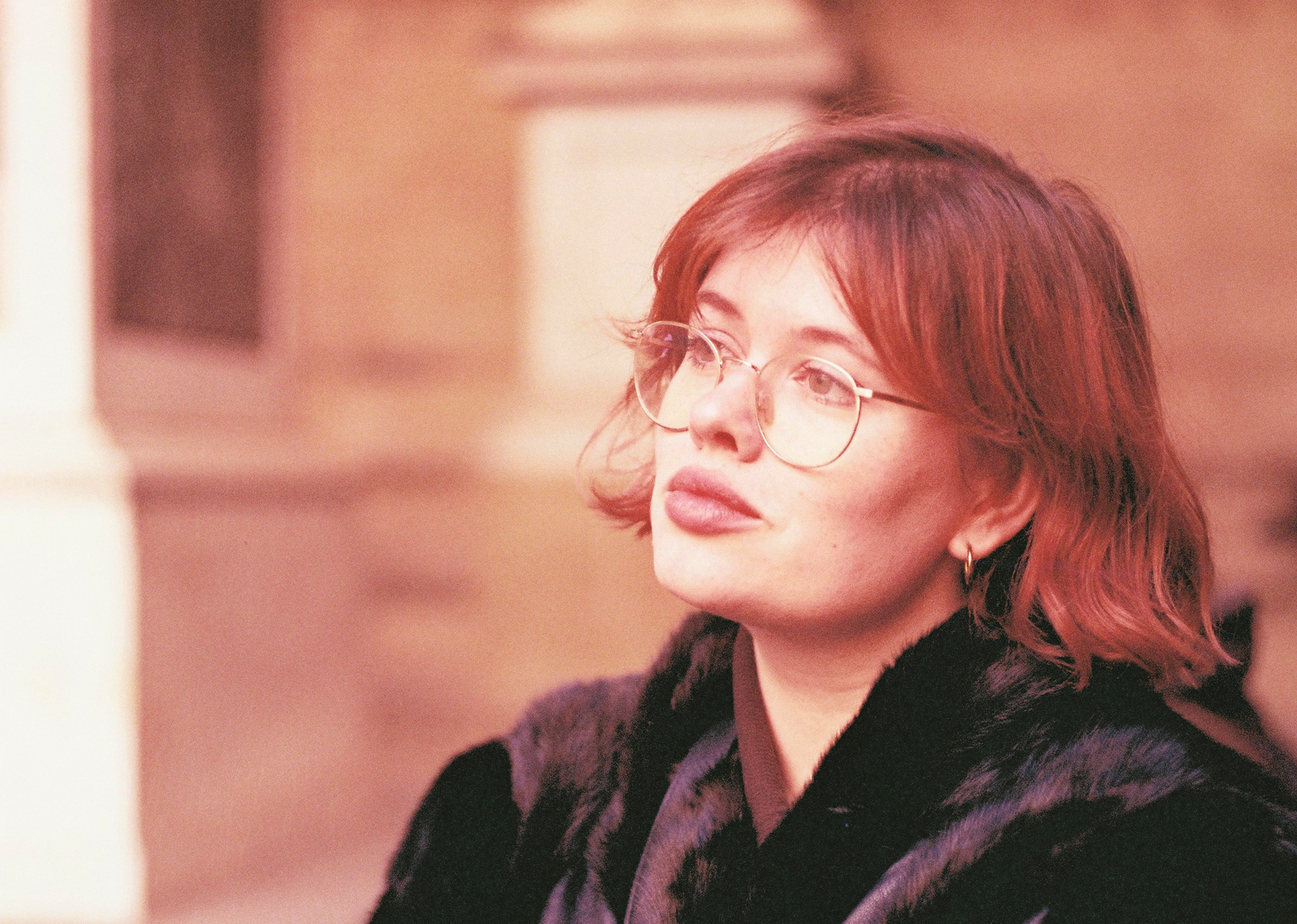
The Author: Avery Curran
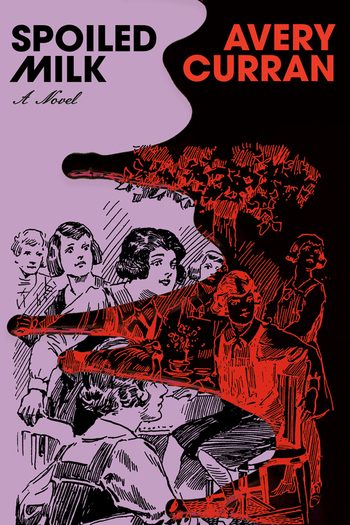
The Book: Spoiled Milk (Doubleday, 2026)
The Elevator Pitch: In 25 words or less, what is your book about?
A gothic horror in which the students at a girls’ boarding school in 1928 turn to spiritualism after the death of one of their number.
The Rumpus: Where did the idea of your book come from?
Avery Curran: Haunted lesbian boarding school historical horror novel came to me all in one go. The various elements work together, I think, because the isolated (and isolating) setting in combination with the extremity and otherness of the supernatural make queerness all but inevitable. I wrote it down in a note on my phone, which I promptly ignored for a year and a half. Then, in early 2022, I was writing my doctoral funding proposal, which was on queerness in nineteenth-century spiritualism, and I had the realization that if I didn’t write this thing before my PhD I’d never do it at all. The kindest thing I ever did for myself was setting the book in 1928 rather than the nineteenth century, so that I could at least pretend to be thinking about different things.
Rumpus: How long did it take to write the book?
Curran: The first draft took about three months. This was probably not a good idea, although it did have a certain thrill to it. Getting it into a state suitable for any kind of public consumption took much longer—I finished the first draft in September 2022, and began submitting it to agents in January 2024.
Rumpus: Is this the first book you’ve written? If not, what made it the first to be published?
Curran: Yes, it’s my first. Frankly, I didn’t think I had it in me until I’d already written it.
Rumpus: In submitting the book, how many nos did you get before your yes?
Curran: Not very many; I was lucky.
Rumpus: Which authors / writers buoyed you along the way? How?
Curran: Too many to count, and most of all I am forever grateful to those who are also my friends, without whom I would never have had the courage to do any of this (they know who they are). There were many authors and books that made Spoiled Milk happen in the way that it did. Here are some of them:
- I read all of the T. H. White Arthurian novels while editing. I wish I could claim that it really shows, but actually they reminded me that there was a whole world outside my narrow focus on my own work, and that I could never ever be as good as T. H. White and that was just too bad.
- Stephen King’s books—too many of them to count, but probably IT most of all—showed me what horror was for when I was small enough to be really malleable. Grateful to him forever for making me a freak.
- The Time of the Ghost by Diana Wynne Jones was so viscerally upsetting that I hesitate to list it anywhere near the word “buoyed,” but it was foundational to how I think about writing children, and the various ways that their agency is curtailed.
- Everything Freddie Kölsch writes is imbued with a generosity and care that sit in fabulous contrast to how extremely scary her books can be. I read Now, Conjurers while writing Spoiled Milk and more than anything else it made the whole thing feel possible.
- Finally, Jacqueline Carey, because sitting in a gigantic hotel bathtub in 2023 and racing through the third book in the Imriel trilogy was one of the greatest reading experiences of my whole life and I wish every day that I could do it over again. I’m just glad it happened during the year where I was slowly chipping away at making Spoiled Milk a functional book so that I can include it here.
Rumpus: How did your book change over the course of working on it?
Curran: The bones of it have always been the same—girls, ghosts, gore, check check check. Violet and Emily have always been the same because I love awful blondes and their foils. Otherwise, the book has changed considerably. I am a devoted outliner, because there’s nothing I love more than a to-do list I can check off. Writing Spoiled Milk, however, forced me to learn to be flexible: my character Evelyn, for example, was meant to die early on, but I found her so enthrallingly unpleasant that she ended up becoming a very important part of the book. On a formal level, I decided to do, and then later discarded, various horrible overwrought Conceits, like having it be in at least seven points of view and also occasionally narrated by a Greek chorus (something similar was done very very well, incidentally, by Krystelle Bamford’s wonderful 2025 novel Idle Grounds, so thank God I gave that idea up early on). For me, writing a first novel was defined by having to accept that I was learning how to do it as I went, and that is a very disagreeable experience if you, like me, are one of the world’s great control freaks. The end has always been the same—but you’ll have to read it for that.
Rumpus: Before your first book, where has your work been published?
Curran: Oh, barely anywhere! My PhD thesis is probably going to be available to download from my university’s server at some point. I know that must be extremely enticing. I have a couple of reviews and articles in a small periodical put out by a publisher and archive based around the life and work of an eighteenth-century Swedish mystic, so you can imagine the degree to which people were battering down my door to hear my burning thoughts about all sorts of subjects.
Rumpus: What is the best advice someone gave you about publishing?
Curran: My girlfriend once told me, “Never give up and never surrender,” and I thought that was really good, but I looked it up just now and learned that it’s from Galaxy Quest. So she doesn’t deserve all the credit for that one.
Rumpus: Who’s the reader you’re writing to—or tell us about your target audience and how you cultivated or found it?
Curran: My ideal reader is anyone who read Enid Blyton’s The Naughtiest Girl in School as a child and found themselves contemplating Elizabeth Allen with great fervour for reasons they couldn’t explain: lesbians, generally, anyone who had to figure out what they wanted for themselves in the absence of a sufficient cultural script, horror aficionados, and people who had a bad time at school. This is an extended way of saying “me,” but as one is so often told to do, I wrote the book I wanted to read, so I can’t help it.
Rumpus: What is one completely unexpected thing that surprised you about the process of getting your book published?Curran: I was, I have to admit, surprised by how emotional I became when I received proofs of Spoiled Milk in the mail. Seeing a real and tangible version of the thing I made up was very special.