At first, I tried to ignore the signs that something was wrong, but as time went on, they only got clearer. Rob barely spoke as we walked to the bus stop one morning. He didn’t answer the text I sent him that lunchtime. He was irritable and withdrawn; his eyes didn’t settle on mine, even when we talked, and he stopped letting me know when he was coming home late. Each incident was both hurtful and too trivial to bring up in isolation, but when I started to see the pattern and thought about it properly, I realised that he’d been like that for weeks.
I’d decided by then that it must be to do with his job; rumours about redundancies had been ricocheting round his office for weeks, and I knew he’d been worried, but when I eventually asked what was wrong, late one Sunday afternoon, he explained, in a focused, matter-of-fact way, that it wasn’t work at all. It was us.
It was snowing outside and I glanced out of the window when he said that, at the huge flakes drifting slowly down, and a little girl who’d stopped in the middle of the road and put her hands out to catch them. Behind me, Rob said he couldn’t keep living in the way that we did, walking past homeless people huddled in doorways each morning, after we’d spent the night in our soft, warm bed. There were brutal wars across the world and unprecedented numbers of deaths in wildfires and flash floods. Droughts were wiping out crops. There was suffering everywhere. We couldn’t keep looking away. We had to do something.
I was relieved when I heard that, not because I didn’t think what he was saying was true, but because I was certain I could solve the part of it that affected us. I looked out at the snow, which was swirling more densely now, and told him I agreed.
He smiled, but he was too worked up to stop talking. He was walking up and down the narrow rug by our fire, turning abruptly at both ends as he spoke. I felt his emotion seep into me, quickening my heartbeat and constricting my throat, and I assumed I was as angry about the state of the world as he was, but then I started to think that perhaps what I was really feeling was more a kind of anxious guilt, because I didn’t think about any of this as much as I should have. I made regular donations to charity, and was careful to recycle, but otherwise, these issues were just shadows floating across the outer edge of my vision, staying conveniently blurred unless I chose to focus on them. I felt uncomfortable now, being faced with them so directly, but there was a relief to confronting them too, because everything he’d said had been true. The environmental situation was especially alarming, and a lot of our friends were trying to live more sustainably, too. It seemed important to do what we could.
‘Let’s give more to charity,’ I said, getting out my phone to do it straight
away.
‘It isn’t just money, though. It’s the environment, as well.’
‘Then –’ My eyes met his. I couldn’t see what he wanted.
‘I mean honestly,’ he said, ‘I think we should stop heating the house.’
I looked past him at the street, where a car was steering carefully round patches of black ice, and I almost said that we couldn’t do it during the winter; it would be too hard, but then I saw how agitated he was.
He started to reiterate that we could save lives if we did this. We could support the local homeless shelter with the money we would have spent heating our home and reduce global warming too, at least by a little. He smiled as he said that. He looked like himself again, and there was so much more hope in his face than I’d seen there for months, that I stopped asking questions.
***
He was noticeably happier when we switched off the heating. His sleep improved in the first few days. At the end of the month, we checked the gas meter and I worked out the emissions we’d saved, and showed him the figure.
‘We did well,’ I said. ‘We saved a lot,’ and he smiled and kissed me, and for a moment, I felt we were close again, the way we’d been before any of this came up.
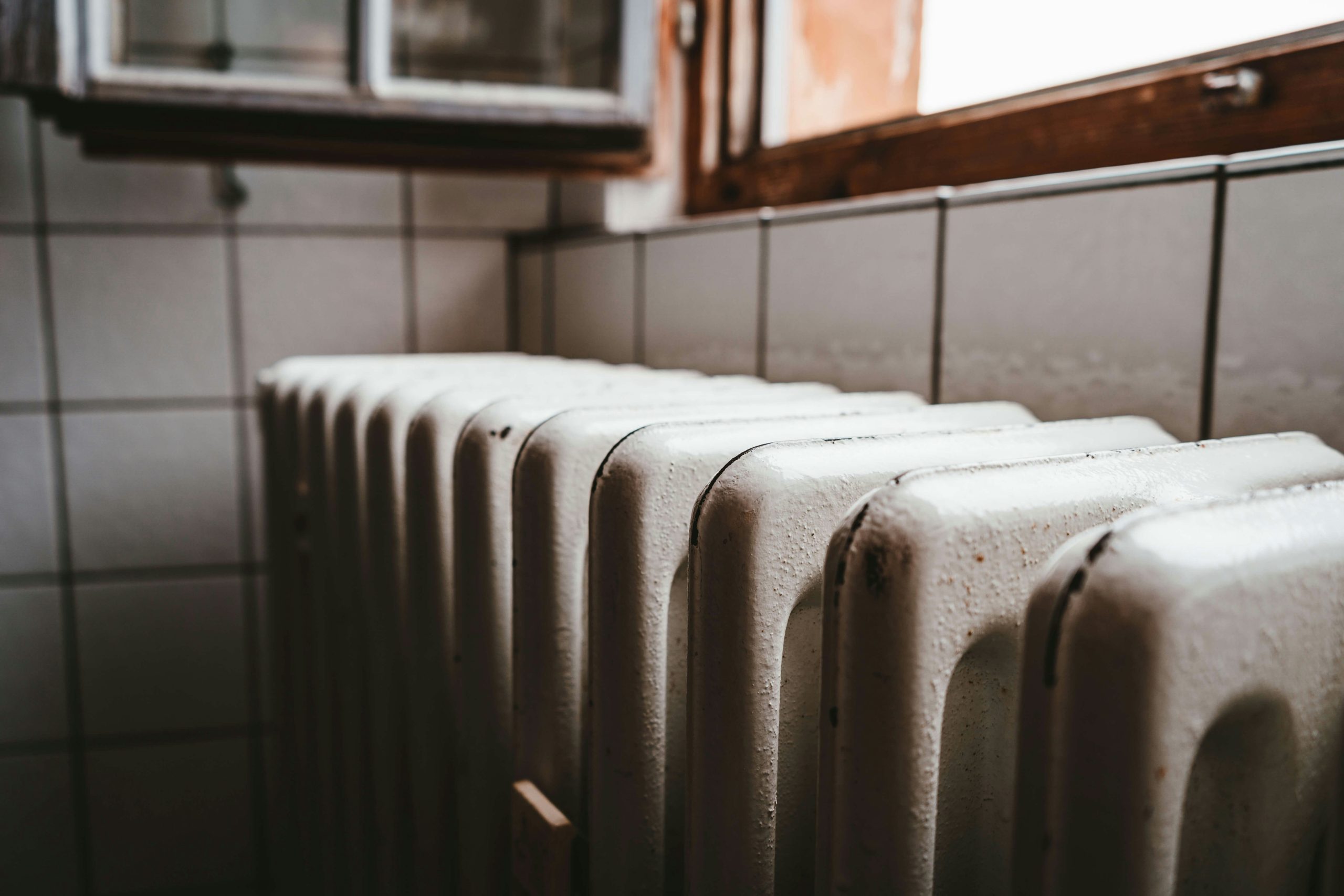
I wasn’t good at managing the cold. It wrestled the breath from me, pressing deep into my chest and throat. Once, when I knew Rob would be out, I cheated and put the heating on, sitting against the radiator and letting the unfamiliar warmth spread over my back and shoulders in thawing ripples of relief. But I couldn’t relax. I knew he’d feel betrayed if he found out, so I made myself switch it off, promising myself I wouldn’t use it again and savouring what was left of the warmth as it drained slowly from the gurgling pipes.
A few days later, he looked up from his book, pulled a blanket closer round his shoulders, and said,
‘Listen, I know this is a lot, but I think we should stop cooking.’
I hesitated. He’d always worried about these issues. In the three years we’d spent together, we’d often discussed what we could do to help others, but the way he was talking now made him seem much more anxious than he’d ever been before; he was tense and uncharacteristically vulnerable. Whatever he said, I was sure this must all be rooted in the uncertainty about his job and the pressure it was putting on him. It was a way of maintaining control in the face of the apprehensive, powerless feelings he was struggling with. I tried to be gentle.‘No,’ I said. ‘I think that’s too much.’
‘It’s just the oven uses so much electricity. If we ate cold food, we’d cut our emissions by half, and save money, as well.’
I tried to reason with him. We’d cancelled Netflix and stopped buying new clothes so we could give more to the shelter, but we needed to eat properly. Besides, we both had good jobs. Even if he lost his – I brought this up cautiously but firmly, thinking that the subject needed to be openly addressed – we’d still be able to donate something.
He shook his head before I’d even finished talking. ‘But the pollution bothers me just as much.’ I started to answer, but he cut me off. ‘And if we do this, we’ll save even more. We’ll be able to help get another person off the streets. That’s got to be worth it.’
‘But cooking’s important. We need to stay healthy.’ It was hard to see how he could argue with that, but his brow was tightening already and I saw frustrated disappointment in his eyes.
‘I hate this,’ he said. ‘I hate ignoring everything that’s happening, just so we can be comfortable.’ He was hurt and indignant, getting louder again.
‘We’re not, though. Look at everything we’re doing.’ I started to elaborate, but halfway through a long sentence, I saw how upset he looked, and stopped abruptly. For a long, uncomfortable moment, neither of us spoke. Then I said,
‘OK, let’s try it. Let’s just see how it goes.’ He nodded, with his eyes lingering on mine. ‘We should get solar panels,’ I said. ‘In the end, I mean. We should buy a little south-facing house and just do it. Maybe this will be the only winter where we really can’t cook.’
We couldn’t afford to buy a house. I knew it even as I said it, but I clung to the fantasy anyway, for the rest of the winter. Thinking about it kept me focused at the times when I was struggling most.
In the meantime, the days were still bleak and the constant cold in the house made everything feel harder. Rob seemed sad again. I felt sorry for him, then immediately irritated – these cutbacks had been his idea and if I could live like this, he could too – and then I was consumed by guilt for having thought that when all he was doing was trying to help strangers. I found myself snapping at him, then trying to take it back by talking to him in saccharine tones that I could tell were annoying. When I felt worst about it, I tried to lighten the atmosphere by regaling him with anecdotes, or taking him breakfast in bed. I brought cakes home one Saturday to share after lunch, but my stomach clenched tight when he refused to take one.
‘Have one,’ I said again, looking at the open paper bag on the table between us. I smiled at him, but it felt like a stand-off.
‘It just feels wrong to indulge when other people are hungry.’
‘Oh Rob, for God’s sake, stop it. It’s too much,’ I heard the sharpness in my tone and regretted it straight away. It wasn’t even what I felt. I was more patient than that, more supportive, more generous. ‘I’m sorry,’ I said. ‘But the cakes were discounted. They cost almost nothing.’
‘It all adds up.’
I put them away, and followed him to the living room. He glanced up from his laptop and then back at the screen. I started to talk, but he hardly answered and though I tried to read, it was difficult to concentrate when he was so tense. The sun flashed bright shimmering rectangles across the floor and walls. I kept looking at the street, wanting to be out there, instead. The clouds were moving fast behind the rooftops. I stood up and stretched.
‘It’s a beautiful day. Let’s go for a walk.’
‘I can’t.’ He smiled, very slightly, and looked back at his laptop.
His shoulders were hunched and his eyes kept moving back to his screen. In the end, I went out alone. The light was unexpectedly intense as I walked down the footpath to the fields and there were already some early daffodils growing at the edge of the woods. I felt exuberant, seeing them. Spring was coming, with its warmth and longer days, and we were already through the worst of the winter. I picked a few flowers to take home, but he looked up and frowned when he saw them.
‘Aren’t they beautiful?’ I said.
He looked at the vase I was arranging them in. ‘No. They’re dying already.’
‘Rob,’ I said. ‘Don’t.’
‘What?’
He was uprooting every tiny shoot of joy I tried to plant and making things harder than they had to be. I tried to frame that in words that didn’t sound hostile, then stopped myself from talking at all. There was no point in arguing. All the same, I was uncomfortable. I didn’t buy cakes again, or bring flowers into the house, and I rehearsed every sentence before I spoke to him, checking it for anything that might seem flippant or uncaring. It broke my heart when I saw what I was doing. Our conversations had never been this difficult before.
***
He asked to look at my bank statements. He’d been through his own and found several cuts he could make. The request made me uncomfortable and I was firm about saying no, but he was agitated when he made our payment to the shelter at the end of that month.
‘It could have been more,’ he said. ‘We could have done better.’
‘How?’ I looked away, feeling awkward and ashamed, but when I thought about all the evenings we’d shivered through and all the pared-back meals we’d had, my mood changed abruptly. ‘How?’ I asked again. I was drawing back, preparing to fight, and I hated that feeling. Adrenaline was rushing through me. My pulse was fast and felt shallow and weak.
‘Just let me go through your statements.’
‘No.’
He glanced at me quickly, pushed his shoulders back, and stood up straighter, and I saw his face flush and his mouth twist, but before he really could begin to speak, I said,
‘I’m not going to change my mind, Rob. It feels so controlling.’
He inhaled loudly, but he looked exhausted. All the anger drained from me when I saw it. I started to tell him to sit down and let me bring him some water, but he shook my hand off his shoulder.
‘What are you hiding?’
He laughed as he said it, but I knew he was serious. I was angry and words were coming to me easily, and if he wanted to argue, I knew I could win, but as I started, I saw what it would cost us and stopped, feeling shaken.
‘Nothing.’ I stared at him with a cracked, fragile defiance.
He sighed. ‘OK,’ he said. ‘OK. But look, there are things we can cut anyway. Birthday presents, for instance. No adult needs those.’
‘I want to spend some of my own money on the people I love.
‘Isn’t it more important to feed a hungry child?’
That silenced me, because I knew he was right. But he was always going to push to do more and it was already too much.
‘Even so,’ I said.
‘OK. It’s up to you. Fine.’
He turned away, but I regretted it a moment later, seeing the hurt move across his face. He could only make this work if I went along with it too, and I loved him. He’d moved in with me the year before, when the friend I’d been living with got a job in another city, and I knew the commitment had made him a little uneasy. I didn’t want to push him towards wanting to leave. I focused on him and the good we could do, and weighed it silently against the need I had to make my family feel loved, but there was no way to reconcile the two. I felt more helpless the longer I tried.
‘I love you,’ I said. I thought his eyes lightened a little and he let me hug him without the awkward unresponsive stiffness that pushed me from his arms so often these days. He leant his head against mine as we sat together on the sofa, watching the last pink streaks of the sunset fade over the grey slate roofs of the houses opposite, and I felt that however difficult that conversation had been, we were over it now.
***
It was my birthday a few weeks later, and when my sister texted to ask what I’d like, I asked her to consider donating to the shelter instead.
OK, she replied. But let’s go for a meal to celebrate
We’d often done that before. I didn’t answer immediately.
I can’t rn, I said after a while.
Why? U too busy to see me???
No. Just saving money.
Why?
For charity
There was a long pause and then she texted OK, but I could tell she seemed hurt, and I wasn’t surprised when she came round that evening.
She stood by the window with her coat buttoned up and her scarf still on.
‘You’re shivering,’ she said. ‘What happened? Did you lose your job?’
‘No.’
‘Did you, then?’ She turned to Rob.
‘No.’ He smiled. ‘Can we really not do a good thing without triggering an inquisition?’
‘It’s just so extreme.’ Neither of us responded. After a moment, she said, ‘When did you last eat?’
‘It’s fine. We’re eating.’ He paused by the window and went into the kitchen.
‘Jo,’ she said when he’d gone, ‘Why are you doing this?’
I looked at her helplessly. ‘I just think it’s more important to give to charity than have luxuries,’ I said in the end, but she didn’t really answer and our conversation was stilted for the few minutes that she stayed.
As she was leaving, she said, ‘This isn’t healthy.’
‘What?’ She was a nurse. I thought she meant the low temperature.
‘This. Rob seems so controlling right now.’
I didn’t answer, but I felt abandoned as I watched her walk away.
When I turned around, I saw that Rob had heard. He was leaning against the kitchen door, looking wounded.
‘It’s OK,’ I said. ‘It doesn’t matter what she thinks,’ but I heard a kind of hopeful desperation in my voice, as though I was trying to convince myself, as well as him.
***
My sister called, and we went for a walk. I didn’t want to discuss Rob, so we talked around the situation instead, but there was a lot I didn’t say, and it made it more awkward. It was almost dark by the time we’d finished walking, and as we approached the bright lights of the high street, Emma said,
‘Let’s stop here and have dinner.’
‘I can’t.’
‘Of course you can. I’ll pay.’
I trailed reluctantly after her. Rob was alone at home, and I knew he’d be hungry and cold. It was difficult to enjoy the meal, and I didn’t say much, and after a while, she started to talk about work and about a patient who’d died. I could see she was upset and needed to talk and I tried to focus on what she was saying, but my mind kept swinging back to Rob. She leant back and sipped her wine slowly, watching me.
‘You do what you can for other people,’ she said, ‘Even if it’s only holding someone’s hand when they’re scared, and that’s what I did for her, but she kept fixating on all the things she wished she’d done and telling me how important it is to make the most of my life, and she’s right. There’ll come a day when I’m suffering as well, and it doesn’t help anyone if I stop myself being happy now.’
‘I know you’re making some sort of analogy, but it isn’t like that. I’m happy.’
‘Are you sure?’ She picked up her fork. ‘Because you’re already doing a lot. Why would you deprive yourself of every possible comfort?’
‘To donate more.’
She looked at me steadily. ‘Are you really sure that’s why?’
‘Yes.’ I maintained eye contact as long as I could.
***
At home, Rob was sitting in the dark. I kissed him, but he pulled away.
‘You smell of alcohol.’
There was something harsh and judgmental about the way he said it, but I tried not to dwell on that.
‘It’s OK,’ I said. ‘Emma paid.’
‘It makes no difference.’
In the past, I might have let that go, but I’d been thinking so much about all of this that I stood my ground.
‘Yes it does. Why wouldn’t it? Why are we doing this if not to save money?’
He didn’t answer. After a few minutes, I heard him go upstairs. The curtains were open and drizzle was visible in a little patch under the streetlight and there was something comforting about watching it slant softly to the ground, but I felt increasingly uneasy. I followed him to our room.
‘Does it bother you that much that I’ve been out?’
‘You said you were going for a walk. It just seems unnecessary to have a drink as well.’
‘It cost me nothing.’
‘It just seems distasteful when people are hungry.’
‘We’re giving the same to the shelter either way.’ He didn’t answer. ‘Rob,’ I said slowly, ‘I know. We’re carrying on as normal while other people suffer. I know it’s awful, but we have to let ourselves live.’
‘I can’t. Not when there’s so much suffering going on.’
‘But there always has been. And what else can we do?’ He didn’t answer. A car passed on the road outside and its headlights swung across the wall behind him, briefly illuminating his face, and I saw the irritation in it, but the words were coming to me quickly now, flowing easily, with so much fluency I didn’t want to stop.
‘The world’s never been perfect. There’s been just as much inequality and hunger and political uncertainty before, and us pushing ourselves to extremes helps no one. We should be sustainable. We should donate what we can, but only within reason.’
He put an arm behind his head and considered me carefully. ‘It’s the “within reason” part that bothers me. I mean, I think it’s reasonable to do more than we are.’
I’d been about to speak. The words were fully formed in my mind, but I stopped abruptly, seeing the difference between us more starkly.
‘I understand,’ I started to say. ‘But –’
‘We should be doing more than they did in the past, anyway. Everything’s worse now.’
‘That isn’t true. Except for climate change it isn’t, and we agreed about that. We should be more sustainable. I just think we have to find a better balance.’
We were quiet for a long time, and I thought I should justify what I’d said, so I started to talk about global famines and droughts, and about twentieth-century wars in Africa, the Balkans and the Middle East, and about the intense political repression that had occurred in some European and South American countries, and the murders and disappearances that had been part of that, and then I just stopped. I sat there for a long time, listening to his breath getting heavier and slower. In the end I said,
‘We’re destroying ourselves,’ but he didn’t react and after a moment, I thought he must be asleep.
***
In the morning, he looked tired and drawn. I thought about leaving for work without discussing it again – it would have been easier, and I had to hurry, anyway – but this was important. I needed to say it.
‘All I was saying last night was that it feels too extreme,’ I said. ‘We need to be able to cook. We need to sometimes heat the house.’ We looked at each other for what felt like a long time. His face seemed empty, but then it flooded with emotion.
‘Why is that more important than protecting the environment?’
‘It isn’t. But we have to be able to live, and we’re doing what we can. We’ll do more in the future.’ I started to talk about the house we’d own one day, with the solar panels and the battery, but he stood up, interrupting me.
‘Jo, stop it. Listen to yourself. You’re just talking and talking about something that won’t happen. We can’t buy solar panels. We’ll probably never be able to buy a house. I might not even have a job by the end of this month. But we can make a difference this way and we can do it right now. Why can’t we just be happy about that?’
I looked at him helplessly. The silence between us felt brittle, but I saw how heavily the problems of the world were weighing on him and how much he needed to believe he could do something to help solve them. ‘You’re feeling this more at the moment because you’re worried about your job, but when that’s settled –’
‘For fuck’s sake. Just stop it.’ He shook his head and a wave of fury passed over his face. ‘That’s such a cheap thing to say.’ He was shouting now. His aggression made me angry too.
‘It isn’t cheap. It is affecting you. We never disagreed about how to live before the redundancies started.’
‘No. We just ignored it all then. I went along with whatever you wanted.’ A moment passed. He said, ‘I know this is hard, but if you were serious about climate change, or about addressing inequality, you’d see –’ I knew I should let him speak, but I couldn’t. I was furious.
‘Of course I’m serious about them. What gives you the right to decide I’m not as principled as you? That’s so supercilious.’ I noticed that I’d shouted and then that my hands were clenched. ‘It’s just insulting to suggest I’m not,’ I said, but in the moment that followed, I thought perhaps I actually wasn’t, and then that anxiety had exaggerated his principles, anyway, and changed him into someone quite different. Adrenaline drained from me, leaving me feeling flimsy and shaky.
He left the room and I heard the front door close a moment later.
The house was dark when I came home that night. There was light in our neighbour’s windows and I heard someone laugh from an upstairs room as I walked up the path, and felt even lonelier. I sat next to Rob on the sofa and he gave me a sad, restrained smile.
‘I’m sorry. You look so unhappy,” he said to me.
‘We’re both losing weight. There’s black mold on the walls. I’ve tried so hard to do this the way you want, but I can’t.’
‘But I can’t not.’
I steeled myself. ‘Then I think you should leave.’ I felt overwhelming relief as soon as I said it, but I was aware of a pulsing sadness, too, because if the world had been simpler, or if he hadn’t reacted to its issues as strongly as he had, I was certain we’d have been OK. He started to argue, then stopped and nodded once, with the blank desperation of a child who’d given in all at once.
It got dark quickly, but I didn’t put the lamp on. I didn’t want him to see my face. Before long, I knew I’d get up and put the heating on and start to cook an evening meal for the first time in months, and I knew we were going to have to discuss the details and that he’d almost certainly go to his brother’s house that evening, but I wanted to delay that as long as I could, so I sat holding him on the sofa for much longer than made sense, watching people laugh and cook and hug in the house opposite, and focussing on the good in what Rob and I had done, which seemed, despite everything we’d lost, like a tiny light, held up against all the darkness of the world.