I had her in my life for eighteen years and ten months before I got the call on a snowy April morning in 1982 that she had died the night before, of a massive heart attack.
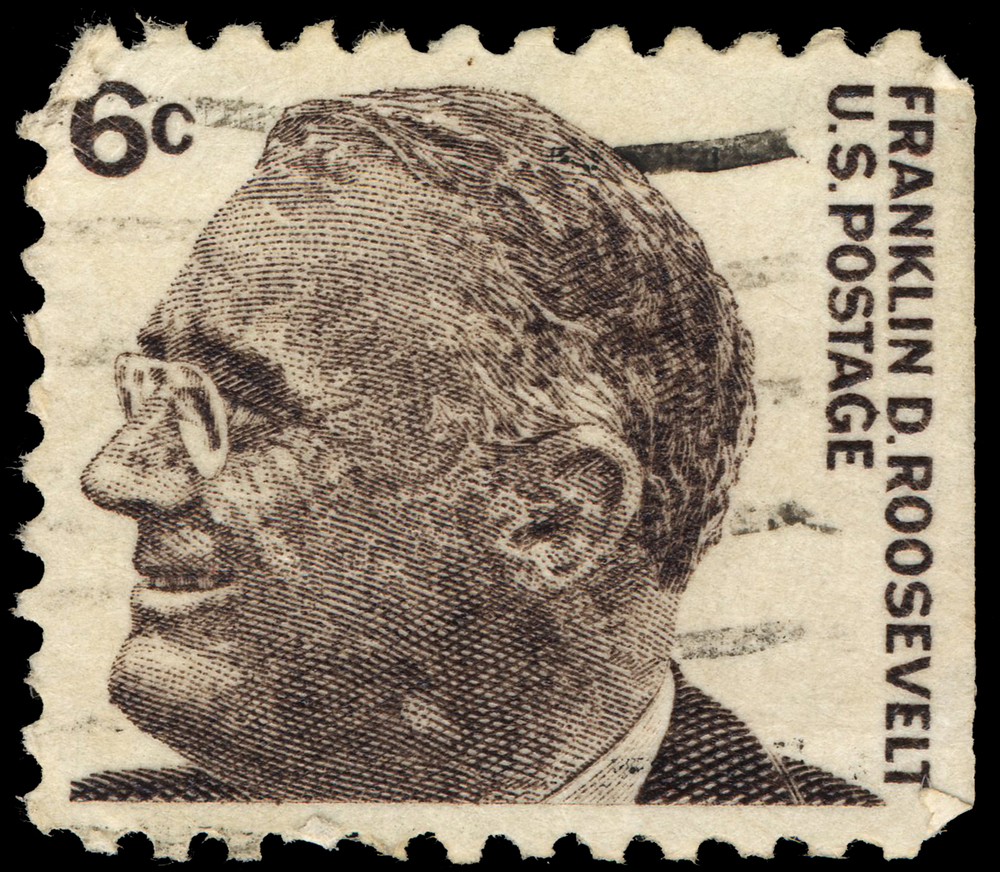
We lived across the courtyard from my grandmother in Queens, and most days, she was in our apartment, arriving before breakfast and letting the heavy fireproof metal door slam shut behind her, waking me, my parents, and our Airedale up, by design. She left in the evening, after she’d picked me up from the school bus, decided what she was going to cook, fed us, and left to watch Merv Griffin at home in her small apartment across the way, under the gaze of an eight by ten glossy of Franklin Delano Roosevelt.
Two or three days a week – never on the weekend – my grandmother traveled by subway from Forest Hills down to the West Village to visit her best childhood friend, Nora, who lived alone on Leroy Street in an apartment that my mother recalled, years later, having black walls. My grandmother still made it home to us for dinner, which, on those days, was takeout or frozen – pizza, Chinese, Gorton’s Fish Sticks – because she hadn’t had time to cook, having spent the day with a woman who had been, as she once quietly described her to me, her lady friend, for the better part of sixty years.
My parents and I didn’t know, and we knew. It was not discussed; my grandmother had married my grandfather in 1934 at the age of thirty-three, the eldest of four sisters and the last to be married after the neighbors began to talk. They had marital relations exactly once in the thirty-five years they were married: on their wedding night, according to my father, to whom my beleaguered grandfather confided, resulting in my grandfather’s taking up with a local Brooklyn nun. My mother arrived exactly nine months later, born to two unhappy people who never shared a bed again.
We didn’t know, and we knew. I knew. Even as a child, I knew, before I had words for it. I knew in the way long lost language embeds itself in one’s viscera, lying dormant through generations until it is recognized histologically, systemically, in a conversation overheard between two strangers on the street, without any understanding as to how or why it is familiar. I was in double digits when I realized that my grandmother’s lady friend down on Leroy Street was the one she loved, even though I could not explain how.
I knew.
I knew the afternoon I came home from school and found my grandmother sitting in the dark on one of our foyer chairs, her head in her hands, weeping.
She didn’t recognize me – she said.
She whispered it, even though there was no one else at home.
Nora had had a stroke, and was being cared for in her apartment with the black walls by distant family members who didn’t know to call my grandmother, because why would they.
Their relationship of sixty years was over, finished, unacknowledged.
That night, like most nights, my grandmother made dinner for us, put it on the dining room table, and went home to her small apartment across the courtyard, where she read the evening news under the gaze of her framed photo of Franklin Delano Roosevelt.
We never spoke of Nora again.
#
I do not know how my grandmother might have identified beyond American; a lifelong, old-school, unwavering Roosevelt democrat completely devoted to her country, she had been a fundraiser during the Second World War, helping to settle a family of refugees who had managed to escape the Nazis during the early days of the Holocaust. She hosted USO dances, sold war bonds, flew flags and bunting going back to the days of World War 1. She marched as an older teenager for women’s suffrage; she brought my three-year-old mother to the Brooklyn Academy of Music in 1938 to watch Marian Anderson perform the year before she was banned by the DAR from Washington D.C.’s Constitution Hall, resulting in her singing instead to an audience of 75,000 from the steps of the Lincoln Memorial.
No one is free until we are all free, my grandmother used to say to me, waving her finger in my face. And she meant it, without a shred of sentimentality or cynicism.
And still, her relationship with Nora ended the way it began, and the way it existed: in secret.
#
When my grandmother died in April of 1982, I was fourteen years away from coming out, and eighteen from meeting the woman I would marry. We have been together for twenty-six years, and all I can do is wonder how my grandmother would respond to us, to the fact of our marriage and the stability we have often taken for granted as the world seems to be spinning off its axis again. Would she beg us to go into hiding, like she did with Nora, for the sake of our own safety, or would she utter those words about freedom that she insisted upon and actually believed with every fiber, but was unable to apply to herself?
Conjecture; I will never know. And during our most difficult times, when the news feels like a steady, slow drip of poison into my veins and I whisper Gramma, what would you do, I wait for an answer to come.