We have all been in some kind of friendship group, or at least in proximity to one. The litany of inside jokes, in turns loving and playful but sometimes harsh, when paired with fierce loyalty, can be equal parts charming and frustrating. The intoxicating pull of such a group is the promise of feeling seen, of being chosen to participate in a shared story. Yet, this bright embrace may bring more of our heart and history into the light than we might wish.
Emily Nemens’ latest novel Clutch, is about a group of five women who meet as undergraduates and over the course of twenty years, go through their ambitions, partnerships, families, and aging while remaining connected to each other. The novel begins with the five meeting up for a weekend vacation to Palm Springs in the second weekend of January to celebrate the arrival of the women at the threshold to 40.
Carson, a novelist and tutor in Brooklyn, and Bella, a Manhattan-based lawyer, are the closest in proximity but still keep their fair share of privacy. Hillary, an ENT doctor based in Chicago, is separated from her drug addict husband, while Reba, now based in the Bay Area, is focused on IVF treatments and her aging parents. Gregg, a once aspiring actress and Carson’s creative confidant, is now a progressive in Texan politics. A weekend together after four years of seeing each other less so sets off a chain of reactions as it awakens them over the course of three months.
Each chapter begins with one text message from one of the five, or someone close to them, functioning almost as a frame. What follows is an omniscient perspective of either one woman or sometimes all five—offering the context we are unable to convey or contain within a few words exchanged via phone. The point of view flows across the characters seamlessly, a craft honed from her debut novel The Cactus League (Farrar, Straus, and Giroux, 2020).
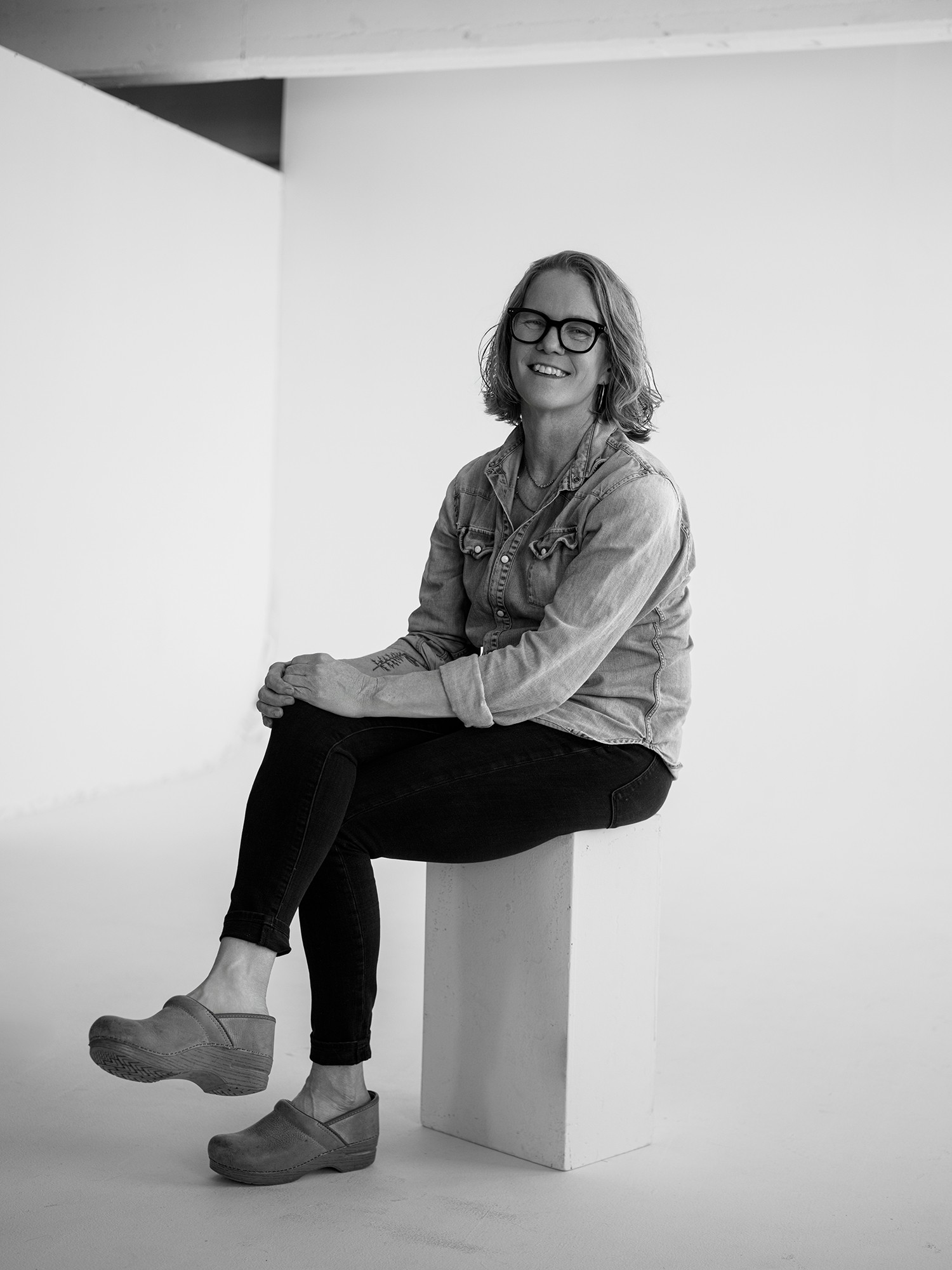
Nemens and I chatted over a phone call about writing in midlife, the complexity and richness of friendships with women, and the timeliness of womanhood.
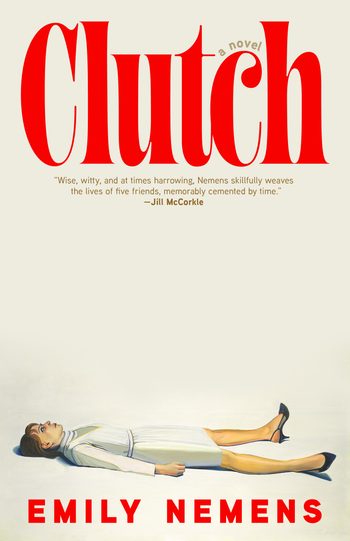
The Rumpus: Why name the novel Clutch and how does the book cover of Wayne Thiebaud’s “Supine Woman” evoke the ethos of the book or its characters?
Emily Nemens: I could write a whole essay on “Supine Women” and why I love that painting, but I was excited by the emotion that figure (Thiebaud never called them portraits) conveyed; the flattened, exhausted but wide-awake woman conveys something my characters are feeling as they try to keep so many plates spinning. Also, there’s a call-back to a certain number of moments in the book when characters are literally in this same position—I liked that, too. The Tin House team and I talked a lot about whether we should try to communicate the group aspect—five of something—on the cover, but somehow this one figure, who showed a universal feeling, seemed to fit better. I have loved this painting for a long time, and asked if we might try something in this flavor or capture its vibes. It was beyond my wildest dreams that we actually got the rights to reproduce it.
As for the title, I love that “clutch” can be so many things: a noun (hand bag, car part, group of eggs), a verb (e.g. grasping), an adjective (in-a-pinch heroism), and that they all seemed to fit the story. Ambiguity or multipurpose? You choose!
Rumpus: What drew you to the idea or goal of writing about a long-term friend group in midlife?
Nemens: There were a few things going on: One, I am in midlife. I have long term friend groups. I feel lucky that friends and female friendships have been central to my life, at different points. I have groups from high school and from college. I moved to New York when I was 21 and had this very scrappy set of friends where we did everything together and figured out things together, and cared deeply about one another and often screwed it up, then helped one another put the pieces back together. (I’ve got a friend who would joke that in our twenties it was the time of maximum hang. We were just always ready to spend time together.) In 2022, when I started writing, I also was coming out of COVID and missed my friends. That year, my partner and I moved out of state, and then I moved to Germany for six months to teach on a fellowship—that, multiplied by a lot by dear friends having families, and our relationships looked different than they used to. The dimensions of what it meant to be a good friend really transformed over those years. It was bound to happen, but accelerated by COVID and leaving New York and leaving the country. I was feeling a lot about my friends and I wanted to write about it.
Rumpus: What does midlife mean to you both as a writer and as a woman, and also by extension, as a friend?
Nemens: As a writer, or as a subject, I was excited about it. I love a good bildungsroman but am also past coming of age in terms of my own lived experience. So I was really interested in writing about or thinking about how, once you figure out what you want out of this life, you hang onto [that experience of evolution and growth], or adapt to that or redirect or make compromises and accept or reject those compromises—it’s often a more complicated moment than coming of age.
As a person, a woman, and a friend, there is a real push and pull about trying harder and trying to level up and still resting and offering oneself and the people around you some grace. It’s like the characters in Clutch. Everyone has been deeply invested in their field and personal life. Coming to terms with, maybe not mediocrity, but a more attainable and sustainable speed of life can be a real reckoning especially if, and I say this one part for my characters and one part for me, you do have big ambitions. There will be disappointments.
Rumpus: The diversity of perspectives really enhances and complicates the reader’s understanding of the reckoning you describe. How did you decide on the structure of multiple POV and each chapter beginning with a text message from a character for Clutch?
Nemens: I had a little bit of practice with this in my first novel because that was an ensemble novel of a different ilk. The Cactus League (Picador, 2021) was a much bigger universe and I trimmed it down to think about difference and resonance, and having enough commonalities and overlaps but also pushing characters and anecdotes far enough apart so the book didn’t feel repetitive.
But of course, the structure was entirely different from Cactus League to Clutch. Only now can I see that similarity. At the time of writing it felt very new and very hard, although I did have help. I read a lot of ensemble novels and saw how they each… don’t do it the same, but I recognized the possibilities of bringing the community together, splitting them apart, and connecting together again. In the case of Clutch, I realized that I’ll have a fast paced and long novel. That is really the only way to cover these many stories of the lives of these many women—even if it only takes place over the course of three months. In terms of the moving between different points of view of the women, having the roadmap of how they can be stitched together really helped. That close third that every so often announces itself gave me a real sense of freedom and possibility to move between characters even within a scene and on the same page. That was fun to play with.
Rumpus: What were some of the ensemble novels you were reading?
Nemens: Mary McCarthy’s The Group and Rona Jaffe’s The Best of Everything. I wasn’t sure if McCarthy was reading Jaffe, but I saw some similarities between them. It was fun to think about those two in terms of potential structures.
Rumpus: How early on did you know that it would be a long novel?
Nemens: I didn’t know how long it was going to go [for three months] but I did have a sense as things got so big. I wrote about a vacation weekend. I wrote about all the women coming back to their lives. I was 100 pages in and I just thought, “Oh shoot, what are we going to do here, Nemens?” I think at that point, I realized I would have my structure sort of be: “ensemble individual ensemble individual ensemble”—the ABA structure essentially, figuring out what the episodes would be was hard, a lot of trial and error, but I had a real commitment to the shape of it.
I do think a lot about musical structures, and call and response. There is a common source to both writing and music—some of these patterns that we digest and metabolize as musicians about structure and callbacks. I love telling my students that if you have an outlier once, it looks like an outlier. If you have an outlier twice or three times, it looks like a variation within the theme.
Rumpus: The structure also came through in the distinct friendships within the group—different iterations of connection, each carrying a different kind of intimacy and friction. How did you think about writing these smaller friendships within the collective, and what did they allow you to explore that the group dynamic could not?
Nemens: That felt very organic to develop. There are so many permutations of these five women who care about each other. I got to know these women so well that I could better understand the good and the bad.
I think something about the five—I don’t know if you’ve traveled with your friends—but sometimes when you’re in a big group there is a reversion to the mean where everyone is okay but no one is thrilled. It’s not the lowest common denominator but there is some sort of everyone just going along to get along because you’re managing so many egos, wants, desires, and dietary restrictions. It was important to render some of those smaller groups because you see a little bit more about the characters than they necessarily let on in the large ensemble. For instance, Carson and Gregg are both creative people and had artistic ambitions, and Carson can’t really bellyache about that in front of the whole group. But when she is just with her friend Gregg, who was going to be an artist alongside her, that ache can be expressed, or at least acknowledged.
Rumpus: There is close attention to physical bodies that change over time. I’m thinking of Carson almost maintaining her body from her early twenties and sustaining a knee injury to the other women “thickening over the years,” and Reba’s tallness or Bella’s shortness. How did you approach writing about their bodies in a way that felt lived in rather than symbolic of their personalities or arcs?
Nemens: I wanted to focus on things they would notice about one another—what had changed. I made a point of not doing the logline from the screenplay of “Reba walks onto the pool deck. She is 5 foot 10, and has olive skin and brown hair.” It is almost a given that these women notice each other and know each other so well. They are not noticing that she is 5 foot 10, they are noticing that she has gone grey.
Rumpus: I was struck by Carson watching Everything Everywhere All at Once on the flight. It was unexpected but made sense. Was there a character whose arc surprised you as you wrote and revised?
Nemens: I think all of them surprised me as I went. With Carson, her life is a little bit different than her friends in that she doesn’t have a partner; she doesn’t have a child nor is she trying to make one like Reba. I think her interiority is a little stranger. She does not have as many responsibilities on the quotidian level as those who have preschool pick-up. She went a little farther out in the field for me as a character. It was a little weird when Dostoevsky and Everything Everywhere All at Once showed up but it also made sense for her. These characters expanded for me as I was going and got more fun to write.
Rumpus: I’m thinking of Bella and Carson and how their passive aggressive moments ripple across the course of three months. You balance the duality of having empathy for your friend with your ability to hurt them. How did you view that duality when writing and were there aspects of friendship you didn’t want to touch?
Nemens: I touched it all! Writing about class, motherhood, careers—in all of those, it can be hard. Several of the friends express that they are disappointed in Carson for not pursuing a more conventional career, whereas Carson feels like she is the last woman standing, in some regards. That doesn’t mean the women can’t be friends. As much as you love these people, you can be disappointed in them too. Whether it is intentional or unintentional, premeditated or you only recognize it after the fact—those kinds of small slights and things that billow out happen all the time. This book is about love and commitment to one another but I wanted to show both sides of love.
Rumpus: When you shared drafts with friends, if you did, were you nervous about their reactions or how they would receive it?
Nemens: Yeah, yeah! I did share with friends. I would say the friends in this book are fictional, though it draws on a series of just remarkable friendships. I feel lucky for that and I apologize to everyone who might see little flashes of themselves on the page. It was really helpful to get some of their feedback. There was one chapter with a detail several of us had experienced and they told me to look at that again, and they were right. Also, my doctor friend was like, “You said kidney but you mean liver.” It was a little bit nervy to share, but a really good experience to do so in advance, so they could weigh in and also so we could reckon with it with some time and space, as opposed to the chaos of pub week.
My closest friend from my MFA left a law career to get her graduate degree, and she was my second reader. She was like, “We really need to talk about what it is like to become a partner [at a big law firm],” because I had it totally wrong. She helped me with the law storyline but also with my prose.
Rumpus: How did you approach writing about their partners and their relationships with their partners, and did you feel like you had to revise how you wrote the men?
Nemens: I wanted to focus on the women and in the first draft, the men were wild villains, not because I think men are wild villains but I was writing this in the fall-out of Roe. And as a woman in America, I felt pretty upset. A lot of that came through on the page. I had a couple of wonderful readers, like my editor at Tin House and my agent both, who told me, “You need to be nicer,” which was true, I did need to be nicer. I did need to think about how these women are at times victims to the men in their lives but they are also complicit in some of their situations.
Through revision, I tried to make the women a little bit more culpable and the men a little bit, maybe not kinder, but more dimensional. That was a really good exercise, and I’m glad I did. I wanted the guys and the partners in this book to be doing different things. How can people be disappointed in different ways? What might it look like when everyone is coming in with different expectations of what care and a healthy relationship looks like? What respect looks like?
Rumpus: You wrote this during a time when there were so many changes in the span of three to four years. How did it impact your writing routine or how you showed up to the page everyday?
Nemens: It felt like a timely story from the start. When I was drafting it, the present time was nearly contemporary, a few months behind. A part of me felt like, not that I was in a rush, but that I was dropped into the rollercoaster and that I wanted to get all the way through the ride. There was a certain amount of just showing up and the pages would go where they needed to. There was also a horrible waterfall (we’re still in it), when it felt like there was something devastating happening everyday. I think part of why I wanted to write the timeline of three months and set these really hard time stamps literally in terms of receipts of their text messages is I felt like I could hold it all within that short window, and what they might have encountered in these three months. Anything longer, and the unwieldiness would’ve multiplied.
Rumpus: What do you hope readers take away from Clutch and how do you imagine women in different age groups might connect with or interpret this story?
Nemens: I hope people can appreciate friendship on the page, and in their lives, differently at the end of the book—not just women, everyone. It’s also, not to be too grandiose, a portrait of this time. This moment of midlife when you’re smushed between so many different obligations and the ambition and moderation that comes with realizing you can’t sprint your whole life.
I would hope that this scratches an itch of the elder millennial reader, in that it’s written about this particular and weird demographic that came of age right before the Great Recession. That being said, the idea of wanting to hang onto the people you care about as your life is shifting is pretty universal and I hope that people a decade younger can see and imagine themselves in the situations that might be coming down the pike. Similarly, when my mom read it, she said, basically, “ I remember what it felt like to be at a time in my life where everything was coming crashing together, and how it felt to be pulled in so many directions.” I do hope that Clutch’s universal themes can speak to a lot of people through its very particular moments of chaos.