The first time he calls you a whore, you laugh.
“I bet there were lots of men,” he says.
You clamp the phone to your ear. It’s the truth. The conference you presented at was packed with men, and you were one of the only women.
Since he moved away, he’s been calling every day. You pick up when you can, flattered he’s thinking of you in his early days of unemployment. Sometimes he sends photos: a mushroom risotto, an old couple on a bench, the name ‘Leonardo’ on a marble plaque. The photos are never followed by words.
You imagine him on the bed of his rented room. A cigarette between teeth, damp walls, mice scuttling beneath the kitchen cabinet. You haven’t seen the room but you prefer it this way. All that’s left is his voice, reaching through the indefinite air.
“Lots of men,” he repeats. “I bet you had a good time.”
That was summer. In the autumn, you fly to see him. The address is a narrow lane off the canal, where tourists recede and street signs wilt in their place. The buzzer is broken, he has to come down to let you in. While you wait, you look at the locals drinking aperitivo across the street. You wonder: Will he ever be that happy? Will we? Wind moves along the smell of algae. The canal is on the other side of the building, but its stench travels.
When the door opens, the first thing you see are eyes: close-set, hungry, honey-brown. The blue vein that carves his forehead. He seems older somehow, or perhaps it’s just the beard that has grown. He wears his only pair of casual trousers: corduroy-grey, ill-fitting, no belt. Belts trap you in, he used to say, tugging the low-hanging loops at his waist.
Now, his eyes pause. When you hug, he’s shorter than you remember. His arms are soft, his nails sharp. They pry through your flesh, scouring for something inside you.
In his Hinge photos, he had brown hair to his shoulders, brown and serious eyes. His profile said he was thirty-three, almost a full decade older than you. But you were bored that day, of your laptop’s light and the seasonless London sky. There was deeper boredom too, for all the things missing in your life that you couldn’t name. When he suggested a drink, you knew nothing about him, and you agreed.
Up the stairwell, your shoulder sags beneath the weight of your bag. It’s an old building, crumbling steps and a tilted banister. A walkway lines the inner courtyard. Doors slam, voices echo in a language you don’t understand.
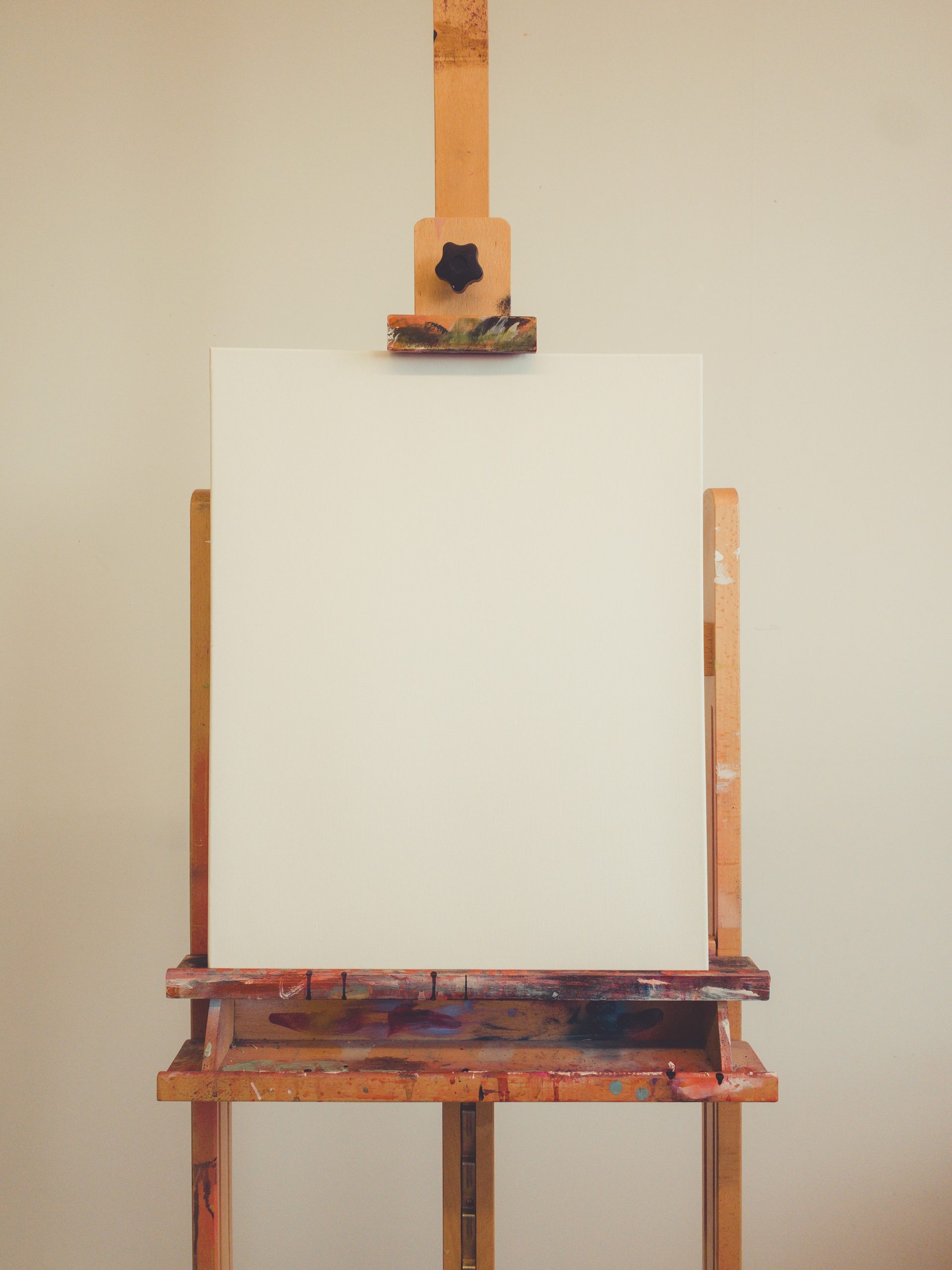
On the landing, he slips off his shoes and orders you to do the same. Your PhD research, the biorobotics conferences, the unfinished thesis – they feel like a long way away. Inside, the room is dark. You drop your bag by the kitchen counter. A gas stove, a rusted sink, a clot of food in the drain. At the far end is a small window, a wooden stool, an easel with no canvas. Beside it, the bed is unmade.
It is worse than you imagined, and it captures him whole.
On your first date, you recognised him immediately, although he looked more ragged than his photos. He was nine months sober and didn’t tell you until you’d ordered an Aperol Spritz. “I want a mocktail,” he said, “and I want it in one of those long glasses.”
“You don’t drink?” you asked when the waitress left.
“I made a bet with myself. Let’s see if I can go a year sober, baby.”
He had one of those grins that made you forget everything else. The bar flowed around you and you barely noticed. He asked questions about your life, its quiet unfolding to academia. You told him that you always did what was expected of you, no more, no less. He listened without waiting to speak.
“What about you?” you asked.
“What about me?”
He pulled up a trouser leg – grey corduroy – to show you his small tattoos. He pointed at the Vitruvian man just above his knee.
“I got this in Italy,” he said, “when I visited last year.”
“Did you like it?”
He nodded. “I’ll move there eventually.”
When you probed his life further, he mentioned his corporate job, but he was evasive.
“I love to paint,” he said instead.
He pulled out his phone to show you. Black and white faces of which there were no lines, only shadows.
“I wish I could paint like that,” you said.
“There’s always something we can’t do,” he answered, “that we look for in those who can.”
The night coated in a golden glow, and you lost track of time, you lost track of everything. At closing, the lights dimmed. He leant forward, digging his nails into your skin.
“Do you know how rare this is?” he asked. “Will there be a second date?”
As his fingers worked their way around your leg, your cunt unclenched, and he answered his own question.
The first night of your visit and everything is new again, encased in that slippery feeling that no time has passed. You sit at a restaurant by the canal, smiling so hard that your cheeks hurt. To begin again – what more could you ask for? On the phone, he’d promised that the past could be replaced. You believe him, you really do.
“I come here often,” he explains, when the restaurant owner greets him by name.
They exchange a few words. The foreign tongue rolls off him, and he appears both familiar and estranged. When you’re alone again, he tells you that learning the language is easy. “You’ll pick it up,” he says.
When you tell him that you’ve been offered a postgraduate job at the university, he doesn’t congratulate you. Instead, he picks starters from the menu. Artichokes, bruschetta, ascolana olives.
“Anything else?”
You shake your head. “You’re still not drinking?”
“No way, baby.”
You count the months in your head. It’s been longer than a year, but before you can say anything, the starters appear. They come in sets of threes. You take one each, and he leaves you the final third of everything.
Over dinner, you talk about life in London, life here.Your research and his art, and how much longer he has on his savings – five years, maybe fifteen if he sells his stocks. You ask how he is, and he talks about the upcoming election, the old colleagues reaching out from the job he doesn’t miss. There are other questions you want to ask, but you look at those honey-brown eyes and decide not to spoil the moment.
Smells are stronger in darkness. Musky bedsheet, his neck sour like wine. The unfamiliar became your life before, and you’re convinced it can become again. He lies so still that if his chest wasn’t inflating ever slightly beneath you, you’d think he was dead.
“How are you?” you ask.
“Good.”
“How are you really?”
“I’m good,” he insists, in that tone reserved for strangers to whom he’s really saying: mind your own fucking business.
He probes his fingers under your bra strap, snaps metal into your skin.
“Ouch,” you say.
For the first time since you’ve arrived, he grins.
In the room behind the canal, you create a small routine. The mornings are so cold that you wake up searching for his heat. He stands at the stove – tattered boxers, creamy skin – watching the coffee rise. You prefer your coffee black, but he takes it with milk and you will too. You drink it quickly, burning your tongue. When he sits at the easel, you know it’s time to leave.
He made it clear, when he invited you. No interruptions to the day, no interruptions to his painting. Instead, you walk the city. You discover the reflection of morning in the Naviglio Grande, the steam of traffic up Corso Genova, the bicycles whippling in the old quarter, where only carcasses remain, chained to metal poles.
With time, you find the cafés you like. You have a thesis to finish: good Wi-Fi and being left alone are your only requirements. Espressos every few hours keep you in good grace with the owners. Too often, you go to the toilet. Eventually, your intestines slow, your teeth darken, and your thesis begins to unfold.
At night, you walk home in the dark. Night in this city is different to London. A thick fog enfolds everything, like a seal. Sometimes you wait by the bar across the street for the hour to turn. If it’s been a good day, you’ll find him smoking on the walkway. He’ll pull you in, show you his painting. He’ll lie on the bed and wait for you to climb on.
If it’s been a bad day, you’ll know.
On your second date, he took you to a restaurant on the green. It was one of those London restaurants with small sharing plates and prices you couldn’t really afford. He picked out food, asked if you wanted anything else. You could only shake your head.
When the food came, he ate with passion. His nails specked with acrylic, his eyes burning a honeyed haze.
“Let me show you what I painted today,” he said with his mouth full, unlocking his phone. Euphoria seeped contagiously between you. I want that, you thought. The rest of your life was flat, as flat as it had always been. Your research and the small friendship group that dragged on through the years. Only this was different, scorching everything from focus.
After dinner, you stood outside. He lit a cigarette. The silence was soothing in the way it rarely is.
“Do you live nearby?”
“Yes.” He paused, courteous like he always was in those early days. “Do you want to come over?”
You hadn’t planned to, but you weren’t ready to call the night over. You walked the outline of the park together, past terraced houses and dusky front gardens, shadows moving behind screens. It was almost summer – late April, maybe May.
“Here,” he said, turning towards a new building complex. There were glass-slatted walls and a concierge who looked on. He tapped the fob key to the entrance.
“I’m working tomorrow,” he said, “so we can’t stay up late.”
“Okay.”
“I just want to paint,” he continued, “and this fucking job – I don’t know how much longer I can do it for.”
He looked at you then, and those eyes you were so convinced were brown had turned black.
One afternoon, you have tickets to the Last Supper, although you don’t tell him that. “It’s a surprise,” you say instead. You usher him out, worried you’ll miss the slot. He groans, leaving the unfinished canvas to the afternoon sun.
At the entrance, his eyes flicker with understanding. He’s talked about coming here since he moved, but he hated the idea of booking in advance. The vestibule is titanium and glass, scheduled visit times and ID verification. You run your bag through the metal detector. He pulls up his trousers and hums impatiently from the other side.
Inside the chapel, the fresco is huge against the wall. His neck strains back, lips gently apart . How long does he stand like that? When he grazes your arm, it is just for a moment.
You were meant to stay two weeks. Six have passed. The clothes you came with are the thin clothes of early autumn. You lather them up. Sometimes he lets you borrow a fleece. Somewhere in your inbox is the confirmation for the return flight you never boarded. You think of the empty seat, the relief of the stranger who would’ve sat beside you. You think of it as a gift.
A café as a place of work is an Anglo-Saxon concept. On weekdays, the cafés here get busy in waves – mothers with prams, elderly couples, suited men on espresso breaks. You’re the only one with a laptop. You’re foreign, you remind yourself when someone glares across the room. That’s your excuse.
On weekends, it’s impossible to get anything done. The canal overflows with tourists. If he wants to paint, you leave the house, looking for a quiet place to call somebody, although the numbers to call are thinning out and the temperature too cold to be outside without purpose. On the mornings when he wants to rest, you lay very still, careful not to wake him. When he finally does, you fuck him like you mean it. Secretly, you hope this will be what saves you.
The next time he calls you a whore is on a Sunday, outside the neighbourhood church. You sit on a bench without touching, watching the sun edge its dome. When you mention your plans to travel after your PhD, his face turns to shade.
“Unbelievable,” he says.
“I’ve told you before.”
“You haven’t.”
But you have, you’re sure of it. You told him months ago, before he quit his job and left London. You’re almost certain he asked to come with you.
“You’ll have fun,” he says. His voice is cruel, cold.
The hypothetical date when you’d leave is a long way away. For now there are only the two of you on the bench, the chiming bells and the people bursting from the church. “Mass is over,” he says. He comes here often: he likes to see hope, he told you earlier, even when it is misplaced.
As the square fills with congregation, he walks away. All hope, he will argue another time, is misplaced.
Late evening. In the room, cold seeps into your bones. Water bubbles on the stove. He grates cheese while you sit in bed, layered up and scrolling on your phone. You realise, suddenly and all too late, that you missed a meeting with your supervisor.
He strains the pasta, shrugging through the steam.
“Can they even fail you?”
“Probably not,” you say, as you type an apologetic email. London is far away, and this is not the first meeting you missed since you came.
“That thesis is just a way to fill time,” he says.
Most of life, you’ve realised, is a way to fill time. You check your inbox for group meetings and conference invitations. You swipe left, watching them disappear.
There’s one more day that begins like every other. The café you go to is one of the usuals. Chatter filters beneath the puffs of the coffee machine. In English, you order an espresso, pay with a single coin. At the table by the window, you start reading yesterday’s work.
That’s when the nausea rises. At first, you try to ignore it. You read through the page again, but the queasiness only seems to grow.
In the bathroom, you don’t have time to lock the door. Your stomach contracts into itself, over and over. A long time after, you pull the flush, watching the contents swirl away like a small miracle.
That afternoon, silence comes in bursts. You hear it as you rush past the sewage of the canal, the fog on the walkway. You hear it as you move across the room, between retches in the toilet, when there is nothing left but stomach acid that stings the back of your throat.
He doesn’t turn when you come out of the bathroom, when you lay on the unmade bed. He’s painting a face in his signature black and white. No lines, only shadows. He’s a good artist, you like his art, you always have. It’s improved since he moved, the details more visceral and abstract.
“Take off your shoes,” he says.
He doesn’t sound angry, although you came home earlier than you should’ve. If these are all his words to you, you think, it’s alright.
“Did you vomit?” he asks.
“Yes.”
He laughs and laughs, and then he stops, and he turns towards you. You cover your face with your hands.
The fridge is bare, but neither of you are hungry. He lights a cigarette on the bed. A lightbulb circles the ceiling, illuminating small mosaics of mould. You think of the damp walls, the mice you haven’t yet heard.
“I’ll go to the pharmacy in the morning,” you say. “Then we’ll know.”
The blue vein throbs at his forehead. His eyes are black.
“This was a mistake,” he says.
“What was?”
He doesn’t answer, merely puts out the cigarette against the unfinished canvas.
The last time you saw him in London, you left his flat at five in the morning. It was early summer then, the sun rising or just risen beyond the cement jungle. Your heart hammered as you entered the elevator, as you crossed the reception room made of glass. The concierge looked up as you went past.
The Uber wasn’t there yet, but you went outside anyway. You sat on the curb. You felt numb, everything was numb. Never again, you thought.
You were almost certain that the concierge was looking at you through the glass. Your ears still rang, and you wondered if he’d heard. Did he patrol the corridors at night? How thick were the walls? Surely someone, anyone, had heard.
You held your head in your hands. Never again, you thought. But perhaps you knew, even then, that this would be a short-lived promise. After all, he hadn’t left his job yet, and that was enough reason to explain it away.
In the morning, you wake to darkness – a final darkness that weans to day. You watch his frame at the counter, tattered boxes and the tattoos already fading. On the stove, the moka pot suffocates the flame.
“Milk?”
“Sure,” you say.
He pours milk into a mug and sticks it in the microwave. He rubs his eyes. Twice in the night he woke up because you were moving. Each time was worse than the one before. You wonder who heard. Silence may come in bursts, but in this building, everything echoes.
He brings the mug to the bed. You focus on the thin rubber ripple where the milk cooled too fast. You feel nauseous again, but you don’t know if it is fear, and fear of what.
“It could just be food poisoning,” you say.
“It could.”
“I’ll do the test, then we’ll know.”
He sits at the easel, close enough that you could touch him, if only you reached out.
Waiting, now. He rubs his hands against grey corduroy. Paint rims his untrimmed nails. And those trousers, when were they last washed? They look baggy, repulsive somehow.
“Is the pharmacy open yet?” he asks. “I want to paint.”
You check the time on your phone. You find your wallet. You pull on your only jacket, a raincoat too thin for this weather.
“You’re shaking,” he says. “Are you worried?”
“Yes,” you answer, because it’s the truth.
“I thought you’d be used to this. Whore.”
You slip into your shoes.
“I’ll be here when you get back,” he calls as you shut the door.