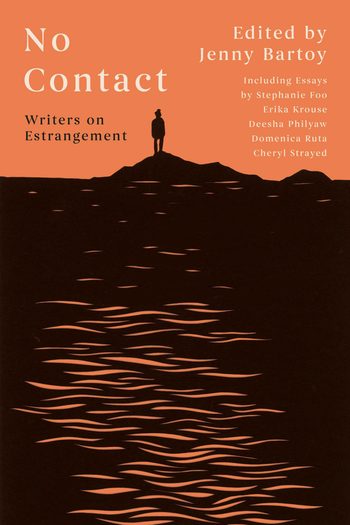
What is it like to grieve the living? How can we reconnect to our mother language and hometown when we’ve severed contact from relatives? What opportunities for joy does estrangement invite? Who can we become without family? Jenny Bartoy’s new book, No Contact: Writers on Estrangement is the first-of-its-kind as an anthology exploring family estrangement. She opens No Contact by asserting that estrangement is an embodiment of existing, as it is, as opposed to being liminal. No Contact refuses to allow estrangement to be pigeonholed. Instead, it can be a journey of reclamation and even community.
Thirty-two authors contribute their perspectives, including Cheryl Strayed, Stephanie Foo, Emi Nietfeld, Deesha Philyaw, Anna Qu, and Erika Krouse, among others, incorporating a range of personal narratives and even poetry which explores the many possibilities that lead to cutting ties (abuse, mental health, addiction, religion, politics, et cetera).
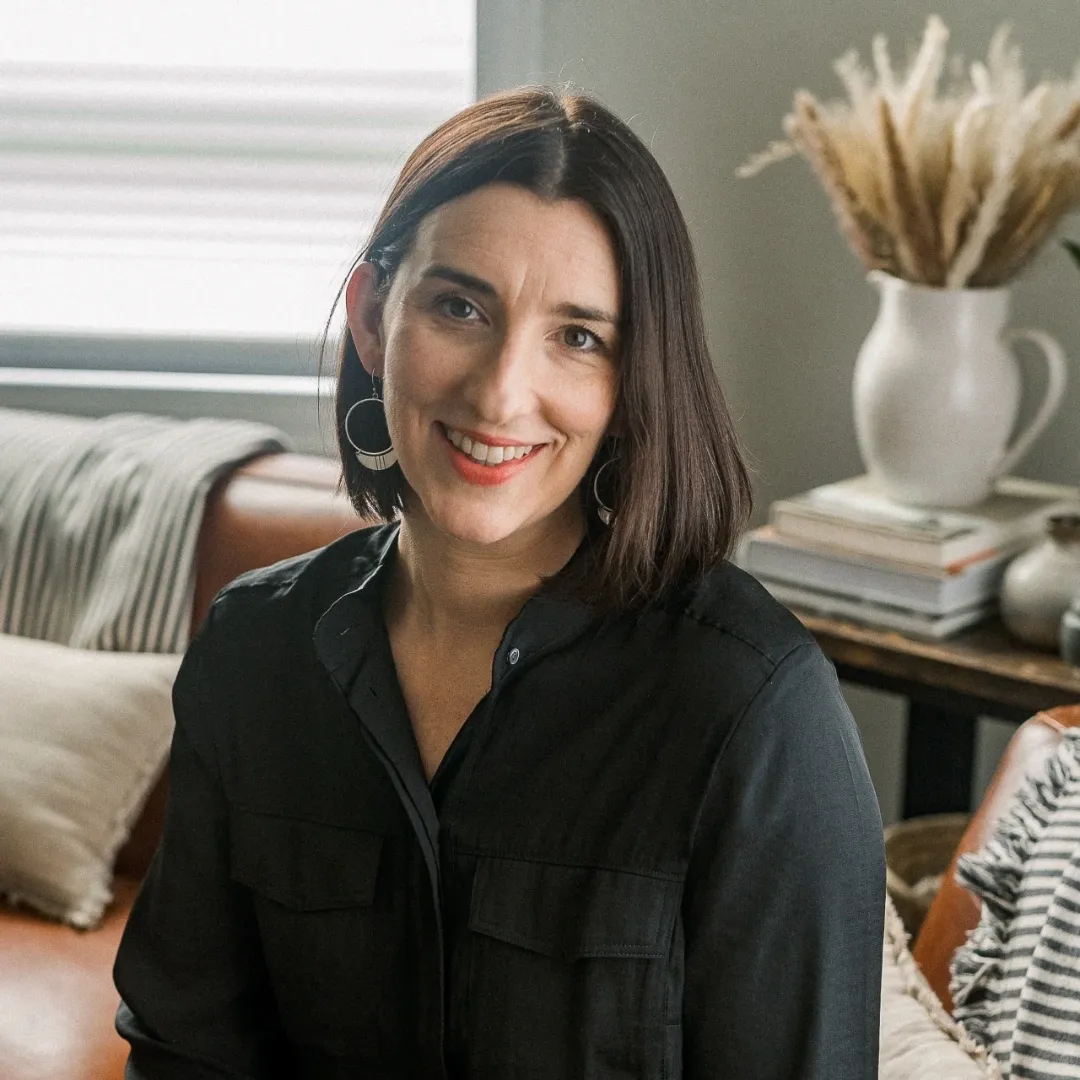
Jenny Bartoy is a French American writer, editor, and critic, who prides herself in offering developmental and line editing which is rooted in honesty and compassion. Based in the Pacific Northwest, she has been estranged from her father for twenty years and counting. For Bartoy, estrangement was the most difficult thing she has gone through but it has guided her to find her sense of truth and self which allowed her to live a full life with a strong sense of who she is and what she’ll tolerate. Bartoy has a great partner, three kids, and has been able to create the family she didn’t have.
I personally went from having an abusive family to an ex-family to chosen family. As someone who has cut off contact with my entire ex-family and all but a handful of people from my hometown for 12+ years, there is no hope or possibility of reconciliation—unless I want to be kidnapped and literally locked in a trailer. I legally changed my name so my ex-family couldn’t find me. One of the things I’m grappling with is how to shape defamiliarization in my own writing. I’m always worried about having an editor who has the sensitivity to hold the vessel of my story. To see an anthology like No Contact be published is a beacon of hope.
I was delighted to speak with Jenny Bartoy over Google Meet about estrangement, author agency, and editing with care.
The Rumpus: Despite media and societal discourse claiming that estrangement is a trend, you have spoken about how estrangement and abusive families have always existed. I was so thankful when Psychology Today released an article about the dangers of calling estrangement a trend. How does No Contact contend with this notion that estrangement is a trend?
Jenny Bartoy: Ever since I saw the word “trend” pop up in regards to estrangement, I found the term problematic for several reasons. Estrangement is more of a reckoning than a trend. I think it’s a reckoning with accountability and truth within our family dynamics. Through a broader lens, it’s also a reckoning with our society and what it allows in problematic relationships and power dynamics. The anthology pushes back against this idea of a “trend.”
In terms of semantics, trend can be related to statistics; yet estrangement has not been researched for more than a decade. I’d be curious to see if estrangement has increased in this time. I haven’t seen data about this, so it raises a red flag to use the word “trend.” Another more problematic aspect of the term is that it implies that it’s trendy which offends me in every way. Estrangement is such a difficult and complex phenomenon and experience, so I definitely reject that term.
Finally, “trend” can [mean] “the topic is trending” in our discourse, and in our media, and I agree with that. It’s a good thing. What is trending is not estrangement itself—it is the conversation. And I think that is wonderful. I think it has opened a lot of doors for deeper understanding and more nuance.
That’s what the anthology is trying to do. We’re taking a big step in that direction in print. There aren’t any books doing this. Memoirs each offer one voice and one story, which is needed, but [No Contact] gives a variety of unique stories on the topic in one volume which pushes back against this notion of trend. Every story is unique. Every story is difficult. Although the experience of estrangement is universal when you look at it broadly, it’s so deeply personal.
Rumpus: You’ve been estranged from your father for over twenty years. How has curating this anthology been a vehicle for healing? How does No Contact play a role in building community and destigmatizing estrangement?
Bartoy: When I cut contact with my father, I was in my early twenties and it was a very difficult and lonely experience. There were no resources available. I couldn’t afford therapy then and couldn’t find books on the topic. Wherever I looked online, it was mostly counseling websites that encouraged adult children to rekindle their relationship or estranged family members to work harder. There was no validation of the decision. It was just very isolating and challenging. Cutting ties was the most difficult decision I’d ever made, and at the same time it brought me immense relief. It didn’t feel like a wrong decision.
As I moved forward, the most helpful thing to my healing was talking with other people who were estranged. In this book, I wanted to replicate this experience with a variety of stories offering a sense of community for a reader who might be estranged. I also wanted to bring into the fold people who are not familiar with that experience, and who can then get an inkling of its complexity and diversity—how harrowing but also empowering estrangement can be.
I hope the anthology creates community by bringing together a chorus of voices: each unique, but together forming a compelling whole. By sharing our stories, we hopefully inform and educate others [thereby] fostering community and destigmatizing estrangement by showing how common it is. You never know what goes on in homes and families. When you realize how many people experience [estrangement], it makes it a less shameful thing to hold.
I’ve been estranged for over twenty years, done a lot of therapy, and a ton of research, and have read hundreds of stories about estrangement in that time. I don’t think [editing the anthology] helped my healing necessarily, but it definitely validated my decision and my experience.
Rumpus: The original title of this anthology was Broken Free. How were you able to maintain the vision for an anthology about estrangement while curating individual selections and maintaining author integrity?
Bartoy: I loved the [original] title, but I was actually the one who changed it. Luckily my editor and team at Catapult were on board right away. “Broken Free” means more to a person who is estranged than to a random reader seeing the book on a shelf. It speaks to the kind of polarization between the rupture and feeling broken and having a broken family, and then the empowerment and freedom and liberation that might come from that decision. I did like the title, but I don’t think it was as clear what the book was about.
I had a very clear vision from the start about what I wanted this book to be; I had a whole checklist of topics to cover, because I wanted to show both the unique personal experience of estrangement and also a universal estrangement story. I wanted to show a diversity of stories, and all the different reasons someone might be estranged: politics, religion, mental illness, addiction, abuse, value differences, adoption, and incarceration. I wanted to show both someone who has made the decision to go no contact, someone who had ties severed with them, and also the murky inbetween. I wanted to show absolute rupture of connection, and also intermittent connection, and low contact. I wanted diversity in demographics (ages, ethnicity, race, sexual identity, gender, immigration), and to show estrangement from one family member (parent/children is most discussed) and estrangement from the adult child’s perspective, from parents, from siblings, cousins, grandparents, entire families, et cetera. There was a lot on the checklist!
There were two things I was determined to stay away from: first, the inevitability of reconciliation. As you know, estrangement is a reality. In many cases, it does not end in reunification, let alone reconciliation. And that’s okay. There’s plenty of good that happens from estrangement that doesn’t aim for closure. And I stayed away from any story that lacked accountability. There’s a huge upswing in op-eds and social media accounts that are raging jilted family members [saying] “how dare they cut me off! They’re just entitled and selfish! They can’t handle conflict!” Basically, these individuals refuse to turn the lens on themselves. And there’s no complexity at all. I definitely didn’t want any of that.
Rumpus: In the introduction, you state, “Estrangement is the process of making strange what was once known.” What is the connection between estrangement and defamiliarization, from your observations editing the essays in this anthology?
Bartoy: Estrangement in itself is defamiliarizing in two ways: One, we become estranged in many cases because we are the one who doesn’t fit into the family dynamic. Family should be familiar, should be accepting, should be your comfort zone. But for many who become estranged, it doesn’t feel that way. Before the estrangement, there’s already this sort of disconnect. Two, the experience of estrangement itself is defamiliarizing. Once we’re estranged, our family no longer feels like home or the source of our identity. We are separated. We are defamiliarized with and from the self. Who are we once we’re cut off from family?
We have to rebuild our identity whether we have cut ties or ties are cut, whether with our whole family or one family member. There is a rebuilding process that happens to find the familiar in the self again. Sometimes it’s immediate. Sometimes it takes a long time. Many stories in No Contact explore that disconnect and the degrees of defamiliarization.
I love Emi Nietfeld’s essay about her mother, who has a large personality and is a hoarder who did not allow the truth to stand. Emi writes about how unsettling it was to feel so disconnected from reality in her relationship with her mother, and how when she cut ties, suddenly she was able to access logic and critical thinking.
Anna Qu writes about how her father died, and how she is cast out once her mother remarries. The same thing happened to her aunt she had never known growing up; so she travels to China to reconnect with this aunt and their heritage. In her home country and ancestral land, she finds a lack of familiarity caused by both the family dynamics as well as the language. The essay is beautiful in that it touches on literacy and belonging.
Domenica Ruta writes about cutting contact with her father and sister during COVID while battling cancer, which is incredibly intense. For her, that conflict is not unfamiliar, necessarily, but she then discovers through addiction recovery what was unfamiliar—finding chosen family and unconditional love, and having to learn to accept it. I find that essay so harrowing and powerful.
Rumpus: I’m so moved to hear about the care you have for your authors in No Contact. What is your editorial approach when working with material that may be traumatic or triggering?
Bartoy: Editing is my day job. I work as a freelance developmental editor. I edit fiction and memoir. My approach to editing, which translated to how I approached this anthology, is rooted in honesty and compassion. These are two values I hold dear in my life, as well. Writing is hard work. You deserve an editor who is honest with you. Writing is hard work. You need an editor who is compassionate. In terms of this anthology, my personal experience completely informs my sense of empathy in the context of this topic. It gives me insight right into what might be tricky or sensitive.
It helps, when editing, to think about the writer, the reader, and the self. When something is triggering and traumatic, I always think about the writer. Are they okay writing this? Are they okay sharing this? Editorially, I’ll say this needs more detail or more refining, or I think it needs to be cut back. All of that needs care, in terms of how it’s communicated. The writer needs to feel safe, both in writing but also in being public about their story. This is magnified when the topic is so traumatic, triggering, and personal. The writers in No Contact have been so vulnerable about, for most of them, the most difficult experience of their life. I don’t take that lightly. It’s a big responsibility.
In terms of caring for the reader, honesty and compassion apply. There are several harrowing stories of abuse in the anthology, and in each of those we discussed how much and how little [details] to share with readers. We discussed what to include and why the trauma was so bad that it necessitated rupture. But also you don’t want to horrify the reader, you don’t want to scare them away.
And for the self, in editing, I think I put a lot of care towards my writers and readers but perhaps not as much for myself. It was a very hard project to work on. Many, many tears were shed in the process. But it was worth it.
Rumpus: No Contact covers a range of topics that at first glance seem binary: grief/healing, in contact/estranged, entrapment/freedom, and compliance/escape. How are binaries broken? How does this anthology grapple with the complexity of estrangement narratives by eliminating the risk of the single story?
Bartoy: In my view, the single narrative in terms of estrangement is what I heard when I cut contact: “Family is more important than everything; blood is thicker than water; you need to get over yourself and reconcile.” That still happens a lot nowadays. A lot of the op-eds about estrangement echo these beliefs. They’ll say, “Sometimes there is terrible abuse, and estrangement is warranted but in many cases, nah…” In reality, there’s a variety of complicated experiences that people have. It’s so reductive and dismissive to put it all under this one [narrative that] “family is most important.” Your family perhaps, but not everyone’s family.
On the flip side, we want to stay away from the single narrative that supports estrangement too, right? It’s not just “cutting contact saved my life” or “cutting contact is empowering”, or “cutting contact means freedom.” I see that single narrative happening also in response. I think the truth is much messier, much murkier. The reality of estrangement is diverse and complicated.
I think the one single narrative, the one thing that applies to most, is that nobody wants to be estranged. Whether you’re the one cutting contact or it’s been done to you, no one wants that. We want to belong. But for the person who made the decision or is grappling with it, it’s often the only path forward. At least in that moment, there’s not another option.
Estrangement is a binary: either in contact or not. But there are so many degrees in-between: low contact, intermittent contact, some families reconnect and fall apart, and some reconnect and it works but the boundaries have shifted.
The anthology grapples with the complexity of estrangement narratives by showing a diversity of stories and different degrees of certainty about the situation. For some people, it is very clear that cutting contact is selfish or freedom or utmost relief or it’s the clear path forward. For some it’s unwanted and it haunts them, and for others there’s always the possibility of change. I think most of the stories show that murky middle.
I often say that estrangement is a form of grief. Like grief, estrangement has stages that feel universal. In certain ways, death is a cleaner process to go through because there’s no alternative. With estrangement, a possibility of reconciliation exists by default, even if it’s not within our control. Maybe a parent misses you so much they go through intense therapy to fix themselves and reconnect with you, and perhaps that reconnection is very boundaried. So, maybe you could reconnect at some point? Maybe. Those little nuggets of possibility exist in the minds of many who are estranged even if they feel strongly secure in their estrangement.
I don’t know if you agree with that? [Dremen shakes her head]. Nope? [Both laugh].
In my own estrangement, I don’t think it’s likely. But you don’t know until death, you don’t know what change someone is capable of—just as you don’t know that the people you’re in contact with might not change and betray you. I think that uncertainty and that sense of possibility is unsettling. It’s also why I think estrangement as a topic is so polarizing, because we don’t know and because there’s never a closure, really. I’m curious what you think?
Rumpus: I keep hearing about all these people critiquing this notion of estrangement as freedom and happiness and I’m one of a handful of writers who write about estrangement as a totally joyful thing. I know Emi Nietfeld does. Maybe it’s on social media? But it’s not in the publishing industry. Please show it to me!
Bartoy: I think what I was getting at is that accountability and real change are possible. In narcissistic, sociopathic abuse, I doubt [reconciliation] would ever be possible. But I think in many cases, humans are capable of immense change. Whether those people that you’re estranged from want to actually change is more debatable.
Rumpus: Accountability, agency, authority—great A-words. What possibilities does estrangement allow for author agency?
Bartoy: In writing about estrangement, it’s important to hold ourselves accountable as much as we may hold someone else accountable, even if we feel like they are the villain of our story. That’s a fundamental rule of memoir, that you must be as harsh with yourself as with anyone else in writing. If you are the one who is “the victim” in the narrative, it’s tricky to then write about others who harmed you and what may have been their worst behavior. There’s a responsibility that comes with that—ethically and legally. Sticking to the truth is what saves us. We are allowed to write about what happened to us; how we write about it is the tricky part.
Storytelling is the ultimate power move. Telling our story, telling our truth—we are the authority on our own life. Ironically, I think storytelling as a power move is shown when families come together to uphold a narrative against the scapegoated family member, or the estranged family member. When we tell the truth, it causes problems for such narratives. You see that in the news currently with the propaganda machine in overdrive. When we tell stories that push against authority, that could challenge it, truth-telling can become dangerous. Ultimately if you tell your truth, nothing can touch you. Truth is the purest form of story.