While I served as an alumni host of graduate student readings at the Bennington Writing Seminars, I first heard Davin Malasarn’s fiction straight from the source. At the podium, he delivered his thesis manuscript with the poise and emotion of a seasoned writer. Later, I was surprised to hear of his background in science, a field he’d originally chosen over his artistic interests for its practicality.
In his debut novel The Outer Country, Malasarn weaves intricate tales of breaking free from social barriers inside and outside the home. Ultimately, the book is a coming-of-age story in which its protagonist Ben is made sick and anxious by family disapproval of his effeminate nature and of his being gay. As Ben begins to accept himself through the help of a supportive boyfriend, his physical ailments subside and his mother and aunt begin to accept him as well. Throughout the novel, Malsarn shifts to the POV of all four members of the Thrakoontong family. In doing so, he paints an intimate, three-hundred sixty degree portrait of the increasingly-complicated stories of the three adults that moved from Thailand to L.A. in the 1970s and 1980s.
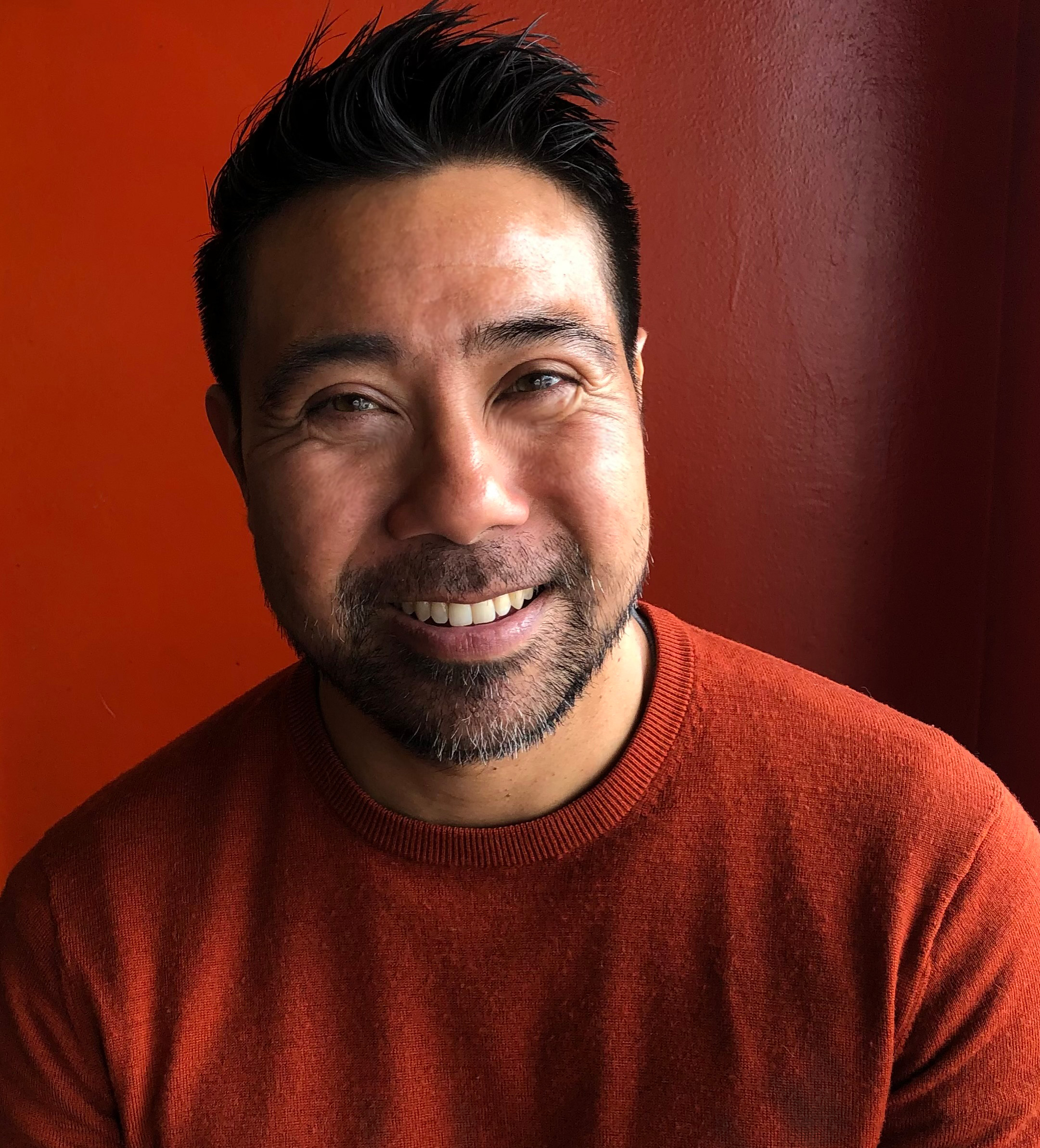
Malasarn is a Thai-American writer who lives in his native Los Angeles. In addition to being an author, Malasarn is a co-founder of The Granum Foundation, a non-profit that supports writers finishing and launching literary projects.
I was excited to correspond over email about Malasarn’s transition from science to writing, the inspiration behind his novel, language barriers within a family and the emotional balancing act of turning fact and fiction.

The Rumpus: It intrigued me that you’d studied biochemistry in college and earned a Ph.D. in biology. I’d love to hear more about your trajectory toward becoming a novelist?
Davin Malasarn: I was painting and writing stories since I was a child, but I never allowed myself to think of those pursuits as possible careers. So, as an undergraduate, I majored in biochemistry for more practical reasons and took studio art and creative writing classes whenever I could fit them into my schedule. I did well in science, but I tended to stand out more in the liberal arts, where I was genuinely inspired day to day. After I earned my PhD in biology, I accepted a postdoctoral fellowship in Paris. There, because I had so much time on my own, I threw myself into my writing. That intense period of creativity was eye-opening. I realized that writing could hold my full attention over the long term if only I was willing to commit to it. I came back to Los Angeles knowing that I would make the switch.
Rumpus: How does your background in science affect your writing?
Malasarn: My scientific training is most helpful when it comes to writing about a new topic. I don’t get intimidated by my own lack of knowledge in a field. I know how to learn, and I can be rigorous about it. Science taught me that.
But I sometimes wonder if science also makes me too analytical as a writer. I have to avoid thinking of storylines as equations, where every plot point has to be integrated as part of the formulation for the ending. I have to remind myself that not every question has to be answered, and not every detail has to be a clue. The heart meanders. The heart can be nonsensical. I want that to be reflected in my work.
Rumpus: In 2024, you were searching for a title for this novel (based on a journal entry on your website). Had the phrase “The Outer Country” been used in early drafts, and how did you ultimately choose this title?
Malasarn: I love poetic titles. I wish I could come up with something like The Unbearable Lightness of Being. But while I was working on my book, I never settled on a phrase that captured the scope of what I was trying to cover. I was calling it The House and the Garden, but that felt too much like the name of a magazine you’d see in a grocery store checkout line. One of my mentors, Claire Vaye Watkins, suggested The Outer Country, and I used that to query agents and later to go on submission. It was an important phrase in the story from the beginning. It means “foreign country” in Thai, but the characters use it specifically to describe America, the country that is so central to their conception of what lies beyond home. As the book developed and as more people offered feedback, that title stuck.
Rumpus: In another journal entry from December 2024, you write: “I’m sitting here with Light in August beside me, feeling its energy, feeling the energy of all these books around me, not as quiet contained objects, but as… drawers on the verge of exploding.” How did Faulkner and other writers influence your work and energy toward this novel?
Malasarn: I remember that moment a couple of years ago, but I don’t remember which books were surrounding me. Maybe K-Ming Chang’s Bestiary or Merrill Joan Gerber’s Revelation at the Food Bank or James Baldwin’s Another Country. I tend to read three or four books at a time, so the stacks are frequently changing. This sense of energy is intriguing to me, though. I think some people might refer to it as “urgency” or “heat” in a book. The idea, as I see it, is to capture the passion of an experience as it is felt in the moment rather than after it’s translated into writing. Many of the great books demonstrate that. They seem to contain feelings that are too big for words. Sometimes while revising, we can distill things too much, searching for precision or concision or even just a sense of order. I think if we go too far in that direction, we risk losing the sense of energy. I’ve sometimes lost it myself, which is why I think about it a lot.
Rumpus: Did your novel’s first draft feature multiple characters’ viewpoints or did that evolve? Were there any characters that presented more of a challenge to write than others?
Malasarn: The book includes a lot of autobiographical material, and when I first started writing it, I was set against centering it on Ben, who most closely represents me—the idea of that bored me. I don’t need to think about myself all the time. So, the earliest drafts had Manda, Ben’s aunt, as the main character, and originally the entire story was told from her point of view.
As part of my experimentation process, I wrote some chapters from the point of view of Ben’s mother, Siripon. My mentor, Jill McCorkle, told me that those new sections provided some useful context for the story as a whole. So, it became a story about two sisters.
Then, someone convinced me that it would be helpful to see some of the story from Ben’s point of view, and I grudgingly added his chapters.
Finally, to complete the picture, I added some chapters from the point of view of Ben’s father, Kamron. That was the most challenging because I had such resistance to it. I didn’t want him to be a major character; I didn’t find his journey to be as multidimensional. But my editor, Oma Beharry, said his absence called more attention to him than his presence would, and so I added him. I’m grateful for that advice. In some ways, those chapters became the most eye-opening for me. Forgiveness is a central theme in this book, and I needed to forgive him.
Rumpus: When you speak of needing “to forgive him,” do you mean the character Kamron or your own father?
Malasarn: The characters in this book often serve as stand-ins for my family members. I forgave Kamron, and that helped me forgive my father. Or maybe it was the other way around–maybe in the writing process I forgave my father and was able to write Kamron’s character in a more sympathetic way as a result. I know what I wrote in the novel isn’t factual. But I think the story is plausible, and that’s what helps me to connect my emotional responses to my characters with my responses to the real people.
Rumpus: Along those lines, you’ve said the character Ben most closely represents you. How have you handled the emotional process of turning autobiographical material into fiction?
Malasarn: This was a big challenge for me. In earlier drafts, I was so cautious about maintaining the same narrative distance from Ben that I had with the other characters. Because I knew Ben so well, I was prone to offer more of his insights and nuance relative to the other characters, and I was actively fighting against that for months. But Claire [Vaye Watkins] suggested that maybe it was okay if the narrative distance changed from character to character. She told me to embrace the book’s irregularities, both in terms of character and in terms of structure, and that freedom helped me tremendously.
Rumpus: When writing this book, what did you discover through your characters about the nature of secrets? Or, what did you set out to explore about secrets?
Malasarn: I came to focus on incompleteness as a consequence of secrets. I was drawn to the idea that each member of the family had a different partial picture of what was going on within the household, and only by combining all the partials could anyone really understand the full story. That was exciting to me as both a mathematical puzzle and a source of drama.
The exploration came from helping to care for my mother during her final years. She suffered from dementia and went from someone who kept a lot of things to herself to someone who was suddenly very open about her past. She told me stories about my family that I had never heard before, and I didn’t know whether they were true. But the more she revealed, the more the details started to fit together. Hazy impressions from my own memory became more concrete as a result of the added information. I realized that I sensed a lot of what was going on even if I didn’t know it directly. It was interesting to think of the characters feeling the secrets even if they didn’t know the secrets.
Rumpus: Along similar lines, silence seems to be an important motif. The passage below comes after Kamron, the father, perpetuates an extra-marital affair.
“When it was over, Kamron turned off all the lights. He grew quiet, listening to the silence in the rest of the house. Then he crept back into his room and into his own bed. He loved Siripon. There was no one else he would want as his wife.”
What role does silence play in this novel?
Malasarn: When I was growing up, my family had a favorite Japanese restaurant called “Yama” where we celebrated our birthdays. Going there as a teenager, I realized how different we were from all the other customers. We never spoke. We sat around the table eating our dinner specials in silence. In my book, characters often withhold information because they’re afraid of hurting one another or because they’re afraid of the consequences they might face if certain things are revealed. As much as the silence makes them uncomfortable, they see it as necessary to maintaining stability.
Rumpus: In the Acknowledgments section, you cite a few reference books. Could you share a little about your research and how what you learned shaped the novel?
Malasarn: Immigration has become such a major topic of discussion in our country—and a source of anger, hatred, and violence. Writing this book, I wanted to make sure I wasn’t drawing only from my own narrow contemporary experiences on this topic. I did research to understand what the immigration process was like during the ’70s and early ’80s. I needed a better sense of the legal barriers immigrants faced and the mindset of the people coming to America at that time. I also needed to understand the policies that were in effect. I should say there isn’t a lot of information available when you’re focused specifically on Thailand. I relied partially on information about immigrants from the Philippines, and I think there are similarities there.
Beyond the reference books, I did research on the Thai naming practices—that was a big challenge, and I’m not sure I ever got it totally right. I also researched Thai cremation ceremonies, but that was largely informed by family photos and my own experiences. Again, there wasn’t a lot available on the topic, which was one of the main reasons I wanted to include it.
Rumpus: When Ben is a child, his aunt brings a monk to the house to perform a ritual to stop what she considers effeminate behavior in her nephew. As an adult, Ben is reluctant to talk to his parents about that. The following passage reflects Ben’s thinking as an adult:
“…he and his family didn’t have the language for the confrontation, even if he wanted one. Any attempt to discuss it would hit that barrier, all of them incapable of exchanging their deeper thoughts. He felt but did not know all that had been lost between them because of this. Telling a story in a different language meant telling a different story.”
What is the importance of addressing language for you in this novel?
Malasarn: The language barrier creates another form of silence. In my life I felt it in subtle ways over decades, but during the writing of this book, a lifetime of emotion was concentrated into a short period of time. I really felt the weight of it. The language barrier strips confidence from the adult characters who immigrated to America. It makes them seem inferior in the eyes of others. It also causes a barrier between generations, and I think that comes with a deep sense of regret. Decisions that were made decades ago, when Siripon came to America to make a better life for herself and her family, meant that she would not be able to fully communicate with her son. And we will never be able to list all that’s lost as a result.
Rumpus: Although the Thrakoontong family’s collection of Buddha statues grows over the novel, they don’t seem to have regular Buddhist rituals or practices. And, as a boy, Ben tests his mom and she first says she’s okay with the idea of him becoming a Buddhist monk. Yet moments later, she asks why he wouldn’t want to raise a family.
What’s important to you about this family’s relationship to Buddhism?
Malasarn: I was raised Buddhist, and my family remains Buddhist. The religion really was a part of everyday life throughout my childhood. Food was offered to our shrine every day. It was provided in the morning, and it was removed after noon, and my family often made me eat some of it because it was considered blessed. We had to go to the temples on our birthdays where hot wax was sometimes dripped into our hair, and at least once that meant it was dripped onto my scalp. Once, when my mom had recurring back pain that the doctors couldn’t solve, she went to the temple and had the monks treat it. The treatment was a painful tattoo delivered via the tip of a pointy stick that was repeatedly tapped into her back. I think she was actually cured afterwards!
At the same time, I think my family also saw religion as a possibility rather than a fact. They didn’t rely on religion to save them. It was almost as if they hoped the religious promises were true, but they were never sure. Because of that, Buddhism never was overbearing. It was a part of life but a secondary part. And I wanted to capture that. I think the context makes the Buddhist ceremony at the center of this book more surprising. An event that isn’t meant to be a big deal becomes a life-changing experience.
Rumpus: What moments brought you joy while writing this novel? What have you learned?
Malasarn: What comes to mind in terms of what brought me joy is what finally happened in my late drafts, just weeks before the final version was due. The structure of the story was settled after a lot of rearrangement, and I could pay more attention to the prose. Finally, I was able to get through longer passages without hitting stylistic snags. That was satisfying, even if it wasn’t long-lasting!
In terms of what I learned, I really came to appreciate how much effort is required near the end of the revision process. I think when you’re sharing writing in workshop or with mentors, usually, the focus is on the big picture. Feedback comes in the form of highlighting larger issues that need work. But to take a book all the way to publication, you finally need to get to a place where the writing is polished, where every word has been considered. I was surprised not only by how much work that last stage required but also by how invested people—like my editor—were in the process. It was a new and wonderful experience to realize others were thinking about the book as deeply as I was.
Rumpus: You’ve now published a short story collection The Wild Grass and Other Stories (Createspace Independent Pub, 2011) and a novel. Would you like to share what type of work might be up next?
Malasarn: I tend to think it’s not a great idea to talk about a next project, but I’ll tell you! I’ve been working on a story about biologists at a prestigious university. They’re wrestling with their experiments while also dealing with their personal lives. It may or may not be historical. It may or may not involve a haunted house. The ghost might just be a quantum anomaly. At this stage it’s all very undefined, and I’m not sure if anything will come of it. But I like the idea of showcasing the beauty of biology, a field that I studied for over thirteen years. I imagine long descriptions of cells dividing under a microscope. I want readers to understand genetics by the time they’re done.