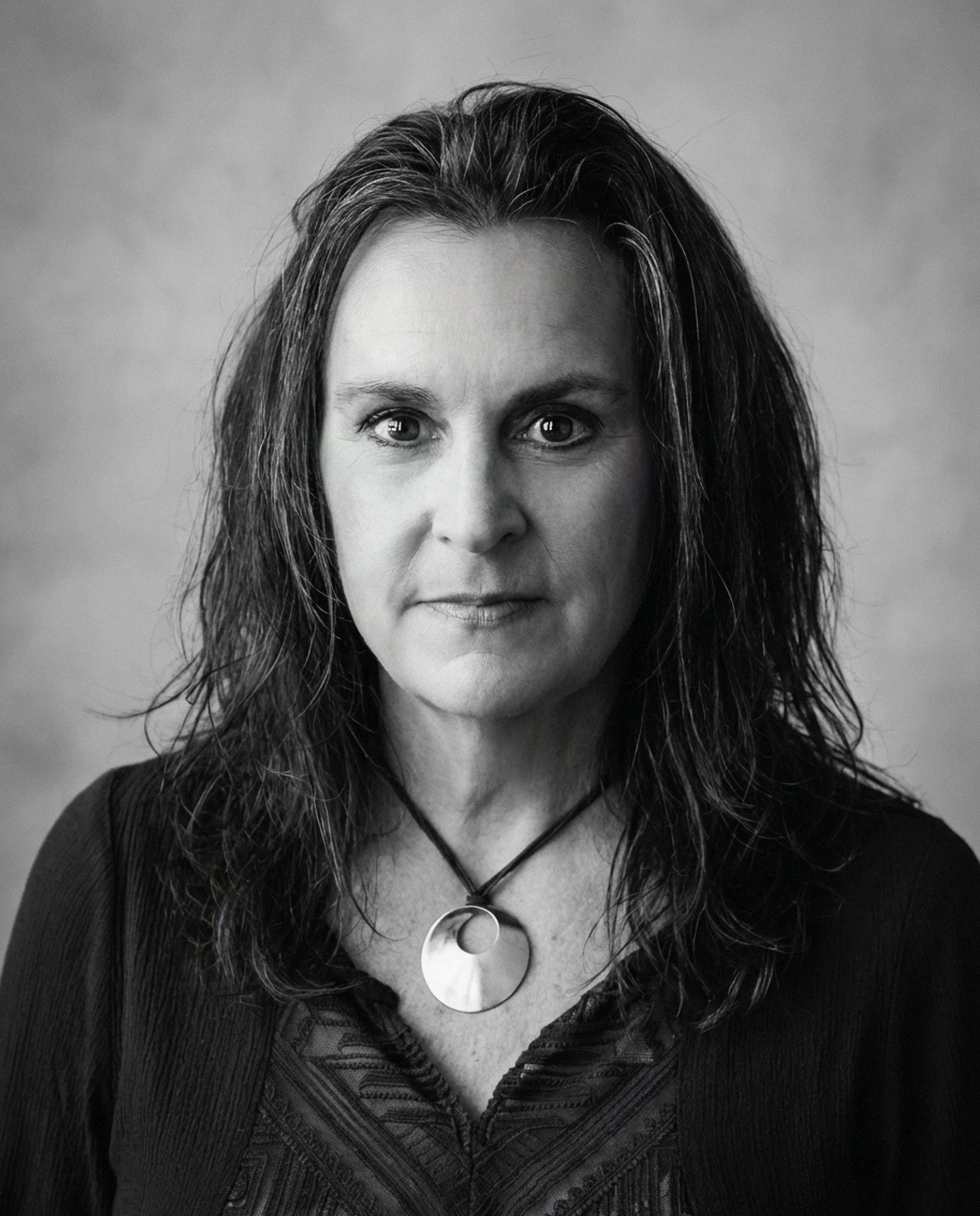
Sometimes the inner magic that keeps us alive can become the very thing that endangers us. That’s the tension at the heart of Magician, the debut dark fantasy novel by Tracy Lynne Oliver. Set in a world both recognizable and strange, the story follows the Boy, raised in the shadow of a cruel Mother who resents his existence. Though scarred by a childhood of sustained abuse, he eventually finds a refuge and chosen family within the makeshift community of a traveling circus. There, he begins to explore his magical abilities, known as the “Morethan,” until an apprenticeship under a magician awakens a deeper, more dangerous inner power he must learn to control.
In the novel, Oliver examines generational trauma and the forms of strength we rely on to survive. Lyrical, unsettling, and emotionally immersive, Magician has drawn comparisons to Our Share of Night and The Changeling.
Los Angeles-based author Oliver is the co-author of the graphic novel The Sacrifice of Darkness with Roxane Gay, adapted from Gay’s celebrated short story. Her fiction has appeared in Best Microfiction 2019 and been published online in Fanzine, Occulum, and Medium.
I recently spoke with Oliver by phone about the origins of Magician, the role of magic in the novel, her writing background, and the book’s journey to publication. This interview has been edited for clarity and length.

The Rumpus: What are the origins of the book? Can you talk about where the idea came from?
Tracy Lynne Oliver: Normally, when something impacts me visually, combined with an intense feeling, I have to be like, “What is that? What’s the story around this? I need to make a story around this.” For Magician, I was at work and just got this vision of this old Black man sitting in a decrepit apartment or hotel room. He was sitting on the side of a bed with his head in his hands, like he had just been through the ringer of life. And it just struck me so deeply. The image stayed with me, where I was like, “What is this man’s story?” And I started from there and just went wherever the story took me. I didn’t really have much planning. I didn’t outline anything. I just wrote, and wherever it led me, that’s where I went.
Rumpus: Is that how you usually write?
Oliver: Not necessarily. Magician was my first novel, and I had only written short pieces prior to that, literally starting with flash fiction, and then four-hundred-word pieces, and then increasing my breadth and depth until I could do one thousand words. And then I did poetry, and I did all these other forms, gradually building my length muscle, where I was just like, “What else is there to tackle? Let me try a novel.” So that’s what Magician became.
Rumpus: This is a story that feels epic, like a fable or a fairy tale. Many of the characters have archetypal names; for example, the protagonist shifts from The Boy to The Man to The Magician over the course of the novel. Why did you make that stylistic choice?
Oliver: His world is not a world set in ours, so I didn’t want to give him a name like Steve. Like when my husband and I were pregnant, naming someone is such an important thing. It affects them the rest of their life, and you grow up with all of that, so, “that kid in third grade who picked his nose was Ryan, or, my ex was named Stephanie.” We can’t do that. So many names in our lives come with some sort of history or background or feeling or identity to them, so, because this story was set in a world that was ours, but not ours, I just decided to keep it that way, where most of the characters don’t have names, or if they do, they’re maybe a little bit strange. I could create a clean slate for the characters, so the reader couldn’t put their own prejudice onto them, so to speak.
Rumpus: Can you talk more about the idea of the setting being our world, but not our world, and why you chose that approach?
Oliver: Yes, so first of all, I love magical realism. But secondly, I think writing a novel was scary for me. It’s a big animal. It was hard. It took me forever, but I was like, “Well, if it’s in a made-up place with made-up things, the reader can’t come back to me going, ‘Iowa isn’t close to Colorado, so she messed up, or…’” I didn’t want to have to think about that stuff. If it’s a made-up place, nobody can call me on, “Oh, well, that’s untrue,” or whatever. It was way more fun, too. I love just creating made-up stuff. I mean, obviously that’s what writing is, but made-up stuff not of this world was so fun for me.
Rumpus: In the world of the book, the Boy’s magical powers, known as the “Morethan,” act as an internal force that both protects him from harm and at times threatens to overwhelm him. How did you come to incorporate magic into the story in this way?
Oliver: Yes, I think the “Morethan” or his power that would come out as needed when he was young, even an infant, eventually became magic at the time. It was an inner power. Eventually, the story led me to him obviously becoming a magician, so it wasn’t an idea upfront that it would be magic. It was more that it was a force that would continually save him, and he would eventually start to learn to control it or use it for his benefit.
Rumpus: What was it like for you to write the character of the Mother? The scenes depicting her cruelty were so unsettling to read.
Oliver: Yeah, I love an evil mom. I don’t know what it is; it just fascinates me, especially being a mom myself. I hear these stories: I think her name was Susan Smith, who got a new boyfriend and was like, “I don’t want my kids anymore,” and drove them into a lake, and said she got carjacked, and just killed her kids. And that’s one of the gentler stories, right? So I think it’s how women love true crime podcasts, like, “What’s the most horrible thing?” I just can’t get what they do to their own children. It’s horrible, and I don’t know how the Mother came to be other than, when I went to write it, it had to start from birth. I knew that, so I’m like, “Who is this person that gives birth to him?” Because I didn’t really, again, have a plan, and it just came out that she was someone who was obviously abused in her time. And then I think she also has a dash of the powers that the Boy inherited. But also, she just had to be kind of hateable to me. And I know, usually if someone’s abused in their childhood, you may have a little bit of sympathy, but I think she goes beyond that.
There’s no other real reason why I made her so evil, other than I think I wanted people to have more love and empathy for the Boy that maybe would keep them going through the story, even though it’s hard to read at some point, because it’s like, “If he has to endure this, you have to endure this. And if you want to be there with him, then you have to see what he’s seeing and feel what he’s feeling,” and it’s a counterweight to how horrible she is. But it was fun writing her because I was just so fascinated with “How can you do this to another human, and your child?” So, it was putting yourself in her place and going to that space. But you have to go through that if you’re going to write any horrible character. I think you have to get into their headspace, or what would make them do that. Otherwise all novels would just be fun and rainbows and puppies.
Rumpus: Early readers have compared your writing to authors like Helen Oyeyemi and Dan Chaon. What writers have most influenced your work and style over the years?
Oliver: Well, first and foremost, Stephen King—I’ve been reading him since I was prepubescent, so it’s easy to pick him because he writes a lot of different things. He started with horror, and now he does these murder mysteries. He’s done nonfiction; he’s collaborated with Peter Straub, and done those epic journey-type books. And I love it all—I mean, some obviously better than others, but that was probably my foundation as a reader since I was a kid.
Then, as I was starting to become more of a writer, I was really immersed in the blogosphere or online literary world at the time, so a lot of the writers that inspired me are writers people aren’t familiar with. But definitely Lydia Yuknavitch’s The Chronology of Water. At that time, I think I was already dabbling in using language in special ways, but when I saw that, my heart exploded. With this book, I was like, “This is it; this is what I’m trying to do here.” That book was just phenomenal. The way you can mesh poetry and prose into a memoir-type book just blew me away. Also, Ocean Vuong—he’s a poet—his writing I recognized right away as spectacular. Also Blake Butler, who has really out-of-the-norm storytelling. The way he structures and uses his words is amazing.
Rumpus: How long was the process of writing this book?
Oliver: Oh gosh. Well, I was a full-time mom and worker and employee. I was just trying to look back to see how long it took. It was about seven years, and that was a lot of lunch breaks. “My boss is on vacation. Let me try to fluff this paragraph up while I’m in my office.” “Everyone’s watching the Laker game. I’m going to go in the other room.” Before work, in the car with the laptop—just any snatches and grabs of time that I could make. I’m a slow writer anyway. I literally could do a whole day on a paragraph, just making it sound the way I needed it to sound. I think if I ever write another book, it’s not going to be that kind of thing. It’s gonna talk normal. I can’t do that again.
And then I had an agent for a while, and the initial version of the book was way darker than the current version. I’m a Stephen King baby. But when it wasn’t getting bought, she was like, “Well, we did a good first pass, a good first submission.” And it had great rejections—a lot of glowing rejections, if you will—but it was a really dark book. So my agent told me, “Well, why don’t you try and tone things down, maybe add some lightness?” So I went back to the drawing board and finished the next version of the book, and I think for the most part, that’s pretty much what came to be. So I had finished the book once, and then I finished it again probably two years after I finished it the first time, but the meat of the writing was probably about seven years.
Rumpus: How did the book come to be published by Roxane Gay’s imprint at Grove Atlantic?
Oliver: Well, back in the days of the blogosphere and the online community, when it was super thriving, she was a star. Every story I read of hers, I was like, “Oh my god, who’s this writer?” There were some obvious standouts back in the day who are still publishing today, but her work was just amazing. Roxane was the editor of Gay Magazine at the time, and that was a coveted place to get published. I think I sent her some work, and she responded back, and then we were also in this online women’s collaborative writing website, so we just hit it off and became friends. We’ve just known each other ever since, and she was nice enough to let me send her sections of Magician and give me feedback. She loved it from the get-go, and when I was down in the dumps, she’d go, “No, keep working on it. It’s great. You gotta finish this.”
So she was just a friend and a mentor and a pseudo-editor at the time who helped me believe in myself and believe in the work. She would really carry me when I was down. Eventually, she found this platform, and she said, “I want to publish your book,” and I was like, “Yeah, yeah, sure, okay. I’ll believe it when I have a contract.” Because I’d just been let down so much with publishing this book, and I understand how things work and what you want, but maybe the powers that be are like, “No, we can’t do that.” So I was just like, “Okay, that’s great. I hope so.”
But then I got the contract one day, and it’s very surreal that it’s actually coming out after being in the darkness in a dresser drawer until now. All that work and all the time I took away from my life is going to pay off.
Rumpus: You also co-authored a graphic novel The Sacrifice of Darkness with Gay in 2020. What was that experience like?
Oliver: Yeah. So she is a busy woman, and she was approached by Boom! Studios, who wanted to bring her short story “We Are the Sacrifice of Darkness” into graphic form. She was like, “I don’t have time for that, but I know someone who does, and she’s an amazing writer.” Even though I had zero experience with that and was totally scared and nervous, I said, “Okay,” and they said, “Okay,” and so we did it.
I’m forgetting when it was published for her, but when I first read it, I was like, “Okay, Roxane, you’re dabbling in my genre,” because it was very outside of what she normally writes, which I think made her think of me for the graphic novel. It’s set in a future that maybe will exist one day, when a man slices his flying machine into the sun and takes away the light of the world. It was very much not her usual style. I don’t think I could write in her normal genre, but this one I could write in. So I was like, “Yeah, let me help. Let me try this.”
Rumpus: Have you always wanted to be a writer?
Oliver: I’ve always liked writing since I was little, my mom saved stories I wrote through my childhood, and she gave them to me later. But actually, a funny story is one I wrote and illustrated when I was twelve, a story for my little brother, who got in trouble, was crying at the time. I thought, “What can I do to cheer him up?” So I wrote this really messed up—it’s funny how early on it showed itself—disturbing little illustrated story about a flower, a little lonely flower sitting on a hill who didn’t have any friends. So she kept crying and crying and crying until her tears flooded the forest where she was living, and all the animals headed over to the little hill she lived on. And she’s like, “Oh my god, I’m gonna have friends now!” but then they killed her for flooding out their homes.
But my mom made a copy of it, all the pages, and sent it to Stephen King. Back then it was Stephen King, P.O. Box, whatever, so she was just able to send it, and then I’m not sure how many months later he wrote back. It’s a typed postcard signed by him that just says, “Thank you, Mrs. Oliver, for sending me her work, and if she wants to be a writer, just tell her to read everything she can and keep writing. Sincerely, Stephen King,” and he signed it, and she framed it, and we still have it. That was awesome.
So I’ve been interested in writing from a young age, and then when the online scene and blogs were a big phenomenon, I was like, “Oh, I can just start dabbling on here, just writing for myself.” And then, if you write every day, I found out, you become a good writer. I was just writing all the time. And then I discovered literary magazines and started being like, “Oh, you mean other people can read this if I write it?” So, I just kept plucking away at the keyboard, developing skills over many years until it was time to do something chunky. And then when I got the printed copy of Magician, I was like, “Oh my god, she is chunky! Look how many words I wrote in here!”
Rumpus: Do you have any advice for budding writers?
Oliver: Write every day, write anything. Don’t worry about rules. Don’t worry if you never went to college. If you love it, do it. Don’t get intimidated, like, “I’m an old person, and I wrote this when I was a younger person.” You just don’t know how long something’s going to take to get published in terms of a book. But start small: Start publishing little things; get feedback; get rejected; get accepted. That’s all part of it. Just do all of that; that’s just all part of the process. And again, if you love writing, write.