
Dear Employee 24601,
We first off must acknowledge, as we’ve always been cautious to, the literary and cultural resonances associated with your allocated employee number. This will, as you’ll see, feature heavily in this correspondence (for reasons you are already familiar with), but we wanted to cut the head off the snake, so to speak, at this point so that we can have this discussion without you being distracted by the perception that we are not aware, or have simply forgotten, what this number has come to symbolize here at the EduCore institute. This is a long-winded way of reminding you that we care about the kinds of things you care about and are not some sort of disembodied board that makes decisions based only on financial rather than cultural expertise.
Janet has been fired. This has not been an easy action to take, but it’s important that we gently emphasize that it has been taken, not to intimidate the rest of your performers, but to be upfront as to the lengths we’re prepared to go to in order to protect our wider community of academics, students, and support staff.
Janet was an important part of the EduCore Amateur Dramatics Society and hence central to what is already being referred to as LesMisGate. At this point I should explain that although you are receiving a private and unique email, a shorter, more generic version has been simultaneously sent to every employee of the company. We feel as though you will understand the need for two different communications on this matter, given your role in the performance, and our own need for efficiency. It’s also worth noting that this was a courtesy the board did not have to extend, and is a testament to their commitment to your continued happiness. The below few paragraphs give an overview for those less aware and are part of the generic mass email. You may skip them if you wish, although I will say that as this is an incident that the EduCore community takes seriously, the board also takes it seriously, perhaps even more seriously than the wider company, and not reading this email in full could be construed as a lack of respect for how much we care.
Victor Hugo’s 1862 Les Misérables is a novel about the morality of the law, the strength of love, and the injustices of nineteenth-century French society. It culminates in the 1832 uprising in Paris and it is the dramatic scenes and scores that surround the barricades in the stage and movie adaptations that provide the defining images of the work, and indeed the focus of the EduCore’s Amateur Dramatic Society performances that spanned the 5th and 6th of June this year.
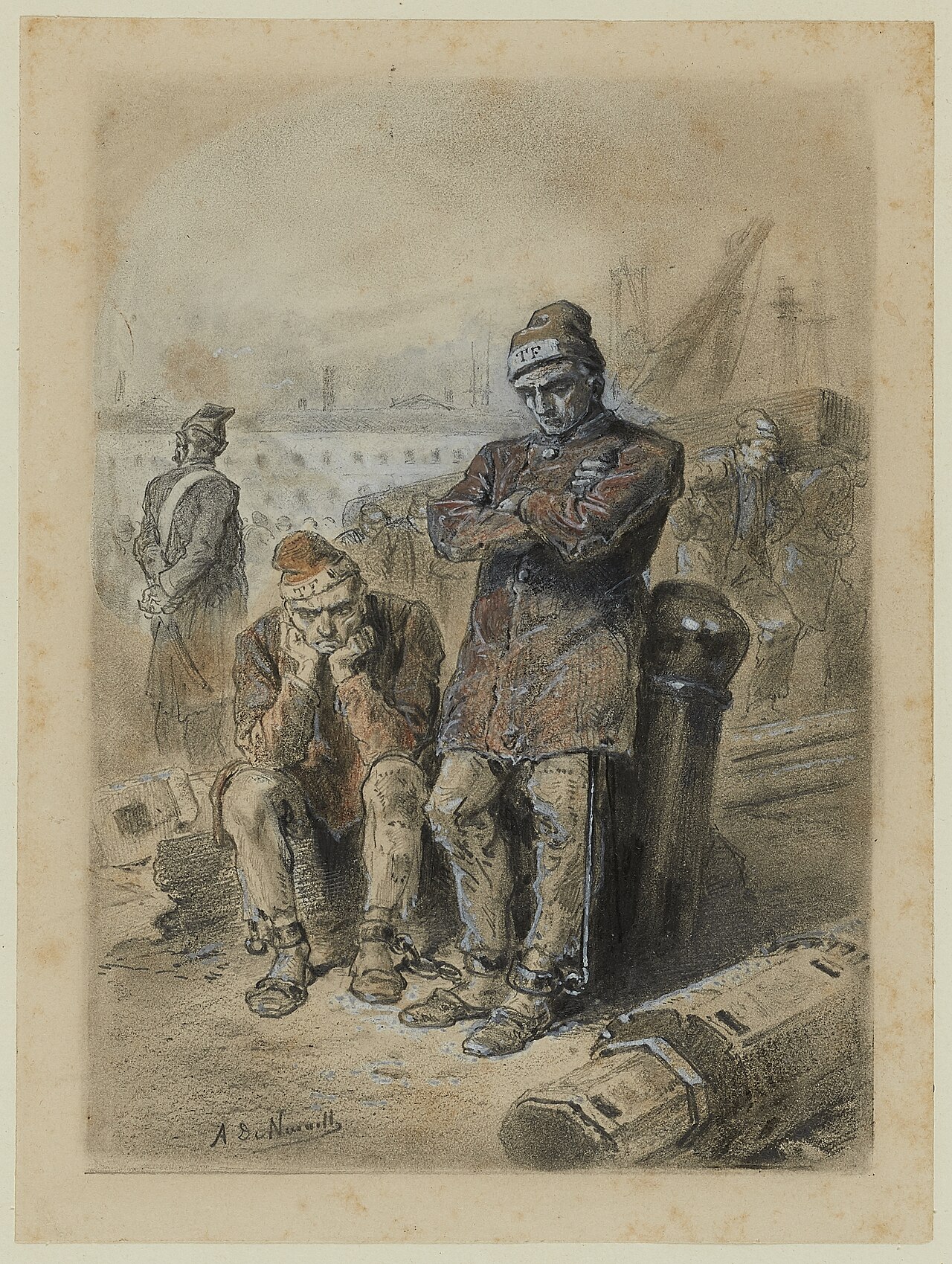
The character Jean Valjean is a peasant thief who becomes a factory manager after serving nineteen years in the galleys, during which he is referred to as his prisoner number: 24601. Although popular opinion looks kindly on Valjean, a few board members have gently insisted that critics often overlook the fact that he failed to follow standard probationary procedures on his release, and this fact seems particularly pertinent given his frequent escape attempts during his time in custody. This is not to say that the board does not have sympathy for his condition. As the opening number attests, he was arrested for stealing a loaf of bread to feed a hungry child. It goes without saying that the board believes everyone deserves to eat. This should not be something that we need to clarify our stance on. Whether in revolutionary France or today’s economy, nobody should be starving. But is this dilemma, one of a moral law vs. the actual law, as simple as that? Certainly it is in the film adaptation, in which the picturesque Hugh Jackman plays Valjean, and we suspect that it is this ethos that has influenced your productions the most.
Cinema is all well and good as entertainment, but can we really expect a blockbuster to tackle the weightier themes underlining a work as complex as this? The fact is that Valjean committed a crime, and then continued to do so on a daily basis by assuming a new identity in order to eschew the procedures society put in place to protect both itself and those emerging from incarceration. The fact is that he did not prove himself trustworthy in this simple regard. He deceived his way into high society and in becoming a factory manager, you could also say he betrayed his humble origins. It should be remembered that several members of the board are from working class backgrounds and have had to make hard financial decisions, especially at the beginning of their careers. That is to say that we understand the situation fully, and the need to talk about the themes running through the work, but we would prefer to see them examined from all angles, particularly in this contemporary context. If one of us, as a board member, broke the law, wouldn’t you want that investigated? If one of us took up a false identity in order to be in a managerial position, is there anything that would justify this? We ask these questions as we feel the EduCore’s Amateur Dramatics Society could have done more to examine them, and by so doing, ensured that the whole community felt included, which would have perhaps mitigated the need for firing Janet.
We bring up Vajean’s identity and role as an industrialist in order to highlight that this feels like a contradiction in the premise of your production. We have some more notes on this, and now that everyone is on the same page regarding the narrative and themes of Les Misérables, we can now move on to Janet’s and your controversial Amateur Dramatics Society project.
Your event, billed as 24601, took the form of a vast series of performances that took place in the lecture halls, meeting pods, canteens, corridors, Student’s Union bars, and outdoor areas of our various campuses. It was an ambitious undertaking, one which would not have been possible without EduCore’s generous research allowances, a privilege that again demonstrates the board’s commitment to providing a space in which you are free to explore your own curiosity and call it research. It featured over eighty-six students, staff and faculty members as performers or technical staff, and spanned the twenty-four hours between midday on June 5th and midday on June 6th.
Your own role in this event is increasingly coming to the attention of the board, much in the same way that Janet’s did. But before we move on to any punitive measures that the board has reluctantly determined necessary, we need to clarify that we’ve understood the aim of your project. We have read the relevant students’ substacks, TikToks, and emails. We’ve also analyzed the various leaflets, flyers, and online marketing material that surrounded the productions (which, at this point, we would prefer to term a festival, since that seems more accurate, and the board values truth above all things).
Was this festival a commemoration of the 1832 Parisian uprising, or a celebration of it? How many performances were centered around The Machine? To what extent did you and Janet encourage a diversity of opinion across the range of performances?
It is the latter question that concerns us the most, particularly as our role as board members is to serve everyone in our community. The event, according to your announcements on numerous courses, many of which were outside your own school of the humanities, called for “performances which challenge, unsettle, and provoke” as a response to Les Misérables. These included a monologue from the point of view of the sex worker Fantine’s sold tooth (the character was the prostitute, not the tooth); a performance titled “Students and Power: Can you Hear the People Study?”; a workshop on “How to Build and Defend the Digital Barricade”; an all-female show called “Street Urchins and Elephants”; an erotic thriller musical titled “Don’t Look Down”; and a lecture given by yourself called “One Machine More: Popular Discontent in the University”. We are still compiling details on many of these performances, but we wanted to reach out at this stage so as to give you a chance to respond.
Our main issue concerning yourself–and the board is relieved to have gotten to this point in the email–is of how your employee number has been misused. 24601, referring to both you and the criminal Vajean, has come to mean something on campus. Students have printed the number on stickers and plastered them around the walls of every corridor we own. Some have had T-shirts made with a barcode topped by 24601, and wear these proudly as they stroll around the quads. It has even been overheard by one distraught board member that faculty are using the number as a shorthand for perceived injustices, saying things like “The situation is totally 24601” and “Ah, but what can you do. They’ve completely 24601-oned the place.”
To what degree this symbolism is still referring to you is unclear (although it seems unlikely you would have this much influence), but we know that you have been playing with the Les Misérables connotations for over two years. Your email sign-off begins “Assistant Professor 24601” and your lecture slides have featured what could be interpreted as slurs against the institution, including references to both faculty and students “serving their time” on our compulsory “Composition in The Age of AI” course. In a particularly disturbing instance, we retrieved an image from a lecture on protest poetry which displayed the university’s logo over Jean Valjean’s police antagonist Javert’s face, and simply “The Humanities” over Valjean’s face. The two characters are in a sword fight and the implication is that the university has been systematically hunting down and destroying its humanities offerings. It’s clear that the 24601 festival is something you and Janet have been cooking up for years.
We also note that your lecture on protest poetry did not speak directly to your course learning outcomes. We love poetry. Again, this is not something the board should have to clarify. Poets are, as Shelley said, the legislators of the world. Where would we be without Shakespeare and Wordsworth? At a certain point though, the world does actually need real legislators, ones adept in the flexibilities required of the modern graduate, and it’s unclear, in this day and age, how protest poetry equips students for the world ahead of them. This is not the board’s fault. I say again that we love poetry. But we also have a duty, not to mention a provider-customer obligation, to give our students the skills needed to succeed. We understand that it’s difficult teaching in a way that you were not taught yourself, and we too regret the market-first manner in which education is now thrust. But it is thrust, and we can’t pull it back, as much as we’d all like to sit under trees and read verse all afternoon. Please ensure your lectures adhere to University policy around best practices in teaching and learning.
We would like to move on to the issue of inclusion, then The Machine, before we reach an important update pertaining to your job security.
We should not need to remind you that EduCore is one of the world’s largest higher education conglomerates and through us you have access to a network of brilliant minds across Europe and North America. Our alumni are powerful people who carry our ethos of diversity, success, and financial enlightenment to every industry imaginable. As an example of our prowess, I’ll remind you that we recently took over the prestigious Clover Bay University in Dorset, a place in which a festival like yours would have no chance of going ahead. But EduCore believe in rigour above all things, and we think you should be able to pursue the research that got you into this business in the first place, even if it so clearly has limited benefit to the wider community.
The simple fact is that 24601 is in violation of numerous EduCore Community Principles (ECCP). ECCP1.8, as you’re aware, is “Foster a diversity of opinion and action among both students and faculty.” Reflecting on the events listed above, do you believe you have done this? ECCP7 reads “Enhance opportunities for inclusion in every possible respect.” Again, can you safely say that you factored this into your festival? The board is confident that you did neither of these things. 24601 consisted of events which focused solely on the plight of the underprivileged “miserables,” and too often came to the naive conclusion that it was all someone else’s fault. There are many in our community that need to see more of a diversity of performances in order to feel included.
What about the challenges faced by the young soldiers who have to brutally suppress the uprising? This would make a fine play on the “Empty Chairs at Empty Tables” number. Why didn’t you give a lecture on the various civil liberties available to citizens under the government at the time? This would have contextualized the national trauma the average citizen carried from the recent bloody history of the earlier revolution and its terror. Did you even consider more of a kitchen-sink drama about the urban horror unfolding outside the windows of people already broken from years of instability (I should add that there has been some debate as to the definition of a “kitchen-sink drama” among the board members, but a vote revealed that this is still the most accurate use of the term)? Why weren’t there any mentions of the cholera epidemic that the brave soldiers and doctors of France were trying so hard to contain? In short, you romanticized the woodpiles and rebels of the barricades, rather than tackled some of the harder truths underlining what was an illegal and bloody insurrection at a time in which people just wanted to get on with their lives.
Finally, on this point, we find it astounding that there were no performances that detailed the prosperity brought about by the entrepreneurism of the 1832 government of King Louis-Philippe, a prosperity that your young rebels threatened for everyone else. We have consulted our in-house AI and eventually came across the following facts, all of which, we believe, also help illuminate what EduCore brings to its staff and students.
- The ruling classes at the time were perfectly transparent in their aims – they instructed everyone to “enrich themselves.” It was not their fault that the starry-eyed Eddy Redmaynes of the world wanted to make it about them.
- Factory owners like your beloved Valjean were flourishing in France’s industrial revolution, an upheaval that laid the social, economic, and scientific foundation for so much of today’s technology that graces our everyday lives.
- Conflict slows an economy and ultimately makes the poor poorer. By clogging up the streets and singing threatening tunes, the rebels were scaring away investment and bringing down everyone’s standards of living.
- Finally, this was a very anxious time for the bourgeoisie. It was not just their hard-earned property that was at stake, but also their hard-earned worldviews that determination and perseverance guarantee success.
Now that we have provided these facts, the purpose of which we’ll return to later, we can now move on to your own role in the festival. As we say, it seems unlikely that you would have so much sway over a large enough population of the university to make a difference, and the jokes you started around your employee number have snowballed into something far beyond your capacities. This in itself is a useful case study on the role of language and misinformation, and we caution you to be more thoughtful in the future. Your research in trade unionism, Luddism, protest, and the media are all very well, but again, how much of it takes the other side into consideration? It’s easy to be the protester. Something is always wrong. Imagine how hard it is to be the protested? Have you considered how much work goes into designing and maintaining a system of control that allows everyone, if they have the right mindset, to flourish?
Janet was fired for her part as festival director. From what we understand, you did not have an official role beyond being on the festival organizing team, your coincidental employee number, and, of course, your own strange lecture. We have obtained a recording of the lecture. Giving our feedback line by line is too tedious (we tried, but regrettably do not have the time), but we will outline some general pointers:
- It’s childish to examine higher education via metaphors of machinery (treadmills, cogs, etc.). What EduCore has given you is a consistent pay cheque and reasonable workloads considering the wider challenges the sector is facing.
- Your take on the role of technology to exploit workers is similarly simplistic and simply outdated. We recommend seeking some more up-to-date research on the benefits of technology in the workplace, particularly if you have influence over young minds.
- We will repeat the need for diversity and inclusion along the same lines as above. Telling the story from the harassed factory owners who had Luddites at the door would speak more to our student body.
- You have made repeated suggestions that EduCore’s pioneering use of The Machine could be considered in violation of numerous United Nations mandates. This is simply bizarre.
This final point deserves expanding on, albeit briefly, as we see no benefit to debating you on this. As you know, EduCore acquired The Machine late last year and immediately gifted it to the whole university community. It is a powerful productivity and imaginative tool and if you were to engage with it in the ways in which we’ve insisted you do, you would see how it can improve your life. Indeed, so much of the above, and the consequent upset of both the University community and the board, could have been avoided if you had simply consulted The Machine. Many people think that new technologies are all magic and bright noises and sparkles, but few actually are. The Machine is the exception. As we’ve outlined on numerous communications, there is only a limited point in talking about The Machine to those still refusing to use it.
We can now end this message with the much-valued next steps, a section I imagine you are pleased to have reached. Look, the board really does value you. You turn up on time. Your students pass their courses. You submit paperwork in a mostly timely fashion. Your research shows promise, even if it’s more passion than utility. But the board likes passion. They see your energy and they like your energy. That is why they are not firing you. They could do so, really quite easily, and even at this point in the term, they could replace you smoothly, with limited, if any, disruption to your students.
But we would prefer the following. As well as altering your research trajectory and sticking to the slide templates from now on, you will stage a new 24601 festival featuring the stories and critiques of industrial France from the bourgeoisie side. We will allocate two board members to personally work with you on this, and it will be billed as an official university event. We are even giving some funding to cover the cost of professional level marketing material and even training for the performers and writers involved. We envisage a two-day festival with guest speakers from the tech, finance, and corporate sectors, and you will have full use of the University’s best rooms and technicians in order to live stream events throughout the network. We will also commission an alternative musical which you will help write and stage, one which details the narratives of four happy-go-lucky factory owners who pay their bills on time and have winning attitudes towards their fellow citizens. The exact title of this is up to you, but we like Together we Enrich the World; 24601 – The Truth; and Waistcoats and Butterflies.
We are also willing to gift this whole concept to you. You will have our backing, guidance, and presence every step of the way, including daily consultations with various board members. The truth is that we’re very excited by this idea, and we’re excited that you’ll be at the center of it, the poster boy for the festival, so to speak. We’ve also taken the task of naming the festival off of your shoulders, and after a short deliberation, have decided that it should be called “The Protest: Re-inventing Capital for a Just Society.” Already we have various banks, industry partners, and even state players interested. We hope you are as pleased with this concept as we are.
Finally, we have also decided to strip you of your troublesome employee number. It was a mistake to begin with to allow the number to be used, particularly among a student body as switched-on to cultural affairs as our own. We apologize for this oversight and the trouble it’s caused you. Please rest assured that we are instigating a network-wide survey of any controversial numbers, and have already eradicated a number of distressing dates. We have yet to extend this to course content, although rest assured that this will be our next step. You are now known as 86103. The number 24602 was actually available (unbelievably, it was Janet’s, who must have joined the same day as you), but we felt a clean break would enable you to move on more effectively.
In conclusion, we must thank you for highlighting this opportunity, and your presumed willingness to host The Protest: Re-inventing Capital for a Just Society. We believe it will progress your own reputation within the network enormously, and if you simply pursue the direction we’ve given you, could lead to promotions down the line.
Now, 86103, you have a festival to design and a musical to write, as well as the ability to wake up tomorrow to another fulsome day of employment.
Yours sincerely,
THE BOARD