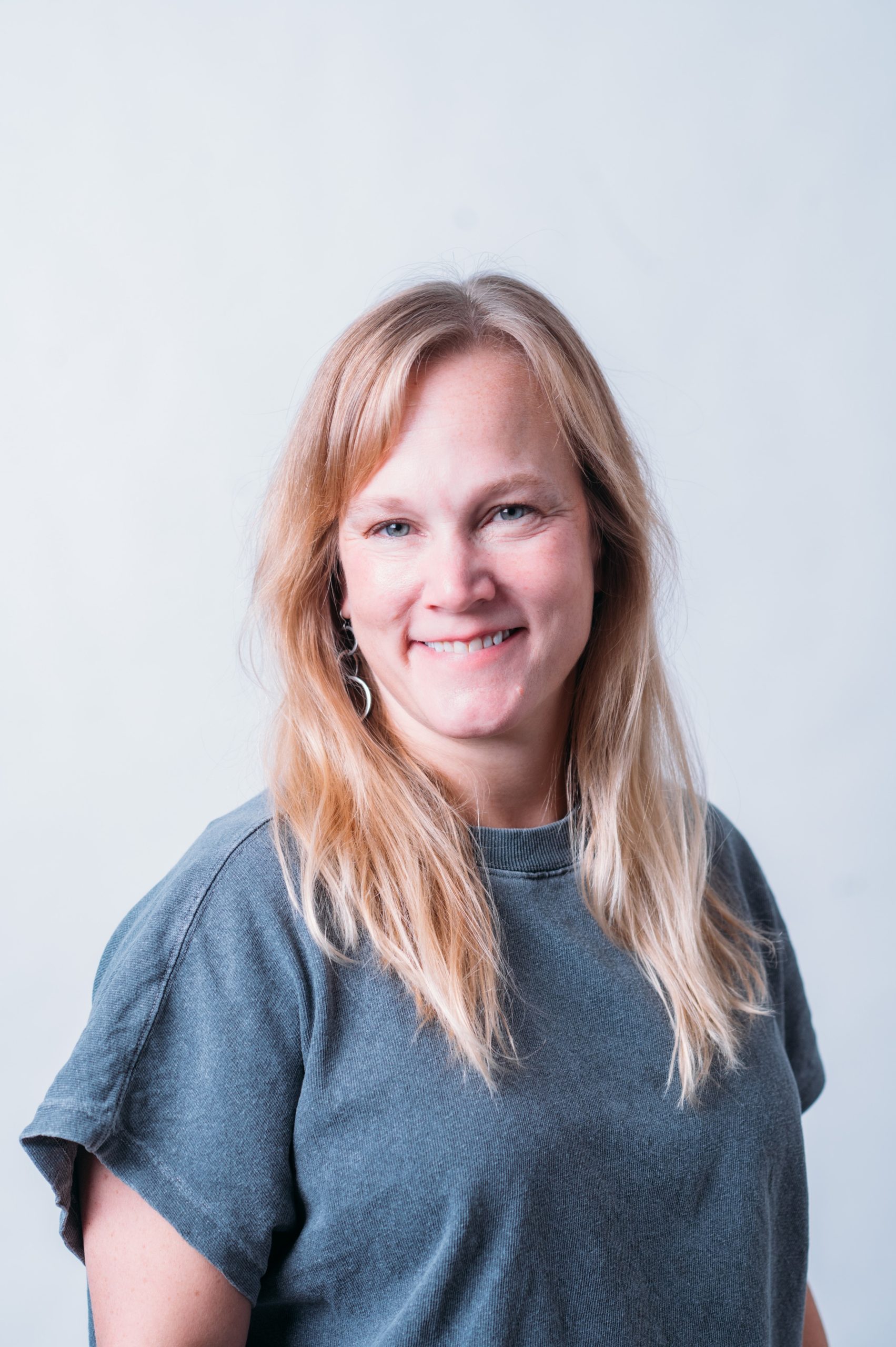
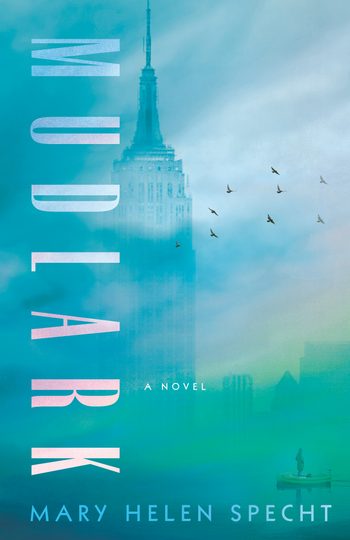
In Mary Helen Specht’s second novel, Mudlark, out July 2026 from Ballantine Books, there’s a line almost halfway through that continues to stick with me: “Funny how things like these—heirloom apple trees and flowering dogwoods, ornamentals planted by humans—could outlast the things humans built. The apple trees continued to fling their fruit every year. Confetti at a party where nobody showed.” How humbling it is to know our interference damages the very things that will outlast our ephemeral lives, and that the structures and technologies we caused destruction for will be just as fleeting. Our presence is known by the chaos we create, by the roots we rip up, by the fruits the heels of our boots crush. As our days go on, it’s clear we are losing the privilege of being invited to such a party.
When Mudlark begins, we meet mother Jenny Sweet and her then-teenage daughter Neko as Jenny prepares to perform with her indie rock band, the Nightjars, at Burning Man. Flash forward twenty-five years later to a flooded Manhattan and the population divided into factions. Neko is a “mudlark,” trained to venture out into the city to retrieve limited resources with her crew. She also hasn’t seen her mother since chaos erupted at Burning Man those many years before, separating them.
During one of her trips into the city, Neko discovers the masters of her mother’s solo album and sets off on a journey to find her missing mother. Throughout the novel, we switch between Jenny’s past and Neko’s present, both women trying to understand their complicated relationship while waiting for a future they can reach together.
Like most speculative literature, the world these characters are forced to navigate doesn’t feel entirely fictitious or too far away. It’s a cautionary tale, a warning sign, a reminder to take care of the things and people you love before it’s too late. You’ll finish the novel and sit with this echoing question: What truly lasts amidst ruin?
Specht and I chatted over Zoom about Burning Man, writing mother-daughter relationships, how teaching inspired her to dive deeper into speculative fiction, and the dishonesty in ignoring climate change in contemporary stories.
This interview has been edited for length and clarity.
The Rumpus: This is such a journey you take us on as readers. I really had no idea how [the novel] was going to end, and the ending was so heartbreaking.
Mary Helen Specht: Yeah, I didn’t know how it was going to end either for a long time.
Rumpus: Really? Is that typically your process, or does it change with every novel? Do you outline or plan how things are going to go?
Specht: Anytime I really try to do a lot of outlining, it never ends up working. For me, for my process, it just ends up zapping some sort of magic from it. So, anything that I’ve actually published, I pretty much didn’t outline. I have things that I outlined, but they were flat. Often, like with this one, I have a premise, I have pressures on the characters, and then I just spend a few drafts, sometimes more, just following them down different rabbit holes, and then the plot is usually one of the last things that really starts to crystallize for me.
Rumpus: There are some writers who don’t start outlining, like you, but then maybe, on the second or third draft, they start. Do you also do that, or the whole way through you’re doing it off the cuff?
Specht: Definitely later. Once I start to be like, “Oh, okay, I think this is what’s happening,” then I will start to do kind of reverse outlining, figuring out what I have and what I want to change or where it’s maybe not working. So, yes, I do a lot of sketching and sometimes I just do it visually, like not necessarily outlining but thinking about the different plot arcs or the different character arcs and drawing them on a whiteboard and seeing where it’s not quite hitting yet and where it is. It’s kind of a messy process.
Rumpus: There are a lot of threads in this novel, so I can imagine that at some point there were a lot of things you had to piece together. We have the thread of motherhood, mother-daughter relationships, music and art, memory. And then, on the outside, we have this thread of the effects of climate change and what that has done for this world. In the novel, it said that the Nightjars, when they begin making music, they just start out with concepts. One example you give is they just have a concept of the street beneath the L train. Did you have a similar experience? Was there a concept you first had that led you on this journey?
Specht: Yeah, it’s funny. This one, unlike my last book [Migratory Animals (Harper Perennial, 2015)], kind of came in a couple of different starts. One of my college roommates some years ago, she was like, “You know, you should write a novel set at Burning Man.” And I was like, “That is a ludicrous idea,” because I don’t have anything against Burning Man, I have some friends who are Burners, but for an introvert who hates sand, I was like, “I have no interest in that.” But then, weirdly, obviously that did stick in my head because a couple of years after that, I found myself writing a scene with an indie rock musician playing a set at Burning Man, and her daughter goes missing. But I didn’t really know if this was a novel or a story or what was going to happen or anything. I kind of put it aside because I was working on some other projects that I had deadlines on at that time and came back to it later after I had a baby, and I was starting to think about things like, “What is her future gonna look like in this world? Can we protect the people we love? Can we try? What would that look like?”
Then it was interesting to me because Burning Man, in a way, is kind of like an imaginary romantic apocalypse place. It was interesting for me to contrast that to the daughter growing up into a real apocalypse. Jenny Sweet, the mom character, starts off in this kind of romantic, desert, apocalyptic-looking environment, but it’s not really real in the same way. And then her daughter ends up growing up into a real one. And, so, those are kind of where the two threads started. I started realizing, “This is another novel, and I think there’s two different timelines here and I think there’s two different main characters,” and that’s kind of when I started to realize what it would be.
Rumpus: When I was doing some research on Burning Man, I saw that the co-founder, Larry Harvey, created ten principles for the community to follow when they’re there. One of the principles is leaving no trace, for the community to respect the environment and leave the space better than when it was found. When did you tie in the climate change thread once you had the idea to start the novel at Burning Man?
Specht: Yeah, so, initially, when I wrote the first scene, I wasn’t really thinking about climate. Then it was years later when I went back to that scene, after my daughter, and I started thinking, “This is like a Mad Maxian kind of world.” I was, I guess, thinking about what kind of world my daughter will grow up to live in. In Burning Man, there’s all these ideals. People have a sense of what their identity is; it can be different at Burning Man. They often have different personas, this kind of sense of trying to create a better world. So, thinking about that, like what does it mean to try to create a better world? What are the ways we fail at that even if we’re trying? So, I did feel like a lot of those themes are really intermixed in what we’re thinking about right now with climate.
Some people talk about how climate fiction is becoming kind of a thing. But, to me, if you’re writing about the contemporary world, it’s kind of impossible to not see it somewhere because every human, no matter if it’s a domestic drama or you’re writing a romance novel, we’re all living in this world that is in this slow-moving catastrophe. I feel like it’s almost not truthful to write a story that doesn’t recognize that, or at least have some sort of sense of how that interplays with your characters and their lives. When I started this book, I didn’t realize it was going to become such a big part of my novel, but that’s kind of where I began, just in a very realistic way. Then it kind of unspooled, like, “What if and what if and what if New York flooded and what if this happened and then what if everything’s underwater and what kind of jobs would be created by that and what would people lose?” It kind of unspooled from there.
Rumpus: I’m glad you mentioned the “what ifs” because before you wrote Migratory Animals, you were trying to write a memoir, based on your experiences in Nigeria, and then you made the switch to fiction because you wanted to unpack the “what ifs” and explore these other types of possibilities. How was turning to speculative fiction a way for you to push deeper into the “what ifs”?
Specht: Yeah, in some ways, it’s like our world is kind of becoming so speculative. When I was in high school, I was actually really into fantastical fiction and speculative fiction. I read a lot of that work. For example, Marion Zimmer Bradley was a writer I was reading a lot of then and she did a lot of stuff that took a feminist twist, kind of like what Octavia Butler does sometimes, on the kind of fantastical or sci-fi. She would retell myths. For example, The Mists of Avalon is one of [Bradley’s] novels that retells the King Arthur’s court myth, but from the point of view of the women and the fairies and the mystical people. I really loved that stuff growing up. Then, I think in college and grad school, I somehow absorbed the stereotype that maybe that stuff wasn’t serious. [I] returned to really focusing a lot, in terms of my studies, on more realistic fiction and political fiction. Then, as I’ve become a professor teaching classes [at St. Edward’s University], I actually started getting back into fantastical fiction because a lot of my students are really into that genre. So, I started doing some fiction workshops that were specifically about that, and it kind of reminded me, just the real magic of how we can see our own world differently when we really allow the lens of something more speculative, more magical, to come into the narrative. Those are some of the reasons I was really open and interested in exploring that stuff again. I had written a little bit of magical realism in some of my short stories, but it wasn’t really to the extent that I did here in terms of the future timeline.
Rumpus: A way that Jenny decides to tell her stories is through Greek mythology, and Greek mythology comes up a lot in this novel, specifically Homer’s The Odyssey. Did you always see how Penelope’s story in The Odyssey could be re-imagined to describe a mother-daughter relationship, or was that something you discovered as you were writing the story?
Specht: It was a little bit of both. Initially, Jenny was interested in The Odyssey when I had her as an early character, but I wasn’t sure if it was going to be very important to the book. Over time, I started to realize that Neko’s sections were really becoming a quest narrative. When she discovers the album, she’s on this quest to figure out what happened to her mom. And so the ultimate quest narrative, in my opinion, is The Odyssey. Then, I started thinking about Penelope waiting, this idea of feminine waiting, so then that becomes one of Jenny’s concerns, too. Can waiting be its own adventure? Does Penelope even want Odysseus to return? You know, so much of that story is really told through this masculine lens. It didn’t match with Jenny’s personality to try to tell it in the sense of, “Waiting is wonderful, we all have to wait.” She’s more trying to [see], in these stories of the feminine elements of this narrative, can we find things that actually are a type of adventure that we just didn’t see as adventure or as a type of power that we didn’t see as power before? And, also, that sense of waiting to see what’s gonna happen with the world, waiting to see what’s gonna happen with your child. So much of what we’re doing right now in this world is a form of waiting. I think we just think so negatively about waiting; waiting is such a negative thing. But I wanted her to think through the ways that waiting can be very pregnant with possibility. I think that’s kind of where I started. It’s also just a great reason to go back and reread The Odyssey through the lens of Jenny Sweet, imagining how she would absorb it and try to change it.
Rumpus: The novel is about this mother-daughter relationship, and your first novel involves familial relationships. What is it about that dynamic, and specifically a mother-daughter dynamic, that draws you in and makes you want to explore it?
Specht: That’s a good question. It’s funny because I’m an only child, so I was raised in a fairly small family. Some of it is just that sense of being an outsider and watching siblings in a certain way. In terms of my first novel, thinking about the ways in which there’s a friend group and there’s also sibling groups and how those are both similar, as somebody who didn’t have siblings myself. But, I think, in terms of this novel, it really was me getting older, and I think there’s just a lot we don’t understand about our parents when we’re young. And then when you get older, whether or not you have kids, obviously I had a kid, but even if you don’t have kids, when you become an adult and start having more adult challenges, I think we start to see our own childhood in a different way. We have to understand our parents and the choices they made in different ways. I find that it’s like a type of time travel. So, we have these multiple strands in the book, and they’re speaking to each other across different times. Kind of in a more literal way in the novel, but I feel like even in our lives, we are often doing that. Maybe in a less literal way, just kind of reprocessing our past and revisiting our past through our new perspectives as we get older. I feel like in a way, in the novel, I’m dramatizing something we already do mentally as we get older but just putting it in a more literal, concrete form.
Rumpus: When it comes to climate and how the humans’ relationships are to it in this novel, there’s a deep care that you have in your writing. How do you hope to maintain and care for the environment through your writing, and how do you think it should be done in literature?
Specht: I think that’s a really important question. Does writing about this sort of thing actually change anything? Does it actually have an effect? Obviously, as a writer, I hope so. I’m not sure, but I don’t think that fiction can solve all of our problems. But one thing I do believe is that one of the things that makes humans really interesting species is that we, by nature, think counterfactually. We are by nature, storytellers, even from early times of human culture. I think one of the reasons we’ve created so many beautiful things is that we can imagine something different than we have. We can imagine a different way of living, a different way of existing, and that brings us such beauty and such horrors, too.
While I don’t think fiction can, on its own, stop climate change, I do think that storytelling is an important conduit for us, particularly right now, to get us out of just the sense of acceptance, like, “Oh, there is nothing we can do. We just have to sit here and take it.” I hope that storytelling continues to encourage us to not do that, to think about what we could each individually change because we can. Obviously, you have collective change and then you have real power when people work together. And so, I don’t think storytelling is all of it, but I think storytelling can be a part of that.