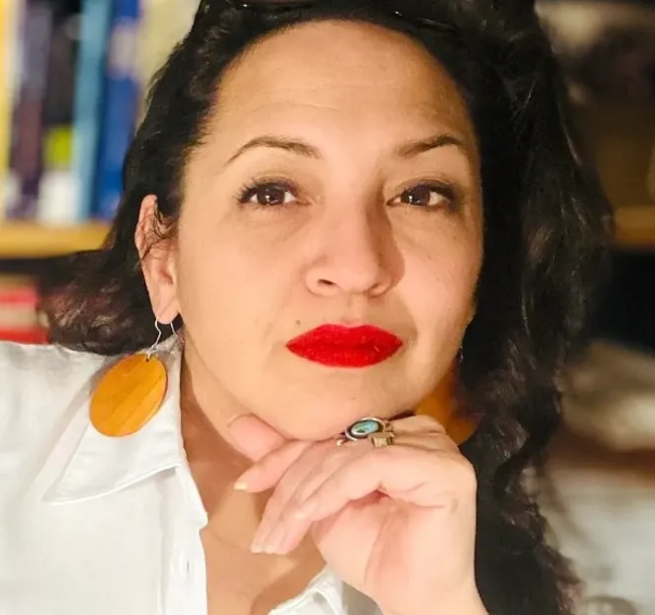

At twenty-nine, Samantha Paige Rosen moved back in with her parents and soon discovered how much she loved co-living—and how life-changingly beneficial it could be. This experience inspired Rosen to reach out to other writers who’d experienced co-living and redefined what home, family, and community can mean.
Communal living is having a literary moment. Hwang Sunwoo and Kim Hana’s best-selling South Korean memoir Two Women Living Together (Ecco Books, 2026), Leni Zumas’ highly anticipated Wolf Bells (Algonquin Books, 2025), Maria Semple’s Go Gentle (Putnam and Sons, 2026), and Rachel Pastan’s forthcoming We Are So Lucky to Live Here (Delphinium Books) all explore the ideas of living collaboratively, building community, and finding and developing family outside of the nuclear family structure. Living, Together: Reimagining Community in the Age of Disconnection (Beacon Press, 2026), an anthology edited by Rosen, beautifully exemplifies and elucidates this moment.
The twenty-one essays and Q&As Rosen gathered for the anthology offer refreshing, revolutionary perspectives on what home and family can mean: a “home” isn’t just the actual building, and collaborative living isn’t just about shared dwelling spaces. With essays by Kristen Arnett, Rhaina Cohen, Kim Stanley Robinson, and others, Living, Together illustrates the importance of a multiplicity of connective spaces that inspire mutual care, close cooperation, and collaboration in building communities that can support, nurture, and protect us all, both in the present and the future. In our increasingly fractured, violent, and volatile world, these ideas feel more crucial than ever.
I had the great pleasure of speaking with Samantha Paige Rosen about the process of editing Living, Together, her own experience with co-living, and the benefits of interdependence, especially in our current cultural moment.

The Rumpus: Could you talk about your own experience with communal living?
Samantha Paige Rosen: When I was 29, I moved back in with my parents. I had a couple of jobs that deteriorated my mental and physical health, and I’d been living alone. My parents said, “We know you like your life overall, but these jobs are killing you. Come home.” I was resistant, but eventually, it became clear that the only way to get off the hamster wheel was to quit my job, and the only way I could do that was to not have the overhead of rent and to get some support. I remember pulling into my parents’ driveway, seeing my moving truck, and thinking, “What have I done?” And then, honest to God, the next morning, I woke up and felt 60% more mentally well. I could finally breathe. I had friends in my home. I wasn’t alone.
We navigated all the ups and downs of six years together, and, truly, they only kicked me out when they wanted to retire and sell their house. I didn’t really intend this, but when my parents found their retirement townhouse, I decided to move across the parking lot from them, which is where I am now.
I’ve always liked knowing who I’m living around. In every apartment I’ve lived in, I’ve made friends with my neighbors, and I’ve loved the idea of hanging out casually in our PJs. I appreciate my space, and I would venture to say I’m particular about who I live with, but at the same time, it’s really important to me to feel supported and known, and to know others, where I am.
Rumpus: It sounds like communal living plays both a safety and a social function.
Rosen: Yes. I’ve been single a lot of my life, and I think safety is a part of it. In the last year or two, I’ve noticed that people have a hard time with friendship. Maybe it’s because I’m in my mid-thirties now and my peers are having kids. Getting on everybody’s calendar is so difficult. I think there’s something about the social function of co-living: it’s casual and doesn’t take that much effort. There’s a daily ease. The other night, I was at my parents’ house. We were doing dishes, and we ended up breaking into song. That kind of connection is built on small, regular moments, and I think that’s harder and harder to have, the more people are spread out.
Rumpus: How would you define communal living?
Rosen: Before I moved back in with my parents, I thought of communal living as formal, intentional communities where people came together over specific values or desires, in structures like co-housing. If you love the environment, maybe you live in an eco-village, or if you’re artistic, maybe there’s a co-living space for artists.
Before I moved in with my parents, a friend of mine sent me an article about this co-housing community in Massachusetts. People are in their own houses, but they have communal meals three nights a week and share physical items—not everybody needs their own snow blower. My friend said, “This is what you need. You’re having trouble even feeding yourself due to stress and poor mental and physical health, and you need this.” My response was, “Ha ha, with what money?” To me, it felt like a formal thing you had to join. Plus, my job was in Maryland, not Massachusetts.
Shortly after moving in with my parents, I started thinking of communal living more broadly. We were three adults living in the same house, sharing responsibilities and goals and enjoying each other’s company: is that not communal living? It made me wonder: what other communal living scenarios were bringing people joy, especially single people like me?
That’s when I came up with the idea for the book. I wanted to find out what living scenarios exist beyond what we’re raised and socialized with. While working on the anthology, my conception of communal living was broadened even more. Now, I really think that communal living is any way that you’re regularly interdependent with others around your home base. It can be as formal as joining or starting a co-housing community or as informal as friends deciding to live together with more intention than just needing a roommate for money.
That’s illustrated in the book by contributors like Rhaina Cohen and Amanda Machado. Rhaina and her husband have experienced several iterations of co-living—with other couples and their children, with single people—and part of their intention is to offer a more supportive environment than typical roommates. They loved being involved in their friends’ kids’ lives on a daily basis. Rhaina was just telling me about helping a housemate who has really bad migraines to organize doctor’s appointments and reading to him when he couldn’t see on his phone because of migraines. Amanda chose to live in a house made up entirely of queer people of color, with shared identities and understanding. She valued intentional community and family tradition, but never felt like she could fully participate in that where she wasn’t fully accepted. So, in this shared house on Mother’s Day—which was a tough holiday for several of the housemates who weren’t in contact with their families of origin—they made a tradition of drinking champagne and watching gay TV.
There are even more versions of communal living: Gabrielle Korn turned part of her house into an Airbnb. She also offers that space for free to artists for short residencies, which helped her connect to the artist community when she moved to L.A. Communal living isn’t about the kind of roof you have over your head or how formal or informal it is; it’s about being intentionally in community with others who are close by.
Rumpus: Do you think that location and income determine our access to communal living?
Rosen: I think that it does, but it doesn’t have to. There is communal living virtually all over. The Foundation for Intentional Community has a map of different intentional communities, and those are just the formal ones—not the ones where you turn to a couple of people and say, “Would you like to live in a house together, or to rent apartments in the same building?”
I think that geography, money, and fear of interpersonal issues are three of the main deterrents to communal living. I also think the biggest misconception about communal living is that it necessitates a long-term commitment. Let’s say I took a roommate and it didn’t work out. It’s risky, but it isn’t forever. Let’s say I found an incredible artist-intentional community somewhere—also not forever. When I started working on my anthology, I thought every contributor would plan to live communally forever. That’s not the case, so I quickly realized that communal living is incredibly flexible. You can come to it when you want and need it. Some buy in forever. Some don’t. Some come back in a different iteration. I’m thinking about Adam Vitcavage, who moved in with his sister in his mid-twenties. She was getting divorced and had never lived on her own before. They needed each other and lived together for four years. He just told me that for about six months of that, their mom was on their couch. She needed them, they were honored to be there for her; then she left. Adam moved out when he met his now-wife, and until pretty recently, his sister was considering moving close to where Adam now lives. Co-living is so much more fluid than you think it is, and I think that opening ourselves up to the flexibility that’s inherent in communal living makes the benefits more accessible to everyone.
Rumpus: I feel like communal living is having a literary moment. Why do you think this is?
Rosen: I want to preface this by saying that I don’t think communal living should only be a response to crises. It can just be something you do because you want more people and more joy in your life, and many of the essays in this anthology show that. That being said, we are very much in the middle of a handful of cultural crises. The busier and lonelier people get, the harder it is to spend enough time with people to form bonds. The more people have migrated, the less likely it is that they live near people they know well. People are being priced out of housing; they run themselves ragged, working multiple jobs—or even one job—just to afford the obscene price of food and a roof over their heads. Now, in my mid-thirties, I see friends being strapped over childcare, or being in the sandwich generation, where they’re balancing caring for their aging parents and their young kids. More and more, people are considering what kind of homes they want to live in, who they want to be near, and what makes sense.
I think that the more all of these forces come together, the more communal living could seem beneficial for a great many different groups of people. I was very aware of that when I was working on Living, Together. Some essays address loneliness, the housing crisis, affording childcare, and responding to our aging population. Historically, there was rarely a time when we weren’t interdependent. Our families lived nearby. Neighbors watched each other’s kids. I think we’ve gotten to a point where people are on the point of crashing, whether it’s financially or emotionally or socially, and everything is so siloed that suddenly communal living-—which actually isn’t far from how we’ve lived historically—seems very attractive.
The other thing I think [that] impacts literature is that, in this very tumultuous present cultural moment, there is the thought that the more we depend on each other, the more we have control over that turmoil. We don’t have control over who makes governmental decisions at present, but the more we can rely on each other, the less we need to rely on the capitalist system or the government. I think it’s attractive to imagine sharing resources with others. Sarah Thankam Matthews writes about that in her essay about starting a mutual aid organization during the pandemic.
Rumpus: I wonder, too, if the switch to so many people working from home affects that.
Rosen: I think so. I’m working on an essay about how living alone can be peaceful and freeing, but it can also be boring and hard, especially when more people work from home, because where are you getting your socialization from?
Rumpus: One of the things that really interested me about the anthology is how the essays push us to reconsider what we think we know about how human beings lived historically. I’d love to hear your thoughts about this.
Rosen: I felt real cultural and social shame about living with my parents, despite the daily reality that I was enjoying it, whether it came from neighbors who asked when I was going to move out or from internalized shame when I’d go to friends’ houses and see their more independent lives. I’d go back to my parents’ house and think, “Wait, I really love what I’m doing, but I feel like I shouldn’t.” I wrote an essay for Catapult magazine and discovered through research that for most of American history, we’ve lived closely with others. Even in the 1950s and 1960s, the height of the Leave-It-to-Beaver nuclear-family era, families were still very interdependent with their neighbors.
And, like other people, I’ve known other communal groups. Several people in my family emigrated from Russia to the US. My grandmother grew up in a communal living situation—her grandmother lived with them, then my great-grandmother lived with her—so I think this is something that immigrant families are familiar with. There’s a piece in the anthology where Jonathan Escoffery talks about his experience with that.
I think that living communally feels risky because it’s “not the norm” in the US, but it’s just not the norm in our lifetimes. It was the norm, and it can be again, and my hope with the anthology is that sharing these in-depth stories of modern communal living will help readers see that it can be done. It is being done, and it’s being done here.
Rumpus: One of the things that interested me about the anthology is that it’s also about collaborative living that moves beyond shared dwelling spaces.
Rosen: This may sound radical, but to me, if you’re interdependent with a neighbor, that’s a form of communal living. If you live within walking distance of a family member and you’re involved in each other’s everyday lives, that’s communal living. For instance, my parents and I share groceries, because if I buy a pack of sliced cheese for a sandwich, I can’t finish it without it going bad.
In the third section of the anthology, there are essays by Kristen Arnett and Simone Gorrindo that offer examples of close, intentional community with people who live a short walk or drive away. Kristen’s friends get together to celebrate every milestone and offer each other help. She writes beautifully about how, when there are hurricanes, they ask who has power and who doesn’t, then gather at someone’s house. They’re regularly sharing time, resources, a sense of safety, and socialization, and that, to me, is what communal living is. Simone Gorrindo wrote a beautiful essay about forming a close, interdependent relationship with a neighbor when she moved to rural Georgia. Simone’s house wasn’t furnished. She didn’t know how to drive, coming from New York City, and she didn’t have a car. She’d just gotten married, and then her husband was immediately deployed. Her across-the-street neighbor became everything to her. They furnished Simone’s house. They went grocery shopping. Then they both had kids, and they watched each other’s kids. They looped in other army wives who were nearby and had dinners together. Simone even slept at her neighbor’s house when she was pregnant and anxious. Is that not communal living?
I think, too, that some people really love quiet and their independence at home. I’m a weird mix, because I love my quiet, my control, and my cleanliness, but I love casual socialization. So the third section of the book is for people like that, who are lonely and in some way desiring more regular community. The perfect example is the Q&A I did with a Gen Z guy who’s known as the king of dinner parties. Community became important to him after having it interrupted as a college student with COVID, and he wanted to be a convener of community wherever he lived. He’s just a lover of people and of creating space where people can get to know each other. When he invites people, he says everyone needs to bring someone he doesn’t know. That third part of the book is for people who may not want to live communally, but recognize that there’s still something missing in their lives in the way of socialization or close friendship or support.
Rumpus: What was the most challenging part of putting the anthology together?
Rosen: The most challenging part was finding people who lived in communal living scenarios and who offered the breadth of identities that I wanted to show. I wanted to represent people from every living generation across the country, of all different backgrounds. Locating these people was a mix of reaching out to communities and organizations, crowdsourcing, asking writers I admired if they had any communal living in their background, and keeping my own ears open at all times. A friend’s boss knew someone very active in the nomad community. A college acquaintance of mine lived in Atlanta, so they had greater access to people in the South than I did. I found Adam Vitcavage because I was listening to an episode of the Debutiful podcast, and he mentioned that he lived with his sister in adulthood. I read essays by Sarah Thankam Matthews and Kristen Arnett invoking themes of community, so I reached out to them. The Q&A section of the book developed because not everyone wanted to or had the bandwidth to write essays, but it was important to me that they share their perspectives.
Rumpus: It sounds like finding the voices for the anthology was an act of community in itself.
Rosen: It absolutely was.
Rumpus: What was the most rewarding thing?
Rosen: Working with the contributors to shape their stories. I tear up just thinking about it. I had not a single bad editorial experience with twenty-two people, which feels rare, and I hope that the contributors would say the same. It was an honor to see these pieces go from idea to reality.
I remember getting the essays by Elizabeth Hart Bergstrom, Dani McClain, and Amanda Machado. Liz’s was the very first one, and I definitely cried. I couldn’t believe these people wrote these gorgeous pieces simply because I asked. I’ll never get over the honor of that. Sometimes I was fully star-struck. Rhaina Cohen, Sarah Thankham Matthews, Kim Stanley Robinson, Kristen Arnett, Jonathan Escoffery—I couldn’t believe I was going to edit these people.
We also have completely new personal essayists in this book. Jake Montano wrote an incredibly emotional essay about his drag family and resilience, and Adam Vitcavage hadn’t written a personal essay before. Rodney Bordeaux, the former president of the Rosebud Sioux Tribe of the Lakota people, had written a great many policy documents and formal statements, and we worked to make a personal essay. Through this experience, I also found that Alex Alberto, Simone Gorrindo, and I really gelled editorially. I feel like we’ll be editing one another in some iteration forever. It feels really criminal to leave any contributor out. Community was the most joyful part.