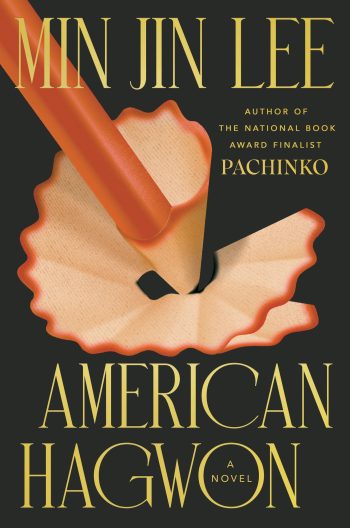
First impressions are important. As a new student at four elementary schools across two states, my fun fact was a crowd-pleaser—I once lived near the equator. College admissions learned about my supreme adaptability; how I moved from Indonesia to Singapore at five and to the United States at six, and learned English in first grade, all markers of resilience and work ethic. I didn’t question whether I wanted what I could accomplish. Min Jin Lee in American Hagwon (Cardinal, 2026) writes about the learned wisdom and education of moving from place to place. The first line in the novel is true, then and now—“the rules of engagement have changed already.”
Education was a competition to become a marketable employee; this I learned from my mother, the first in her family to leave Indonesia for the United States. My mother’s formula for success is hers, molded by her migration patterns as an adult. I am an adult when I realize I’m reading from a teleprompter, when I recognize I am an immigrant. This is why American Hagwon is important to me. The novel examines the Koh family’s migration from the United States, Australia, and Korea, and it is informed by Lee’s research and interviews with Koreans and Korean Americans. What better way to begin to understand each other and our communities? In this novel, the Koh family navigates the rules of engagement at hagwon, college, work, and church while code-switching between Korean and English. The Kohs prioritize dignity, grace, and wisdom. Each family member revises their plans again and again, learning what it means to live a life worth having.
American Hagwon is the third of the Diaspora Quartet, joining Free Food For Millionaires (Warner Books, 2007) and Pachinko (Grand Central Publishing, 2017), with Marshall Plan to complete the series.
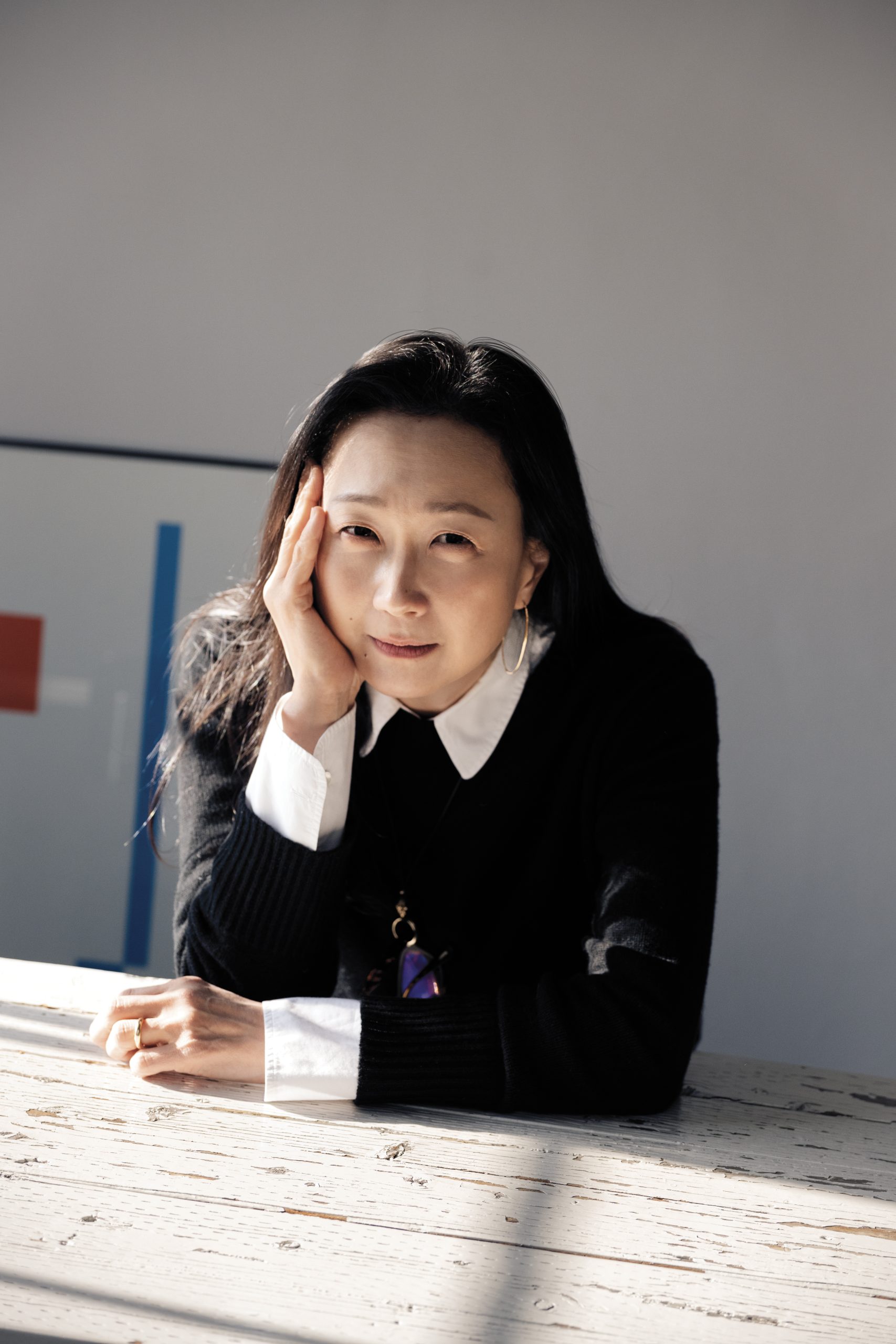
Lee called me from her home in Harlem, New York. On the phone, she talked about education beyond traditional schooling and what we can learn from each other.
This interview has been edited for length and clarity.
The Rumpus: At the heart of American Hagwon is the Koh family: Helen and John and their children, Bo, DH, and Mido. The family is shaped by different migration patterns across the world, but they’re bound by a shared understanding of what is important. What was it like to explore the Koh family’s values?
Min Jin Lee: The Koh family knew circumstances were outside of their control but what they could control was how they behaved with each other and the world. Their attitude and behavior were important to me because their lives expressed dignity, and this is something that I’ve witnessed again and again with people who are decent even in their struggles.
Rumpus: You show this at the beginning of the novel when Bo tries and tries to get into Yonsei University. It’s beyond his control. How does his stubbornness relate to his birth order?
Lee: Bo thought he had to be a certain kind of first son, so the birth order is important. He also saw himself as a smart person who could work hard. And I think smart people who work hard who also experience continued success can sometimes fall into a kind of grandiosity about what they can do without recognizing their changing context and circumstances. I don’t think Bo accurately understood what it would be like to grow up in Korea and the structural inequity that he’d face as an outsider.
Rumpus: Yes! Like when he said, “I think I might be stupid in this country [Korea].”
(laughter)
Lee: I spent a lot of time learning the different education systems for several countries and different states in the United States. Standards in America are not nationalized, so that was humbling. That said, I thought it was good for me to think about formal education in the context of what immigrants have to go through. If you are an immigrant or a person who moves from place to place, and if you happen to be in charge of educating a child, you are forced to learn the varying educational requirements of the place where you live.
Rumpus: There is so much to catch up on, even if you have help from others. The Kohs have support from communities at work and church, and both feel like important cultural centers for immigrants. Still, conflict is inevitable in these tight knit spaces. I returned to this line again and again: “It was one thing to refuse sin for oneself, but he [John] wanted to be competent even when facing the sins of others.” When in the writing process did you know wisdom, from faith and ancestors, would be a theme?
Lee: I knew that I was going to write about the subject of education. The more research I did on education, it really struck me how people viewed education as a kind of transactionalism and that really upset me. I was trying to figure out why that upset me so much, so then it forced me to ask myself, “What do I really care about?” I’ve always thought about education as a force for liberation and transformation. I’ve always wanted to be a wise person. Then I realized, “Oh. I want to write a book about wisdom. So what is wisdom exactly? How do you get it?” I usually have metaphysical questions and if I don’t have the ones that will sustain me, it’s very hard because my books take so much time. It was very good for me that I had these big questions about faith, morality, and wisdom.
Rumpus: Wisdom touches every part of every character’s life, and every character has a different interpretation of wisdom, too.
Lee: That’s exactly what I wanted. I wanted you to wonder, “What does Mido think wisdom is? What does Bo think wisdom is? What does John think?” because every single person lives differently according to their philosophy on wisdom.
Rumpus: Can you talk more about discovering that wisdom was a central question?
Lee: When you say my question is wisdom, it’s like you have these massive doors and you open them and go, “Oh my goodness it’s a cathedral in here; it’s a stadium.” I think having that sort of space… it can be very intimidating. It’s also really worth going in because those rooms can change your life.
Rumpus: Definitely. You layer big social questions throughout the narrative, like when Bo learns about Maslow’s Hierarchy of Needs and asks his undergraduate psychology professor, “‘Is that a life worth having?’ Bo asked, ‘A life with esteem, but no love?’” Why is this a pivotal moment?
Lee: Maslow’s Hierarchy of Needs is an idea that I wanted so much to introduce because it explains why there’s intergenerational conflict and misunderstanding. It also causes so many problems between practical people and people who may be more attached to ideals. On the most basic level, Maslow’s Hierarchy recognizes that you need to survive. When you are a new person in a new country and you need to survive, your focus is different. At a certain point, your children, especially if they’re born here, they’re not interested in just surviving. They really want to flourish. You can get physical needs, safety, esteem or love—a few of the needs Maslow names—in many different ways, but self-actualization is the hardest one to obtain.
Going back to Bo’s question, I wanted to have that sort of dialogue in which we’re witnessing and asking ourselves, “Well, what is a life worth having?” If you have esteem, if you have money, does that mean that you have a good life? Does that mean you have a wise life?” Certain lives that have been compromised in some of these needs may not be ultimately wise. I’m willing to question that.
Rumpus: It feels like a callback to when John realizes he’s never listened to a sermon that addressed lying in business.
Lee: I think people tend to look up to a wealthy person or a successful person in business because they have good earnings, but they don’t often ask, “Well, how did you get that money? Have you cut corners? Have you cheated people? Have you fired people you didn’t have to? Did you miscalculate or misstate earnings?” I think everybody has a different reason for doing what they’re doing, but for me, I wanted to know what that paradigm was, and to think about it through an ethical lens.
Rumpus: It was shocking to see how things unfolded in the book—
Lee: At church!
(laughter)
Rumpus: At church, where people in positions of power were trusted to be ethical.
Lee: Church leaders may be the last people that you’d detect for criminal acts because they’re supposedly properly vetted. But then again, they’re vetted by each other. You had mentioned this earlier so wisely that churches are not just places of worship but also micro-communities, and important ethnic communities for immigrants—whether you have a shopping mall or whether you have a church—that’s a locus of culture and its own civilization. So to be an elder at a church may not necessarily be what is explicated in the Bible, but rather, it may serve as a status title for an immigrant.
Where are your spheres of influence? Very often, Asians and Asian Americans are not understood contextually, and that’s why so often we’re misread. It’s almost inconceivable to a mainstream Western audience that an Asian or Asian-American might actually have a complex identity. I don’t think it is just simple racism. It’s a lack of education, a silence in the culture, and sometimes, just low numbers of people. For me, I think the best practice in life is to assume that everybody’s equally important and valuable. I think it’s a safe way to live, thinking that you’re consequential, but everybody else is consequential, too.
This idea is also embedded in the thesis of the book, “the rules of engagement have changed already.” I think the rules of engagement have changed and they’re constantly changing, but it’s important to understand that there are rules of engagement with each other.
Rumpus: Like John moving from a corporate job in Korea to a restaurant job in California. He sets aside his esteem, accepts the rules of engagement have changed, and helps his family.
Lee: The tragic thing is the fact that he’s middle-aged, and when you’re older in many institutions, your options do change. You could fight it, or you could accept it. You can ask yourself, “Well, what is the point of my life? Was it to have a white collar position and also what price would I have to pay for that title?” I’ve met all these people. The ones that I admire the most had a kind of dignity and wisdom about the expulsion from the cruelties of organizations. Work is hard and displacement is painful. That said, I have witnessed individuals who have experienced class dislocation or outright unfair institutional rejection, and many of them have applied their professional excellence into whatever work they had to do, which provides not just surplus value to the employer but also, it provides a sense of self-esteem to the employee. I don’t think it’s fair or acceptable to have age discrimination or other unfair employment practices. That said, how we respond to these events is telling of our own personality, options, and lives.
Rumpus: I think so, too. This is why when I see older Asians in the community, I bow… they’re invisible to so much of America.
Lee: But they’re not invisible to you. They’re not invisible to me. We’re also respecting ourselves in seeing their humanity. I think that when you give other people dignity, you’re also saying, “I’m a dignified person.” You have good home training, Tiffany. (laughter) I mean, that’s the kind of education that you want to have, right?
Rumpus: Personally, yes. Not Danbi! Let’s chat about her. John’s longtime friend and superior at work is Taehun Shin. Shin has an affair with Danbi who is a trainee at the same company and, without getting into spoilers, Shin’s relationship with Danbi creates conflict in Korea and California. In a way, Danbi represents greedy ambition and the Kohs represent moderation. What does Danbi think about satisfaction?
Lee: One of the reasons why I respect Danbi is that she knows what she wants. Her wishes are so intense and enormous. What I don’t respect about Danbi is how there’s no limit to what she won’t do. That to me is a sign of lust, an over-desire.
Rumpus: There’s a line, from Shin’s perspective, about how if Danbi was a man, she’d be a self-made tycoon or a national leader.
Lee: Right, but as a woman without wealth living in a very patriarchal country, she’s limited in terms of the tools that she can use. So, as a woman who has ambition, who understands her sexuality and has enormous identity hungers, she’s quite a remarkable character to watch.
Rumpus: She claims respect for herself regardless. She runs a business with her husband, takes her child to hagwon, and has an affair with George, who is a trusted member at her church.
Lee: Well, George serves as her real estate hagwon, right? (laughter) She’s a very willing student at the feet of her master and her payment is sex. So her child is going to—say, golf hagwon and she is going to real estate development hagwon—it just happens to be at a hotel. She’s fun to write and she’s also fun to read. She’s very understandable because all of us have ambitions that we would never allow ourselves.
Rumpus: She’s the flip side of Mido and Peter. When someone suggests Mido and Peter to put their hagwon on the internet, they quickly know their answer is “no.”
Lee: They wanted to have that in-person relationship with their students. Their attitude is, “Yes, maybe we could make more money, but that’s not really what we are designed to do.” They’re willing to critically question their lives and to revise their plans. I think that’s wisdom.
Rumpus: I loved watching them grow together, and Mido—she’s one of my favorite characters. I love how she wonders about the purpose of education. I grew up with the viewpoint that education is a competition. Mido prioritizes the process and joy of learning. Can you share how you explored her perspective?
Lee: There’s actually a lot of people like Mido in the world. But they don’t get a whole lot of attention. I think the Danbis in the world get a lot of attention.
Rumpus: (laughter) They’re in the news. You can read about them today.
Lee: Yes! They get a lot of clicks, but the world really wouldn’t work without more Midos. I wanted to put a character like Mido at the center because her sacrifices are just so rarely publicly acknowledged. Everybody who knows her knows that Mido is someone you want in your corner. But in the public eye, she’s not going to win attention. She’s going to do things slower and be behind her peers… and yet, her life has profound love and grace.
I don’t see many Asian American women, especially young ones, getting a lot of sympathy in the Western culture. I think that it’s easier to admire Sunja in Pachinko, an older character. She’s actually a very young character when she does a lot of what she does. Because she’s from another era, she’s seen as an old-fashioned kind of person.
But in my research, I saw many, many young Asian American women, who are deeply sacrificial, almost to their detriment, and also taking their time. Most Asian women, most Asians in America… they’re trying so hard to be good and that’s not recognized. It’s not glamorous to be good or sacrificial.
Rumpus: I didn’t put that together… I haven’t read a narrative like Mido’s. Can you expand on your research, meeting Midos in the world?
Lee: Oh, my heart would break. I’d meet these [Korean] sisters, who would tell me things like, “Well I’m working two shifts at a job, and I’m responsible for rent. My mother moved out and she left the three of us and we’re taking care of each other.” If she’s the oldest, she’s taking care of the rent as well as, let’s say, the car insurance and another sibling would be working as well as going to high school and paying for the phone bill. I would see these different economies in America and I thought to myself, nobody talks about this—of how difficult it is for these kids and these very young people to survive, but they’re doing it with a tremendous sense of mission and purpose.
Rumpus: They’re like little adults, which is something you wrote through Ginny. She’s a child when she leaves her family in Korea for school in California. She works so hard and I wanted her to slow down, watch TV.
Lee: I think you’re saying that because you feel protective of her and her childhood.
Rumpus: I am! She’s so aware of everything as a child. Maybe Ginny is a version of Mido from that time.
Lee: That’s exactly right. You’re getting an A plus.
(laughter)
Rumpus: As a recovering overachiever, thank you!
Before we wrap up, I have to ask you about the Rosetta Stone. It appears in the novel a few times, so I’m curious about the significance for you.
Lee: You know, I’ve always thought the Rosetta Stone was an incredibly cool thing. I mean, first of all, a French engineer and French soldiers found it in Egypt. Have you ever seen it?
Rumpus: No—
Lee: Because there are three different scripts, people were able to use that to translate other things. It’s almost like finding a dictionary. Let’s say you have a passage of Hamlet written in English, French, and Spanish, but we were never able to know what Spanish and French were, so by looking at that same passage, you can learn different words and meanings. You would start to understand French and Spanish. You have a key to three different languages that would not have been accessible elsewhere.
That is so cool because I love this idea that we can have a key to each other in one place. Tiffany is a Rosetta Stone. Like, let’s say you have the capacity to unlock several different civilizations or worlds. Does that make sense? This thing could be embodied in a thing or in a person. I find that to be really unifying.
Rumpus: Oh that is so beautiful, I’ll be thinking about that.
Lee: I’m so glad you picked up on it, and it means a lot to me. Also I want to talk about how people in the diaspora, we’re Rosetta Stones. All of us.
Rumpus: Absolutely. Last question. What is your hope for readers and their relationship to American Hagwon?
Lee: I would like, very much, for people in the diaspora, and those of us who interact with people in the diaspora, to recognize that we’re additive. I want us to think about the process of education and wisdom. I would love it if we could actually ask questions of each other, like, “What have you found that works for you? What strategy should I employ? Did you learn something when you went through that difficult thing?” I think American Hagwon is essentially about this idea that we can learn. We must learn even as we age and we can learn from each other.