
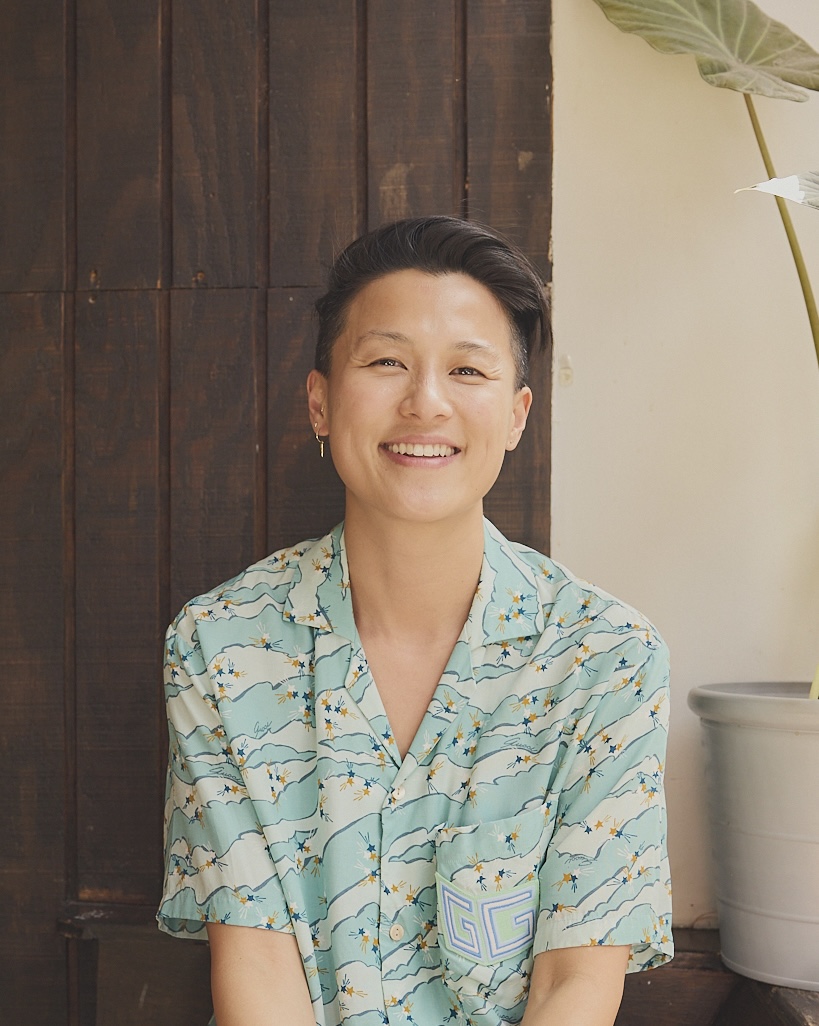
After winning Top Chef: All-Stars L.A. in 2020, Melissa King landed a two-book deal with Penguin Random House and set out to write a memoir and a cookbook. While both books were deeply personal and grounded in food, the memoir King wanted to write, as a queer Shanghainese Cantonese American chef, involved a complex intertwining of generational and cultural layers. She completed the cookbook and her publisher gave her an extension for the memoir. Her community stepped up with Door Dash deliveries, encouraging texts, and invaluable advice. From the grueling hours on the line in restaurant kitchens to vomit-inducing stress during her first season on Top Chef, King is no stranger to being in the weeds. To complete the book, she forced herself to write twelve hours a day, often dictating voice memos on walks and in the middle of the night. It was therapeutic, exhausting, and all-consuming.
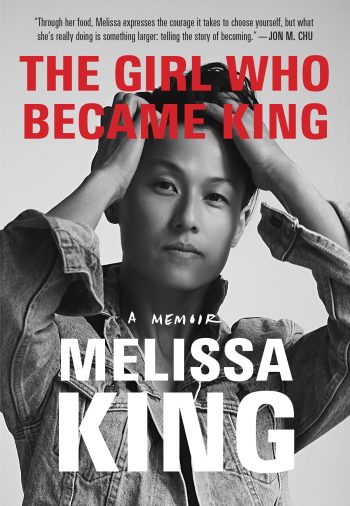
Her enviable resilience and determination in all areas paid off once again and, last June, King won a James Beard Award for her cookbook, Cook Like A King: Recipes from my California Chinese Kitchen (Ten Speed Press, 2025). In early October, her memoir, The Girl Who Became King (The Dial Press, 2026), six years in the making, came out.
During our hour-long chat over Zoom, several times King grabbed her book and held it up to the camera, just giddy with the accomplishment of having written it, almost in disbelief that she was finally holding it in her hands. Her exuberance was contagious and I am so happy to share our chat with you.
This interview has been edited for length and clarity.
***
The Rumpus: I loved spending the past few days with your book. I cried quite a few times. Have other people been telling you that?
Melissa King: Some of the early readers and reviews have said this. I cried when I wrote parts of it. I cry when I read it. What parts resonated for you?
Rumpus: I felt such a generosity from you toward your father, even when he was being so difficult. Can you talk about the word forgiveness and how it is relevant to your book?
King: It was very important to not just write my own story. I wanted the reader to really get the full scope and understanding of our culture, from the expectations and pressures that can be put on us to the lack of affection that both my parents faced with their own parents. I didn’t want the reader to just assume my dad is this horrible person. It’s nuanced. For anyone who has a parent of that nature, it’s often due to trauma from their own childhood, and their parents’ trauma, and beyond. I wanted to show compassion for that and even compassion for myself. I really had to write it with a lot of empathy for everyone involved.
Rumpus: You write that as a child, “Racism seemed individual, something interpersonal and not systemic.” Can you talk about when that started to shift for you?
King: When I was in elementary school and getting bullied and picked on for being Asian, I just thought it was me. I didn’t realize this whole other layer of how the world operates. Now as an adult I see, being Asian, that there is a system we are in. Especially people like my parents being immigrants, they have to start down here [hand down low] when everyone else is starting up here [hand raised in the sky] and they had to really crawl their way out of that. My parents don’t even see that system that they were in. They say, “Oh, it’s just how it was.” And I say “You didn’t even know English when you came here with no money and you should be really proud of yourselves and of who you are today.”
Rumpus: Can we go back to the amazing image of you as a child in the kitchen with a meat cleaver? What was getting you into the kitchen at five years old? Why were you cooking?
King: It was a giant Chinese meat cleaver because my parents never had French knives in our house. It was this big—
Rumpus: —the size of your head!
King: Yes. That’s what I trained on as a child. This was the late ’80s to ’90s. My mom would come home from work quite late, six or seven o’clock at night. I just wanted to hang out with her. I would help her prepare dinner. For every Asian kid, the simple task that we do is we wash the rice and stick it in the little rice cooker and push the button. Then moving into washing the vegetables, cutting them with a knife, and then to playing with fire on the stove. Over time, I just fell in love with cooking and nourishing my family. I knew at an early age that food could bring people to the table. By the time I was ten, I was putting on full, elaborate meals for dinner all the way through until I left for college. And so it became a kind of safe space and my playground.
Rumpus: Your family warned you that if you cooked every day you would stop loving it. When did cooking shift to something that you thought you could do professionally?
King: How can you hate something that you love so much? They were saying if you have a hobby it should stay a hobby because if it becomes your work then it becomes a burden. For a long time I felt like everyone was against me. They didn’t fully trust that a five-year-old could know.
Rumpus: Well, it was very clear that something felt right. You say that when you picked up a knife, you felt alive.
King: True. I still feel that way. Every time I hold a knife, there’s this sense that I’m about to create something. It’s an extension of my arm. I feel naked without it. I travel with my knives in my suitcase. Just in case. Cooking has always been the thing that created happiness; it just lit me up. I feel confident when I hold a knife.
Rumpus: Even though there was resistance from your extended family to becoming a professional chef, you learned so much from them. You say “there was history hidden in their hands.”
King: I love hands. When we were learning as children to make dumplings, my grandma and all the adults were just on autopilot; they knew how to do it, and it’s perfect every time, because it is muscle memory. But there’s history in them learning it from their mothers and their grandmothers. I’m a nostalgic person and I just think there’s so much beauty to people’s hands. I love just examining people’s hands, because these are the tools that we use to create, whether you’re a musician, a chef, a painter. There is so much we can do.
Rumpus: Well, you could write a whole book on hands!
King: Definitely.
Rumpus: You write a lot about fighting for happiness every single day. Why was this so important?
King: For so long, my family and everyone around me told me not to cook, or to try to be straight, suggesting maybe it was all a phase. I felt constantly silenced for who I was and so, ultimately, I fought for my identity, for who I truly am. I didn’t realize that fighting for happiness started with my mom until I was writing this book. She was going through a terrible marriage and divorce and really had to fight for herself because for so long she put everyone else before herself. She even put the dog before herself. Then one day it just flipped and I saw such a powerful woman come out of her and she became a big example for me of fighting for your happiness and choosing yourself.
Rumpus: When you did finally start working in restaurants, what were you gathering, knowledge-wise, and what was it adding up to, in terms of who you are today?
King: My takeaway today is: What type of leader do I want to be? I’ve experienced it from the flip side, and I never want to make someone feel that they’re not an important part of the system. At the end of the day, everyone is valued from line cook to the dishwasher. The dishwashers are the most important people! But there were many kitchens I’ve been in where it was the opposite. You don’t know until you’ve been through it to see how good it actually can be. But oftentimes cooks will train in restaurants and they’ve never seen a healthy kitchen and they think this toxic and unhealthy kitchen is the only way. And they get trapped in that. It’s very similar to dating a toxic boyfriend or girlfriend. But it’s your employer, and you feel in a way that you’re trapped in a trauma bond with that person or with that restaurant and it can be difficult to leave even though you know you deserve better.
Rumpus: And it doesn’t help that toxic restaurant culture is often represented in the media as sexy.
King: It has often been portrayed as the sexy bad boy with tattoos who cusses and smokes cigarettes. I think we’re changing, but it can always be better. There’s still so much aggression.
Rumpus: Did you ever have moments working in restaurants when you thought you just couldn’t do it anymore?
King: The burnout came in many forms during my decade and a half in kitchens. Some was physical, where I really had so much pain in my arms and my body. It’s a selfless industry, very self-sacrificing. You give up not just your personal life, your family—you give up your body for burns and cuts and backache, chronic pain from standing for hours at a time with no breaks. It is a relentless career. It’s a little masochistic. People in this industry kind of enjoy the torture and the pain of it, but the beauty of it is we get to nurture others and anyone that is in the service industry is a giver. You have to be willing to just shower people with your love, whether it’s through food or through giving them the best front-of-the-house service possible. We dedicate our lives to that.
Rumpus: In the acknowledgements of this book you say that writing this book was quite a solitary venture and a very vulnerable one. Chefs often work with ghost writers but you chose to write this on your own.
King: It was very important to write it myself. I don’t think the ghostwriter route would have worked. I did try it for a second but it was not working. It didn’t sound like me; it didn’t feel like me. Talking to friends and mentors like Padma Lakshmi certainly helped. She wrote her own memoir and she said, “It’s gonna take you much longer to do, but you can do it. You just have to really sit in it.”
Rumpus: Can you talk about finding your voice as a chef and then more recently your voice as a writer?
King: In cooking, you find your voice by training in many different kitchens and seeing what you gravitate towards, what you pick up and what you leave behind. It’s like sculpting. I find that writing is sculpting too. I didn’t realize that until I wrote this book. I wrote over five hundred pages and we had to sculpt it all down, but even up to the day I turned the manuscript in, I was still editing. I learned a lot from my editors.
Rumpus: What did you learn from them?
King: I didn’t realize there were so many different styles or ways to write. I didn’t want the whole book to be a stream of consciousness but you do hear my inner thoughts throughout the book. These were the fun moments where I was able to put humor into the book. But I also was learning the difference between putting the viewer into the scene versus just describing it—
Rumpus: —showing not telling.
King: Exactly. When I first started writing the book six years ago, I didn’t fully know the difference. I needed to trust that the reader is intelligent enough to understand and to be able to feel the scene, instead of me having to tell them everything.
Rumpus: I think that’s why the internal dialogue works so well in your book. Because at all times, especially in intense situations, like in a restaurant, you’re going about your life, talking to your coworkers, but at the same time you have all these ferocious things going on inside your head so hearing a little of that helps broaden the story for the reader.
King: We all have this inner voice that can be our worst enemy and can take us down. And we assume the worst. Or we can think we’re not enough; we can pick ourselves apart. And I really wanted that voice to carry through the book, and for the reader to see the shift of that voice, going from someone who is internal and trapped in their fears to someone who says, “I’m gonna own this and let’s do it.” And you see that power shift as you read through the book.
Rumpus: One of my favorite lines in your book is:“No one is going to die, we’re just cooking.” Who said this?
King: That was Roberto, one of the most incredible chefs I’ve ever encountered in my career. It’s also one of my favorite lines in the whole book. It really sticks with me today. I was a line cook, training with Dominique Crenn. I was a saucier. I was not qualified but she trusted me with that role and Roberto was training me. He was a very calm, zen-like type, like a ninja, running around the kitchen. At the time, I was a complete spaz. I was young, still very green and I did not have full control of my anxieties. I would have constant panic attacks on the line if it got too busy. And here’s Roberto coming over to me, saying. “Mel, we’re just cooking. Calm down; no one’s going to die. We’re not in a hospital; you’re not a surgeon. You can bring it down, here; this should be fun.” It became a bigger metaphor for life.
Rumpus: There’s a similar expression that we say around my house that I learned via a Lena Dunham interview which is that there are no art emergencies. It’s just art. It’s just cooking.
King: That’s exactly how it was. It’s just cooking. Like, we’re just feeding people, and everyone eats every day, every couple hours. It’s okay.
Rumpus: And did you bring that mantra with you into the Top Chef experience?
King: When I did my first season, I was that anxious little ball of a mess again and I got too wrapped up in it and was constantly second-guessing myself. I really fell into that stress. I got to the point in the second season [Top Chef: All-Stars L.A.] where I was like “I’m just gonna cook and have fun and if they don’t like what I’m making they can kick me off, go ahead, I don’t care.” I got to a point where I was just gonna go and do my best and this is my food and I was quite unapologetic about it.

Click here to subscribe today and leave your comment, or log in if you’re already a paid subscriber.