
Almost every Filipino family I know has a family dispute about land, with the most vivid example being from a friend of my mother’s. The only girl among nine siblings, she alone inherited their parents’ hacienda, and she alone left, to move abroad. Rivals for the land included her brothers but also the New People’s Army (NPA), the communist insurgency group in the Philippines, who had already shot and killed two of her older brothers after altercations. Her own daughter holds no interest in the land back home.
Even my own family on my mother’s side, as poor as they were, owned land to fight over: a plot with several mango trees. The lucrative fruit yield of the mango trees have recently piqued the interest of cousins on their father’s side. One of my aunts, who died recently, went so far as to join the Communists, hoping they would lend her their guns.
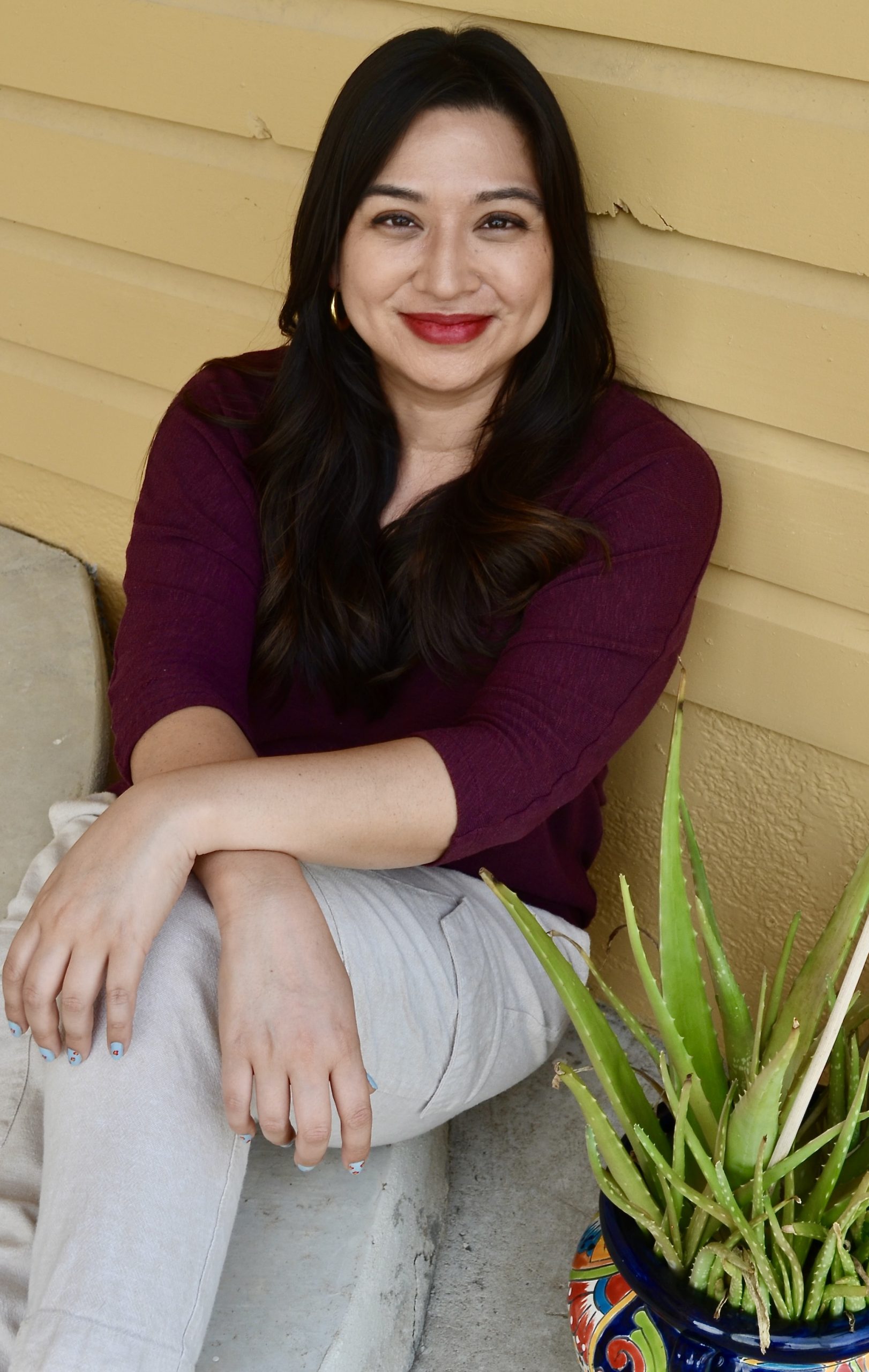
No armed rebels show up in Kimberly Garza’s Between You a River (Henry Holt & Co, 2026), the follow-up to her debut, The Last Karankawas (Holt Paperbacks, 2023), but her focus remains on exploring a family’s legacy tied to land. Death can resurrect past secrets and pull kin to the source of their birthright, which in the novel happens to sisters Hannah and Mari in America when their mother Cory dies.
Kimberly Garza and I spoke about being mixed Filipino; about her publication journey through her mother’s cancer and death; and about finishing this novel while she was undergoing her own breast cancer treatment.
This interview has been edited for length and clarity.

The Rumpus: Between You a River was optioned to come out this year or next, but you pushed to keep it on track for 2026. Why?
Kimberly Garza: I was editing it all last year, and Holt kept telling me, “We can push it, we can push it—nobody’s making you do this.” If I wanted it to run in 2026, it had to be done by a certain date, but it didn’t have to be; we could have pushed it to 2027. And I was the one who said “No, I want 2026 to be joyful.” I wanted to push through and have it be a good year. The timing of my treatment, and when I finished it, and when I turned in the final version of the book all sort of aligned. It felt fated—fortuitous, like a good omen.
Rumpus: It’s incredible that you kept revising through treatment, and that they gave you the option to wait and you didn’t take it. How did that affect your process?
Garza: Incredible is a nice word for it. At some points I was thinking, “Crazy. Pig-headed.” There were meaner words I’d use on myself—“You’re being dumb, you could just take some time.” But I didn’t want to. I can laugh about it now, but there were moments where I asked myself why I was doing this. At first, I told my editor I could do it—it would be a nice break for my mind, something other than breast cancer and chemo and worry. I already had a first draft, so I figured I’d just revise, come back to these characters, and it would feel refreshing. That part was true.
What I hadn’t counted on was how low my energy would be. I thought I could compartmentalize—physical energy over here, cancer treatment over here, and mental and creative energy over there. That’s not how it worked. Some days, even when I wasn’t in treatment, I just didn’t feel like doing anything. My eyes would get tired very quickly looking at screens, I’d get little headaches, the brain fog was too much. I’m usually a pretty good screen person, so I didn’t count on that. But on the days I did feel good, I had this sense of, “You have energy, aren’t you excited to be in the book?” I’d bring that feeling to the page, and it was really healing. It felt like a good distraction. It turned out mostly how I’d imagined; I just hadn’t counted on there being fewer of those days than I expected.
Rumpus: Between You a River already has a story behind the story—the lore of how the book was made, and then the actual lore inside it.
Garza: I didn’t count on it having lore. When I first had the idea, around 2020, I thought it would be the most straightforward thing. I was pulling from real experiences my family was starting to go through, and I thought setting the family’s home base in Uvalde would be my chance to put my hometown out in the world. I thought, “We’ll make Uvalde a little bit famous.” Years later, everybody had heard of us—for terrible reasons. So in a lot of ways, it already had lore I wasn’t counting on, and now, with this past year, even more so.
Rumpus: How did you land on the alternating timeline—the present-day sisters and Cory’s chapters from the past?
Garza: It emerged twofold. I always knew these sisters would have to leave home and go to the Philippines to reconnect with family. In early versions, I had a much stronger through-line in Uvalde, because their father was there—other characters who eventually got cut, more scenes grounding the book there. It was almost fifty-fifty between Uvalde and the Philippines. Then I started hearing Cory’s voice in my head. I imagined occasional flashes of her speaking from the river, from the afterlife. I worked with that for a couple of drafts, through some editor changes—people saw it and said, “Keep going.”
Then my current editor, Cara Reilly, got a cleaned-up version of the book last year and told me how compelling the Cory chapters were. I already had her speaking from the afterlife, and I’d also written moments where she spoke to her childhood, in Mindoro and Manila. Cara said the voice was so strong—what did I think about a dual timeline? I hadn’t pictured that. I’d always imagined a heavier focus on the sisters in the present, with briefer moments from Cory. I played with it, saw how it looked, and loved it. I think I’d just been carrying around an older version of the idea in my head, and it’s hard to shake that off. I needed Cara’s fresh eyes to say, “Actually, I think this would be stronger if we gave Cory equal weight.” That’s where the dual timeline came from.
Rumpus: It’s fascinating, from a craft perspective, how directly an editor can shape a book’s direction—we don’t often hear these kinds of stories. How many editors did you work with before Cara?
Garza: Cara is technically the fourth, but really, I’ve only worked closely with two on this book. I sold this one as the second in a two-book deal, though I hadn’t written it yet. My first editor at Holt was Ruby Lee, who worked with me through my first novel—phenomenal. She left Holt after The Last Karankawas came out, while I was working on Between You a River. I moved to another editor who was at Holt very briefly; I hadn’t given her any pages yet, and she left not long after. Then I had another editor, Micaela, who worked with me through the first draft and then also left, for reasons I wasn’t privy to, but on good terms. Micaela saw the first draft and gave me some notes before she left. Cara took over, read the second version, and gave me a much bigger packet of notes—much clearer suggestions—to really shape it into what it is now.
Rumpus: You mentioned earlier that revising the book during treatment felt like an escape, almost healing. Was that true of other hard periods too? You’ve also spoken about losing your mother.
Garza: There were a lot of moments, even in my worst stretches, when I had no energy, felt gross, was tired, couldn’t focus my eyes on a screen, and I was sad I couldn’t be with the book. There was something healing about going back to it, especially because it was fiction. During treatment I had ideas for essays, but I tucked them away—“There’s no room for nonfiction right now,” I thought. “My whole life is nonfiction. I wanted to sit with other people’s problems for a minute.” It was cathartic, and it was a lesson in empathy, because I believe there are things you go through where you can’t help but feel entirely selfish, entirely narcissistic. My cancer treatment was one of those. The other, before that, was my mother’s passing. Grief feels so heavy and so immediate, coloring everything, and then you look around and people are laughing and having a great day, and you just want to punch them. That’s fine when you’re going through something hard, but you can’t sustain it for long without turning into a monster. It was really helpful, when I didn’t feel like being out in the world among other people, to be with other people in the book instead—to think about them, worry about them, wonder about their lives instead of mine. That was healing.
Rumpus: How do you decide which culture pulls you when you’re working on something?
Garza: I don’t think I make a conscious decision—it just sort of happens. I usually start with an idea, or with a place, and I’m informed by how I felt there. A lot of Between You a River came out of a trip I took to Australia and the Philippines with my family in 2022. My mother had passed away by then, so it was my first trip to the Philippines without her. I’m very fortunate—unlike Hannah and Mari—to be close to my family; my aunts and uncles gathered around me, made sure I was comfortable, talked to me the whole time, traveled with me. My immediate family lives here in the States now, though we have extended family in the Philippines. So I was made as comfortable as possible in my mother’s homeland without her—but it was still unsettling, isolating in a way I hadn’t expected. That informed how I wrote Hannah and Mari there, the distance between their family members. As close as I am with my family, I felt a marked distance in the Philippines. I can’t speak Tagalog fluently—I needed my cousins or aunts and uncles to translate. I could understand a good amount, tell when people were talking about me, but I couldn’t exchange it myself. There was a lot of questioning: “What am I doing here? Do I have the right to say any of this, to claim this as part of me, when I wasn’t born here and the person who linked me to it isn’t here anymore?” I channeled that feeling—upsetting, and new for me—and I think it ended up being the thrust of the book: the sisters’ link to their Filipino heritage.
But I don’t think I’ll ever be able to extract one identity from the other, because of course I had to include the father, who’s Mexican American, Tejano, and the girls’ roots in South Texas. Even now, thinking about writing my father’s homeland—which is physically closer to me, where I have more experience, where I speak the language better—I still feel that same question: “Do I actually belong here?” I don’t know if that ever goes away, or if it’s just something I’ll keep thinking about, as a writer and as a person, forever. I don’t consciously decide I’m going to write the Mexican story, or I’m going to write the Filipino story. It’s always about how I feel in these places, and what’s the dominant emotion running through the project.
Rumpus: What is the place of shame in this novel (in Tagalog, “hiya”)—the secret Cory holds, the daughters not feeling fully at home in the language?
Garza: I think it’s exactly that. There are layers to it, and maybe it’s one of those things that gets passed down through generations whether we intend it to or not. I relate most to the sisters, because that’s the experience I grew up with—the shame of being a second-generation American, an immigrant’s kid. I’ve experienced that with Tejano and Mexican culture too—there’s a joke around being a “no sabo kid,” the idea that if you’re Latino but don’t speak Spanish, that you’re not real, that you go in a different category. That holdover of language and authenticity is something I think Filipino and Mexican culture share.
The book doesn’t dwell on the girls’ encounter with their Mexican side as much as their Filipino side, but I related to Hannah and Mari through both—the shame of not having the right to claim a culture the way other people do. I read an article recently debating what counts as real Mexican food, because I live in San Antonio, which is proud of its Tex-Mex—and there’s always a debate over whether Tex-Mex is really “Mexican.” I think about authenticity a lot, and the shame that comes with not feeling like you belong in these spaces you’re supposed to belong to.
I hadn’t quite thought through the layers of shame on the parents’ side until Cory started keeping secrets in the book. She’s under pressure to be a particular kind of daughter, to live up to her mother’s idea of who the family is and should be—and she has her own dreams. As much as Cory might say she achieved them and is proud of it, I think she experiences shame too—that she made certain choices that led to certain consequences, and there’s a lot of bluster behind her attitude of “I lived my life, deal with it.” I didn’t consider that until I’d finished the book.
I remember, after my first novel came out, an interviewer told me about a mixed-race family member of theirs who wasn’t “upset about it,” as if to ask whether I was upset about being mixed-race. That’s stuck with me. There are complications to it, for sure—I don’t want to say it’s easy and happy all the time—but at my core, I’m proud of who I am and where I come from, and I can celebrate it and question it in my writing. So the shame is part of it—not the only part, but part of it.
Rumpus: You specialized in Chicano literature in college. How do you find that different from, or similar to, what you’ve discovered about Filipino American literature?
Garza: I’m sorely underread in Filipino literature proper—only in recent years, post-grad, have I started diving into it. When I was drafting Between You a River and I was in the Philippines, I was trying to absorb as much as I could—I had copies of José Rizal’s books and considered his own history, asking myself how that time and those conflicts might translate into the book. They don’t, not directly, but I think coming to Filipino literature later fed into the sense of shame, of not belonging, that runs through the novel. I’m fascinated by the Filipino American experience specifically—Mia Alvar’s In the Country was one of the first that moved me, and since then there have been so many other books I love encountering and championing.
With Chicano and Tejano literature, borderlands literature specifically, there’s so much in common—always this sense of feeling unbound from a homeland. Though I think Filipino American literature can talk about diaspora in a way Chicano literature doesn’t quite approach because of physical distance. Like Selena Quintanilla’s father says in the movie, [Selena], our homeland is right over there, you only have to cross a couple of miles. So how do you speak to feeling disconnected and far from your people when they’re just over there? That physical distance separates my cultures. But the rest feels really similar: questioning around language, carrying it through to your children and grandchildren, traditions, Catholicism—both colonized by Spain—the patriarchal family, respect for elders, the way you’re supposed to greet or treat them.
There’s also a shared emotional register, a rebellion in that American-born generation, of the literature—this wanting to say, “My family does things this way, but I might be different,” and the push and pull of that. If you love your family, if you feel a sense of belonging to it, then being different from it is a real upheaval. Filipino American writers, whether they’re writing about queerness, assimilation, migration, marrying outside the culture—those are things Mexican American writers, borderlands writers, share too: This idea of going against the current, and what that does to a person, for good or bad. It can be devastating and exclusionary, but also empowering, individualistic—a little bit of both.
Rumpus: That maps onto the idea of exile literature too—Tejano writers exiled from their own land through colonization, even while still standing on it.
Garza: The land is still there, but the labels changed. The saying is always: “We didn’t cross the border, the border crossed us.” That’s true for people like my father’s family, and a lot of people in that area—one day they woke up and the border was the Rio Grande, not another river further inland, and suddenly they weren’t in Mexico anymore, they were in Texas, or vice versa.



Click here to subscribe today and leave your comment, or log in if you’re already a paid subscriber.