
criticism
-

Please Please Please: Casey McQuiston’s The Pairing
Few romance novels hit such emotional and sensual highs with the leads physically apart; fewer still so elegantly capture the fluid contours of gender and desire.
-

Slant Panes of Light: Emilie Menzel’s The Girl Who Became a Rabbit
Meaning is fleeting. Meaning is self-made.
-
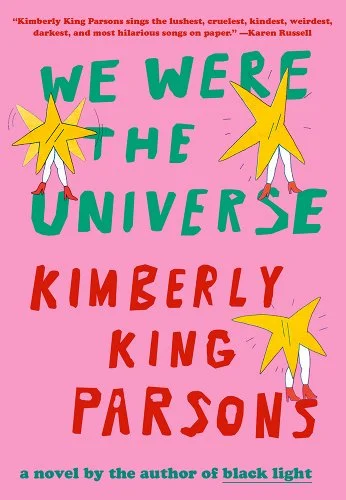
Gilded: Kimberly King Parsons’s We Were the Universe
The opening—that split person—might serve as a metaphor for a book told from the perspective of a person embroiled in grief: someone half in the past, trying, in different ways, to get out.
-

The Poetics of Holes
Unawareness can be exhaustion, but the very act of poetry is recognition—witnessing. To tell her truth, Nguyen must tell what is, to her, a mystery itself.
-

Totally and Brutally Honest: Talking with Amanda Petrusich
Music critic Amanda Petrusich discusses DO NOT SELL AT ANY PRICE.
-

Fresh Comics #12: Rolling Blackouts
Some books take such a mammoth effort to produce that it’s hard to want to be critical of them. Rolling Blackouts is one of those books. The nearly 300 pages of delicately crafted, watercolored panels make evident that Sarah Glidden is a…
-

To Speak Unsatisfactorily
To memorialize a tragedy, one must inscribe unmistakable significance into reticent materials, attempting to curb the natural processes of forgetting and obsolescence. For The Nation, Becca Rothfeld writes about W.G. Sebald, author of The Emigrants, among others, and his obsession with…
-
Not Quite Human
For the second time that day, then, I waited in the dark for something not quite human—and all too human—to begin. If you haven’t seen Charlie Kaufman’s new film Anomalisa, we highly recommend that you do. And then after, read…
-

The Rumpus Interview with Garth Greenwell
Garth Greenwell discusses his debut novel, What Belongs to You, crossing boundaries, language as defense, and the queer tradition of novel writing that blurs boundaries between fiction and essay and autobiography.
-
Art Should Make Things Worse
Art shouldn’t be mere normalizing sublimation or queer desublimation, which amounts to the same thing. Should actually make your problems worse. Only then can the fantasy of endless role-playing and analysis be traversed. Art is, in this way, less delusional…
-
Intellectual Sadism
Lisa Ruddick, at The Point, gives a state of the union address on critical theory, arguing that current trends are leading us down a dangerous, anti-empathetic, anti-individualistic road towards “cool criticism”: Academic cool is a cast of mind that disdains interpersonal…
-

The Rumpus Interview with Margo Jefferson
Pulitzer Prize-winning critic Margo Jefferson talks about her new memoir, Negroland, and about growing up in an elite black community in the segregated Chicago of the 1950s and 1960s.