
Emily Dickinson
-

The Sunday Rumpus Interview: Jericho Parms
What is lost still has substance, is malleable, can take on new impressions, and be molded again to our experience, often resulting in the most lasting force that determines how we see the world.
-

A Death Blow Can Be a Life Blow to Some
What does it mean to be carried away? To be captured, carried off, liberated? To lose control of oneself? Lerner doesn’t show concern for questions like these. More generally, The Hatred of Poetry takes little interest in the rarities of…
-
The Rumpus Interview with Connie Wanek
Connie Wanek discusses her latest book, Rival Gardens: New and Selected Poems, the challenge of looking back at older poems, and what prioritizing writing looks like.
-
Naturally Emily Dickinson
I became tantalized by the idea of a genius poet whose talent was nourished not by extensive travel, nor by formal literary training, but rather by an intimacy with the kinds of creatures Americans routinely encounter and rarely appreciate. For…
-

(K)ink: Writing While Deviant: Ames Hawkins
Is it really that human capacity is limited? Or are we limited by what it is we believe we are able, and allow ourselves—are willing—to see?
-

Night Sky With Exit Wounds by Ocean Vuong
Jeff Nguyen reviews Ocean Vuong’s Night Sky With Exit Wounds today in Rumpus Poetry.
-
Emily Dickinson Wasn’t Crazy
Emily Dickinson continues to appeal to literary critics fascinated by her poetry’s terse and alarming emotional breadth. Many biographies attribute her emotional poetry to a sense of agoraphobia, but at Lit Hub, Jerome Charyn makes the case for Emily Dickinson…
-

The Amazing Disappearing Woman Writer
To refuse to disappear at mid-life—I am forty-two as of the writing of this essay—is perhaps the best rebellion a woman poet can make to the literary world and to the world at large.
-

The Last Book I Loved: Sheila Levine Is Dead and Living In New York
But when my loneliness feels as vast—and capable of drowning me—as the sea, this book about self-destruction comforts me more than any self-help.
-

David Biespiel’s Poetry Wire: Pretending to Pretend
Just as a body, like water, retains no constant shape, so in memory there are no constant conditions.
-

The Rumpus Interview with Amy Fusselman
Amy Fusselman discusses her latest memoir/manifesto/philosophical treatise Savage Park, the rise of a new kind of nonfiction, and what kind of art “discombobulates her and makes her scream.”
-
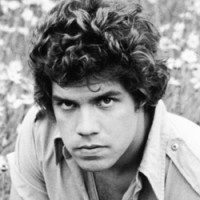
David Biespiel’s Poetry Wire: Cornerstones of American Poetry
The only way I can put it is, no American poet I have ever met regardless of disposition or poetics has disliked Frank Stanford’s poems.