Rumpus Reviews
-
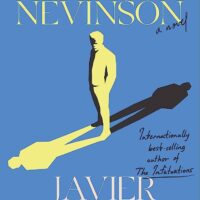
Killing One to Save Many: Javier Marías’s Tomás Nevinson
Marías is one of those gifted writers whose style sets him apart from other writers, whose authorship is apparent on every page he writes.
-
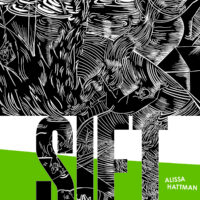
Memory Among Landscape: Alissa Hattman’s Sift
. . . in a barren world with little protection and corners to hide, it’s also impossible to hide from our thoughts . . .
-
Sketch Book Reviews: Night Vision
I love it when a book forces me to reassess my thinking on a particular subject.
-

A Perfect Sketch of a Moment: Janet Malcolm’s Still Pictures
“Memory is not a journalist’s tool. Memory glimmers and hints, but shows nothing sharply or clear.”
-
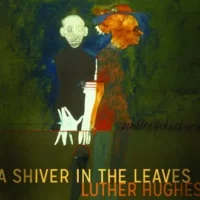
Waking Up at the Wake: Desire, Death, and Disruption in A Shiver in the Leaves
When I consider a shiver in the leaves, my mind fares in two directions: One is back to my first-time experience with psilocybin, shocked at how the fig leaves hung as if shivering . . . and the other is…
-

Critical Attachment to Geniuses: Ada Calhoun’s Also A Poet
. . . how to simultaneously develop a deep curiosity about cultural icons and maintain a critical distance from them . . .
-

The Myriad Conflagrations of our Times: Chloe N. Clark’s Patterns of Orbit
In this collection, the reader can slipstream from space shuttle to submarine, from Grimm to Goldilocks to Charybdis, because a cautionary tale that’s never heeded is never out of date . . .
-
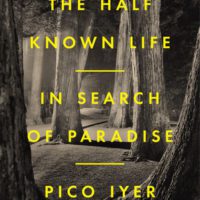
Travels in Paradise: Pico Iyer’s The Half Known Life
To try and gain a level of peace amidst the disappointment and chaos of the world is perhaps the only real paradise.
-
A Worn Violence: On Gabrielle Bates’ Judas Goat
[T]here is a speaker who will simply persevere, who will, like “the heart trying to leave the chest,” keep going, and by keeping going, will tend always, though it’s sometimes hard, toward human connection. Toward love.
-
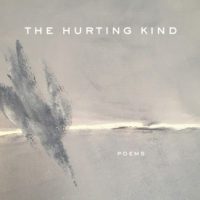
Clearing the Bar with Care and Complexity: Ada Limón’s The Hurting Kind
The Hurting Kind’s epigraph, a quote from Argentine poet Alejandra Pizarnik [implores] us to “Sing as if nothing were wrong. / Nothing is wrong.” When we read Limón, we can almost believe that.
-
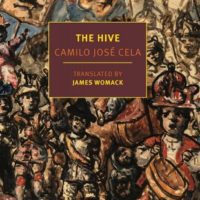
Languages Within A Language: Camilo José Cela’s The Hive
How do you represent, in a different tongue, the languages within the language of the original text?