
The Atlantic
-

It’s Literally Fine
At the Atlantic, Adrienne LaFrance defends teenagers’ ever-maligned contributions to the lexicon, citing a recent student that examines the extent to which teens influence linguistic change: And the thing about linguistic changes is they can’t exactly be stopped in any…
-
A New Nancy Drew
An actress of color is predicted to play Nancy Drew in the upcoming CBS adaptation of Nancy Drew. At the Atlantic, Lenika Cruz reflects on this decision: The announcement will do little to quell fears that the future of entertainment will…
-
Art Is Not A Formula
Electric Literature’s Lincoln Michel writes a rebuttal to a recent Atlantic article “All Stories Are The Same,” which attempts to reduce stories to basic formulas. Michel argues: These self-congratulatory attempts to reduce art to formula rarely tell us anything useful about stories. These formulas…
-
The Magical World of Children’s Literature
Over at the Atlantic, Colleen Gillard takes a critical look at the differences between British and American children’s stories. While British stories for children tend to be rooted in fantasy and folklore, she writes, American children’s classics tend to be more…
-
When Does a Writer Grow Up?
The Atlantic examines adulthood and how we get there, including a close look at the life of a writer: Henry published his first book…when he was 31 years old, after 12 years of changing jobs and bouncing back and forth between…
-
Greatest Hits of the Heart
Patience. Curiosity. Repetition. Looking again and again. Not imposing a story line. Letting composition emerge through pattern, rhythm, shape, sound, movement. Occasionally … you hit upon a moment of grace. You can’t plan for it. You just have to practice…
-
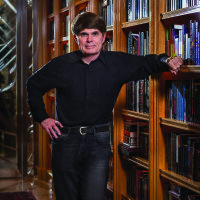
The Rumpus Interview with Dean Koontz
Dean Koontz talks about his newest novel, Ashley Bell, overcoming self-doubt, and “what this incredibly beautiful language of ours allows you to do.”
-
The Human Voice to the Rescue
At the Atlantic, Joe Fassler speaks with author Kevin Barry about the future of fiction. According to Barry, the “best hope” for building interest in fiction in a world “distracted” by technology is through audio storytelling: But one thing can still…
-
Why Commercial Success Gets Criticized As Sentimental
Perhaps it is because there are so few proven paths to success, and so little success to go around, that when an acclaimed novelist actually succeeds on a large scale, highbrow critics can become vicious. While the novels praised as…
-
Writers and Running
Nick Ripatrazone on why writers need to run: While on sabbatical in London in 1972, a homesick Oates began running “compulsively; not as a respite for the intensity of writing but as a function of writing.” At the same time,…
-
Famous Rejections Show Publishing’s Shortcomings
Rejection is often cited as an essential part of writing. Rejection is even celebrated, as if great works must be first overlooked and then pulled from obscurity. Consider Marlon James, 2015 Man Booker Prize winner: his first manuscript was rejected eighty times.…
-
Gaitskill on Tolstoy
Mary Gaitskill wrote for the Atlantic on Tolstoy’s classic Anna Karenina and the complexities of personality: Everyone says Anna Karenina is about individual desire going against society, but I actually think the opposite is stronger: the way societal forces limit the expression…