
the new york times
-

The Day Jobs That Influence Our Writing
At the New York Times, writers Francine Prose and Leslie Jamison explain how their past jobs—at a morgue and in kitchens—have taught them about writing: But it was another truth — the humility of that kitchen, confronting what I didn’t…
-
Time Travel in the Antarctic
In the latest installment of the New York Times‘s Sunday Book Review, Caroline Alexander writes an elegant review of Rebecca Hunt’s Everland, a novel about two expeditions in the Antarctic that take place more than a century apart: Her careful…
-
Androidish Spy Paraphernalia
The New York Times brought together two distinctly imaginative authors, George Saunders and Jennifer Egan, for a chat on writing the future, their famously fabulist impulses, and the core of why we turn to literature at all.
-
Poetry’s Love Affair with the Internet
We already knew that the Internet is a wild and wonderful place for poets, but the web is also empowering verse offline. The New York Times reports on how the Internet is vaulting poetry onto the bestseller list, and we…
-
Mothers, Tell Your Daughters Makes a Splash
Writing about the same river culture that Bonnie Jo Campbell once discussed with The Rumpus, the New York Times‘s Sunday Book Review called Mothers, Tell Your Daughters “watchful and viscerally alive” with a “spirit of indomitability.”
-
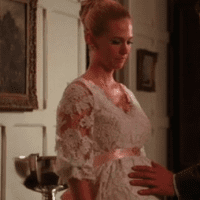
The Saturday Rumpus Essay: On Madness and Mad Men
In my eight years as a Mad Men fan, the series has repeatedly prompted me to reflect on parenting.
-

The Rumpus Interview with Melissa Gira Grant
Melissa Gira Grant talks sex workers’ rights, labor politics, the novelty of women’s sexuality, and her book, Playing the Whore: The Work of Sex Work.
-
Sacred Literature
For the New York Times, Alexandra Alter interviews Salman Rushdie about his new novel Two Years Eight Months and Twenty-Eight Nights. Their discussion covers the stylistic choices that went into the novel, as well as the role of mythology and polytheistic religions…
-

The Saturday Rumpus Essay: Informing Form
She was a physical, as opposed to a media, reality to me—someone with a voice to be addressed rather than a flattened image.
-
The Volcano that Defined the 1816-7 Art Scene
“The year without a summer,” as 1816 came to be known, gave birth not only to paintings of fiery sunsets and tempestuous skies but two genres of gothic fiction. The freakish progeny were Frankenstein and the human vampire, which have…
-

The Rumpus Interview with Joshua Mohr and Janis Cooke Newman
Authors Joshua Mohr and Janis Cooke Newman talk with one another about their new novels, All This Life and A Master Plan for Rescue, respectively.
-
The Wheelbarrow is Real
When we read this poem in an anthology, we tend not to think of the chickens as real chickens, but as platonic chickens, some ideal thing,” William Logan, the scholar who recently discovered Mr. Marshall’s identity, said in an interview.…