
As a librarian in a detention center for the past twelve years, I serve youth who are primarily poor—African Americans, Latinx youth, and some white youth. With over 70,000 youth in lockdown across the country, books of interest to this population and those that care about them—which should be all of us—are extremely important.
Most of these youth have challenging lives and want to read about “real stuff.” Biography and autobiography is an entry point after popular African American teen fiction. (Popular Latinx teen fiction would also be an entry point were there enough selection—authors and publishers, are you listening?) The majority read at a fifth grade reading level; however, when they see themselves and their lives they are highly motivated to read the book and will then often read above their reading level.
There are three new and outstanding books of interest to those of us who live on or are interested in the margins and the marginalized:
Dear Marcus: A Letter to the Man Who Shot Me by Jerry McGill: this is my current favorite book. I am especially enamored of it as I saw the originally self-published title listed on iUniverse and was intrigued by the title. When I saw an advance reading copy in a pile in the back room of a local bookstore I yelled aloud. Lorri Moore wrote about it in the New York Times Review of Books in May of 2011; in June Spiegel & Grau picked it up and created a beautiful package.
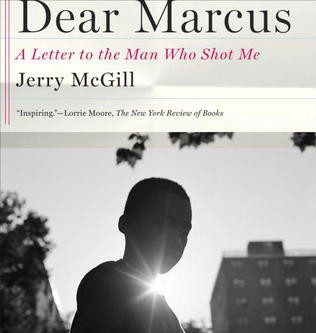
McGill was thirteen when he was shot in the back while walking home late on New Year’s Eve. What happened to him after that unfolds in letters to his assailant, who was never found—or even looked for. McGill was an inner city black boy being raised by his mother, but his life is far from stereotypical. These letters take readers on an unforgettable and intriguing journey as Jerome comes to terms with his paralysis and his life. Themes of violence, hope, despair, forgiveness, anger, and living with a disability are explored both lightly and deeply, humorously and profoundly, and always honestly through stories about his relationships with family, friends, nurses, and others that crossed his path, all in a conversation and relationship with the person who shot him. The complexity of issues is presented with stunning and distilled simplicity. This is a literary page-turner that explores the reverberations of an action and a moment, the ways in which perpetrators and victims are connected. Letters alternate with short movie-script chapters and themed photographs of the profile or shadow of a young black boy, pavement, chain link fences. From the packaging, to the insights, to the defiance and challenge of assumptions, to the writing, this is a straight up gorgeous book.
There are some terrific interviews with the author, which can be found here and here.
Carissa Phelps was twelve when her mother dropped her off in the lobby of the Fresno, CA, Juvenile Hall and told the man behind the counter that she couldn’t control her daughter. Her memoir, Runaway Girl, touches on complex issues, including covert threats of sexual abuse, what it means for a child to feel safe and cared for, and a bi-racial Latinx identity that was not acknowledged. Like Rachel Lloyd’s Girls Like Us (HarperCollins, 2011) and Jaycee Dugard’s A Stolen Life (Simon & Schuster, 2011), Runaway Girl demonstrates a great amount of insight and maturity. Crisp writing and perfectly chosen events highlight the story of what happens to the majority of twelve year olds on the street—Phelps was picked up within forty-eight hours and sexually trafficked. Her book is unique in its details and her focus on both post traumatic stress and self-esteem issues. Her ability to connect with and reach out to strangers along the way—counselors, teachers, and a woman who was, for once, a selfless and caring person helping a child in need—saved her life. Each small yet steadfast act of kindness and encouragement made a difference. By the time the author turned thirty, she had both a law degree and an MBA from UCLA. With not a trace of victimhood or unplaced drama, this is a terrific read.
Carissa came to speak to my girls in June. Having an author come can inspire youth to read an otherwise intimidating book. Malika (not her real name) had this to say: “I liked her a lot. I loved her book.” As many of our girls do to mitigate the barrage of disappointment and false promises, Malika continues, “I didn’t think she was going to come.”
But she did come!
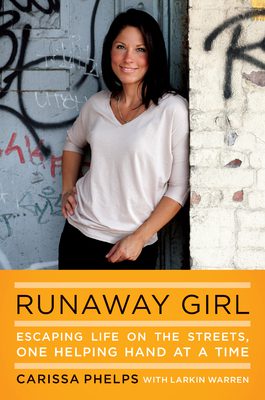
“I was so happy when she came. Her story was tragic but she came in happy, excited and determined. Her eyes were wide open, internally and externally. She was committed. She was open to being an advocate instead of just coming in to tell her story. What she learned from people, the information she had received to help her—she was giving it out for free!
She motivated me to stay in school. I may have good days and bad days. The most important message she gave was that I don’t have to do things to make people love me.”
The fact that this girl—someone who most likely has had to do horrendous things for a twisted experience of “love” or even for basic necessities such as food and clothing—received the message that she is loved for who she is and doesn’t need to do anything—is truly priceless. Malika will have the signed copy of the book to remind her of this message if she ever forgets.
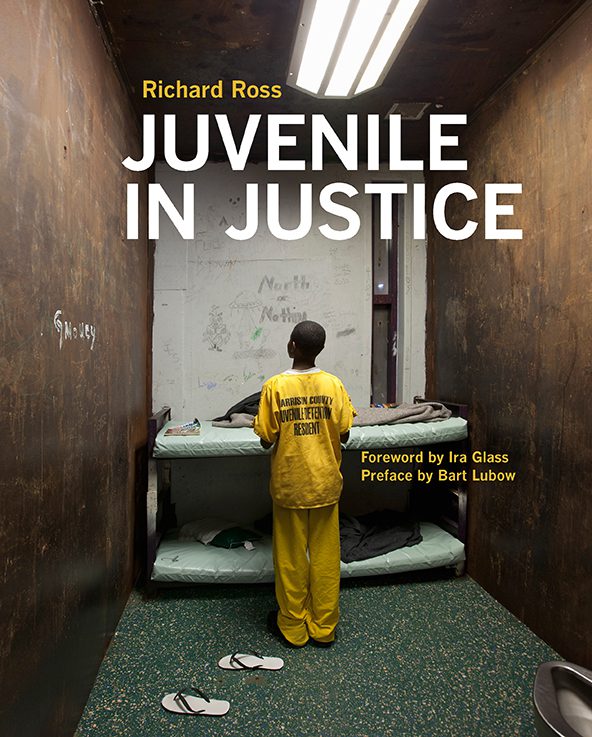
Award winning photographer Richard Ross spent over five years speaking with 1,000 youth confined in more than two hundred juvenile detention facilities in thirty-one states. The result, Juvenile in Justice, is visually profound and provocative.
Stark facts such as “Nearly 3 of every 4 youth confined […] are not in for a serious violent felony crime” or “Black youth are 9 times as likely to be sentenced to adult prisons as white youth” are one to a page. Portraits of youth are accompanied by short text: a quote from the youth, staff or short narrative explanation. The fact of the youth’s anonymity (legally required), captured in personal and thought provoking ways (“fuck me” cut into the skin of a girl’s arm) is haunting.
The ironies and contradictions inherent in the system unfold perfectly with the visuals of facilities and accompanying text. For example, “The state of California spends $224,712 annually to house a juvenile in the new ‘green’ Oakland facility. Oakland spent $4,945 on the education of a child in the Oakland public school system” is accompanied by a sign proclaiming the use of OC pepper spray (not exactly “green”). Montages of themed images such as food trays, “time out” rooms and restraining devices tell the story in a way nothing else can.

4 responses
Amy, the words “Thank you for what you are doing” are, like, a dust mote. As a former homeless kid who was institutionalized (in a government-supported cult, no less–look up Straight Inc. Get your mind blown), I thank you (dust mote). As an urban and alternative school teacher who doesn’t know if her love for the kids can outrank her hatred for the machine, I thank you (refrain). But for posting the cover of Juvenile Justice, thereby making me cry before the friggin sun is even up, I kinda hate you.
We can either spend money at the end, when these people become violent or lost, or we can spend it at the beginning, when they’re very small children who need help.
Let’s vote for the latter. It’s way cheaper, way kinder, and way more gratifying.
As a writer, having grown up in Oregon Youth Authority, on the streets, raised by violence and the feeling of being forgotten, I have always wanted to write about my experiences. As a poet, about to come out with my first collection of poetry, it has always been my intention, or hope, that maybe one person can feel as if they are not alone in a cold and apathetic world, even if it os only for one day. My inability to adapt to a world I hold in disdain has impeded my ability to evolve in life, and still often feel as if any effort will be a waste and that failure is imminent. It will take decades of “success” ot dispel such beliefs and understandings, regardless of how I might intellectualize the irrationale of said perception. Thank you for sharing.
I agree with Shelley. I have always believed that if you invest in books/libraries now you won’t be squandering our governments money on prisons, welfare later on. But most important of all you could give kids at risk hopes of a better future…
Click here to subscribe today and leave your comment, or log in if you’re already a paid subscriber.