
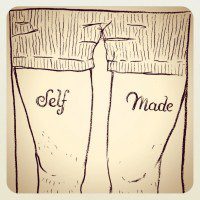
I am in a good mood when I meet a woman with a severe, sophisticated haircut for a business lunch on a sunny patio in Back Bay. She asks about this column, about my manuscript. It seems that some people are more at ease when they know I’m trans, some less. I can’t figure out the math exactly. With women I wonder if it’s a vague sense of familiarity they don’t have with non-trans men, or, more cynically, if it’s a perception that I am some sort of lesser-than, a eunuch.
What makes a man? I want to ask her, but she’s telling me a story.
She gets a catch in her throat when she talks about a recent break-up; then her tone turns bitter and oily. It’s because of this column that she tells me about herself, because I say I’m reconciling my masculinity with the actual fact of men, that I’m trying to map out my place in a world of urinals. “It must be so interesting,” she says, her eyes swiveling toward me, “to observe male culture from your position.” She leans in close, expectantly. I wonder what she sees when she looks at me, in my Ray-Bans and collared shirt, my light scruff and designer jeans. I’m just happy to talk to anyone about my life who doesn’t treat me with kid gloves. The New England commitment to privacy combined with a collective cultural anxiety about difference means that people are kind, but uneasy. She is worldly, born abroad, and I can tell that she might see me as a fellow exotic, but I tell myself it’s better that than the disquieting silence after I mention a testosterone shot in mixed company.
“You must have a lot to say about masculinity,” she says, and then waits.
There is a tension that I can’t name between us, a transaction that she’s aiming for. I tell her about how being a man after 30 years of not being one is strange and sometimes beautiful. I say I feel like a tourist in my hometown: appreciating the layout anew, getting hit viscerally by the shape of the skyline, wondering sometimes about the structures we value and the ones we don’t. What is beautiful, she wants to know, so I say the vulnerability everywhere; how much more exposed men feel to me than women, how many interactions are weighted with feeling despite the odd insistence that men are “simple.” I do not know any simple men, I tell her. I think of my father, of meeting him in a tea shop in Oregon, of the way he hunched over his apology, as if protecting it.
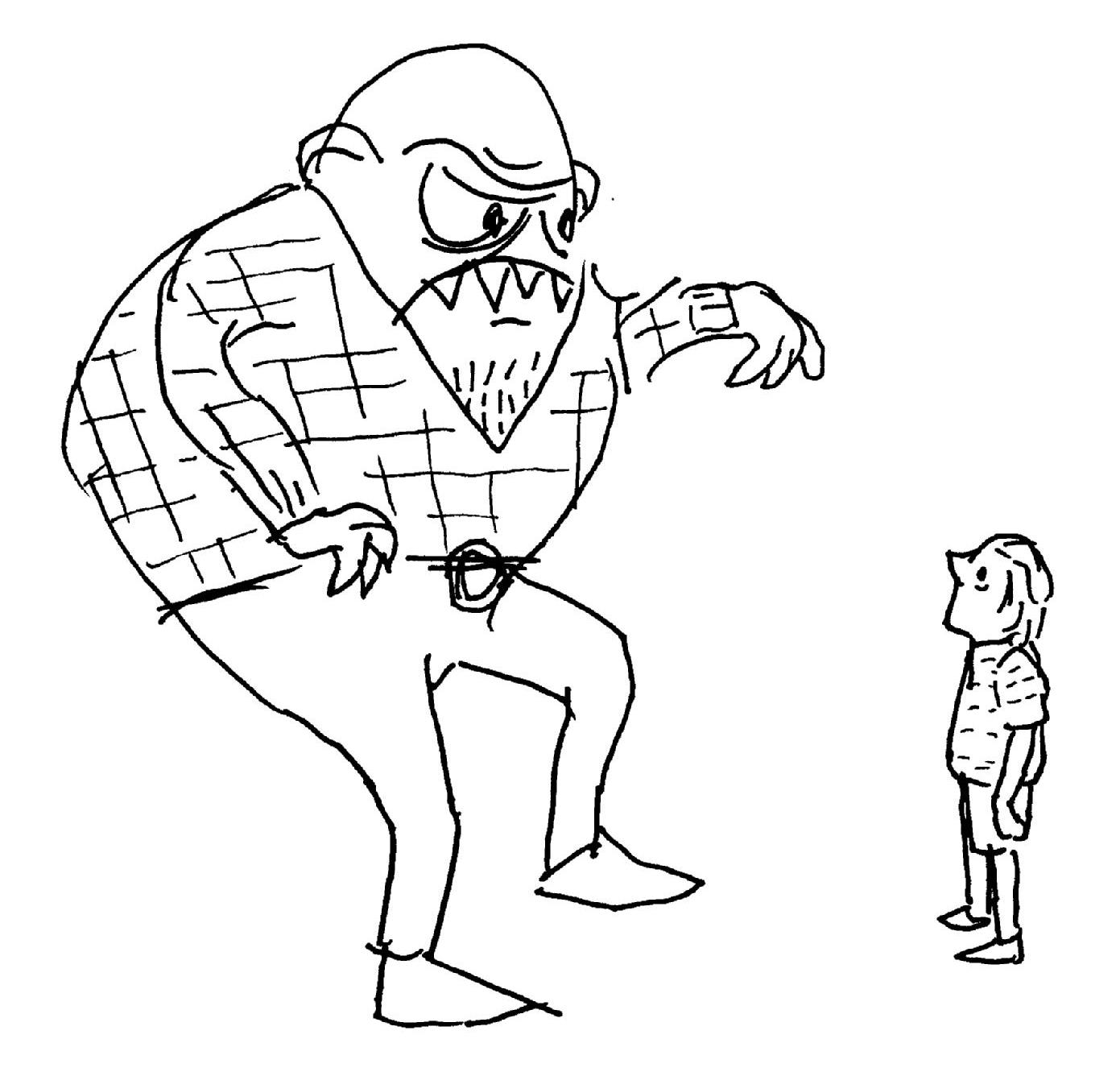 I grow bolder, tell her I have discovered a hidden compassion for men, for the ways society trains them to quiet their emotions. She twitches as if I’ve hit her. Her ex, she tells me, turned violent toward the end of her relationship because he didn’t know how to deal with his feelings. She looks at me defiantly, as if I might defend him. “That’s really messed up,” I say, toying with my sandwich, realizing what’s happened, but it’s already too late.
“Why do they do that?” she asks, and I see she’s held that question in the whole conversation, that this is a drumbeat in her mind. “I’ve spent months trying to understand, and I just can’t. Why do men turn their anger outwards, why do they hurt the people trying to help them?” Her voice rises, as if we are not strangers.
“I don’t know why some of them do, like some women turn anger inward,” I say, palms out, to show that I am in agreement, but that the whole system is sick. She nods blankly. “It’s messed up on all fronts,” I add.
I have no idea what else to say. I’m not wise, or ready. I buy time by taking a big bite out of my sandwich. “I think it’s also maybe observer bias,” I tell her. “You know like when you’re primed to look for something, so that’s all you see?”
“What is wrong with them?” she asks again, and I follow her gaze to a group of peacocking teenage boys. I realize I have no response: I am not on either team; not an interloper, not even an easy answer.
It’s not that I don’t see why she’s angry. “I just want to feel safe,” she told me. “I don’t think a man can understand that.” But you can, she meant. And she’s right. On the other hand, now I can also sleep on a bus station bench without fear, if I want to. Now I can accidentally scare a woman I’m behind when I walk back to work around the Fens, not noticing my pace until she looks back at me, frightened.
I don’t know about violence’s origins, but I think the problem with masculinity is that men are taught it can be taken away. Right now, a kid is getting bullied somewhere for the way he laughs, like my brother was mocked into submission by our thick-armed bus driver in elementary school. Right now, a kid is calling another a “girl” for liking to read, teaching each other that what makes a man is tenuous, that being feminine is an insult, that gender is not a prism to shine through but a fleshy prison requiring contortion.
“That’s the problem with violence,” she’d told me. “You can’t undo it, you can’t un-remember it. I look for it in every guy I meet.” I once had a shrink who told me that almost everybody experienced trauma at some point, that my early childhood just prepared me better than most.
“I’m sorry,” I told her, because I am not a woman, because I do not feel safe, because I’ve stopped expecting to.
We hugged goodbye and I walked to the train, past the guys playing basketball, past couples picnicking on the green, past the emergency call box for women joggers, past gay men cruising each other with acrobatic subtlety, past homeless men sleeping in nests of blankets, past dangers large and small, hidden in the shadows of ice cream trucks and hooded eyes.
I wish I’d said different things to the woman who wanted answers from me: that I am a feminist, that I construct my own masculinity, that if I had a son I’d teach him that strength is in flexibility, in openness, in knowing how to be yourself.
After I saw my father at the tea shop and he said in a strangled voice that he was sorry for abusing me, that he thought about it every day, that he only wanted to make up for it somehow, he waited hopefully for me to respond, just like she had. I couldn’t give him what he wanted, but I told him that he hadn’t broken me, if it was any consolation. I said I hoped he did something good with his life, even one little thing. It’s not what he wanted to hear, but he smiled and said he would.
I started testosterone a month later, confident that I could be a good man, not my father’s son.
“Yes, but do you forgive him?” People want to know. Even though it’s not the point of the story. The point is that I was there. The point is that I saw for myself he was not a vessel of violence, but a man.
I’m still so angry, I wanted to tell that woman.
And yes.

7 responses
It doesn’t feel good to say this, but I have little sympathy for that woman. I don’t know her or her story, but if she’s going to generalize about men, then it’s fair to generalize about women. And women, as a generalization, reject men who don’t project their masculinity in very direct ways. Women, as much as men, repress the urge in men to express their feelings. Men are punished both for their sexual desires and emotional needs. They are to be strapping but sensitive, strong when it suits the woman, but also weak and vulnerable, again, when it suits her. It’s NOT that “You can’t have it both ways.” Only that you won’t. If women want men to feel free to accept (and to verbalize) their emotions, they must show that they have permission to do so.
As Nancy R. Smith wrote, in her poem “For Every Woman”:
For every woman who is tired of acting weak when she knows she is strong, there is a man who is tired of appearing strong when he feels vulnerable.
I love this so much!
“I don’t know about violence’s origins, but I think the problem with masculinity is that men are taught it can be taken away.”
I’ve never heard it said so simply, succinctly.
Just discovered this series and quickly went back to read them all. Thank-you for your graceful and considered writings. They remind me to be more cognizant of the unique struggles of the people I encounter, but also of our commonality.
Thanks so much for the kind words, folks. It really means the world to me to know this stuff lands with people.
Thomas, I’ve been really grateful for your columns since I discovered them, what…a couple of months ago? I’m in the middle of transition myself, at 26. In outwardly becoming more of my masculine self, I also find a deeper feminism than ever before. Thank you.
Up top there: I feel like you’re missing the point. so close but so very, very far.
Danpot, I do have sympathy for you, but I also think that’s a really shitty thing to say — that you don’t have sympathy for that woman, or for any human being who has experienced gender-based violence. Try to have a little compassion, brother. Just a little. Shame on you.
Click here to subscribe today and leave your comment, or log in if you’re already a paid subscriber.