
I am thrilled to introduce this partnership between The Rumpus and VONA/Voices of Our Nations Arts, the only multi-genre summer workshop for writers of color in the US. Founded by Elmaz Abinader, Junot Díaz, Victor Díaz, and Diem Jones in 1999, VONA/Voices is committed—like The Rumpus—to creating spaces where people come to be themselves through their writing, to tell their stories or speak their minds in the most artful and authentic way they know how. And like The Rumpus, we nurture writing that’s challenging, brave, passionate, and true (and yes, sometimes very funny).
In our seventeen years, VONA/Voices has helped integrate the literary landscape by mentoring 2,000 writers from around the globe, birthing more than 200 books, and launching the careers of countless writers, some of whom, like Olivia Olivia and Soo Na Pak, were published for the first time at The Rumpus. Their commitment to creating outlets for diverse voices is critical to our work. In March, The Rumpus published an important Roundtable on Writing, Editing, and Race, whose members spoke about the role VONA/Voices played in their careers. We are eternally grateful and extend special thanks to Mary-Kim Arnold, Marisa Siegel, and everyone involved in this joint venture.
–Faith Adiele
***
Know what it is you are trying to steal. Not just a string of letters—Jiang Wei Lin—but the characters behind them: 蔣維霖.
Know that you are trying to steal from a naming ritual and culture that goes back five thousand years.
Learn to say it correctly. Jiang, third tone—start low like a bass note, dip down then bring it back up to alto. Wei, second tone—let it rise like a question you already know the answer to. Lin, second tone: let it rise again.
*
My family name 蔣 comes first because family always comes first. See how the grass radical 艹 sits on top of 將 like a crown. 將 for “general.” 將 for “leader.”
維 is my generational name. It means, “to keep together.” All of my cousins related to me through my father’s brothers share this generational name.
Not only does my generational name connect me to my cousins it connects us to all of our elders and ancestors. That one word 維 is part of a long, ancient poem designed to help our family keep track of its lineage, designed to tie us to my father and his brothers, my grandfather and my great-grandfather—and all those who came before them.
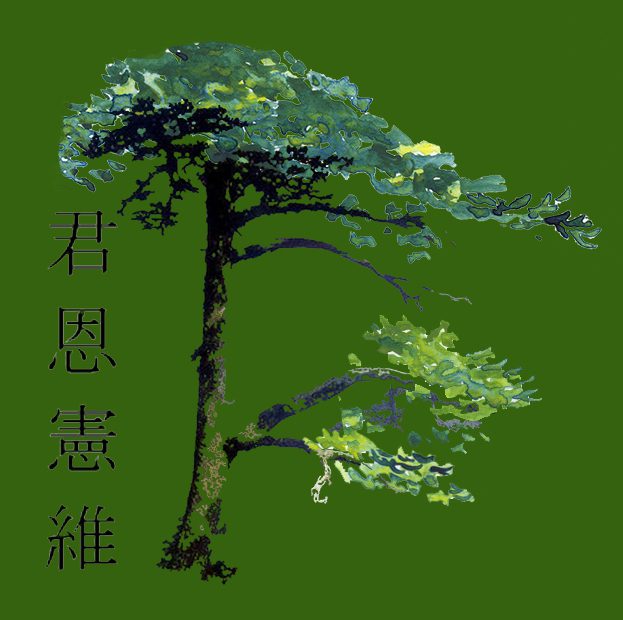
Together our four generational names form a segment of that poem:
君 A noble person
恩 acts kind
憲 (and upholds) the law
維 together
*
霖 is my given name. It means continuous rain.
See how the character for rain 雨 hovers over the one for forest 林.
See the wood 木 in 霖. All of my 維 cousins’ given names include 木. In this way, we are connected not only by our family and generational names, but also by the element in our given names.
More than three thousand years ago my given name was carved into oracle bones to help divine the future.
 See the oracle bone character for rain.
 See the oracle bone character for woods.
 See the character for my given name—rain cascading over woods.
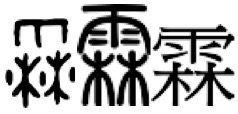 See the evolution of my name over three thousand years.
*
My name was given to me by my grandfather, my Yeh Yeh 爺爺, who named me via letters from Taiwan to my parents just before I was born on a cool spring morning forty five years ago in a hospital near Spanish Harlem, New York City.
See 爺爺 at his desk, the one covered by a heavy glass plate, writing “蔣維霖” on thin blue airmail paper. Under the glass lies a single photo—my father, age twenty, smiling in swim trunks, tanned, sculpted and fit from swimming the waters of Keelung most of his life. Hear my 爺爺 sigh recalling the day my father left for the US to go to graduate school. Was that really only two years ago? 爺爺 thinks to himself. It feels so much longer. (It will be another four years before they see each other again.)
Then see my 爺爺 who learned English as a child from missionaries in China beam with excitement and pride thinking about his son in America, and now his new grandchild—the first 蔣 to be born on 美國soil.
*
I didn’t always love my name.
*
See me growing up in the 70s in a nearly all-white suburban Jersey town.
At age eight, I am standing in front of my mirror praying that I might wake up blonde and blue-eyed like Barbie, like Cinderella.
See me the next morning: same sallow skin, straight black hair, small brown eyes with their puffy mono-lids, wondering: Why did I have to be born Chinese?
In fifth grade, Jeff, the boy I have an unspeakable crush on, the one with green eyes the color of sea glass, glares at me during class. “What are you looking at, chink?” he snaps.
After school, he and his friends see me pass by. They pull their eyelids back, make bucked-toothed grins, and bow as they pretend to say my name. “Ching chong Chiang! Ching chong Chiang!”
They chase me down the street. “Why don’t you go home! Go back to where you came from. Go back to China!”
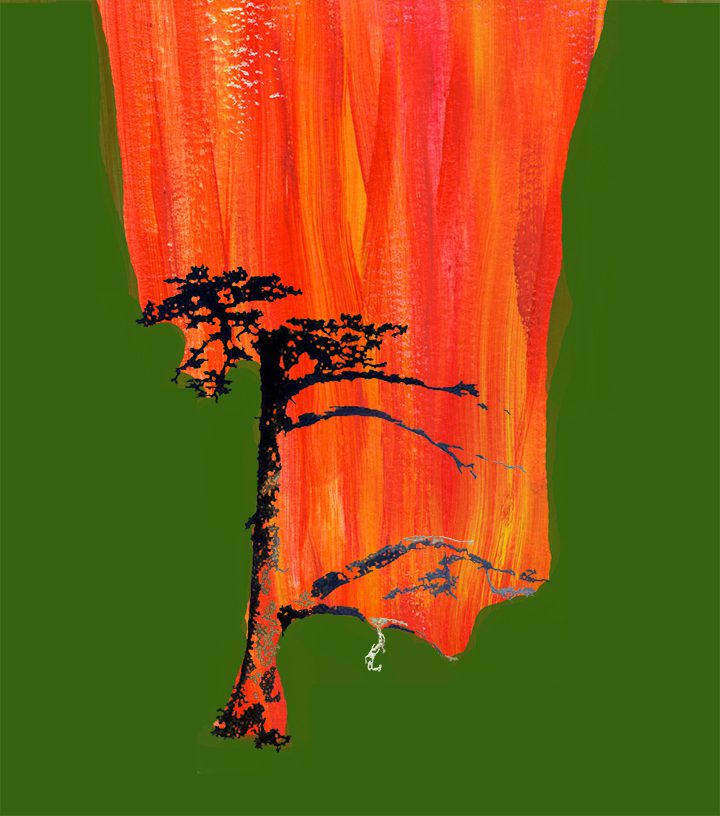
See me waking up to my house surrounded by flames. It’s Mischief Night and someone has soaked gasoline in toilet paper and torched our pine trees. My parents are fighting the fire with a garden hose. One neighbor helps them, beating back the flames with a shovel.
The next year, all of this happens again.
*
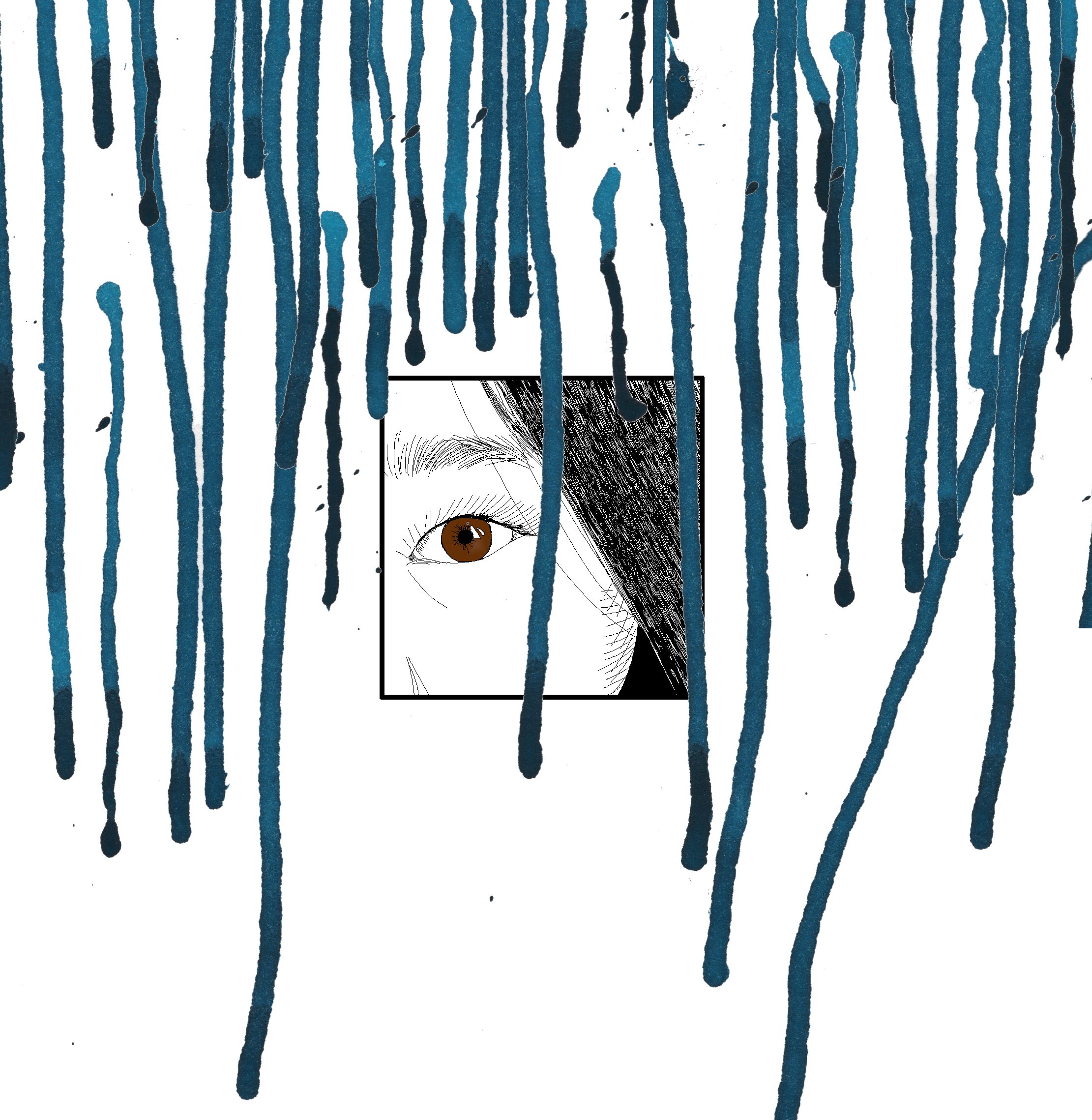
See me in high school bleaching my hair. Which shade of blonde will make me look more beautiful, make me look the least like me? See me holding up ads for colored contacts next to my eyes. Which ones should I save up for? I wonder. Ocean, sky, or electric blue?
See me in my bedroom listening to Madonna’s “Dress You Up” while spraying my permed hair with so much Aussie it makes the whole house smell like a grape factory exploded. In our kitchen, my parents fry chilies and play Deng Li Jun on full blast.
*
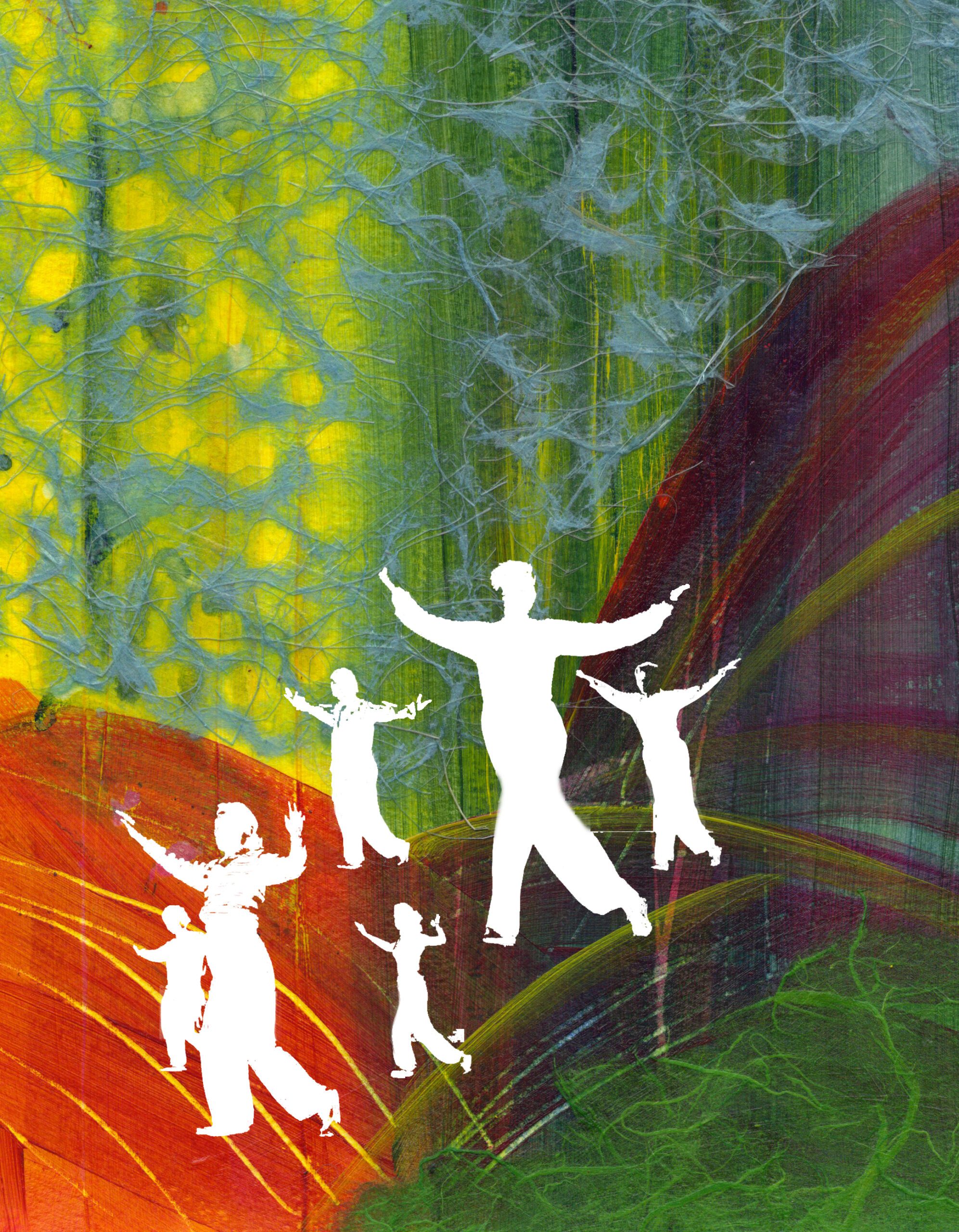
Before you steal my Chinese name, see me at age twenty-seven when I visit China for the first time. In a Beijing park, surrounded by elderly men and women practicing taichi, I dig my fingers into wet soil, bring it up to my nose. Even though it looks and smells pretty much like dirt from Jersey, I almost cry because I want to believe that for the first time I am truly home.
*
Flash forward to today. See me spend half my income on my daughter’s tuition to a Chinese immersion school where she learns to read, write, sing, and play in a language I wanted to have nothing to do with for much of my life. See me watching her show me a new Chinese poem she’s learned to recite. See me hoping that her journey to loving her Chinese self will be shorter than mine.
*
See me again as a child—my mother and I at a wooden desk hunched over a notebook. She pays me a nickel for every character I learn to write. At night, in bed, she traces them on my back before I drift to sleep.
“Try to guess,” she says.
She writes human 人 with its walking legs.
Big 大 with its outstretched arms.
Mountain 山 with its jagged peaks.
Love 愛 with its beating heart.
I guess them all.
Finally she writes 蔣維霖.
“That,” I say, “is my name.”
***
Rumpus original art by Genevieve Tyrrell.
10 responses
I am so glad the Rumpus scheduled this important response to the appropriation of identities. We are in an important dialogue about colonization and appropriation, this is a beautiful entry into that conversation. I am also excited that it came through the VONA/Voices collaboration
Excellent, insightful piece. Much needed.
I love this. My (whole, four-part) name is half Japanese and half French, and I also came to love it in stages, as I learned more of the layers of its meaning. I’m so glad that The Rumpus and VONA are collaborating to share these important stories. Thank you for sharing this essay, Sharline.
Sharline Chang’s essay was thoughtful and beautifully written. Thanks to Rumpus for publishing it and for collaborating with VONA/Voices
Poetry. Strong and beautiful.
I love this so much. My father and all his brothers also have “Wei” in their names. Beautifully written and realized.
Beautiful, emotionally resonant, and helpful for those of us who don’t have strong roots. I’m going to show it to my kids and see if I can get them interested in Chinese calligraphy. Thank you.
Sharline has given me back love of my own identity and pride in an ancient heritage. I can’t even remember how I lost them, just that the past forty-five years have been lived in a fake and alien identity. Several years ago, in her fervor to make me more acceptable, a friend decided to bestow upon me an easily pronounced, more American version of my name. I don’t blame her, it was her effort to make me fit in;I never even questioned it.
But as I read Sharline’s words today I have finally found the courage to break free and rejoice in the original names my grandmother and my mother named me. Thank you for making me whole again.
Sharline has got a beautiful mind and soul… I feel grateful and joyful when reading her essay… they are so integrity and with a bared soul… I am from Hong Kong and English is my 3rd language only… my mother tongue is Cantonese and I have learned Mandarin in China… I have worked and lived in Canada for some period of time. Thank you for your lovely writing.. they are simply heart soothing and beautiful.
Thank you, Sharline for sharing your beautiful thoughts. Anyone who is different, whether in appearance, religion or lifestyle seems to be a target for abuse even though we are supposed to be a country that embraces the “melting pot” of our diversity. You are, and have always been, a beautiful person and I’m glad you’re supporting your ancestry by allowing your daughter to embrace your culture.
Click here to subscribe today and leave your comment, or log in if you’re already a paid subscriber.