
This post was sent to Rumpus members in our biweekly newsletter. If you’re reading this, and are not a member, please consider signing up to become a member or making a tax-deductible donation to keep our magazine independent.
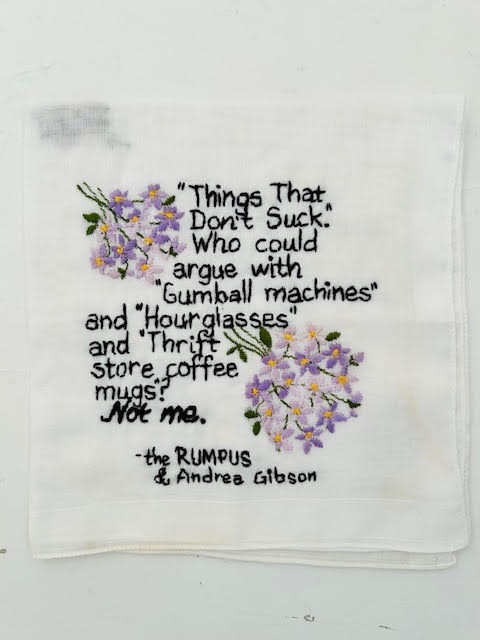
By Rumpus EiC and peony enthusiast Alysia Sawchyn
Jamila Minnicks is the author of the forthcoming novel Moonrise Over New Jessup (Algonquin Books, 2023), which won the 2021 PEN/Bellwether Prize (selected by The Barbara Kingsolver). Minnicks’ short fiction and essays are published, or forthcoming, in CRAFT Magazine, Catapult, Blackbird, The Write Launch, and elsewhere, and her piece, “Politics of Distraction,” was nominated for the Pushcart Prize. This past year, she was awarded a Tennessee Williams scholarship for the Sewanee Writers’ Conference, and she also earned a residency at the Virginia Center for the Creative Arts. Minnicks is a graduate of the University of Michigan, the Howard University School of Law, and the Georgetown University Law Center. She lives in Washington, DC, but is taking her book on the road in the new year—check out her tour schedule if you’re on the east coast.
***
The Rumpus: What are some of your early memories of book covers, either positive or negative, and how did those impact your ideas about the cover for Moonrise over New Jessup?
Jamila Minnicks: We had a living room and a family room growing up. The family room was where we watched television, practiced instruments, played with the dog and our toys. There was a bookshelf stuffed with books, and I spent a lot of time on the sofa, or nestled in the shag carpet, reading and doing homework. In short, it was where we lived.
The living room was off-limits. Playing or lounging of any sort was prohibited. Sky blue velvet covered the couch and its matching armchairs, and there were two bamboo lounge chairs covered in a rich cream cotton embroidered with mustard yellow stitching. Paintings and African masks adorned the walls, and a crystal coffee table with a two-inch thick top sat center stage in the room. But the prized piece was a hardwood table hand-hewn by my granddaddy. It sat along the wall between the two velvet armchairs, and it held my mama’s most prized treasures, which included several books. The most vivid book cover I remember was I Know Why The Caged Bird Sings sitting on my granddaddy’s table.
That cover was its own masterpiece—the striking orange, the yellow rings of sun in the bottom corner; the font and the layout of the writing; and, of course, that bird in flight. That cover touched me long before I knew how to interpret it (I was too young to understand that the title was evoking a caged bird’s longing for freedom). But the cover made me want to know what was inside—especially given its place of distinction on Daddy John’s table, which held treasures deserving special reverence.
For Moonrise Over New Jessup, I wanted something not just beautiful, but evocative, playful, and subversive. I’m pleased to see such a positive reaction to it—people have called it “striking,” or exclaimed, “That cover!” I think the lushness of the flowers against that velvety black background has a lot to do with that, though people likely dissociate floral covers with anything relating to strength. But every element of the design is intentional. When readers finish reading, close the book, and look at the cover, I hope they recognize resistance and resilience and joy worthy of a place on their granddaddy’s table.

Rumpus: At what point of the manuscript submission/acceptance/publication process did you start discussing the cover and how much input did you have in the final design?
Minnicks: I completed an Author Questionnaire during the first round of edits. In the AQ, the publisher asks, among other things, that authors identify covers that we like.
The final cover is everything. The first version arrived via email around December 2021, and other than the Author Questionnaire, we hadn’t discussed my actual vision. So when it arrived, I asked for revisions to incorporate this rich blackness, some really lush, night-blooming flowers, and a moon. Algonquin was incredibly receptive to my feedback.
Rumpus: Can you describe the design’s details and how they relate to the manuscript?
Minnicks: An abundant array of blooms, many that you would find in Alabama, flourish on the cover. Poppies, azaleas, snapdragons; there are some hydrangeas hanging out in the back, irises, ranunculus, some delphinium or lilac. While I can’t identify all the names, there are four o’clocks, gardenias, and moonflowers—all which bloom at night. The spray bursts from a dark, velvety background, and represents life thriving in deep blackness.
The book is called Moonrise Over New Jessup because Alice [the protagonist] rises and shines when she is surrounded by Blackness. She’s all Alabama when she descends the bus—smart, creative, dynamic, resilient, and she knows her own mind. And in New Jessup, where she is surrounded by a community that recognizes her gifts and talents, and allows her to experience the weight of her vulnerabilities, she can strive towards her fullest potential as a Black woman. It’s not that Alice floats through life unscathed in New Jessup, but she finds a community where, if she’s wounded, she can heal. She can become the moonrise for others because she lives in a place that nurtures and challenges and encourages her to grow.

Rumpus: Do you have a favorite flower in general or on the cover?
Minnicks: I love peonies and ranunculus and hydrangeas and moonflowers. And I don’t even need to see honeysuckle—the scent takes me right back to Alabama every time.
I can’t pick a favorite because the cover is its own entity to me! Although there are several individual flowers, it is really one living thing. Night coaxes four o’clocks, moonflowers, gardenias, and honeysuckle open. The buds bloom and perfume the air, releasing their fragrance into the vast possibility of infinite darkness as though they have every right to cast an influence upon the world. That’s community to me—that we’re all part of something larger than us, and have a role to play in infinity. These flowers, like Alice and New Jessup, blossom in blackness, where they can then give their gifts to the world.
Rumpus: Who actually made the design? Were you familiar with their work beforehand?
Minnicks: Kelly Winton designed it, and her work took my breath away. She took my notes and truly captured the magic of New Jessup. I did not know her work before, but it’s safe to say she has a new fan. The cover is a burst of color that exists in the world because the right seeds found the right soil and, left undisturbed, they rooted and thrived. There is thriving and lushness coming from blackness. Kelly truly understood my vision and designed the perfect cover for New Jessup.
This cover is a celebration of all that is possible when we find our community. The flowers are vibrant, flourishing; the blooms crowd and complement one another. Life is interrelated in ways that prompt growth, ways that encourage others to grow as well, and ways that can stifle. Just like when we find our community—sometimes, you have to reach forward for a helping hand, and sometimes, you have to reach back to offer one. And sometimes, folks just don’t get along.
Rumpus: Last but not least, what are some of your other favorite book covers?
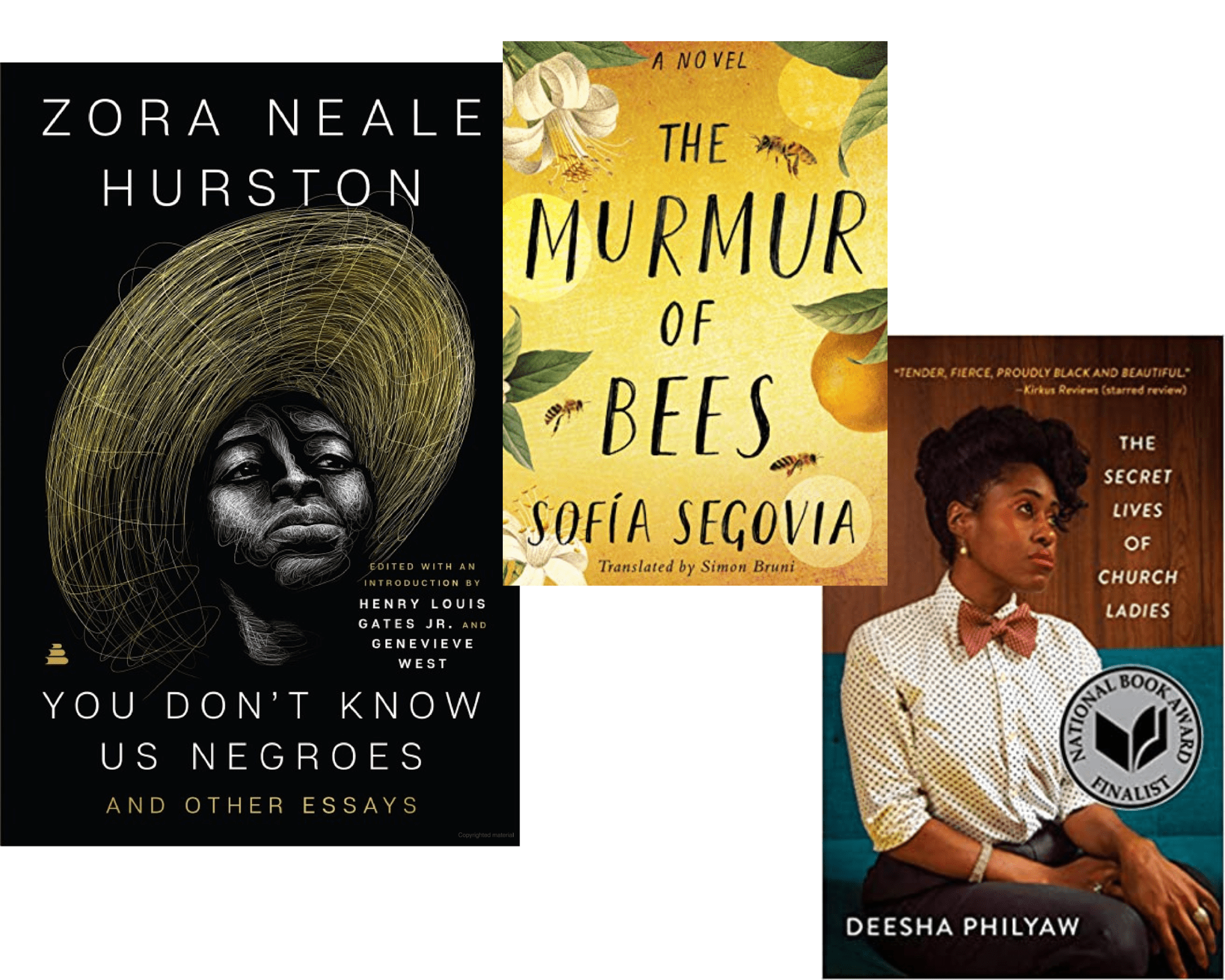
Minnicks: There are so many! The Secret Lives of Church Ladies because the woman on the cover looks like she has some secrets to tell. Sweet, Soft, Plenty Rhythm because, like the book, it captures a very raw vulnerability of sensuality. The Final Revival of Opal and Nev is just as dynamic as the rock and roll storyline inside. The Murmur of Bees has a vintage richness that the book so elegantly captures, and You Don’t Know Us Negroes conjures the indomitable spirit of Zora Neale Hurston with that stunning black, that stunning Black woman, and the straw hat spun of gold foil. I could go on for days!
***