
An ordinary adolescent health study, on the surface, reveals itself to be far more complex—and perhaps more troubling—than expected in This Moth Saw Brightness by A.A. Vacharat (Dutton Books for Young Readers, 2025). The strange and beautiful novel follows ’Wayne, a high school junior whose name is pronounced with a silent D, and a participant in the study. One component of this study requires ’Wayne to take pills without being told what they do to him, a detail that hints at broader ethical violations and historical echoes of exploitation. Jane, a fellow participant, origami expert, and autistic girl, becomes not only a compelling bright spot in ’Wayne’s life but also a voice that pushes against the silence and ambiguity imposed by the study. The story sheds light on darker aspects of American history and invites readers to consider how the U.S. has treated—and continues to treat—its most vulnerable citizens. In a time when many young people are reckoning with systems of injustice, these characters offer quiet but powerful resistance, speaking directly to the questions of agency, voice, and dignity that remain deeply relevant today.
The story also engages with the emotional tensions arising from the anticipated return of ’Wayne’s long-absent mother, as well as the intricacies of the relationship between ’Wayne and his sometimes overly present father. Both relationships are portrayed with nuance and depth, offering a compelling exploration of familial bonds.
This debut poignantly and humorously explores self-identity, personal growth, mental illness, courage, and friendship. The narrative is deliberately fragmented, with intentional shifts in perspective and tone that disrupt the reader’s expectations, also creatively using different forms for characters to communicate, such as emails and screenplay.
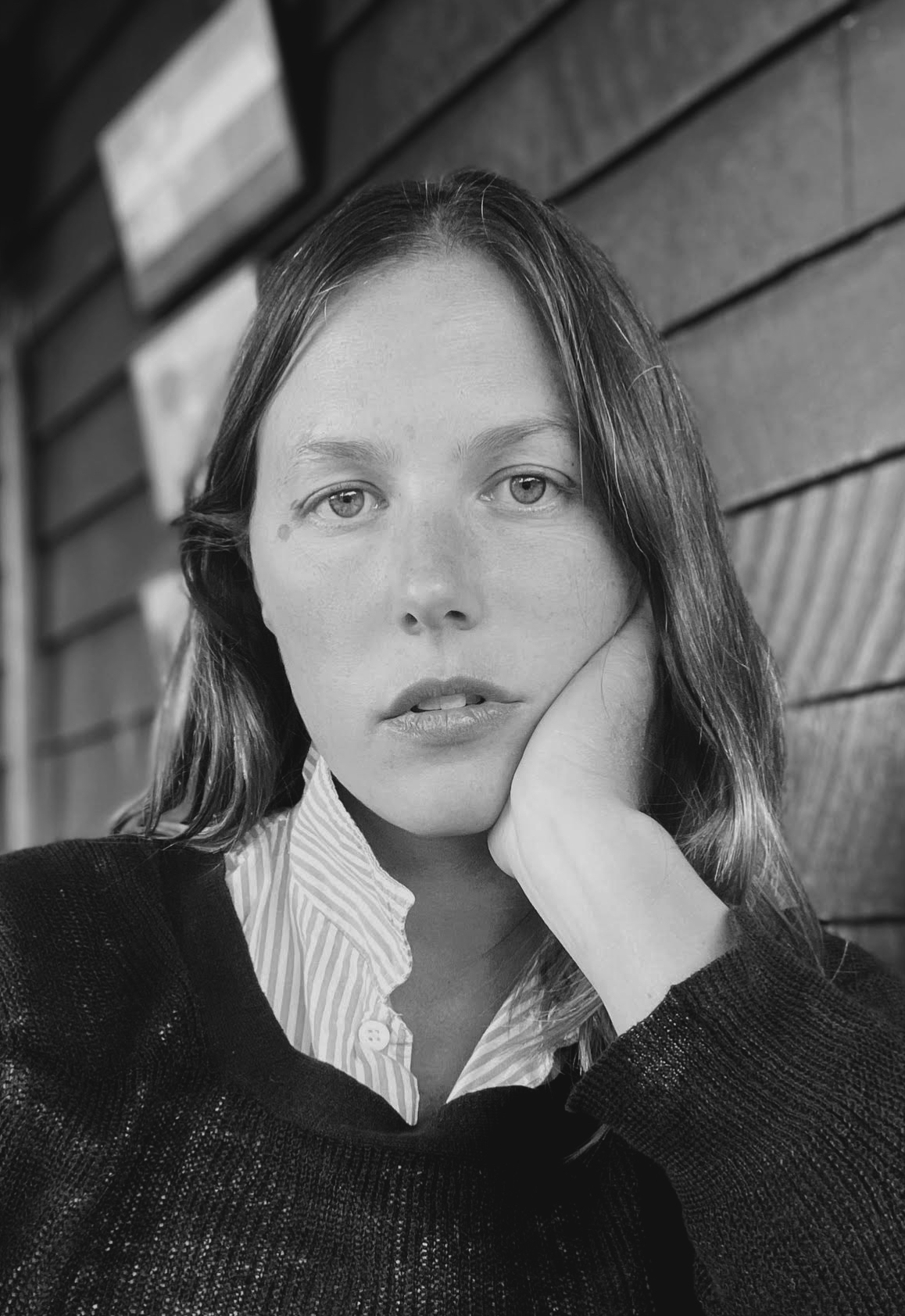
I connected with A.A. Vacharat on Zoom to discuss the multifaceted narrative structure of her work. We explored how she employs diverse forms, such as footnotes, screenplay excerpts, and emails from ’Wayne’s mother. Our conversation reflected the book both in content and in form – she moved fluidly between topics, offering a rich variety of vivid and poetic answers. This interview has been edited for length and clarity.
***
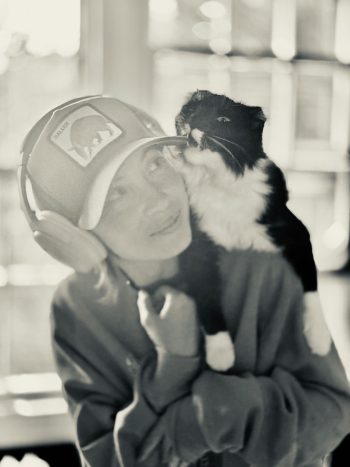
The Rumpus: The form of the book changes based on which characters are talking. It’s an especially interesting choice to have the conversations between ’Wayne and his dad be told through a screenplay. In screenplays there’s a way to denote that someone is not saying something, and the things we don’t say in conversations can be just as meaningful as the things we do, so it felt like the perfect choice for the kind of relationship and dialogue between ’Wayne and his dad. What went into your choices around dialogue and language and how did you form such distinctive voices for each character?
A.A. Vacharat: For the screenplay, that one is a disappointing answer in that I didn’t really decide that. Almost every time I wanted to write a scene with ’Wayne and his dad—that was just the only way I could get it onto the paper. I finally gave into it because I needed to get the scenes out. And then I started thinking, “Why is this like that? Why is this only happening like this?” I had to reason with my author brain to make them into something that worked.
But as far as voices, I guess this stems from the same place as all of the voices, which is that they’re so real in my head, and I think this might be as somebody who struggles with conversations and who replays every conversation for days after I have it, and I can hear the nuances of everybody’s voice in my head, in an obsessively painful way. I think it helps in characters because I also hear them with that same total clarity in my head. Their voices are so real to me. But it’s probably because I’ve had a lifetime of hearing everybody else talk back to me in my replays.
Rumpus: Screenplays give room for silences. It’s interesting in dialogue, in literature, we don’t always do that even though the silences in a conversation can convey so much. In the beginning of the story, ’Wayne imagined Jane to be so different than she was. The reality of her is so much more full and human.
Vacharat: With Jane, it came a lot from myself when I was younger. I was very bubbly and this bouncy little thing and I was mostly invited to places because people thought I was cute and they could stick me in a corner. I felt as I got older, and I became more aware of who I was and more aware of how much I didn’t like that. I think a lot of autistic characters in media are often given that role of that cute, quirky, like you put them in a corner and they add a little comedy or cuteness to your scene. So, I really wanted with Jane to almost start with that model because on the surface she exhibits a lot of those traits. But, she so isn’t that person and I wanted that to evolve throughout the novel.
Rumpus: I thought it was really interesting to get to know ’Wayne’s mom primarily through the emails that she was writing and also the reports of the oral history she was doing. So, part of how we come to know her is her telling other people’s stories. What went into the choices of these two forms for this character?
Vacharat: I wanted it to be primarily from ’Wayne’s point of view. I think this is how he’s trying to understand this mother who’s been gone for so long. The mother gives the core themes of the book in these little bite-sized pieces, to rephrase the things that are happening in a way that ’Wayne can process. There’s both the letters and him presumably scraping these little bits of articles from the Internet which is him preparing for his mother’s visit in his own way. So, there’s that perspective, but then there’s me as an author, thinking, “Okay reader, here’s a little thing. if you wanted somebody to summarize what this book is about, here’s a little thing for you to help you get there.”
Rumpus: I thought it was a really cool choice to have the author’s note within the story. The classic narrative that we’re used to is that the author is supposed to be a magician almost in that you’re not supposed to know that they exist or that they’ve created these characters. What went into that choice to put yourself and your thoughts into it for a moment in a way that disrupts the plot?
Vacharat: That came from a long back and forth with my editor. It started with the footnotes. They were originally very intentionally placed to break the fourth wall and to make sure that you as a reader cannot get fully lost in the novel. So, they’re supposed to be a little bit annoying, a little bit like the voice is different. You’re reading, but don’t forget that this is a novel.
Also, I think that came from having studied theater. I wanted it to be like this Brechtian thing where I wanted to have a novel that had a plot that was moving along, but still not let the reader use it as entirely escapism. You could enjoy the plot, but I wanted you to remember that, no, this is an artificial construct. This is something that is here in your hand or on your screen and you have to remember that. The same thing happened at the end where I really wanted to make sure that you remember this is a book, this is a story. You have to make a choice. You are always making those choices. And it’s echoing the choices that these kids are making. So that’s where that came from. That was the reasoning behind it.
Rumpus: There is so much research that goes into the novel. How do you thread fiction and nonfiction—and with so much history? How did you decide what aspects of history you wanted to incorporate? What was your process of writing it?
Vacharat: That’s funny because I, as a person, historically was never interested in history or politics or anything. I think over the course of writing this book, I think I said recently that, I realized that in order to like what I was writing, I had to care about it. And this was over the course of 13 years. Over that time, I was slowly becoming more and more interested in history and what it said about humans. Ultimately, I didn’t have confidence in myself to spend too much time in history and spend too much time in fact. That’s not really what I wanted to do with myself as an author anyway. So that was the line of “Okay, I want to give some history and hint at realness and have people know that it’s real,” but I didn’t want to dive all the way in.
And always playing in my mind is my sister who shuts down when there’s too much fact or too much history. And so, it was always that line of like, “Okay, would Melissa be shutting down now?” I wanted to just give enough and people can learn more if they want to.
Rumpus: One of my favorite passages in the book was when ’Wayne and Miranda, his crush, kiss—it felt to me almost like a poem within prose. That moment creates a lot of turmoil for ’Wayne and for Jane, who has a bit of competitive energy with Miranda, but it still was a really beautiful thing. What was the experience of writing that scene like? Did it feel to you, when you were writing it, that it was its own thing within the story?
Vacharat: Especially that paragraph or two, I think that felt separate. I mean, that’s a ridiculous scene in a way. There’s a lot of silly stuff going on in there with the goats and cows. And I wanted it to really feel like that moment was something separate because it was for him. It was something separate and it was beautiful, even though it wasn’t the type of thing that he really wanted, but it was still its own beautiful thing.
This is not really answering your question, but I think that that idea of these little moments that you can hold in your hand—I think that’s something that was playing in my writer’s self a lot through writing. Always playing in my writer’s self is that desire to be able to hold bits and pieces of it in your hand. And I think that’s why I ended up with so many short chapters and used all the different form types because I wanted as much of it as possible to be, even if you just got this much, you got something that you could hold. I tried to write poetry for a long time. And I think that impulse comes from there, even though I was not a good poet.
Rumpus: I really loved the scene in the beginning when ’Wayne’s being told “we all start with perfection and every semester you start with perfection and then we inevitably puncture that.” I feel like this idea closely aligns with the way he views himself and the way others view him, as this person who makes mistakes and is ruining this idea of perfection perpetually. Then as the story goes on, he changes and his values change. How does this idea of perfection or a lack thereof change within him and how he wants to live his life?
Vacharat: I think that a desire to be perfect is something that a lot of people can relate to. I think for him, over the course of the novel, he is running into so many things that force him to question who he is and to realize that that boundary is flexible. And so, the mistakes that you make don’t define you because you are not really defined ever. And I think he goes through that with the experiment, the study and these pills [a key aspect of the study in which Wayne is a participant requires him to take pills regularly without being informed of their purpose or effects] that may or may not be changing him and thinking about what’s happening with his mother and, you know, what makes her her. And is she coming back and is she the same person and is he the same person that he was when he left? And all of those things are making him question, “What is selfness?” When selfness is ephemeral, then I guess, mistakes are less impactful as well.
Rumpus: In the same way that Jane could be the manic pixie dream girl, Kermit, ‘Wayne’s long time best friend, could have been used simply to provide comedic relief, but he goes so much deeper than that. And I feel like we’re really able to see the way that, especially when we’re young and we don’t have a lot of people we feel connected to, there’s a sustenance and something just so important about having someone close to you for the day-to-day. They’re dealing with really serious things, but they’re also silly and making each other laugh and teasing each other. I wanted to ask about the experience of writing those two friends and what went into Kermit’s character and his relationship and his growth as well.
Vacharat: Kermit, interestingly, was originally three people, and one of the things I like to do as an author is go through and kill characters because I have a very hard time writing scenes with multiple characters in them, so I just, I want them all gone. But also I realized that I was putting three trophy characters into their own bodies, and I could just like smoosh them and have one much more befuddling and interesting character, and I really liked the way that it played with ’Wayne because, you know, I definitely had those friends that I wasn’t even sure really why we were friends. We didn’t really get along, and I don’t think that he and Kermit really get along, even though they kind of do—they’re so not compatible in so many ways. When you are around somebody long enough, you start to know the realness of them, and I think that’s the way it is for ’Wayne and Kermit. ’Wayne sees the realness in Kermit, and so even though on the surface level, because they’ve been stuck together so long, they have this very real friendship on things that are so much deeper than, “Do we like the same music? Do we both collect shoes?”
Rumpus: It shows that these relationships where you’re thrown together are not less meaningful than relationships where people connect completely. The relationships by circumstance are worth celebrating as well
Vacharat: Yeah, I really think so. I’m in Asheville. In the hurricane it was very similar. Suddenly everybody was out in the streets and none of us knew each other and all of these neighbors that had never talked to each other and on the surface level, were not really friends, but now we have all of these relationships which are like ’Wayne and Kermit’s relationship. We know the deeper underbelly of each other and I think it’s a very valuable thing.
Rumpus: One of my favorite lines that also just broke my heart was “How could anyone meet Jane and think she’s not worthy of life?” That whole passage is one of my favorites. Her character meant so much to me and I know she will to so many people who read the book. These characters are fighting back against injustice and a world that treats them in a way that reflects this quote. It feels so important in the current climate to have a story like this. Some of your readers might relate to Jane as they’re out living in the world right now with everything going on. Is there any advice you have for them directly?
Vacharat: Nothing more than, of course, you’re worthy of life. It’s one of those things where you write a book and you wish that by the time it came out that all the things that you wrote would no longer be relevant. And I think that the opposite has happened. Don’t let them tell you that you’re not worthy of life.