
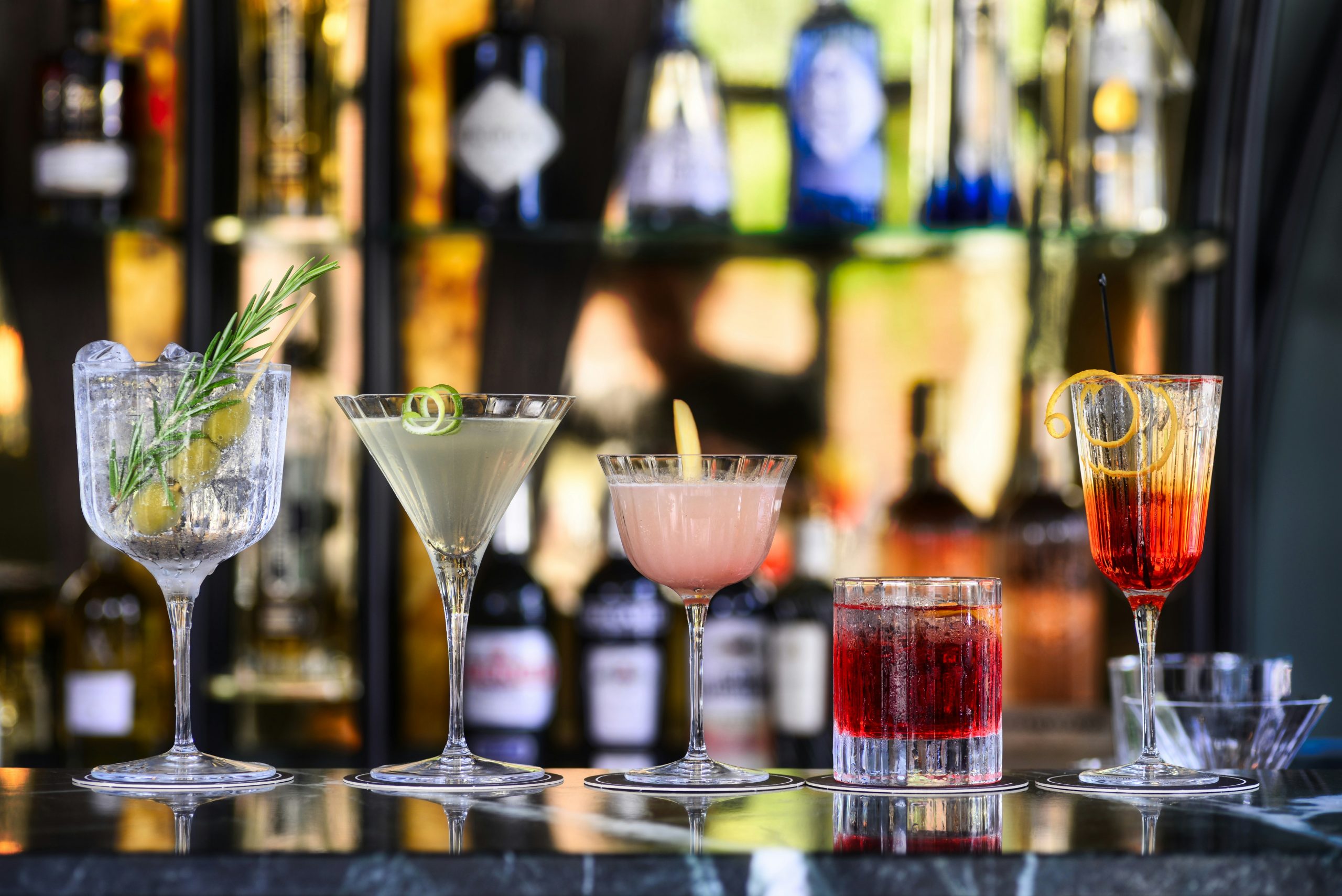
It’s 8:30 pm, and I’m half an hour late to meet you. I spot you smoking out on the curb in front of Wonder Bar, a queer bar I’d Googled dozens of times over the past decade, always too nervous to set foot in it. You’re rocking a low fade, oversized button-up, and cuffed jeans. We’d matched on Bumble a week or so before, and I knew from a short video call that I liked the sandpaper sound of your voice. Out of habit, I give you the same warm hug I give everyone in Taiwan, the kind that’s meant for family, and you return it with a stiffer, one-armed embrace.
Inside the sleek, blue-lit bar, the AC is ferocious. I can’t blame them; I’ve spent nearly every summer break of my life in Taiwan, but the temperatures this year are the highest I can remember. We complain about heat exhaustion to break the ice. Across the room hangs a neon pink sign that reads, I love pussy.
You’re seven years younger than I am, but as hard as I try, I can’t feel the gap between us. It’s my first time on a real date in Taiwan, and definitely my first time on a date with a woman here, so I feel a little unmoored. Maybe it’s the language. Chinese has a way of undoing me; in my mother tongue, I’m perpetually seventeen: a 乖女兒,at that age where everything feels like flying or falling, where you feel yourself teetering on the cusp. The sound of it spoken in Taiwan, with the gentle, dryly lilting marcato, sounds the way my childhood bedroom smells: instant and instinctive, torquing my insides. Every sentence sounds private, as if for no one’s ears but mine.
I point to the sticker of Taiwan on your phone case, the shape of the island lightly outlined in black, and you tell me cryptically that though you love Taiwan, you’re not always sure she loves you back. You tell me about the way you hold your arms close to your body whenever you’re on public transit, not wanting to give any woman an excuse to accuse you of inappropriate touch. The way your British ex used to chastise you for your lack of racial awareness, something that never ceased to confound you––“How did a white woman have the right to accuse me of being racist?”––and the fact that your mom, reassured by the presumption that a romance with a foreigner could never turn into anything real, invited her to visit your family in Keelung.
There’s an intimacy between us that feels easy and automatic. I relax into the warmth of a language in which I’ve never had to try to sound white. What I lack in fluency I make up for in enthusiasm. Only a few years ago, I would’ve felt too anxious to look at you, let alone talk to you, if we’d met, so fully was I gripped by internalized homophobia and a fear of the burn of transgressive desire. Now, my throat relaxes, needing to strain for neither the exaggerated intonations of American English nor for the rigid pretenses of straightness.
But it’s strange, being on a date in a language in which I have, up until now, existed only as a daughter, sister, and girl, in a place that watched me go from anxious toddler to imperious teenager, which is to say a place that has never known me as an adult, and therefore never known me as queer. As rich, deft, and expressive a language as Chinese is, the combination of my near-native accent and somewhat limited vocabulary has conspired to make me sound like my sweetest, most unthreatening self. In a way, I’ve almost liked how easy it was to slip into being a good daughter here, feminine, tame, straight. It’s made my existence simple.
Though I’d been out for almost a decade, San Francisco, where I’ve lived for the past three and a half years, was where my queer life was born––where I let myself grow up. There, dating became something of an annoying if benign routine: not so unlike grocery shopping or getting a dental cleaning. Narrativizing myself to new people felt undemanding, if repetitive; over the years, my vocabulary had evolved as I did, and I developed words for things I was, wanted, rejected. Words like queer, fluidity, relationship anarchy. Patriarchy, heteronormativity, binary.
But before moving to the Bay, I’d never deliberately sought queer community, spaces, and relationships. In fact, my earliest years of grappling with being queer had felt nightmarish: a sudden, violent unsettling, a vanishing of the earth. It did not matter that I had harbored progressive values my entire life, that I openly supported my queer friends, that my boyfriend at the time, and later, my family, were understanding. Queer desire felt like the deepest betrayal, and all I knew was that I could no longer trust myself. In my last year of college, every solitary moment was filled with obsessive ruminations about who I was and what I wanted.Terrible, unwanted thoughts began to crowd my mind, and I developed a fear of seeing women who looked like lesbians, queer people I might find attractive; in class, as I listened to my professors lecturing about Hardy or Beckett, I’d sit on my hands and cross my legs tightly, terrified I might lose control of myself or drift out of my own body. Often, it felt as if I’d evaporated, and in my place, a traitor had made her home.
Over the years, the edges of that distress softened, though for the most part, that softening just meant silence. Having come out to most people in my life except my relatives in Taiwan by the time I was twenty-four, I tried not to talk about it anymore––tried not to bother anyone, including myself , with the reality of its presence.
So when you ask me for my story, I feel a sudden constriction in my chest. Do your parents know? When did you come out? Do you also date men? What was your last relationship like? What are you looking for? Questions that in English I could’ve answered with my belly button, as the Taiwanese expression goes, now strain my vocabulary like a pull on a ligament. I had grown up in one language only. I ask you how to say patriarchy, feminism, and queer, searching for footholds from which to climb onto a plane that might encompass these politics. But the translations you offer from your own budding political lexicon feel both overly abstract and too direct. In my mouth, 父權制, which literally means the system of men in power, feels crass and reductive, and 女權主義, the ideology of women in power, sounds similarly absolute, too caught up in the capitalist logic of white imperial feminism. And queer––my favorite word, the one I gravitate toward for its insurgent edge, and that is as much about the refusal of legibility and the defiant embrace of revolutionary wildness as it is about who I desire––sounds stiff and almost fake when translated phonetically to 酷兒; somehow, to my ear, the word lacks the heft and legitimacy of translations for more established words like gay, bisexual, straight. I don’t know how to capture my curiosity about forms of relationality that defy familiar, ossified shapes when I don’t even have the language for fluidity. How can I name the intimacies on which I don’t want to slap the moniker boyfriend, girlfriend or describe my propensity for unscripted love when the only word for anarchy that I have is something as bureaucratic as the state of being without a government? How to pronounce these parts of myself when I barely even know how to swear or joke, when I don’t even know how to say explore?
So I string together words and phrases in haphazard chains, trying my best to be honest in a language where what I chiefly lack is nuance. I tell you I am seeing someone back home, a longtime friend, a man, the relationship’s structure a little too undefined and idiosyncratic at the moment for articulation. When I tell you that we are both free to date others, that we’re not monogamous right now (another word I can say only in English, its syllables heavy on my tongue), I see the subtle flinches on your face as you register what I’m telling you, or perhaps what you think I’m telling you. My imprecision unnerves me. I fear that you think I’m every bisexual stereotype: indecisive, greedy, cowardly. Seeing your eyes harden, I almost wish I’d lied.
For a moment, I’m angry at myself for inviting this encroachment of complexity, which is the encroachment of reality, though of course it’s neither your fault nor mine. Before this intrusion I was relishing this strange liminal space we’d unwittingly made together, one as limiting as it was freeing. I’d been sort of playing a character, though I wondered if you could tell—a kind of avatar of the person I might have been had I grown up in Taiwan. My home language had sanded down the edges of my politics. When you made a comment that smacked of transphobia, I noticed how quickly I stifled a response. The inside of my brain felt different, as if all the rooms there had been rearranged. In my real life, no first date I’ve ever gone on has ever not felt like something of a political litmus test. But having suddenly lost the words that made me myself, I felt both incomplete and bare: reckless, wild, light.
Only much later would I come to understand that perhaps beneath that anger at myself lay another, more ancient feeling: rage at needing English, the colonizer’s tongue, to express myself. In a country where one’s ability to speak English is still equated with intelligence, where having lived or studied––or better yet, been born––in America translates to social and professional capital, where international-school students have told me they mock and torment local-school teachers for speaking in accented English, I had to wonder what it meant for me to reach for this language,which had reached my lips through centuries of imperial domination,when I needed most acutely truthful words. English, the language of my thinking life, was stained with blood.
Suddenly, your boss calls, furious. You’ve somehow misread your schedule and missed your shift at the hotel you work at. In a panic, you become convinced you’re going to lose your job, that your life is over. You spend so long on your call with him that the bartenders go out to check on you. When you return, you down your drink, shove crumpled bills into my hand despite my insistent offers to pay, and we head into the damp heat of the night.
We’re in the Zhongshan district, home of lesbian bars and izakayas, and we’ve wandered onto what appears to be a seedier street. There are women in uniformly short pink chiffon dresses laughing in falsettos, hanging onto the biceps of older men. It’s nearly eleven, and the roaches dart out from sewers, zigzagging across the sidewalk, ready to menace and play.
You’re buzzed and telling me that you’ve fucked up too many times recently, that your boss is on your ass. You’ve slipped into English, your intonation flecked with remnants of your ex’s British accent, but for reasons I can’t enunciate, I keep speaking in Chinese, both of us clinging tight to languages in which we feel a little outside of ourselves, in which we have to give something up. You smoke three cigarettes in a row. You say that you hate the bureaucratic nonsense of your job, that you want more from life than this. You want to go to Australia or the UK––to leave this country that now feels too small, squeezed tight by political strife and your own tumultuous personal history. I try to tell you that I admire your hunger for newness and challenge and drama and life. But when the words come out, they sound like the kind of vague, abstract reassurances one offers to someone they’ve known for only three hours and might never see again.
Eventually, we begin our long, slow walk toward the MRT station. It’s past midnight. Whatever tensions that had emerged between us earlier have evaporated into the darkness. The back of my hand brushes against yours, my palm too damp for holding. You thank me for spending the harrowing night with you and offer to hold my bag. I let you. The silly chivalry of the gesture charms me. In English I would’ve just asked to kiss you. In Chinese, the question suddenly sounds wrong. Desire leaves a vast blank space in my brain, and so I do nothing.
The last train departs at 12:37. We arrive at the station with seven minutes to spare. It’s futuristic-looking, sleek, white, and empty; without the usual crowds, I suddenly feel like I’m in the womb of a spaceship. I feel the diaphanous quality of my existence, the privilege and grief of anonymity and transience. I put my arms around you, run my thumb along your undercut, and tell you I have to leave. “I hate you,” you whisper, half-joking, holding my waist. “Why do you have to go?” Behind us, two security guards talk and laugh, ready to close up shop. I wonder what story they’ve imagined for us and our patchwork conversation in English and Chinese. I lace my finger through yours. Do we look like lovers reuniting after a long absence? Could they have known how briefly we’d collided, each a fleeting visitor in the other’s world? In a moment, I’ll get on the train and head back to my grandmother’s house. In a few weeks, I’ll be back in San Francisco. I glance again at the officers who, like almost all men in Taiwan, make me think of my grandfathers, my uncles, my dad. You squeeze my hand and turn, not wanting to face them––but I catch one’s eye and, for a moment, allow myself to feel the thrill of being seen.


Click here to subscribe today and leave your comment, or log in if you’re already a paid subscriber.