
La Niña grew up watching their movies. Worshipping every blonde who showed up on the screen and thinking que lindas. Nicole Kidman, Meg Ryan, Cinderella. Each time they appeared; La Niña was left mesmerized. Perhaps because their eyes sparkled in a way no one’s she knew did. Because of this, La Niña believed everyone over there would look this way. Tall and lean and doll-like— just like her Barbies. She even began hoping once there, some of that doll-ness would rub off on her. So of course, when Mami first told her they were moving to America, La Niña grew excited.
“A Los Estados Unidos?” she gasped, her pupils widening and beginning to dance—already halfway across the ocean before Mami could respond. “De veras, a los Estados Unidos? With all the tall buildings and movie stars?”
Over the coming months, as La Niña watched Mami ready their suitcases for their new life, she listened intently to the conversations happening around her. The way Mami’s friends—ones who’d never visited the states but seemed to know everything from the Hollywood films they watched—warned of the fast food which would be everywhere, they said. Un McDonald’s here, another there. “Riquisimo but so bad for you,” they said. “Cuidado que no engorden!”
La Niña paid close attention, gathering every piece of information she could get her ears on. Learning that in America, not only were their people sometimes bigger, but also their cars, their roads, their houses. And this was because America had enough. More than enough to go around. In America, dollar was king. In America, children could not be spanked. This one, La Niña loved because Mami’s nalgadas were the worst. How she hated the way Mami waited until the moment had passed, until her anger had gone. There was nothing worse than the anticipation of waiting to be spanked. But in America, there would be no such thing! And in the months leading up to their departure, La Niña wielded this newfound truth, using it as armor when she’d done something worth a spanking.
“Se-Pe-Ese, Mami. Did you know it stands for Child Protective Services?” she’d ask. “C-P-S,” La Niña spoke slowly, dragging out each letter, practicing her English for the life they were supposed to be heading toward. At this, Mami would laugh. Roll her eyes. Shake her head at her daughter’s spunk. But always, always, there was a pause. And the second Mami’s eyes went still and a shadow passed through them, La Niña thought she was winning. That she’d struck a nerve. That maybe Mami really did have to think about CPS and the spankings, though one day, she’d learn it wasn’t just CPS. But also ICE. And DHS. And every other acronym that meant someone could come and take everything away.
“Aqui hay que pasar por desapercibidas,” Mami would say. A reminder to go unnoticed. Unnoticed enough that no one might ask for proof of their belonging in America.
“Desaparecidas?” La Niña would say, giggling at the idea of going missing.
“No, bebe. Des-a-per-ci-bi-das.”
Though La Niña always giggled at the word, enchanted by its rhythm, it didn’t take long for her to understand: not everything in America was wonderful. Mami had made sure of that—warning her about guns, about the way even little kids sometimes brought them to school. She warned her about getting lost—at the park, at the grocery store—because in America, children were snatched from front yards and store aisles all the time, their faces ending up on milk cartons. But worst of all, she warned her about the lunatics. America was full of them. Men who kidnapped and murdered for entertainment. The kind of thing that was only possible in a country with so much wealth, so much excess. All that wealth and excess making it so bored people hurt people.
“They just snap over there,” Mami would say. “Too much freedom, too much sugar. No one hits their kids, so they grow up all twisted.”
Mami knew this because she’d seen it on the news, she said, telling her daughter about the years she spent listening to Segunda Cadena reporting on these “asesinos en serie.” Years before La Niña was even born, Mami learned names like The Lady Killer, The Night Stalker, and—one which sent shivers up her spine— The Atlanta Child Killer. When La Niña asked, wide-eyed and curious, Mami pulled out old newspaper clippings she’d saved from La Prensa or El Trome, pages yellowed at the edges, the killers’ faces grainy and menacing. Not to scare her but to show her what she meant. In the end, this was the fear that stayed with La Niña the longest. Not the milk cartons or the playground warnings, not even the guns at school—but the lunatics. The ones who killed for fun. The ones whose faces oozed evil. This fear had come with a visual. It had a name. A face and a fancy headline.
*
These were the things La Niña knew. The things she expected. But the things she hadn’t foreseen? That list began growing longer the moment she stepped into their new lives. For starters, there was their new home which La Niña envisioned as one with a sloping roof, something bordered by a white fence. She’d imagined a fireplace and a winding staircase. A nook by a window. Something of the America she spent her early years seeing in the sitcoms she loved like Sabrina, la Bruja Adolescente. Sabrina had a nook in her room. But to La Niña’s disappointment and surprise, their new home had no nook. No fireplace or winding staircase. And the fence wrapping around the apartment complex was rusted and steel.
“Mira, muñequa! Isn’t it nice?” Mami said the first time La Niña entered the new apartment.
La Niña turned her head slowly, wondering if Mami was somehow forgetting their old two-story house? The one with the wooden stairs, and big windows, and most importantly, a princess carpet big enough to hold all her scattered toys? La Niña furrowed her eyebrows and scrunched her nose, all the while searching for some sign of sanity on Mami’s face. Standing on the discolored entrance tiles, she wondered how it might be possible that one could see their entire home with a swing of their chin. To the left were two metal shutter doors hiding a washer and dryer, ones that would rock and screech so loud La Niña would come to be certain they were possessed. Straight ahead, La Niña could see a bare space that would later come to be equipped with sofas and wooden side tables Mami would drag from the apartment dumpster after La Niña had fallen asleep. To the right was a bedroom that would quickly come to be outfitted with a bunk bed presenting yet another surprise for La Niña. In America she didn’t get her own bedroom.
“Suertudas,” Mami said. “Aren’t we lucky to have a place like this all to ourselves?”
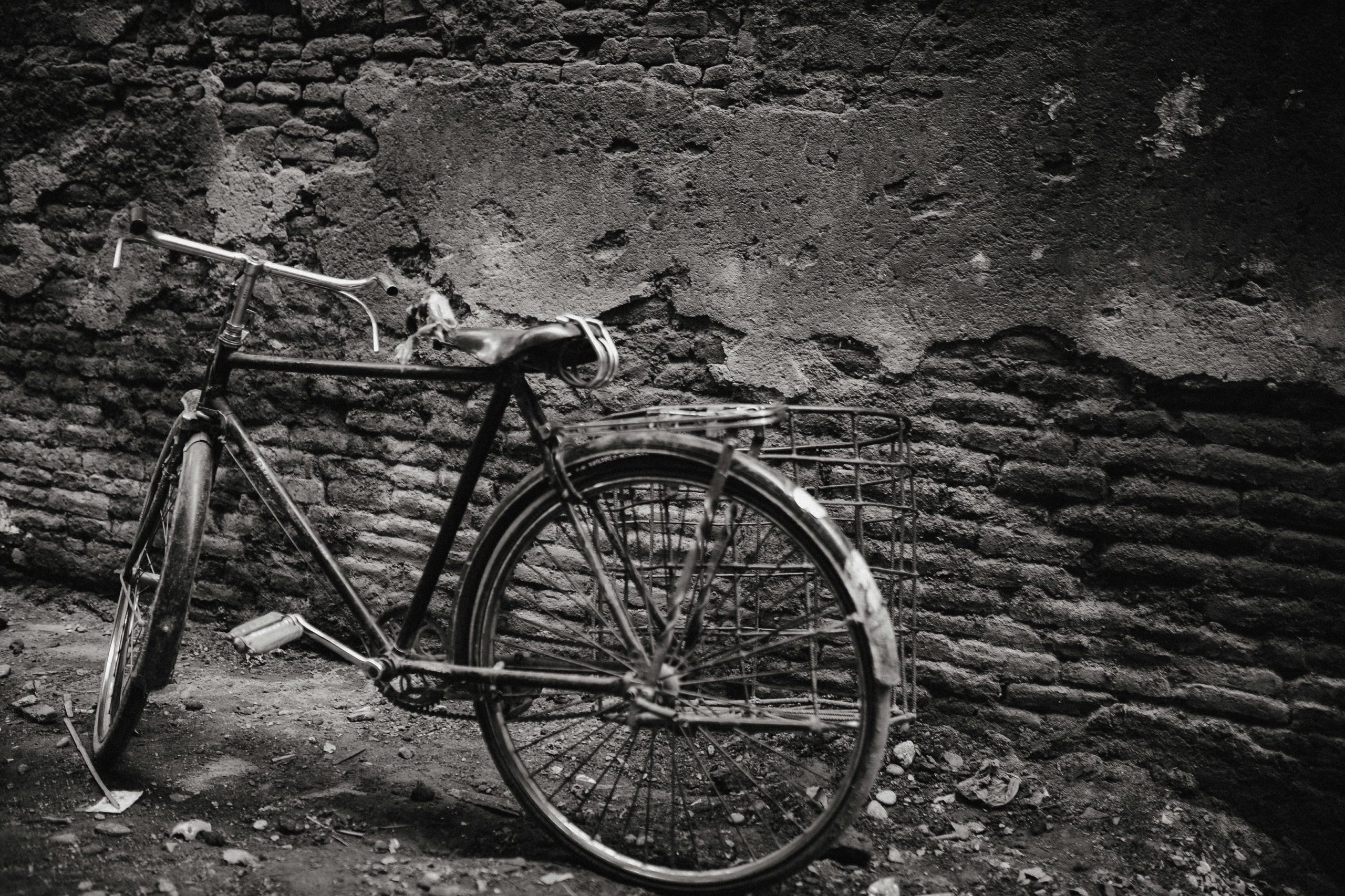
La Niña agreed despite being unsure if she agreed at all while Mami continued to count their blessings. Like how easily she’d found a job. La Niña knew Mami had been nervous about this but look how quickly she’d found two jobs. One at a hotel. One at a restaurant. She’d even managed to get a rickety bike from a flea market five miles away, though when La Niña had asked to tag along, eager for the outing, Mami had said it was too long and too hot of a walk. Even the scorching Florida sun could hurt her here.
Nevertheless, the important thing was in no time, Mami was mounting that bike as early as 4:30 in the morning, riding through the dark to brew liters of coffee and line plastic trays with paper doilies and an assortment of bagels. Meanwhile, La Niña was left at home. From sunrise to sunset and just a few hours past, La Niña—doing as Mami had asked—existed quietly. Pasando por desapercibida and ignoring her disappointment because she thought she’d be in school. But not yet, Mami said. There was paperwork to gather—birth certificates, immunization records, proof of residency—things La Niña was too young to understand. It wasn’t Mami’s fault. Just the way things worked here.
Nonetheless, La Niña found ways to keep entertained. Sometimes by simple acts such as wondering where the closest McDonalds might be and daydreaming of what she might order the day she got to go. Until then, La Niña would make herself pb&j sandwiches just like she’d seen in the movies, always taking extra time spreading the peanut butter until it was a perfectly smooth surface for what was the rush anyway. Other times, she opened packets of ramen and cans of Vienna sausages and experimented with what might happen if she mixed them together. Magic, that’s what.
At first, La Niña had taken to complaining about the groceries Mami brought home. Everything canned and everything bagged, she whined playfully though she understood, these were the only things Mami could find at the convenience store close by. Without a car, it would take hours to get to a market. This was because—the things they’d heard were true—in America there was so much space, so much road, so much land.
With no school and nothing to do, La Niña created a repertoire of activities to fill the hours. The first day, she played with the jacks she’d brought with her. She perfected picking them up by ones, by twos, by fives. She played until she got so good that it was no longer fun to be so good. The next day, she tried reading. She tried headstands and splits. She tried baking with only flour and sugar. She wrote stories—ones in which the princess was rescued and taken on some great adventure. By the fourth day, La Niña had created a tally system—drawing stars in her diary every time Mami worked both jobs in one day. By the end of the week, La Niña was playing the humming game with herself, switching off from being the one to hum and the one to guess the song but this she stopped quickly for it made her feel a little crazy. La Niña tried this and tried that, but the truth was nothing kept her entertained for long, and by the time La Niña’s diary showed eleven stars—it felt like an entire summer had passed by. An entire summer locked away, bored out of her mind, and so one night, when Mami came home exhausted from work, tiptoeing around the room so as not to wake her daugther, La Niña spoke—“Mami?” she said.
“Dime, bebe.”
“Why can’t we go back?”
Mami stayed silent as her fear came into existence in the darkness.
“I never see you here. Why can’t we go back?” La Niña persisted.
Still Mami could not speak. Just when La Niña began to think Mami had fallen asleep, just as she began to turn over and try to sleep herself, Mami hugged La Niña close.
“Las cosas mejoraran,” Mami said. Things would get better. La Niña would take comfort in these words. Both on this night and for years to come.
To make things better—that night, in the darkness—Mami began to plan. It would start with a promise: to find La Niña some dolls to replace the ones she’d had to leave behind. The very next day, during a brief break between her two jobs, Mami rode her bike to the flea market. There, she sifted through tables piled high with secondhand toys and trinkets looking for anything to make La Niña smile.
Over the following week, La Niña added this new activity to her repertoire for now she had dolls. And even better, Mami began coming home with other toys from the hotel. Things left behind by careless tourists and their crying children. So many things left behind that soon La Niña was able to compile a large card box worth of trinkets. And every day, she dumped the trinkets on the carpet and began sorting. First, she looked for the things that could act as furniture for her dolls. A pencil case for a bed or bathtub. Empty match boxes stacked together for a dresser. And once La Niña had arranged the furniture in a manner she was satisfied with, she looked for things she could use to decorate the place. Single Lego blocks serving as picture frames which, in her imagination, held photos of her doll’s birthday parties. She used cotton balls as pillows. She used colored pencils to draw different outfits, ones that had once been her favorite, and scissors to cut them out. “Que linda,” she’d say laying the paper clothes cut outs over the dolls. And only when everything in her doll’s home had been set up, was La Niña ready to begin making up the places she’d go. Sometimes it was an ice cream shop near the empty corner in the closet. Sometimes, it was the beach by the bathroom sink. And sometimes, it was the hotel her mother worked where she’d be greeted with pancakes and chocolate milk.
But despite how much La Niña loved her dolls, it was inevitable that after enough time pretending, La Niña grew restless once more. Began pacing around the apartment wishing someone would come play with her. That they could go to the park, or their house, or— La Niña was struck with an idea. Perhaps, she could go swimming. Afterall, the condominium pool was only a few steps away. She could go and be back in no time. But just as La Niña had nearly convinced herself, Mami’s voice would kick in. Mami had been explicit: under no circumstances was she to leave the apartment. When La Niña had asked why, Mami had only said— “it’s not safe.”
“Lunatics?” La Niña had asked, her voice still light and playful.
“Sure, baby,” Mami had said mindlessly, her voice flat with the kind of tired that never really went away these days.
She’d said it so offhandedly; La Niña hadn’t thought much of it at the time. But remembering this now, La Niña grew serious imagining the world outside: a pool shimmering under the moonlight. Dead trees and overgrown bushes surrounded it. Bushes where the lunatics were hiding, waiting, eyes lighting up like fireflies. The image alone made her heart race and her feet freeze. Made it so she didn’t want to go out anymore.
*
The day the knock came, La Niña would later be relieved there wasn’t a mess of jacks scattered about, or dolls sprawled everywhere—activities that would both have taken far too long to clean up— though at the first knock, La Niña’s heart began thumping faster with excitement. For a brief moment, forgetting where she was, she wondered if it might be a friend at the door. A friend seeing if she was free and done with her homework so they could go play. How wonderful that might be, La Niña thought. Her chest swelled with hope as she imagined running outside, shouting, “I’m ready!”
But once the second knock arrived, La Niña was quickly reminded she was in America, in this new life. And in this new life, she didn’t know anyone. Quickly, La Niña looked through the bedroom blinds. There stood two dark figures. Two thick-as-tree-trunk shadows resembling everything Mami had warned her about. La Niña fell to the ground, instinct taking over, she quickly began crawling on her forearms and knees, keeping her belly low to the ground until she’d reached the bunk bed. Once there, she began climbing, careful not to make the stairs creak though they creaked anyway. All the while, the front door vibrated with every bang. La Niña knew what she had to do—bury herself under the covers. Knock. She held her breath tight inside her small body. Knock. She exhaled only in slivers. Soon the knocking stopped, and the door creaked open. La Niña could hear the heavy footsteps stepping onto the entrance tile. Though it was growing hot beneath the covers, the air growing too thick to breathe, La Niña fought with all her might the urge to come up for air. Instead, she focused on the footsteps moving from tile to tile. Tile to carpet. Carpet back to tile.
In the kitchen, the men turned on the faucet. The gas stove. They spoke quickly and loudly, their voices somehow more frightening than their fists pounding on doors. La Niña tried to listen intently, to understand what the men might be saying, but no matter how hard she tried, the little English she knew failed her. Instead, her mind filled in the gaps. Perhaps they were discussing plans of where they’d take her. How much money they’d ask for. Would serial killers ask for money?
Tears soon began to fall. La Niña thought of Mami. Of the dolls she’d gotten for her. Had she been thankful enough? She thought of the food she’d once complained about. Why had she complained at all? Mami had been right, La Niña realized now. Mami had always been right. But it was too late now. The men had reached the laundry room. After making the shutter doors screech open, the only place left to look for her was the bedroom. Atop the bunk bed. That’s where they’d find her. Take her far away. La Niña regretted ever daydreaming someone might come for her. This was not what La Niña had meant. Oh, how she didn’t want to go far away. Please, please, La Niña pleaded silently, her heart thumping in her ears.
And then, just like that, after some clicking about, a couple muffled exchanges, the men were gone.
At first, untrusting of their departure, thinking it might be a trick to get her to come out, La Niña stayed beneath the covers. She was certain the men would return. How could they give up so easily? But when beads of sweat began trickling into her eyes, La Niña finally emerged. She raced to the front door to lock it once more but the men had locked it themselves. How strange. And then she sat thinking for a long time. Pondering if perhaps, she ought to call Mami. Brainstorming what she might say and finally, resolving not to because in America, Mami was under enough stress. In America, there was no reason to scare her further. And when Mami did come home that evening, the sticky note left on the door— Maintenance. Knocked. Routine check— had long flown away. And for now, everything Mami and La Niña had expected of America remained.



Click here to subscribe today and leave your comment, or log in if you’re already a paid subscriber.