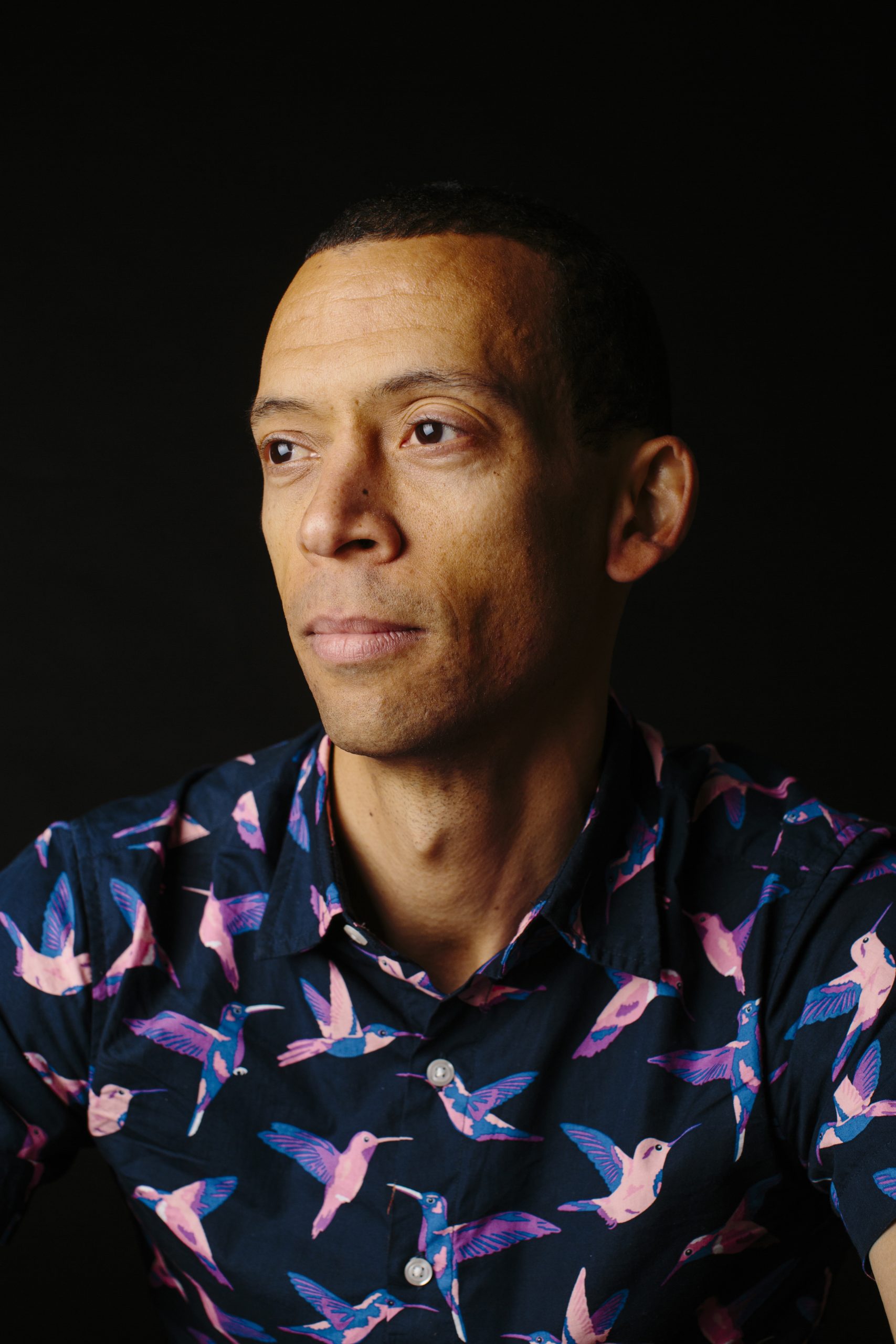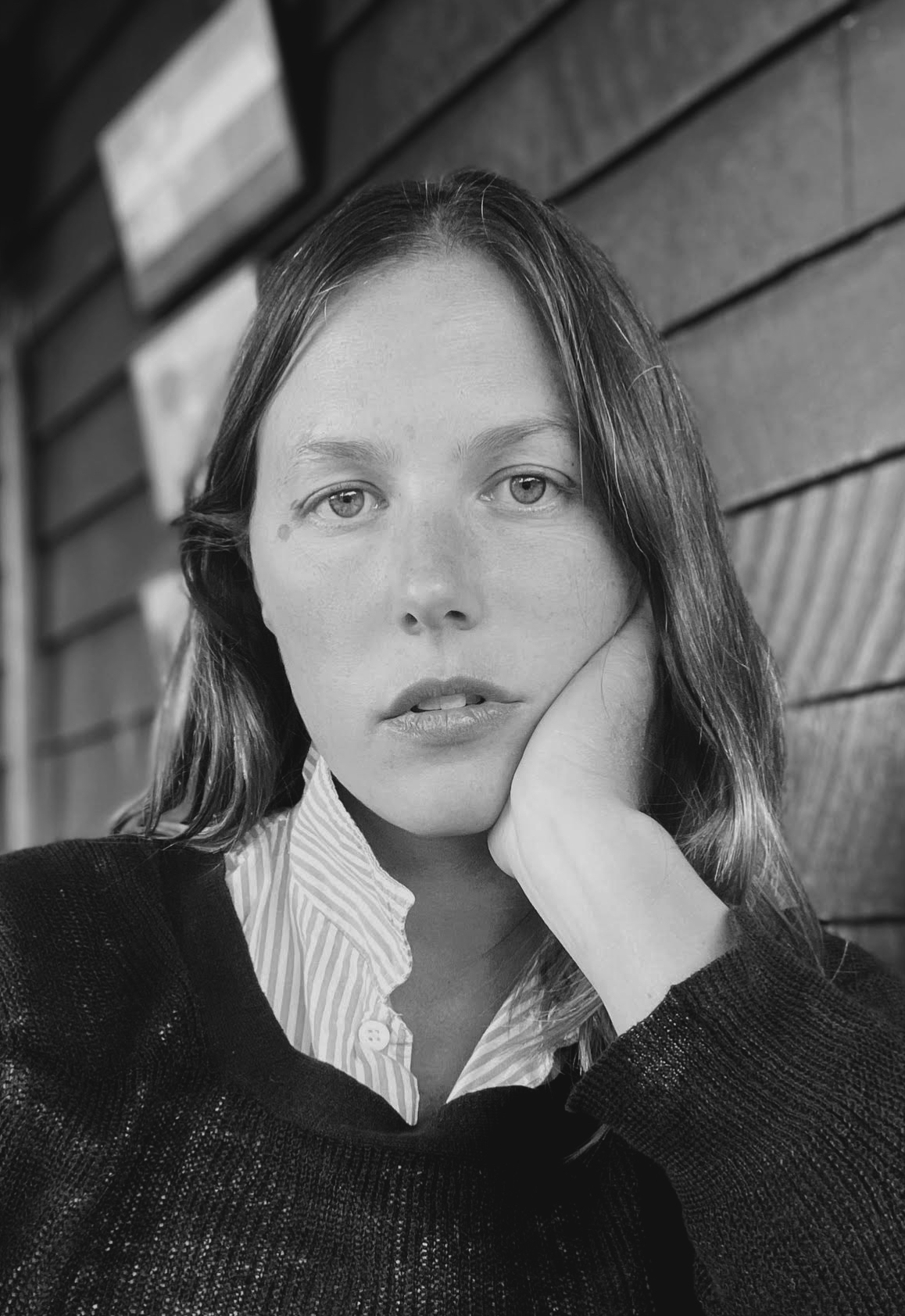
Beth Ann Fennelly’s The Irish Goodbye is a collection of micro-memoirs exploring family, grief, and growth with wit and warmth. Fennelly previously explored the genre, combining both flash nonfiction and short essays, in Heating & Cooling (W. W. Norton & Company, 2018), which positioned her as an innovative author to watch.
Fennelly was the Poet Laureate of Mississipi from 2016 to 2021 and has published three books of poetry, as well as a novel co-authored with her husband, Tom Franklin. She brings a signature mixture of candor and lyricism to The Irish Goodbye in which she shares relatable anecdotes and reflections about her marriage, her lost sister, and her aging mother, but also dissects significant life-altering experiences, such as the transformative friendship formed with her college roommates, her year spent teaching English as a naive young woman in Eastern Europe, and a sobering volunteer stint in a refugee camp, among others.
The Irish Goodbye is both laugh-out-loud clever and gut-punchingly poignant. I found it difficult to pin down in a neat defining nutshell, but I settled on a meditation of the self, steeped in memory and connection.
I had the pleasure of chatting with Beth Ann Fennelly over Zoom during the holiday break at the end of 2025. True to her writing persona, she was warm and graciously forthcoming with insights about her book and writing life. This interview has been edited for length and clarity.
The Rumpus: To get us rolling, I would love for you to explain what an “Irish goodbye” is—in case any of our readers are unfamiliar with the term—and why you chose that as the title for this book.
Beth Ann Fennelly: An Irish goodbye is when someone leaves a party without saying goodbye. [It’s the title of] a very short, one-sentence piece in the book, about my sister’s death. I was struggling to find a title for the book. Overall, it did occur to me that one of the central themes in the book, something I keep coming back to in the book because it’s something I keep coming back to in my life, is trying to understand and process my sister’s death, even though it happened in 2008. I know sometimes people find titles by looking at the titles of individual pieces, and they look for the most significant or biggest piece. And in this case, it was actually one of the slightest pieces, but that also seemed to suit the book, because it has the idea of slipping out the back door and not calling attention to itself and just disappearing. I thought thematically that [title] could work as well for a collection of micro memoirs that circle around this central disappearance.
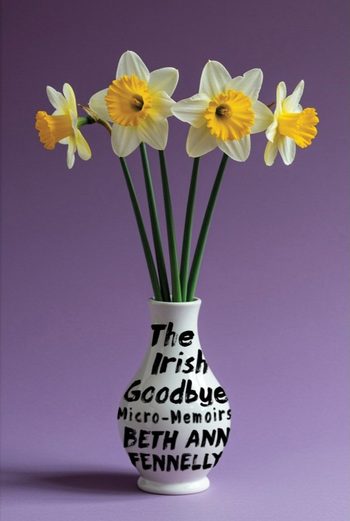
Rumpus: In subtler ways, it also applies to other things you write about, like dementia and relationships that fade over time. I’m curious about your approach to crafting this particular book, which weaves together so many parts of life with a tone that ranges impressively from witty to wistful. I’m a very visual person, and as an editor, I like to think of structure visually: what does this story look like? The image that came to me for The Irish Goodbye was a bouquet of flowers: different textures and sizes and colors that together make this beautiful, cohesive whole. There’s a bouquet on the cover, so I may not have had a truly organic realization! But tell me about assembling this kind of collection, in terms of textures and tones. Do you have a method?
Fennelly: Well, first, I love your bouquet metaphor. The cover [image] is the daffodils that all look the same [featured in “The Trespass”], but I’m actually thinking in my head of a bouquet of mixed flowers, and how it’s good to have something spiky next to something that’s floppy, and how you might think about scents or having greenery. And if you had a bouquet perhaps only of the greenery, or only of the spiky flowers, or only cone flowers or only pansies, there’d be, ultimately, a prettiness that could verge on monotony, whereas I’m really attracted to the sense of different textures and tones. I really like tonal variety. So I would say what you noticed is true. I like to think of each piece becoming its own best self, and I don’t care if it looks different than another piece. I do admire books that have thematic or stylistic unity. I love books like that. It’s just, simply, I’m more drawn to variety and things pinging off each other. So my problem ends up being having too much variety in a book and then having to retroactively do a little weeding, to stick with our gardening metaphor. Once you find the right size vase and the overall shape, there are some things that are just not going to fit. And it’s not that there’s anything wrong with them. They’d fit in another vase, but it’s just too much.
Since I initially wrote Heating & Cooling, I’ve continued writing micro memoirs. I’m still learning from them. I really like the learning process, so I imagine if the learning curve plateaued, I would think about exploring a different genre—my training is in poetry and I’ve done some fiction—but I’m still having so much fun seeing what the micro memoir can yield and what I can do in a small space. At the same time, I had been writing longer essays, and then occasional pieces that would be about a weird obsession of mine, like banding hummingbirds in Belize, or the southerners’ old-fashioned habit of eating dirt or clay, and crazy things about culture or music, where I just take an interest and do the research and follow it to the ultimate extreme. Then I put all these things together, and it just seemed like too much. So ultimately, I cut out any of those research-based essays about a specific topic, and what I was left with was the topic of me, me, me, me, me: short pieces and longer pieces. When I read the book from start to finish, with this new organization, I wasn’t sure if it would seem too disruptive for someone to be reading short [pieces] and then have a longer meditation that goes a little bit deeper. But ultimately, people told me, when they read it, that it felt nice to have that variation in rhythm. So that’s when I thought, maybe I could pull this off.
Rumpus: The consistent threads throughout this book are your relationships with your sister, mother, and husband, which often represent the shorter bits. And then you have these longer pieces that often explore experiences and relationships that seem more peripheral but go deep. Two of the longer essays that struck me coincidentally bookend the book. One is about being an English teacher in Eastern Europe in your early twenties, in which you write, “I was a very smiling, trying girl,” and then the end piece is about posing nude for a painting more recently, where you write, “I am nakedly human, flawed and alive,” which definitely feels more like middle-aged acceptance. If there’s a coming-of-age arc in this book, these two pieces sort of anchor it.
Fennelly: I love that observation. I placed them in those places in the book because it felt right and it was kind of chronological. But even with the two pieces you just [mentioned], there’s a part where I talk about the portrait, that I’m not smiling, that I’ve been placed facing the viewer in this not unappealing pose, but just a very normal human pose—nothing sexy about it, no come hither, blowing of the hair—that I wasn’t to smile, that my hands were just at my sides, that I was just like a human gazing. [They’re] kind of weirdly the opposite: what I was trying to do when I was twenty and searching to figure out what my role was in that country and in my life and in my head, and this acceptance of my own humanity that came about through age. If we are lucky enough to live long enough, we kind of settle down into an acceptance of who we are, and that’s probably one of the surprise gifts of aging for me. I think that’s really why I posed for that portrait. I was interested in doing that reckoning with what it means to be me.
Rumpus: There’s another way in which these two pieces ping off each other, as you said earlier, in that in the Czech Republic at twenty, you were sort of invisible yet so eager to make connections, and then in the painting, you are very visible but there’s that sense of reluctance with being on display. In these two pieces, you also explore different degrees of alienation and evoke what’s lost in translation, which I think continues throughout your book—what’s lost in translation of language, but also of memory, of perception, and by contrast what can be shown through art, be it painting or writing, with vulnerability.
Fennelly: Yeah, absolutely. [About] things getting lost in translation, we were saying another theme in the book is my mother’s decline from Alzheimer’s. The theme of things getting lost with her comes up in several ways. At one point in the book, I talk about my sister, remembering that as a girl, she had been locked in the basement. And that’s something I don’t remember [myself]. I was too young. And the piece is dealing with the fact that everyone who could answer the question is gone now: My father’s gone. My mother’s gone. My sister’s gone. So what do we do with these things that are lost, these questions that we can’t answer? And you said vulnerability too, and I think that that’s something I’m interested in, again and again, I seem to be wanting to explore relationships that reveal something due to vulnerability.
Rumpus: In that last essay about the painting, you write, “Perhaps when vulnerability is a burden shared by all, it ceases to be a burden. Perhaps it becomes a gift.” I love that so much, and I think that underlines your willingness to face shame and be honest about so many things in this book. Posing for the portrait is sort of emblematic of your approach to writing these pieces, in that you kind of bare what might be for most people secret shames. Throughout, you’re very open, sometimes with humor but also with anger and bitterness, for example, about your sister. But by exploring this vulnerability, your writing connects with the reader in a deeply relatable way, because I think we all feel these “ugly truths” but may be too scared to express them.
Fennelly: I grew up Irish Catholic, so it was all shame and secrets for everybody. That was the culture. You simply did not talk about anything ugly. And so as an adult, I press into shame. I’m interested in what it means to have shame, and what happens when we understand its sources and its triggers. I’m also interested in writing about the emotions in life that we have that we don’t fully understand, partially because we weren’t prepared to understand them through culture. So there’s a piece of the book where, at one point I realized I was mad at my sister for dying, which is not a fair thing to think, because it wasn’t fully her choice, or perhaps wasn’t her choice at all. But I remember when we were kids, and we went into this House of Horrors. We were on vacation, and I was a shy and kind of retiring child, and she was a little tiny bit of a bully. She was older and she decided that we were going to do this thing. I wanted to spend the money on fudge, and she wanted to go to the House of Horrors, so that’s what we did. And as we were in line [inside], I heard people scream, and I turned around and ran out. She followed me, but she was so angry because we lost our money. And I realized the reason why I kept thinking about that memory is I wanted her to not die. I wanted her to come out and check on me, and her job as my big sister is to be here and make sure I’m okay. So I made this kind of weird connection, but I know it came from this ugly emotion, this thing I’m not supposed to be allowed to feel, which is this child’s immature reaction of, “Why did you leave me? I’m still here—it’s not fair of you.”
Rumpus: That feeling of injustice, oof, yes. One of my favorite pieces in the book is about your complex grief toward your sister, “What I Think About When Someone Says They’re Estranged from Their Siblings.” That piece obviously spoke to me because of my own experience of estrangement, but also because it again reveals that sort of darker truth about our relationships. In estrangement, we grieve the living but it often comes with a meaty side of wishful thinking that we can only curb by being realistic about who our family truly is. But in grief for the dead, it feels culturally or even emotionally unacceptable to talk about the dark sides of the person who has passed. We don’t speak ill of the dead, and so on. That piece feels so powerful to me because you go there.
Fennelly: That piece was about being exacting with myself instead of sentimental, because I’m 54 now, and I still feel this deep loss of my sister’s death. I think I always will, my whole life. But it’s also true that having a loss like that almost allows you to think [that] the things that are wrong in my life would be filled; I had this perfect companion, and this person was taken from me. But in truth, if I’m going to look at it dead on and wipe the film away, I know that all the bad habits she had were only going to get worse, and the tension that we had over her bad habits was only going to get worse. And if she were alive today, would she be this soul sister and this boon companion that I like to think about? If you told me my sister was in Manhattan right now, but I had to crawl there on my hands and knees, I would be on my hands and knees, but that’s a romanticizing of a human relationship. When we sentimentalize, we actually weaken the complexity of what it is. And she was not an easy person necessarily to love or live with, and probably getting less easy. So I think that’s what I was trying to face and hold myself accountable to, as opposed to romanticizing the absence of her, in a way that changes who she was and who I am.
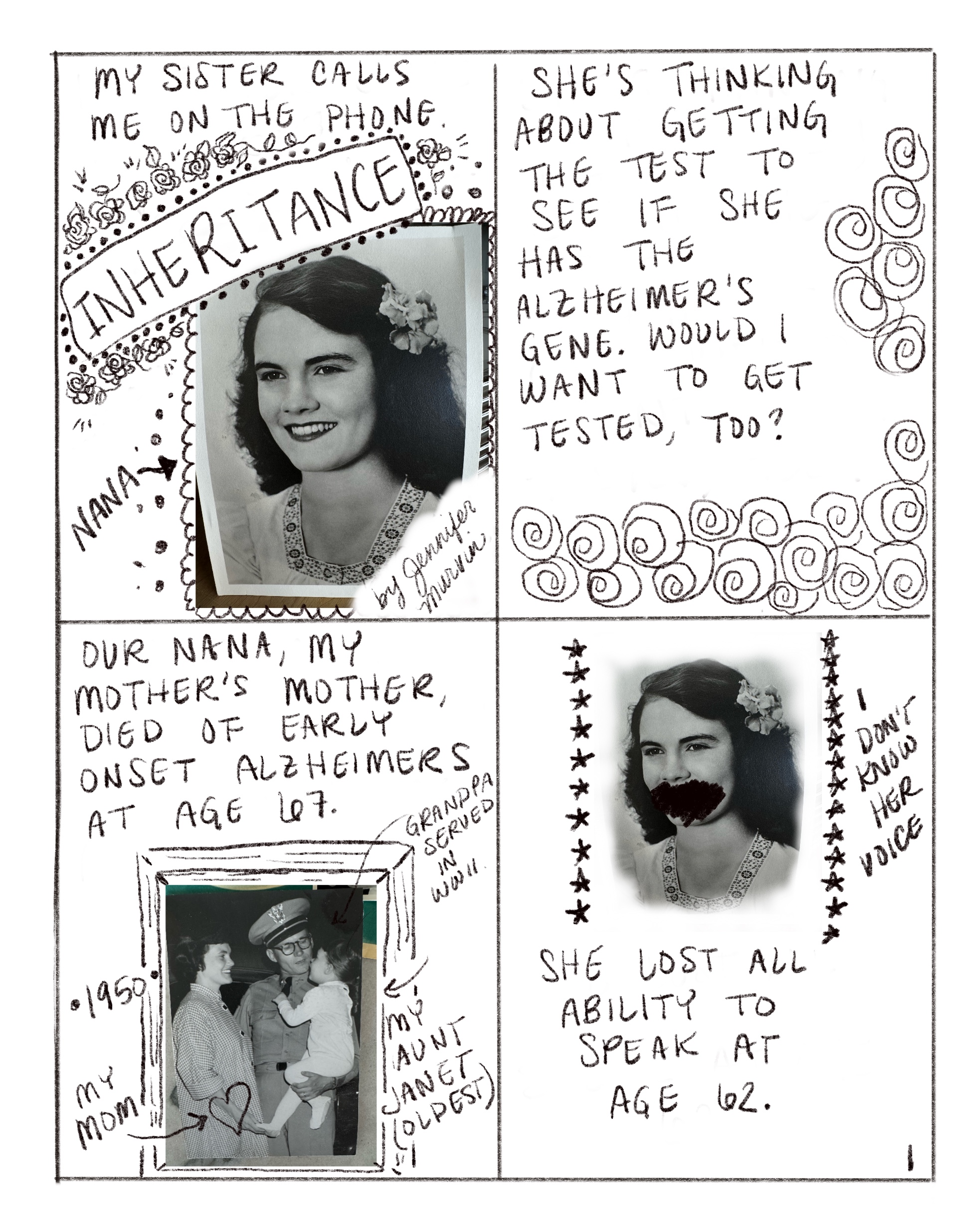
Rumpus: You beautifully explained it. It’s such a short but complex piece, and its depth really translates to the page. I like what you said about being exacting with yourself. Romanticizing can very easily become dishonest, in death or in life. We were just speaking of estrangement. Dementia is also a form of estrangement, and the grieving process is similar. Having a family member suffering from dementia fits in that same sort of murky realm where they’re alive, but they’re really not present anymore. You grieve a person who’s still here but your relationship has disintegrated. I found your descriptions of this process with your mother so real in all its frustrations and poignancy but also this wry humor that’s sort of your trademark.Fennelly: I’ve been taking care of [my mother] since October 2020, and then she died [in November 2025]. So, it was a really long time of seeing her lose her personality, and it was really sad. I found it really hard and depressing—I’m just going to be honest about that. But that’s one reason, in the book, why I also really enjoyed writing about my husband and our long marriage and just funny little things that I’ve observed in the world, because they were ways of balancing out my own life and modulating my experience. Every day I would go visit my mom, and be buzzed in and go back there and find her. And toward the end, she couldn’t recognize me, and she couldn’t talk. Then you go outside, you kind of cry in the car, but then you pick up your kid, and life goes on. And then your child says something hysterical, or you see something weird. An average day can hold so many different kinds of complex emotions, which is another reason why I wanted that tonal variety in the book, where some pieces are silly and some are serious and some are a little bit bitchy and some are a little wistful or poetic, because I find that that actually reflects the way the world feels to me. That’s one reason why there’s humor in the book—because I find a lot of absurdity and humor in being a human walking around on planet Earth. So while I talk a lot about my sister’s death and my mother’s dementia, I don’t feel the book is a depressing book, and I hope other people don’t either!