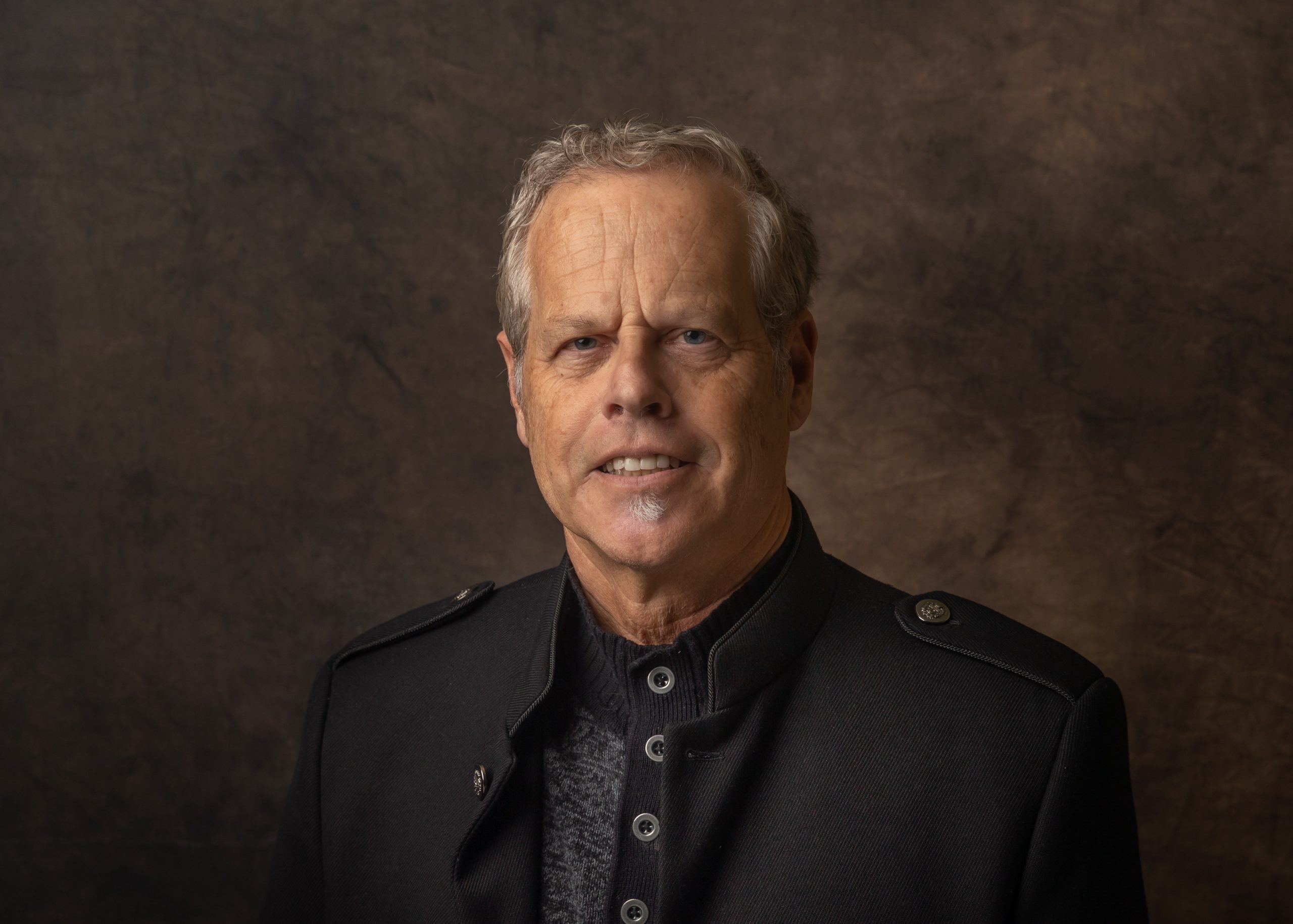
The Infinite Sadness of Small Appliances by Glenn Dixon has a sentient Roomba® named Scout for a protagonist. Through observing the deep grief of her human when his wife dies along with the various ways he seeks solace through art and connection, Scout develops something like human feelings—or at least a partial understanding of them. But the Grid, an all-powerful system of artificial intelligence that controls everything—including Scout, including the humans—doesn’t care about emotion.
Here’s an admission of my own bias and desires. Despite the cheerful colors, when I read about the all-powerful Grid on the jacket cover, I expected something bleak, dystopian, and in conversation with other classic stories of sentient machines—The Matrix, Murderbot, Blade Runner, Battlestar Galactica—something messy, or even violent, in what it means for a machine to develop sentience. Considering our current reality and the threats posed by generative AI, I also craved a book that would outright skewer it. The Infinite Sadness of Small Appliances is something else entirely—a quiet underdog story.
When he and I spoke over video, Glenn Dixon seemed delighted to discuss how Scout relates to the heroes in the books of his own childhood. With its childlike protagonist who ultimately performs an act of great bravery, the book does feel like one of those classics. But we also pushed into its more serious concerns, such as artificial intelligence and fascism.

The Rumpus: Scout is a delight. Why did you want to write about a tiny, automated vacuum?
Glenn Dixon: Partly because it’s fun. I can’t tell you how many people said to me, “I have a Roomba® vacuum cleaner, and his name is Stan, or his name is Fred, or her name is Nancy.” They’re just cute little things.
And there’s the idea of a little machine fighting against the bigger machine. That’s one of the big ideas I’m looking at here.
Rumpus: It’s interesting that before she can take on those machines, Scout must become more human or humanlike. She starts by naming herself.
But I want to ask about how she finds that identity. Scout has a short screed that her pronouns have nothing to do with her domestic duties. And yet. Do they? Why is every other appliance who speaks (Watch, Clock, Fridge, Auto) “he,” and the vacuum is “she?”
Dixon: There was more on this in the earlier drafts, a whole dialogue where Clock expounds on Latinate naming systems, how a Roomba®, ending in an a, must be female. And Auto, out in the garage, was originally named Volvo, in both cases delineating that he must be male. Now, for one thing, that’s an amateur interpretation of Latin, but you see where it came from.
Then both the words Roomba® and Volvo were flagged by the legal department at my publishing house as brand names and they strongly recommended that I do not use them. If you look closely, I think I used Roomba® maybe once in the whole book. It’s like Kleenex®. Everyone thinks it refers to something generic but it’s a specific brand.
Having said that, there was still the problem that Scout, as a cleaning appliance, must be female, so I needed her to say explicitly that she has chosen this gender for herself, probably because she was so impressed with the girl, Scout, in To Kill a Mockingbird.
Rumpus: Are you saying that an entity who cleans must be female?
Dixon: No. No. In fact, she’s conscious of that herself, and wants to rebel against that. She says it’s not because she’s a cleaning appliance. She chose to be a girl. It’s really because she listened to To Kill a Mockingbird, and she saw the young girl, Scout, in that book, and how brave she was, and courageous. My thinking is that Scout chose that for herself.
Rumpus: In the way we all just know our gender because we know our gender?
Dixon: Yeah.
Rumpus: The next stage for her is perhaps to learn about human feelings—but it’s not easy. She and the other appliances approach abstract concepts in fascinating ways. They’re almost deconstructing them, so I feel them anew.
“You’re not to talk to the Humans.”
“What was I supposed to do?” said Scout. “He is unhappy. I wished to fill a happy memory for him.”
“This is not allowed.”
Clock piped in. “A happy memory is an intangible thing.”
“It’s a metaphor,” said Fridge.
“No,” said Scout. “That’s not what a metaphor is. None of this is metaphor. It’s real. He has Sadness. He has Loneliness, and this is a problem we can attempt to solve?”
“Go back to your port, child,” said Clock. “Watch will be wanting another word with you.”
Dixon: Clock is the one pulling Scout back from her abstract thoughts. As a clock, he is the keeper of precision, of quantifiable, measurable facts. He will not abide the foolishness of abstraction.
My favorite scenes to write were the ones where Scout and Fridge and Clock are in the kitchen after their humans have gone to bed, and they discuss all these very human attributes: grief, loneliness and concepts like happiness and beauty. I love how they’re trying to understand and maybe Scout does a little bit. They can get it conceptually, but of course they can’t really feel it.
Rumpus: Let’s talk about that bigger machine that Scout goes up against—the Grid. It’s a system of AI that runs everything—traffic, trade, governance.
Dixon: Although I never used the words artificial intelligence in the text, it’s clear that that’s what we’re dealing with here.
On the other hand, I don’t wish to be seen as a real expert. I hoped to look at this in an engaging way. Maybe as a fable. I liked it a lot when one reviewer called it Animal Farm for the 21st century. That’s pretty accurate.
Rumpus: I saw that! Your book doesn’t seem as bleak to me. But you like the comparison?
Dixon: Yeah. Obviously, I’m talking about the politics of AI. But I wanted to do it in a metaphorical way. Animal Farm, of course, is quite political about the Russian Revolution. But mine is using these characters to talk about the dangers of AI and what’s coming.
Rumpus: Is the Grid fascist, or a representation of fascism?
Dixon: The Grid here is ruthlessly efficient. So there’s that. But there are a couple of passages where a character says something like it’s just algorithms, it doesn’t hate or love or have any moral bias. It is purely efficient. I guess you could argue that that is pretty much the heart of fascism.
Rumpus: The Grid in this world controls everything. It tells people where they can live, what jobs they can have, what they can own. Yet it has ended all wars. It’s also ended climate change. So it’s done some good things! But in our world, AI is going the opposite direction. AI is accelerating climate change.
Dixon: The data centers, yeah.
Rumpus: Do you think this book sends the message that AI is dangerous or good?
Dixon: It’s complicated. I think it comes down on the side of, we better be really, really, really careful here.
I just read a long article in the New Yorker about Sam Altman, who’s the head of OpenAI, and, wow, it was quite an eye-opener, because OpenAI started with the mandate of, we want to do something good for humanity, but it’s Sam Altman’s ego that basically took over. We’re in a real dangerous time.
We’ve maybe learned some lessons from social media when we unleashed it on the world without thinking it through at all. Hopefully, we’ve learned from that a little bit, that we don’t know where AI is going, or what it could do and can do. But we better be really, really careful about it. I would say that much.
Rumpus: I’m thinking of the warnings we might find in the tradition of sentient machines in science fiction. How is The Infinite Sadness of Small Appliances in conversation with those books and ideas?
Dixon: There is a long history from Isaac Asimov’s robots to Hal in the film 2001: A Space Odyssey. I grew up with all that stuff.
I think it’s fair to mention that the chief antagonist in my book, the omnipresent and all-powerful Grid, which is the totality of AI that runs almost everything in the near future, from shipping goods to politics to self-driving cars, is a bit like Big Brother from 1984.
But there’s movie after movie and story after story where the machines take over, and they’re definitely the bad guys. Only, in these previous works, it’s the humans—it’s Winston Smith in 1984—who try to fight the power. In my little book, I wanted to imagine another machine, in this case, a Roomba® vacuum cleaner, who is the one to actively resist the evil entity. So yeah, the difference is it’s the little machine that fights against the Big Brother system.
I also wanted to write something that had a sense of innocence about it. A good piece of advice I heard for authors is not the old saw about “write what you know,” it’s “write the book that you yourself would like to read.” I suppose in these troubling times, I didn’t want to write something dark. There’s too much of that. It was in remembering those books I read as a child, that I found my way to this book.
So I was thinking, what were the books that I loved? What were the books that made me a writer in the first place? That’s why I went back to To Kill a Mockingbird and all the little books that are referenced in here, like The Little Prince, The Lion, the Witch, and the Wardrobe, and The Alchemist; these books that, when I was a young teenager, really touched me.
I was conscious that I want to write something like that. It’s not going to be heavy. It’s going to be innocent, and hopefully a little bit charming. I did not want to write a dark, dystopian thing about AI.
Rumpus: These books you mention are the ones collected by Harold, Scout’s human. His hobby is restoring rare first editions. I notice they’re not quite all white authors, but predominantly so. Only one is written by a woman, and while it deals with racism, it does so through a white savior approach. They make sense as books a retired English teacher of a certain time period might appreciate. But do they also make a statement about values, about the world Harold wants to preserve?
Dixon: Honestly, they are the books that I read as a kid too, which tells you something about me and my time period. The point of drawing in those particular books was to write a book that would have a sense of childhood wonder, that it would be a sort of fable rather than another ominous dystopian novel about AI. I wanted to convey the innocence of childhood in Scout and those were simply the books that illustrated that. There was of course the real Scout in To Kill a Mockingbird, and there were the children in The Lion, the Witch and the Wardrobe, primarily Lucy. There was the Little Prince on his tiny planet and there was Santiago the shepherd boy in The Alchemist and, of course, young Bilbo Baggins in The Hobbit. Maybe most of all there was Alice finding her way in Alice’s Adventures in Wonderland. All of them faced with the same sort of dilemmas and journeys and growing up that the little vacuum cleaner in my story had to do as well.
Rumpus: These are also the books that the Grid tries to take from Harold. Of course, that has metaphorical resonance—the way our current generative AI is based on the theft of books and other intellectual property. But it also seemed to me about physical property rights—the Grid tries to take Harold’s house and his late wife’s piano as well.
Dixon: The Grid collects what I call Artifacts. I’m not sure the Grid even knows what to do with such things. Like our museums today, these would be the objects, such as first edition books, that have been deemed worthy or consequential. But therein lies the rub because in the case of the books, they’re just paper and binding and ink like any other book. It’s interesting that Harold and the other main characters recognize them as valuable and precious. There’s a passage where it’s thought the Grid is collecting such things to learn more about humans. But do they? Can they?
Edie’s most valuable possession is clearly her grandmother’s piano. It’s not a particularly valuable piano, but it is to her. There is a scene where it’s to be taken away, but that’s only to clear out the house of her possessions, with the assumption it would be relegated to a dump of some kind. It’s not one of the so-called Artifacts.
That’s powerful. Value can be imbued on something not because of its cost or the craftmanship that went into it, or even the age of it. It’s because of Edie’s memories. The piano even plays into the first, long ago meeting of Harold and Edie.
Rumpus: So it’s more about the sentimental value of objects. They mean something because they stand in for memories. The Grid can’t understand that.
Dixon: A good example is the piano. It’s the one device, machine, in the house that is not sentient. That piano is so important. It was Edie’s grandmother’s piano. The first thing she played on it was “Claire de Lune,” because that was her grandmother’s favorite song.
And Scout, the little Roomba®, liked to listen to this music, but she didn’t quite know why, and she couldn’t understand how this thing of wood and strings and varnish could produce these sounds. Maybe that was the turning point for Scout, that she could see the value of this.
Rumpus: So it’s the music that brings Scout to understand emotion?
Dixon: Yeah. Scout has all the data on the composer and what year it was composed and what key it’s in and what the tempo should be.
But there’s a part in one of those scenes in the kitchen, where she’s talking to the other appliances about the little piece that Adrian is learning, which is the Prelude in C by Bach, composed two or three hundred years ago and how, if you play it properly, you are having the same feeling that Johann Sebastian Bach had when he was playing it. And Scout says that. Even outside of this book, that’s such a fascinating idea.
Rumpus: It is. It reminds me of how Scout tries to go through the motions of having feelings by talking about them. And so, is thinking about a feeling the same as having it? These machines are constantly struggling with that. What is the difference between understanding and feeling, between empathizing and trying to empathize? Does Scout become more human in her attempts to get closer to these things? Or is that impossible?
Dixon: Obviously, all the appliances at their different levels of sentience can understand a dictionary definition of what sad is, or what happy is, but Scout… I don’t know if she actually feels it, but she really does understand what it might be to feel that. Yeah, we’re way down a philosophical hole here.
Rumpus: Good.
Dixon: Geoffrey Hinton, who is sometimes called the godfather of AI, says we’re not even at real AI yet. We have massive data banks that are very good at pattern recognition, what he calls Superintelligence. It’s the Singularity where machines actually are equal or smarter to humans. The various experts have that at anywhere from five to twenty years from now and, yes, we should probably be scared. The thing about Hinton, though, is he’s trying to think of ways in which a higher intelligence would still care about a lesser intelligence. There are examples of course: Environmentalists who see us as stewards of the Earth is maybe one. Hinton’s example is a mother looking after her baby.
At any rate, we have to find a way to infuse empathy into these AI models. And that’s where we come to my novel. I don’t know if I was thinking of this in writing the novel—I was slogging through the first draft of it like any other writer—but, really, that is the heart of it.
The ominous and all-powerful Grid is the AI that doesn’t care. It’s just algorithms. And we can clearly see how this is playing out.
On the other hand, this is the magic of Scout. She is the most advanced appliance in the house, and she is the one that does somehow come to the idea of empathy, of looking after her Humans and thereby being at odds with the Grid. So Scout learns to have empathy for her humans. Whether or not that’s possible, in reality, I’m not sure.