War Boys, A Father and Son Memoir, begins with the true story of a Russian boy, Volodya, whose town is decimated by the Nazi insurgence in World War II. At ten years old, he finds himself orphaned and homeless. A Nazi general discovers him stacking wood at a slaughterhouse in exchange for food, takes him under his wing, and renames him Wolfgang. This, War Boys shows us, are the unimaginable costs of survival: to lose your mother, your name, and live among the people who murdered your family, to keep existing.
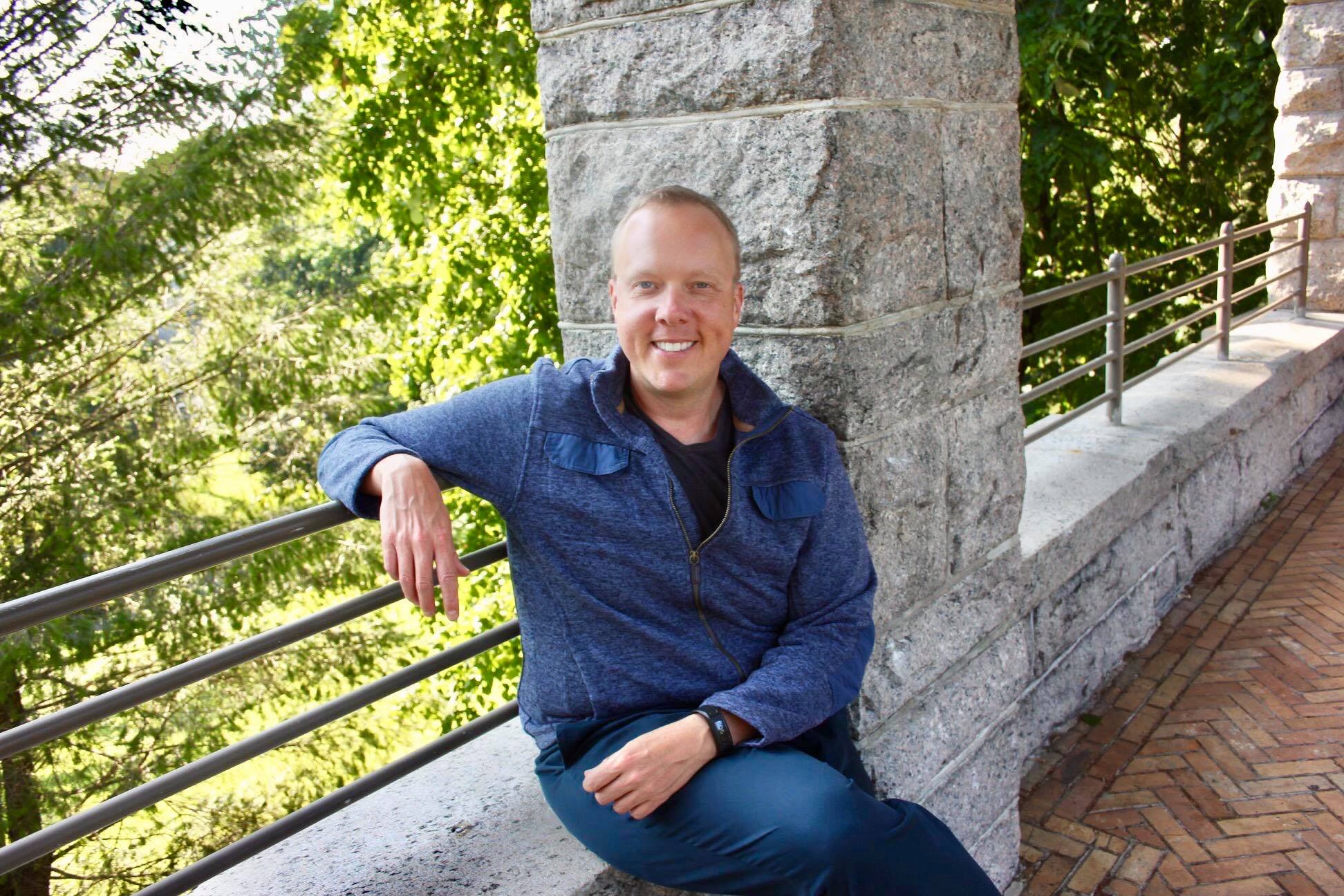
That boy became Jason Prokowiew’s father, now known as Walter, a man desperate for family and yet who tormented his loved ones with alcoholic rages. As the youngest of thirteen children, Jason witnessed the complicated ways trauma ripples through a generation. Emerging from his childhood, also wounded, Prokowiew felt driven to understand his father: conducting over fifty hours of interviews with him, delving into historical records, and probing his own upbringing. Prokowiew also came out as gay—anathema to his Catholic parents. War Boys explores what it takes to survive and ultimately overcome trauma both global and personal.
I took a year-long memoir intensive with Prokowiew and marveled at his ability, over two decades of writing his book, to keep the narrative fresh, to recognize his own part of the story, and to find the right container to weave two bracingly distinct narratives together. I couldn’t wait to read the finished book, which won the PEN America/Jean Stein Grant for Literary Oral History and the Aurora Polaris Award for Creative Nonfiction from Trio House Press.
We Zoomed on the second day of spring but, true to Boston’s contrary nature, snow and ice pelted the windows outside. I wondered about the little boy, huddled in his summer shorts during the long Russian winter, in even darker times. We talked about how Prokoweiw retraced his father’s steps by traveling to Germany and Russia to research, how he found his own narrative, and why this story of war and oppression resonates in ways he could have never anticipated when he began his journey twenty-five years ago.

The Rumpus: You started writing your father’s story in 2000 and worked on it for decades. When did you realize it was also your story?
Jason Prokowiew: That came late in the process for me. I got my MFA in creative nonfiction in 2006. We were more focused around nonfiction that involved the writer but would tell a larger story. I read a lot of nonfiction like Julia Blackburn’s book about the artist Goya and why Goya was important to her. That form of nonfiction still exists, of course, like Soul of an Octopus [by Sy Montgomery].
In 2009, I got writer’s block. Then, as I’ve joked, I did what anybody with writer’s block does; I went to law school. But I still thought about War Boys, still talked about it. If you ask my husband, he would say that I was most alive when I talked about the book during the thirteen years I was practicing law.
I reopened the book in 2018. By then nonfiction had evolved, closer to what we know as memoir now, where the writer is looking through a window at one particular event in their life. I fell in love with The Fact of a Body, by Alex Marzano-Lesnevich, where Alex is looking at a murder, but also telling the story of abuse within their own family. The same approach of weaving history and memoir in Ordinary Girls by Jaquira Díaz.
These books were closer to what I had hoped to write with War Boys. And I was getting encouragement to bring myself into the story. That’s when I found the year-long Memoir Incubator at Grub Street.
I got into the Incubator on a Tuesday. The day after that, I searched for a therapist. I knew I needed mental health support if I was going to braid my dad’s story and my story of being raised by this person who was affected by his life with the Nazis and as a child of war.
Rumpus: You talk about how alcoholics suck the oxygen out of everyone else’s life in a family. That could have easily happened in War Boys as well. The father survives a war-ravaged city, while your struggles take place in an affluent suburb.
Prokowiew: I’ve had to do a lot of work, in therapy, to respect that my journey was hard. And even though I wasn’t in a World War, and wasn’t ten years old without a family, there was still validity to the pain that I experienced, and there was value in showing how what my father went through affected his family.
As you know, everyone in the Memoir Incubator gets an established writer to advise us. Mine was Mike Scalise. He asked for the five memoirs I was most excited by. And I started old school with The Color of Water by James McBride and included The Fact of a Body, and Ordinary Girls.
Mike came back to me with a structural idea based upon Sven Birkett’s The Art of Time and Memoir. He pointed out that all five books had a thread that acted like a “now” point in the story, that allowed the writer on the page to jump back and forth in time. He suggested that I use my interviews with my father as that vehicle. I could tell the story of my father’s experience of war, and then interrupt those moments with a flash to the interview between my father and me.
I resisted immediately. I said, “That’s so bizarre.” And he asked, “Have you ever seen The Princess Bride?” I took a beat. “Oh, yeah, the grandfather and grandson do that in the heat of action. It’s something I loved about that movie.” It became the “Princess Bride Technique” in my head and suddenly ding ding ding!
It was a relief, because I had a way for these two narratives, one largely set in the ’40s in Europe and the other one set in America in the late 1980s, ’90s and early 2000s, to speak to each other. They didn’t have to be tit for tat; they just had to relate.
Rumpus: What were the parallels between the traumas that you both experienced, you and your father?
Prokowiew: I’ve done a good amount of work to understand psychologically what my core wound is, where it came from, and try to heal. My core wound is always being chosen second, behind my father’s alcoholism and my mother prioritizing his well-being over mine.
And I think that my father’s core wound is abandonment. A lot of the fear that he showed towards my mother and family was fear of us leaving him, which did happen. It was astounding to see him fall apart. The abandonment he felt in childhood always drove his actions.
It was a relief when I learned the fate of my grandma, that she did not abandon him. She was murdered days after the invasion of Belarus started. Unfortunately, I found out after my dad had passed, but I saw that thread throughout his life, looking for his mom and wanting to understand why she’d left him. It was a gift to find out that was not the case.
Rumpus: In addition to abandonment, what about other threads, like the abuse your dad passed down and your coming out as gay with strict, Catholic parents?
Prokowiew: Krautsick, the Nazi general who adopted my father, was also physically abusive to my dad. And then my dad was physically abusive, primarily to his sons although not to me. It was their way to control situations. That’s what I’ve grown to think of it as.
As to your question about being gay; it’s not as if my father did a 180 on my sexuality between the time I came out at sixteen and when he passed away nine years later. I plot gay awareness with Ellen DeGeneres coming out on the magazine cover and saying, “Yep, I’m gay.” I came out three years before that. People were not saying gay. My parents weren’t saying gay. It was a bad word.
But I had breadcrumbs of hope. I was in middle school and one of the kids in my religious class talked about how we should gather up all the gay people and send them to an island to die. The teacher didn’t react. I went home and said to my parents, “I’m not going back there.” And my dad said, “Yeah, that sounds ridiculous.” He may have believed being gay was morally wrong, but he never believed, “Let’s send them to an island and kill them.”
When I did come out to my parents, it was a long conversation at night. The next day, I came home from school thinking we had reached a certain point of growth about it. But they were not even able to look at me. So I left and spent a week with friends and their parents who gave me the love that my parents did not.
That was the first time I hadn’t talked to my mom for any amount of time. She was distraught. “So,” I said, “Now you see what it’s like to live without me?” (Jason laughs). I was so cocky. I believe some of that cockiness had to do with knowing how my dad despised the Nazi hate and racism; he never brought that into my childhood, in fact, quite the opposite. So, my young brain thought, there’s hope here for me to be different and still find love.
Rumpus: From where did your gift of writing come? No one else in your family writes.
Prokowiew: My third-grade teacher, Miss Thompson, gave me my first lifeline. She let me stay inside at recess with three or four other kids. We’d pretend we were in girl groups or sit around writing stories. We felt safer to be inside with Ms. Thompson, fooling around with art.
That’s where I first got the chance to use writing as a way to be free from what was going on in my school and at home. And God bless Mary Lou Thompson who gave me that space. She told my parents, “Jason can write.” At that point, nobody was telling me I was good at anything.
She suggested I be put in a program called Catalyst, for kids who could stand to learn in a different environment. I remember having to suffer through the dull sixth-grade curriculum and then go to Catalyst and debate euthanasia against my classmates. It was an explosion of creativity and possibility in those spaces. And each of those teachers would comment on my writing ability even then. So thankfully, it was fostered early.
Rumpus: They say each child in a family has different parents. How was your experience, as the youngest of thirteen, different from your siblings?
Prokowiew: I experienced two versions of my father that my siblings didn’t. I got “active alcoholic father” and then I got “dry drunk father.” I was ten when he stopped drinking, meaning I could be in the rest of the house after 5:00 p.m. and not worry about a verbal attack from him. Most of my siblings were already out of the house by the time that happened.
From the time that I was twenty, I tried to practice what I was learning in Al-Anon. They constantly remind you to focus on yourself and not make it all about the alcoholic. That was a monumental shift for me. Everything I did had been informed by my dad. The way I moved safely through the world was in avoidance of him and what he might say. And Al-Anon keeps putting in your head that you have a life to live that does not involve just being focused on this person. I started focusing on my friendships.
Rumpus: It’s hard not to draw comparisons between your father’s experiences and what’s going on politically in the world right now.
Prokowiew: I finished much of War Boys before this second term of Trump; we’re seeing a stronger fascist push in this second term. So it’s only with the completed manuscript that I’m seeing the similarities. My press is Minnesota-based and my publisher lives two blocks from where Renee Good was murdered. She emailed me while that was happening, to say she was going back to War Boys to understand what was happening now.
War Boys meets the moment in a way that I did not anticipate and did not write to meet.
Rumpus: What do you think your father would say about our current political climate?
Prokowiew: I’ve been pondering that a lot. My first reaction has been, I’m so glad he’s not alive to see this; I don’t know if his heart would have taken it. But I also think back to when he was deciding to go to the United States, he was doing his research, and he was learning that America was this very young country. He may have considered it growing pains, that we need to go through this ourselves and hopefully we survive, because for some reason we can’t learn from history.
Rumpus: Like a teenager.
Prokowiew: Like a teenager, exactly.
My dad would say, “Question everything.” So no matter what I’m hearing or what I’m reading, I’m questioning who is saying it, why they’re saying it. What is the counter to what they’re saying? What is left out of what they’re saying? Although, as I always joke, my father probably didn’t want me to question everything he was saying to me.
He made a good decision to come to the States. He had choices to go back to Russia, to stay in Germany, to go to England. But he was intrigued by this young representative democracy and believed that maybe there was more hope in that than in Communism or Fascism or whatever systems were potentially available in those other places.
Rumpus: You visited your dad’s homeland, Belarus. What was that like for you?
Prokowiew: Being back in the motherland was a very positive experience for me, and an emotional one. There are things about myself and my dad and family that feel very Russian. We speak of the Russian soul and there’s sadness that can be stirred by music and art and poetry and prose. I felt that love on the ground in Russia.
“Oh,” I felt, “This is who I am, where I’m from.” It connected me to this motherland, this Russian-ness that still feels amazing to me. And my dad imparted that. We’d go to the Russian chorus in Boston, and he cried at their songs. We all felt moved. There were times when my brother and my father and I would all listen to a piece of music, a classical recording, and get swept away.
Rumpus: What sort of reader do you envision picking up the book?
Prokowiew: A wide range. There’s obviously a lot of readers who like World War II topics. I hope they’ll read it, and I hope War Boys adds to the literature about how war affects children. I hope that readers who have lived the inherited trauma of war can find solace in it. I was writing for children of war and also the children of those children.
And it’s also a queer story, which was important to me. We have this divide: you can’t be queer and also have this other part of your family life; you have to divvy them up. I’m queer every goddamn day of my life. I imagine some people will get to those sections and ask, “Why did he include this?”
Well, if you want to hear what happened to Russian Volodya you’re going to have to hear what happened to Gay Jason too. It’s me being subversive.
Rumpus: What do you hope lingers with your readers as they finish those last pages?
Prokowiew: Those recordings with my father were an amazing experience. I can’t imagine where I’d be if I hadn’t sat down and asked him what happened and pushed him outside of the comfortable narrative that he had gotten used to telling. I hope that readers take something away about listening, really listening, to other people, to the people in their families, to the people they love.