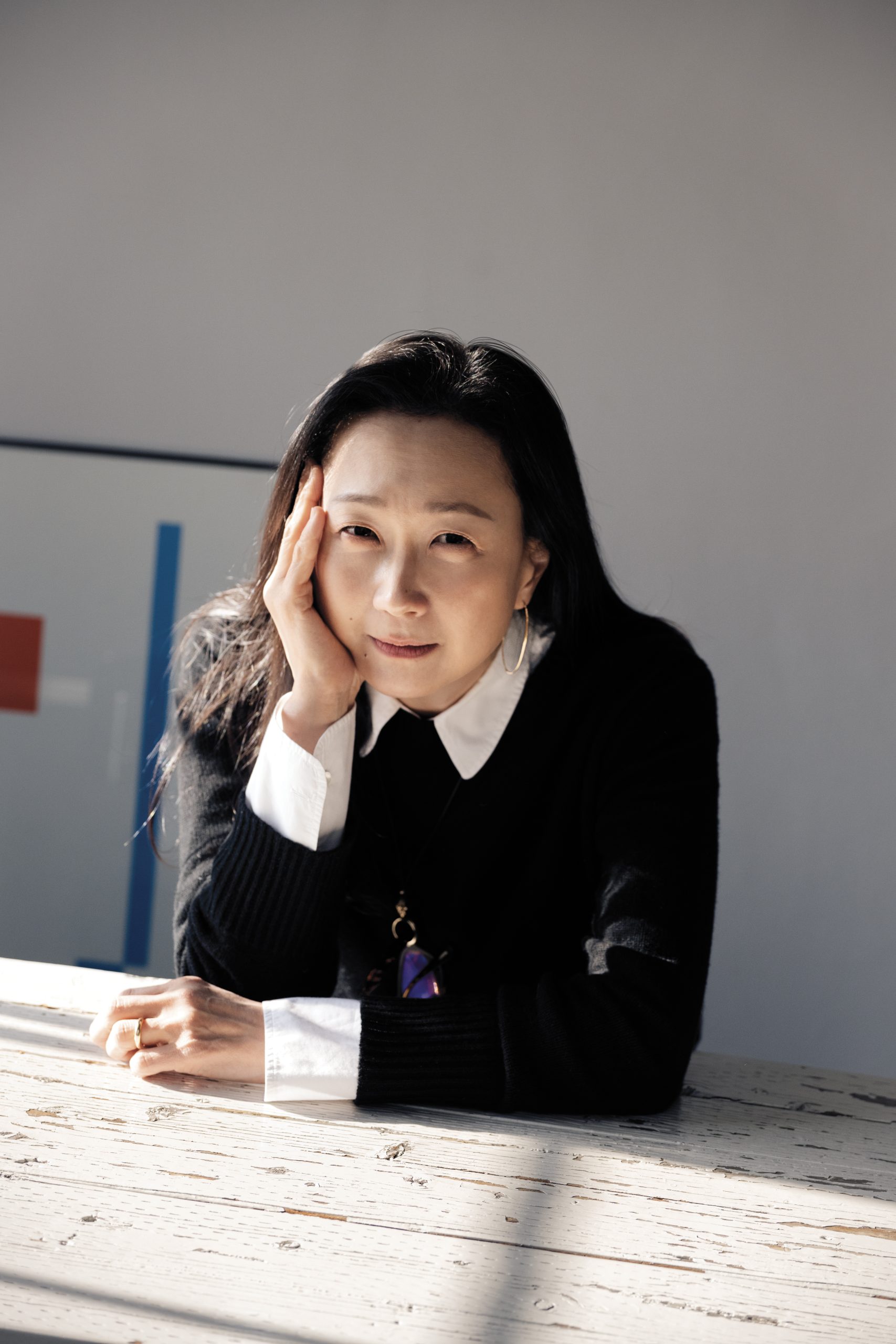
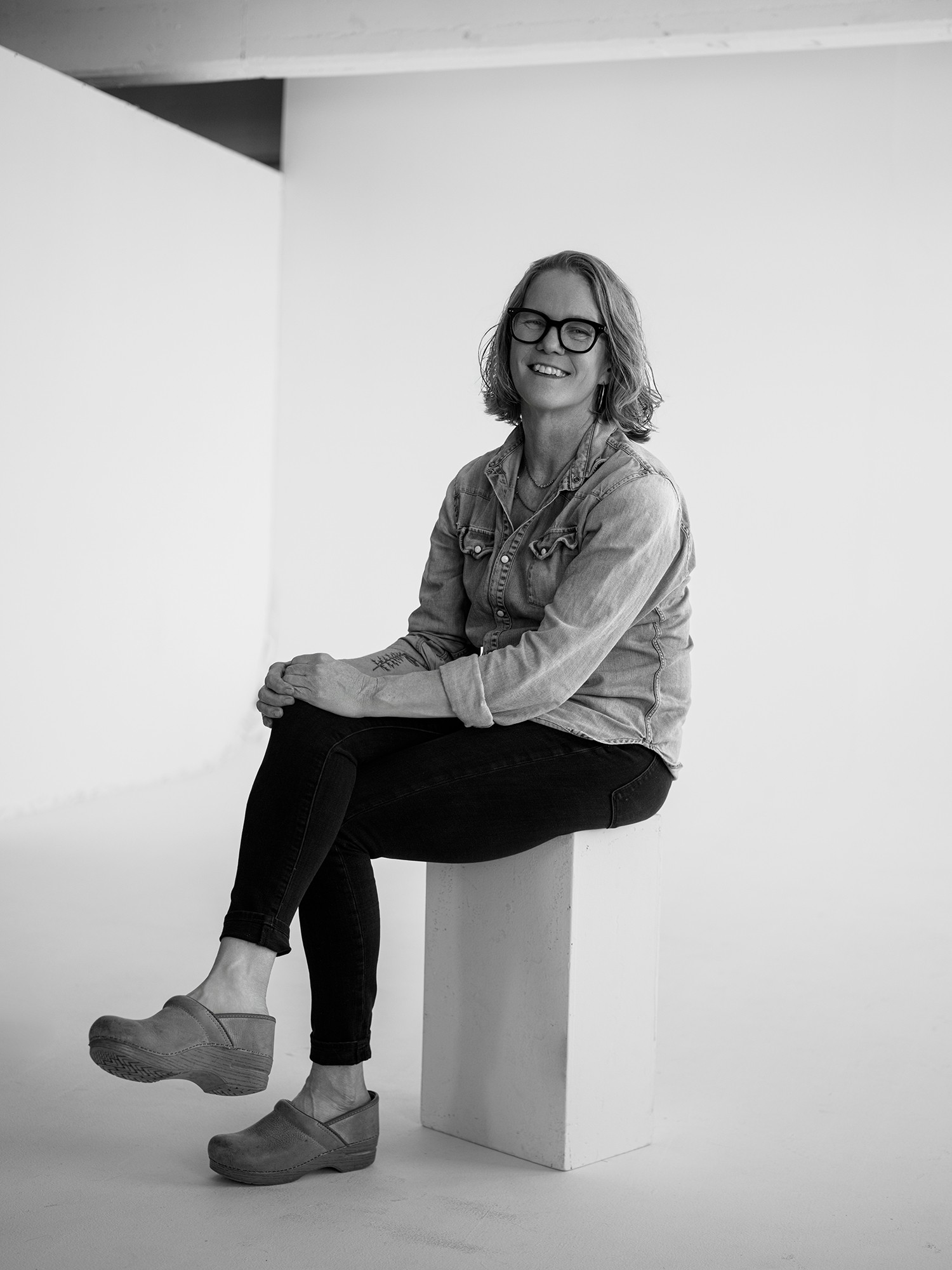
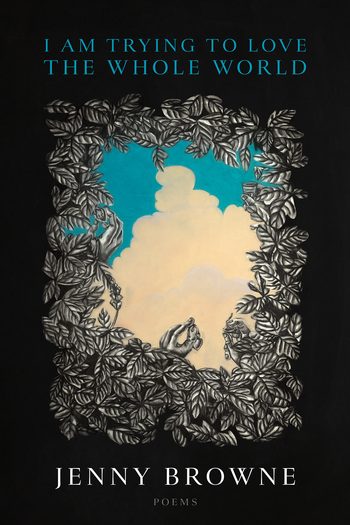
The word “hope” gets thrown around a lot. It seems everyone reaches for it, but no one has mastered the art of acquiring it. In this mess of history, it feels more like a goal than an endpoint. For nearly a year, poet Jenny Browne began each poem with the line, “I am trying to love the whole world.” The consequential word here: trying. She let this attempt at tenderness guide her through an empty nest, an unraveling marriage, love, death, and a move across the ocean into an exhilarated new life. Her fifth poetry collection, I Am Trying to Love the Whole World, meditates on the tenuous nature of humanity and the sustaining work of art, even as life—and the ailing world around us—constantly upends.
Browne’s poetry touches on so many things we’re all grappling with right now: the urge to flee, the need to find meaning in everything, and the challenge of staying afloat in a world yearning for grace. She grounds her work in the poetry of place, and this collection explores the terrain of middle age alongside the ongoing work of building community through language.
I reached out to Browne via email at her alternate home in Belfast with questions about this moment in history and how it shapes both her life and her poetry, from her transcontinental move to writing through the loss of a loved one.
This interview has been edited for length and clarity.
The Rumpus: I’ve always found that the best poetry connects with the reader, allowing us to sit with a feeling, hand in hand with someone else. We all know what it means to lose someone, or if we haven’t yet, we will. Tell me about Katie Pell, to whom you dedicated this book, not just as “artist, mother, and best of friends,” but as muse.
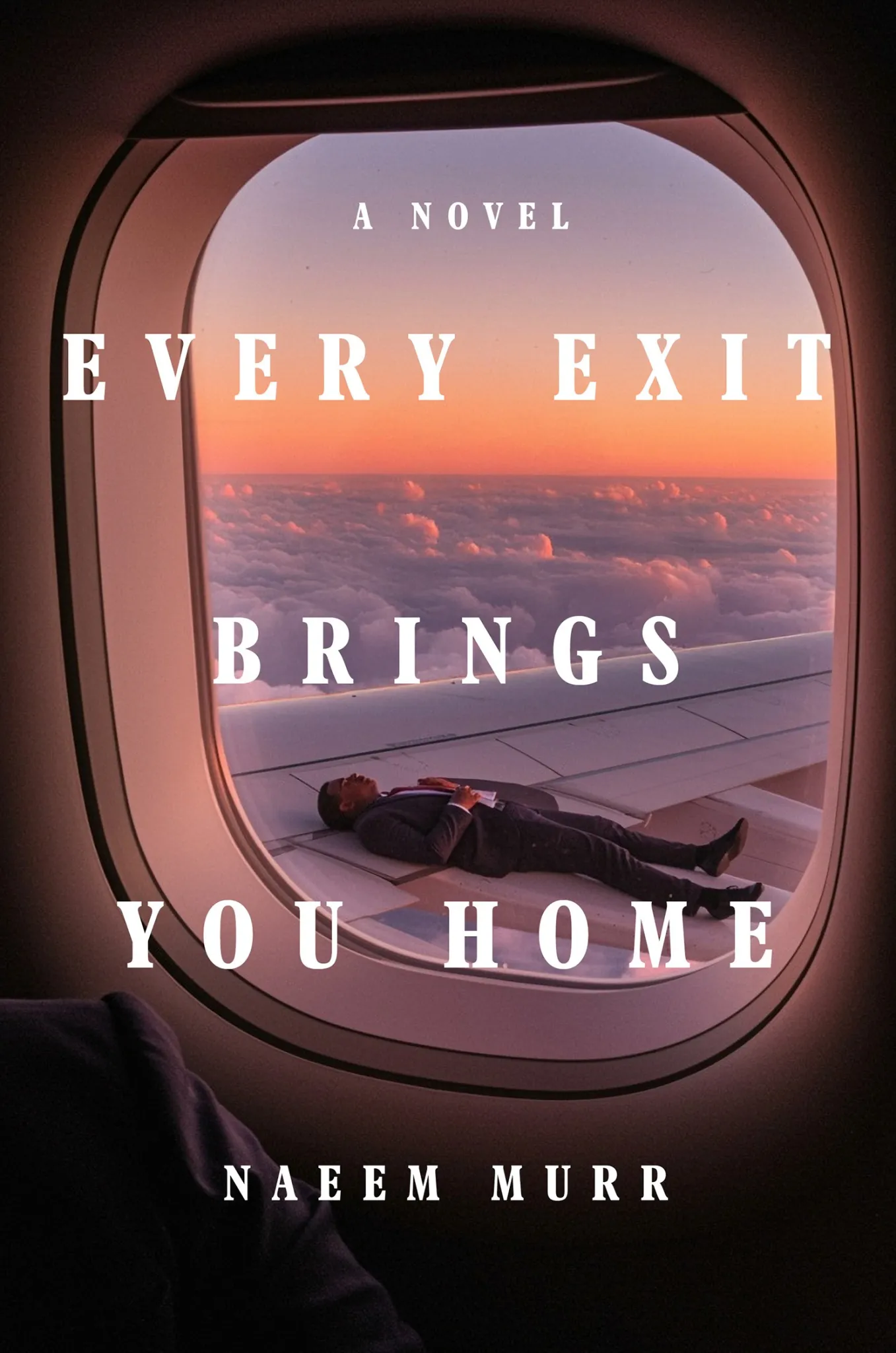
Jenny Browne: I love your notion of poetry as an intimate conversation, and yes, this new book is largely elegiac and specifically addressed to the visual artist Katie Pell, whose incredible painting, “Love and Kudzu,” is also on the cover. What to tell you? That her hands were always dirty with clay or graphite? That in the right light she looked like Mick Jagger? That she loved power ballads and hated pettiness? That she made big wild art with a big wild heart? I think Katie was one of those people who really only ever wanted to be an artist. She was brilliant, and she struggled. She was my ride-or-die friend, and this book became a way to continue the conversations about art and ambition, gender, the powers and failures of the body, procrastination, and luck that we’d been having over twenty years of walks along the San Antonio River. Which is to say, I couldn’t imagine my own life not being able to talk to her, so I kept talking to her.
Rumpus: I love the idea of a conversation that never ends, especially with someone you’ve lost. “But You Can’t Keep Everything” opens the collection, as many poems in the collection do, with the line, “I am trying to love the whole world / but you can’t keep everything.” In a world that prizes certainty, what does trying make possible that certitude cannot?
Browne: I write in explicit conversation with so many poets and poems I admire, and also below the surface in ways I’m probably not even aware of, fellow travelers if you will. One accidental source text for this collection was “Try to Praise the Mutilated World” by the wonderful Polish poet Adam Zagajewski. It’s probably best known as a 9/11 poem and remains one that recirculates in times of collective grief, which sort of feels like all the time these days. I love teaching it for the way it persuades through images, and while the [line] commands “you must,” [praise the mutilated world], the poem actually begins with the imperative to try. I’ve probably read it with students hundreds of times. One day deep in the middle of Covid, facing a grid of black Zoom squares, I read it and in the silence that followed heard myself speaking to the darkness or maybe to Zagajewski or to God or everyone or no one: “Look, I don’t know about praising the mutilated world. I am trying to love the whole world.” Did I mean whole as in complete or not mutilated? What is the difference between must and try? There is no certainty but in trying. And I hadn’t written anything in months, and so I wrote the line down and waited for what came next. And then I did it again the next day and the next, for a year. It felt like a private assignment, but also gesturing to something larger. And there was space for the next line, which ultimately felt like imagination, which is another way to say hope.
Rumpus: As a poet of place, you’ve always gestured toward something larger, far beyond the physical space you occupy. These past few years have found you living fully in two worlds, both geographically and emotionally. How have your ideas of home and of place as an emotional landscape changed?
Browne: Yes, I’ve been teaching and living between South Texas and Northern Ireland for the past five or six years. I am actually a week out from switching cities again right now, so I’m feeling the emotional push and pull quite keenly. I can see the Black Mountain from my wee third floor Belfast office and, having walked up there many times, I know that there is a pillar at the top that was the first spot used to map the island in the 1800s. Places are archives, but they aren’t static. Neither are people, and if you know anything about Ireland or Texas, you know how borders come together and pull apart at once, and how a place embodies memory, pulling the past into the present. Belfast is a long way from San Antonio, but there is geographic and cultural in-betweenness to both places. As a poet and as a person, I do think I’m drawn to liminality, thresholds, and the thrill and disorientation of change, but also how distance reshapes the familiar, and in doing so, rearranges our insides and shakes the cage of language. Of course, I feel shaken like that on the inside sometimes, too, neither fully here or there. My writing practice is very much a walking practice as I move through a place and it moves through me. I long for the Irish Sea when I’m in Texas, and for that big blue sky and waiting freight trains when I’m over here. Walking is how I tend to find a feeling of home wherever I am.
Rumpus: Shaking the cage of language feels very relevant, especially in these times when the larger quake of the world feels so internal and personal. These poems are written toward hope, yet charged with grief. They hold clarity and doubt, belonging and estrangement, joy and mourning, all at once. Does sifting through those tensions shape the way you write?
Browne: The border between what we want and what we risk feels so much more fragile and permeable than I want to admit. Because it’s terrifying and no fun to think about losing what you love, but working on that inside the field of a poem, finding a phrase or image to tunnel into that tension, that’s the heat. So, I don’t know that it is sifting through the tensions so much as trying to write in a way that feels true to how life feels, knowing that you don’t get real joy without real suffering or true beauty without some ugliness. Like I can hear seagulls outside—shipyard seagulls—they are kind of rough characters. Like I once saw two of them fighting over the wing of a third, and their calls are part choke, part sob, part shout, part laughter, so I’m writing that down and that sounds about right.
Rumpus: All those parts—choke / sob / laugh—sound pretty human right now. I think we all feel that seagull energy. We all live in that medley of emotions. While each poem in this collection stands on its own, the book as a whole feels like an ongoing conversation. A witness to many emotions unfolding at once. In “The People Who Feel No Pain,” the poem moves from motherhood to loss to longing with remarkable ease and fearlessness. Are our emotional lives naturally nonlinear, and is poetry uniquely equipped to hold those contradictions without resolving them?
Browne: I love this question, and the poems I most love to read do feel like living conversations, not just with people and places but with the whole range of emotional and physical sensations—reflections and memories constellated in any single moment. And I do think poetry is a unique vehicle for enacting and embodying the polyvocal and multilinear. I was recently listening to a podcast about consciousness, and how the more we study it the less we really understand, but also that one thing we are coming to understand is how it begins in the body. It starts with feeling, not in thought. I was walking as I listened to it, so now I just have a note in my phone that says the “podcast on consciousness” and “felt uncertainty of being alive,” and if I had to give a working definition of what I want a poem to do, it would be to employ the power and strangeness of language to evoke those phrases.
Rumpus: The idea of the strangeness of language is an excellent way to put it. Like in the title poem that closes Part One, which describes the magpie as “the only creature rumored to have refused the ark.” I found that turn of phrase so compelling. I mean, what sort of creature does that? And in the larger sense, what does it mean to reject the safe haven?
Browne: There are lots of birds in this book, not birds as romantic symbols or even metaphors, just actual weirdo wonderful birds, magpies being one. In thinking about that particular poem, I think of how often I tell my students that poems are smarter than we are. One thing I know I mean by this is that if you already know what you have to say and how you want to say it and how it all will end, then why bother writing it? But I also mean that there is always so much working beneath the conscious mind when we open up to where writing might take us.
For a long time I’d been carrying an image of an actual magpie I once saw as I crossed the Irish border. It seemed to stare right through me from the back of a shaggy spray-painted sheep and left me feeling struck, wondering “Whoa, what kind of bird was that and why does it know my soul?” So I read some old legends and learned magpies are known to be tricksters and that seeing just one is bad luck. Also, the useful Victorian factoid of how it didn’t want to get on Noah’s Ark and preferred to stay out in the rain talking shit.
What does this have to do with rejecting the safe haven? That it feels necessary sometimes, and similar to the idea of trusting the unknown of the poem? My long marriage was also falling apart even if I wasn’t speaking directly to that yet, the detail of not walking two by two onto the ark also stuck with me. Wondering where that leaves you? I’ve been swimming near daily in the Irish Sea lately, and that is for sure a practice that shows you who you are. Some days are so calm and clear. Others slap you in the face and are so cold that there comes the moment when you think “I can’t do this.” And then you do. You just keep going. This seems true of writing a poem, and of living.
Rumpus: There is so much Ireland in all these poems. In particular, Part Two encapsulates only one poem, one place. Tell me about “Dawn, Killary Harbour” and why it needed its own space.
Browne: “Dawn, Killary Harbour” is a painting of that coastal fiord by the Belfast born artist Paul Henry, and so this poem is ekphrastic in the sense of being written in response to another work of art. But even when you sit down to write “about” a work of art, beginning in description, you also inherently write about the texture of your encounter with it, what is in the frame and what is left out, and also what you bring to it. I went to go visit the painting repeatedly in the first months after Katie’s death and the earliest fragments address her directly, but then I got curious about trying to document the process of a long poem written in chronological time, sort of charting my own changing relationship to the image. Even when I left Ireland and was back in Texas, I looked at the image as a screensaver on my computer. The landscape appears wholly absent of humans, but there would have been people out there, many suffering from the famine in Ireland, or migrating across the ocean. Eventually, the image would evoke the plague-emptied streets outside. Interestingly, strands of Irish myth and even some Titanic lore made their way into the poem without my permission. It became interesting to see how far beyond the image I could go and still feel tethered to it. When writing the poem, I often thought about how the parts and the whole gather and echo, also about the close of Seamus Heaney’s poem “The Fragment.” “‘Since when,’ he asked, / ‘Are the first line and last line of any poem / Where the poem begins and ends?’”
Rumpus: There’s a generosity in that notion that feels really epic. Again, a continuation of the conversation—not just with people but with things and ideas. A lot of these poems have that same generosity and it never feels performative; instead, they seem rooted in compassion. Were there moments in the writing when forgiveness—of yourself or of someone else—became necessary before a poem could come into being?
Browne: This is a nice thing to hear about the poems, and also a hard question. Whether as a parent, a partner, or a friend, it is important to understand one’s intention in writing a poem, especially one that involves people we love. That takes time, and these poems took a long time. To write not for exposure or catharsis but rather to hold often seemingly incompatible truths up to the light. Or try to! And this does require forgiveness of all the ways one won’t get [it] right, both in life and on the page. I am wary of the notion that writing a poem will fix a problem, let alone a person. I wonder if I don’t feel the same about forgiveness in some sense, not that I don’t believe in it—I do, deeply, but not as the endpoint, but rather an ongoing practice of letting go of needing to fully understand or resolve something, to let it be exactly as it is and not look away from that.
Rumpus: You did get one thing right. At the start of Part Three, you are tasked to write a poem that “rhymes cancer with dancer,” and in the final poem, you do. In those words, humor and quiet despair are made honorable through association. Where do you find the strength to chew “the sweetness loose” from so much grief?
Browne: There’s an image in the book from one morning, driving Katie home from chemo. She was losing her hair in handfuls and sat there in the passenger seat just holding some in her fist. Everything on the highway was bright and absurd, and all of a sudden, she was like, “You need to pull over.” I didn’t know if she needed to be sick or what was happening, but when we got out, cars were roaring by. She handed me some hair and asked me to put it on the top of a fence so birds could use it in their nest. You used the word muse earlier, and yeah, I think she was that in how she held both beauty and suffering in one hand, insisted on it actually, and on making something from it.
Rumpus: Again, the birds. How wonderful thinking there is a nest somewhere that holds a piece of her. Throughout this collection, trying feels more important than arriving. In the final words you write, “The peer-reviewed study on why humans / believed birds felt louder during lockdown / concluded they were not actually turned up / although without our leaf blown white noise / cruise control drone we could / for a time, better / hear each other try.” Now that the book is complete, what are you still trying to understand—about yourself, about your poetry, the world?
Browne: I like to think about how the definition of the word try requires choice, as in the etymology, which comes from the French “trien”—to separate one or some from the rest. You can’t love the whole world at once. It is impossible but also isn’t that what we do when we choose to give the cellular details space and attention, which is individual compassion? And how there is tension in that. Love for the bumper of the car, the sound of the bird. Maybe it comes with age, but I have to believe most people really are trying their best, and honestly, I’m just trying to be a better listener.