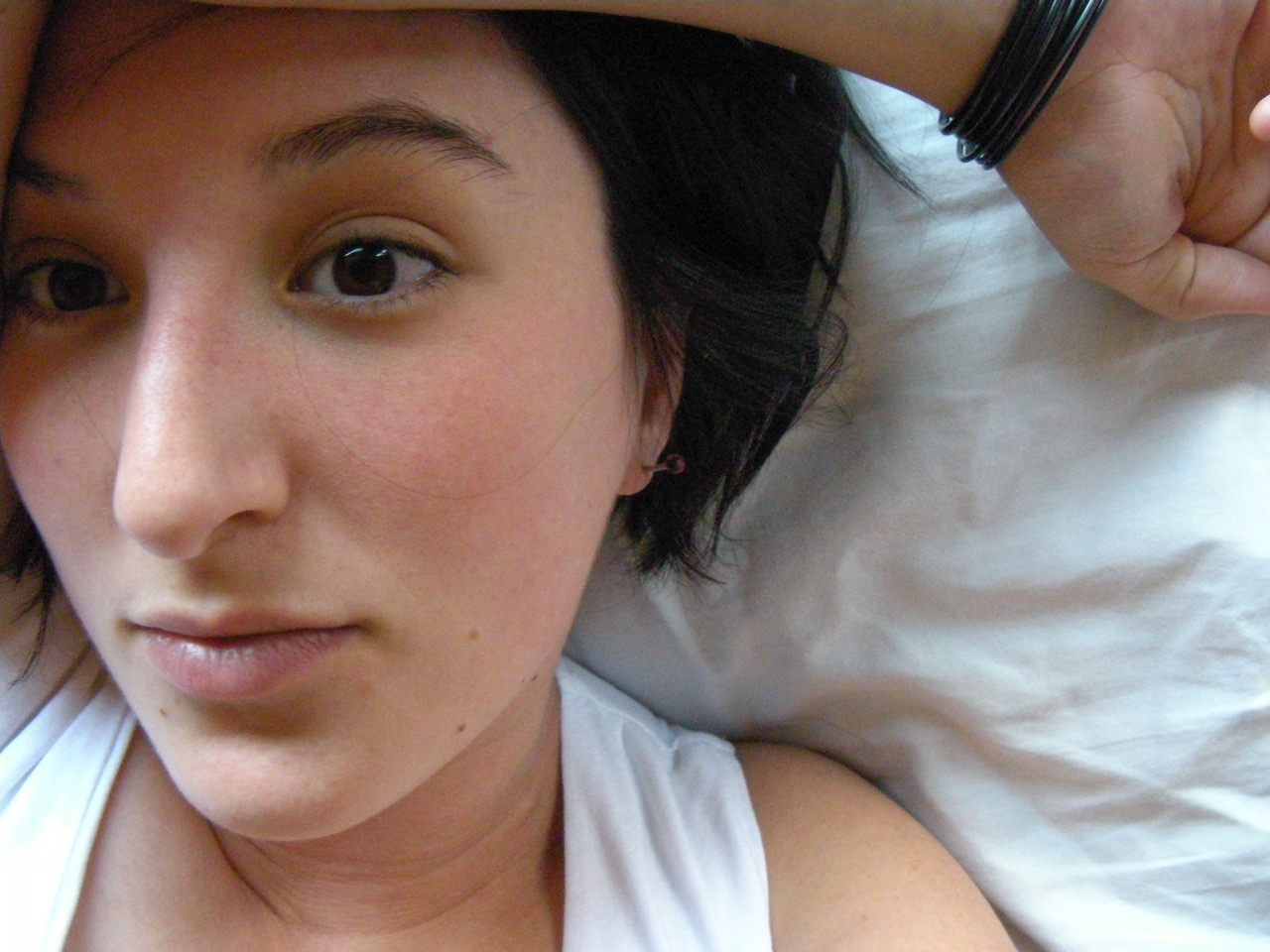
Once upon a time there was a girl named Lux Nightmare who thought you could change the world by taking your clothes off.
So she did. And it worked, sort of.
These days she tries to change the world by beating people up while still looking feminine.
ThatStrangeGirl.com landing page, June 15, 2006
—
When I first read through the email from Wendy Shalit, I thought that it might be a hoax.
I was very aware of who Shalit was. She burst onto the public stage right as I was graduating high school in 1999, creating a media frenzy with the publication of her first book, A Return to Modesty: Discovering the Lost Virtue. It was easy to see why Shalit received so much attention: A twenty-three-year-old first time author, she positioned herself as an antidote to the excesses of sexual liberation and pro-sex third wave feminism. She was a young woman who’d seen the libertine attitudes of her classmates at Williams College and decided that hookups and frank discussions of sex weren’t simply uncomfortable for her personally, but bad for women as a gender. “What women will and will not permit does have a profound way of influencing the behavior of an entire society,” Shalit wrote, functionally arguing that some women’s immodesty had the downstream effect of giving men as a whole a free pass to treat all women as disposable objects instead of people.
Whether you loved her (conservative writer George Will was a fan) or hated her (feminist Katha Pollitt panned her book in The New York Times), she was interesting to talk about—even if you were just talking about her to dismantle her lukewarm insights about the benefits of modesty. But still: I couldn’t really understand why Wendy Shalit would be emailing me. How did a “conservative feminist” who’d become a vocal advocate for the pleasures of keeping it covered know who I was in the first place? And what could possibly make her want to talk to me?
In June 2006, I wasn’t anyone particularly of note. I was just a twenty-three-year-old woman living in the East Village of Manhattan—the same age Shalit had been when A Return to Modesty had been published, yet without the public profile. By day, I was a sex educator working at two different afterschool programs in New York City; one in East Harlem and the other on the Lower East Side. By night, I was Joey Hardcore, one of the founding members of the Gotham Girls Roller Derby league. I couldn’t imagine that Shalit was much of a fan of either comprehensive sex education in afterschool programs or the punk rock vibe of the neo-roller derby revolution.
I had been someone at one point. Just a year and a half prior to finding Shalit’s email in my inbox, I was the proprietor of my very own porn site, That Strange Girl, which I’d started right before my senior year of college. It was a largely softcore “indie porn” site that featured naked photos of nearly eighty models—mostly women, but some men as well. And in my mind, it was also a radical feminist experiment: porn that celebrated authenticity, porn that showcased a variety of bodies as hot, porn that recognized men and women as equally worthy of ogling (“equal opportunity objectification,” I called it in one of my banner ads). In the handful of media pieces that profiled me, I argued that my work could liberate people of all genders by destigmatizing sex, by making it just another topic we could all be comfortable discussing publicly. I wanted to prove that modeling nude or being filmed having sex was no different than any other form of art. I wanted to prove that sexuality was just one more beautiful, natural part of life that was normal to be curious about and want to watch.
In other words, I was the exact sort of woman that Shalit had spent the better part of a decade publicly condemning. The immodesty that she decried as coarsening our culture was something I openly embraced. Where she was convinced that libertine attitudes towards sex and nudity were cheapening intimacy and putting women’s safety at risk, I felt certain that it was only by revealing sex and the body to be no more scandalous than any other part of the human experience that we could truly achieve gender equality.
And yet, as soon as I got her email I knew that I was going to talk to her. What was the worst that could happen? Even if she misrepresented me—even if I wound up the tragic cover girl for Slutty Girls Who Pretend to Be Smart: Why Being a Slut Will Kill You—did it really matter? Would anyone whose opinion I respected take Wendy Shalit’s read on me seriously?
My friend Sean tried to talk me out of it, writing me a lengthy (and flattery-filled) email cautioning me to consider the potential dangers:
Obviously, you’re a smart (and beautiful) young woman who is totally liberated. She obviously isn’t. I think the column that says “others who have bought this book also bought” a book against feminism, for example, is just as telling: there are red flags all over this…. Remember that you speak fast, you say a lot (and write a lot), which
is giving this Shalit character more opportunity to twist your words.
I appreciated his concern but I wasn’t going to listen to him.
***
When you tell people you started modeling nude online at the age of eighteen, that a year later you launched your own porn site, everyone wants to know why. You’re supposed to have a good reason for doing things like that—especially if you happened to launch your porn career while you were a student at an Ivy League university. You’re supposed to have a whole story that explains your decision, that offers a reasonable explanation for why you veered so far off the correct and “normal” path, something you can regale curious party guests (who will inevitably follow up that query with questions like, “So what do your parents think?”).
Money is an easy explanation: Either you were broke and needed quick cash, or you spotted a chance to get rich quick and decided to run with it. That could have been what inspired me. In 2001, when I first dipped my toes into the adult industry, the online porn world was still in a gold rush. Pornhub and its peers didn’t exist yet—while there was free porn, often in the form of preview clips and thumbnail galleries, if you wanted the good stuff (or even just the okay stuff), you were going to have to pay for it. It wasn’t unusual to hear stories of people who made a quick million just by buying a generic library of porn photos, doing some minimal curation and branding, and slapping up a paywall. It would have made sense to people if I’d spotted what was going on and decided to cash in, using online porn to set myself up for a comfortable financial future. But that wasn’t my story.
Another story people will accept is that of the devious older boyfriend—the man who lures you into the lifestyle and manipulates you into staying there. And I was, sort of, manipulated by an older man. There was a boyfriend who encouraged me to get into porn work, and the reality is that if I’d never dated him, I probably never would have ended up in the adult industry, if only because it would never have occurred to me that I could do this work. But to put it all on him would be an oversimplification. This wasn’t Chuck Traynor coercing Linda Lovelace into shooting adult movies she’d later deeply regret. I wasn’t a mute victim with no agency. It was more complicated than that.
The most hateful of the accepted narratives is the trope of sex workers all being child sex abuse and incest survivors—it’s not even a storyline that offers a logical path from the experience of abuse to the decision to do sex work. It’s just a thing people like to offer up as a way to explain the unexplainable, to suggest that sex workers choose the things we choose because we are broken dolls; we do what we do because we’ve been so badly stunted that our entire existences revolve around being devoured by men’s sexual appetites. It’s also, for the record, grossly dehumanizing to abuse survivors to imply that surviving that kind of violation leaves you permanently “broken” and “damaged.” Needless to say, that wasn’t my story either.
I don’t have a clear answer for why I did what I did. It seemed like it would be fun. It gave me a powerful thrill. It felt like I was making a political statement—and as an added bonus, I got to feel sexy. It put me in touch with interesting people who wanted to make interesting art. All of that was true.
But more than anything, there was this: I was eighteen, and I had a lot of things I wanted to say to people. I had opinions about sex and feminism and bodies and identity and they were worth sharing. But I didn’t feel like anyone cared, like anyone was going to take me seriously. The second I took my clothes off, I suddenly became a person whose opinions mattered. Maybe the people who approached me for interviews were less interested in my thoughts than in the sensationalism of my public sexuality, but they were still giving me a platform. And I was more than happy to make abundant use of it.
It was that very same urge to be listened to, to feel like a person whose opinions were worth hearing, that led me to give Wendy Shalit my phone number.
***
I was the one who insisted on a phone call. It seemed safer than an email interview, which could leave me vulnerable to being taken out of context and misinterpreted, without ever forcing Shalit to reckon with my humanity. If I was going to give her an opportunity to twist my words, if I was going to leave myself open to being painted in some book as a sad slutty tragic slut, I wanted her to contend with me as a real person first. I wanted her to acknowledge that I was more than digital pictures and lines of text. I wanted her to hear my voice—and I wanted to hear hers as well, to get a feel for the person behind the call to modesty.
She called me on a Sunday at 1:00 pm. I was at home in the two bedroom apartment I shared with my college best friend Rob, a 5th floor walk up with a distressingly slanted living room floor that was mostly desirable because it was just half a block from Tompkins Square Park. We’d done our best to make the apartment feel adult, but it still gave off the aura of two twentysomethings who were still getting their shit together. My furniture was a haphazard collection of items I’d either inherited—like the dresser my mom had since childhood—or borrowed—like the futon I slept on that was technically Rob’s—combined with a couple of items I’d picked up at Ikea. When it rained hard enough, water would rush in through my bedroom window, soaking my bed.
Even though I’d technically still been a porn performer when I moved into this apartment, even though I’d spent several months running my porn site out of that very my bedroom, giving members a glimpse of me at my laptop, sitting at my tiny green Ikea desk, there wasn’t really anything “porny” about the apartment itself. Save for some photo shoots on my roof, I’d never really done the porn part of my porn business out of this apartment. And now, a year and a half after it had all been shut down, the only things tying me back to that life were that I owned a webcam and a decently nice Canon digital camera. That, and an archive of the entire website still lived on my computer.
But here I was in that apartment, pacing between the tiny kitchen and the slanty floored living room, trying to explain my porn career—why I had done it, what it meant to me, how it had factored into my feminist worldview—on the phone with Wendy Shalit. Wendy Shalit, who had to whisper her end of the conversation because her baby was sleeping.
We didn’t start out by talking about porn. Over the course of forty minutes, she eased me into the conversation, and initially we just talked about feminism. This part I felt incredibly prepared for. This part I knew how to handle.
“What do you think the dominant theme of feminism is today?” she asked, and I knew better than to fall into that trap.
“Well it’s a flawed question, isn’t it?” I said. “Feminism has never been a unified movement.” It couldn’t be, I pointed out: there were too many women, with too many different agendas, to ever really coalesce around one specific theme. I had my own feminism, certainly, and it was one that advocated for bodily autonomy above all, for sex education and access to reproductive healthcare and abortion, for the rights of sex workers and queer people and trans folk. But there were plenty of women who didn’t see eye to eye with me on those points—women who even vehemently disagreed with me on some of them—and I wasn’t sure I could simply dismiss those women as “not feminist.” Even Wendy Shalit, for all my disagreements with her, was still trying to do something along the lines of feminism. To declare one the “dominant” theme seemed reductive, almost ridiculous.
She seemed to like that answer, which honestly felt good. Maybe I had written her off too quickly. Maybe we could find more common ground than I’d initially expected.
For most of the conversation, I tried to stick to my talking point of personal choice. Personal choice was the ethos of my porn work: If you wanted to do it, I supported you, and if you didn’t, that was cool too. And if you wanted to do it, it should unfold along the lines of how you wanted it to happen, not according to someone else’s idea of what made you sexy. I wanted her to understand that I cared quite deeply about making sure people who posed naked felt comfortable and good about what they were doing—that I, myself, had done what I had done because it felt good, and that when it didn’t feel good anymore, I made the decision to stop. I didn’t need her to agree that my choices were right for her, or for anyone else. I simply wanted her to understand that whatever she thought about how I lived my life, it was my choice to live it that way—and her choice to live however felt best for her.
It felt, at times, like we could find common ground, or at least agree to disagree. When she brought up the topic of gender neutral bathrooms—one had opened at her alma mater, Williams College, and she seemed to find the very notion horrifying—I pointed out that you could have both single sex and gender neutral bathrooms, that people could have the option to choose which one felt best. That was a reasonable compromise.
As the conversation came to a close, she thanked me for my time, telling me how well-spoken I’d been. “It was a pleasure talking to you,” she said, and I believed she meant it.
“Thank you,” I said, and told her I was eager to see what happened with her book. I knew I probably hadn’t shifted her worldview or even really changed her mind, but I was still curious to see how she’d work my opinions into her argument. I was still curious to see what would come of our conversation.
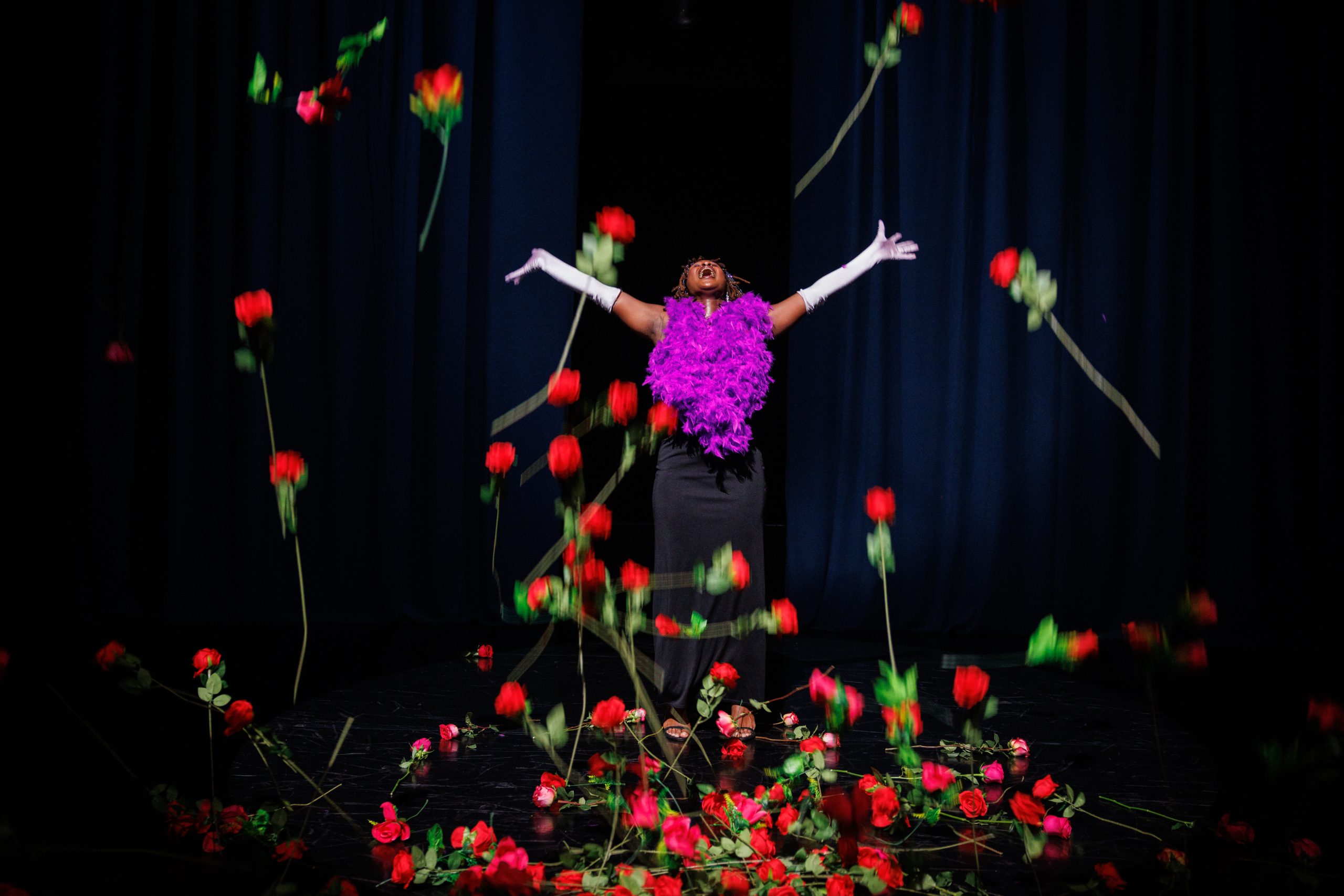
That evening, I grabbed my skates and gear and headed to the club downtown to participate as a contestant in the Miss LEZ Pageant, a queer “beauty pageant” featuring contestants from lesbian (or at least lesbian friendly) venues and organizations all around the city. I’d been entered as Miss Gotham Girls Roller Derby—and though I didn’t win the title of Miss LEZ, the other contestants unanimously voted me Miss Congeniality. The drag king host awarded me a bouquet of fake roses and a framed certificate with a picture of Sandra Bullock on it.
***
Despite her promises, I didn’t hear from Wendy Shalit when her book was released. There was no email telling me to look out for it, and certainly no offer of a free copy as thanks for the time I’d spent chatting with her. I didn’t even know she published anything about me until two and a half years after our conversation, when a stranger emailed me to ask about whether it was true I’d created pornography to get people to care about me, or if Shalit somehow skewed my words to serve her own purposes.
I was taken aback. Make porn to get people to care about me? It was now four years since I’d shuttered my website, and while I’d found my way back into the adult industry—I was now the editor-in-chief of Fleshbot, Gawker Media’s sex and porn blog—it still felt jarring to hear my younger self and her motivations described in such a desperate way. I asked for more context and was sent the following two paragraphs from Good Girl Revolution.
Sometimes I can’t sleep because certain details I learn don’t add up for me. Like the young woman who told me she had “no regrets” in starting an “alternative” porn site in 2002, but she took down her site by January 2005. If she had no regrets, why take down the site? When I visited her blog in the wee hours one morning, I learned that her boyfriend at the time would not be intimate with her “unless there was a webcam on us, unless we were performing for an audience.” This, naturally, had unsettled her. On the other hand, she wrote, one “great” part of running a porn site was “documenting my life and having people care.”
It’s been a year since I spoke to this young woman, but I remain haunted by this idea: creating pornography so that people will care? Clearly, we need to find other ways of showing girls that we care about them, even if they don’t want to take off their clothes. And as I’ve learned from my friends, who are truly good, it is never too late to show that you believe in someone. Growth is always possible. Until it happens, though, one can always write about it.
Even as I’d prepared myself to be flattened and misrepresented, my words distorted to the point where even I couldn’t recognize my original argument, I hadn’t anticipated this potential outcome. I hadn’t foreseen the possibility that I’d appear in her book, not as some exaggerated parody of myself, but as an anonymous object of pity, a nameless little slut who was as pathetic as she was delusional. I hadn’t expected Shalit to cherry pick quotes from a blog I created to process my complex feelings about my time in the adult industry—a blog that didn’t even exist at the time of our conversation—and strip away all my personality, my thoughts, the things that made me me. I hadn’t expected the only identifying information about me to be a URL in the endnotes as citation for my quotes.
But perhaps that was the only way it ever could have gone. Because even as I entered the adult industry determined to do something real—to counter a flood of artificial, airbrushed, fantasy versions of bodies and sexual appetites with my real body, my real life, my real desires—I’d constantly found myself repackaged into someone else’s convenient take on my motivations, my desires, my life. It didn’t seem to matter what my intentions were, or how many manifestos I wrote: Every version of myself I saw reflected back at me by someone else felt distorted, taken out of context, a funhouse mirror version of the person I intended the world to see.
I had thought that honesty, transparency, and good faith were all that it took to be understood, to be taken on my own terms. What I was still too young to fully understand was that some people never even wanted to give me that chance.
***
Nearly a decade after that phone call with Wendy Shalit, I found myself on the phone with another infamous writer, one who’d made a name for himself by documenting a kind of man who took full advantage of the immodest culture that Wendy Shalit railed against. Neil Strauss, whose book The Game had introduced many people to the seedy world of pickup artists, had just released a memoir about his recent attempt to heal his damage and find a way to have a healthy romantic relationship. I’d read The Truth after receiving a review copy, and now I was interviewing him for Grantland.
To my surprise, I liked Strauss’s book. I found it honest, and vulnerable, and more interested in encouraging readers to tap into their own pain and anxieties than in giving them some pat answer about the one true relationship structure that would guarantee their eternal happiness. And yet I felt certain that, despite his openness, despite his willingness to bare all, the press he got would surely misinterpret what he was saying in order to align with their existing worldview. “Author Of The Game Realizes Monogamy Is The Way” was always going to be a catchier headline than “Man Who Struggled To Form Intimate Connections Realizes That They Require Honesty And A Willingness To Be Vulnerable.”
I told him that when we talked. Not just that I’d been deeply moved by his book, but that I knew in my heart that its message would be distorted in the media. He laughed knowingly, and said something that has stuck with me ever since.
“Part of me writes books to be understood, because I was never understood growing up. Yet the irony is, the more you put things in the culture and become part of the culture, the more misunderstood you’ll be.”
The problem I faced in my early twenties wasn’t that I had done porn—not exactly. Being naked on the internet affected how people saw me, made them more willing to project their own versions of me onto my story, to play fast and loose with the things I said to make them serve their own purposes. But the real problem was that I believed I could retain control over my own story, simply because it was mine. The real problem was that I put my story—with all the intimate detail, with no attempt at a filter—out into the world while I was still living it, before I even knew what story was being told, when I was the rawest and most vulnerable version of myself.
I don’t pose naked on the internet anymore. I don’t treat the internet like a diary, exposing my most vulnerable moments as I am living them. It’s not that I think that these things are wrong, or that I judge other people for doing them. It is simply that I am too vulnerable to turn myself into meat for the internet’s content mill—that I no longer think that transparency and good faith are the only things one needs to be taken on one’s own terms. When I choose to share personal experiences, they’re the ones I have enough distance from to toss up for other people’s engagement. They’re the ones I understand well enough to not feel personally affected by someone else’s commentary and dissection.
There’s a part of me that wonders sometimes if I should have listened to Sean all those years ago, if I should have ignored Shalit’s email and refused to serve myself up for her. But honestly, I don’t regret the phone call. Some lessons we learn can only be learned the hard way.
And at least I got a good story out of this one.