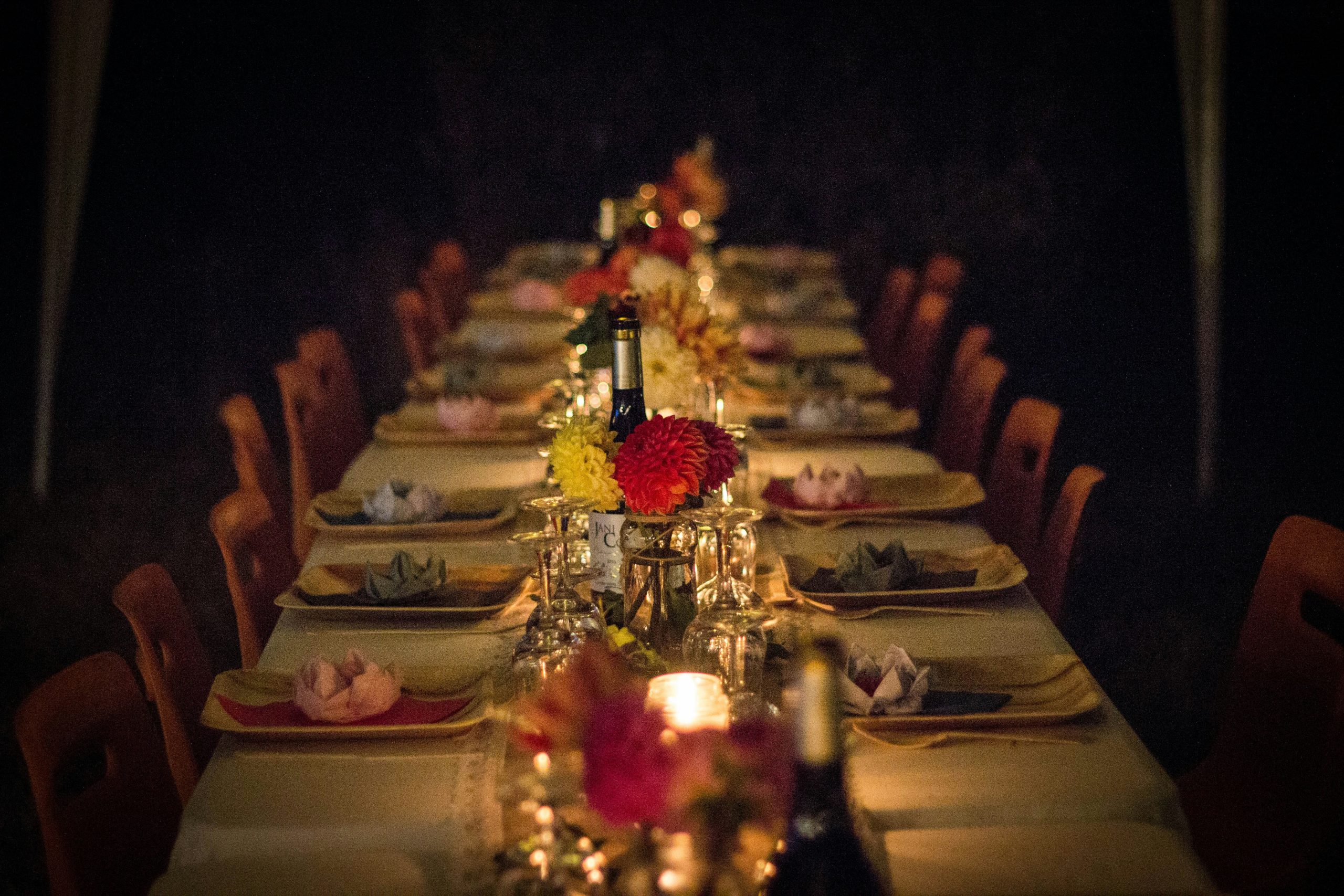
My partner and I have been trying to have people over more often. We recently hosted a dinner party where the conversation found its way to retirement. Our acquaintances, all in their late twenties and early thirties, laid out various strategies—maxing out 401ks and IRAs, inheriting property, practicing radical acceptance. They slipped in terms like “NVIDIA” and “index funds” to make it sound like they might know what they’re talking about. Someone read a paragraph verbatim from CNBC’s website about the ideal investment portfolio for Zillennials. My partner shared our plan of evacuating to his home country, where things are slower and our dollars might go further, to spend our final days. Despite the conviction with which we spoke, these were all fictions. The room was full of air. In a financial reality burdened with runaway student loan interest, where entire industries gain and lose funding overnight based on a president’s ever-evolving grievances, and where there’s no reasonably affordable housing (or anything) to be had, none of us truly have any idea how we’re going to make it.
When the conversation reached my best friend, perhaps my only real friend at the table, she joked her plan is to “kill herself” before 40. A voice three seats down then politically corrected her, “Unalive yourself before 40.” The conversation lost all momentum. Save for Bad Bunny bumping in the background, the room fell into silence. People matched this silence with other forms of silence—fiddling with their food or studying cracks in the wall which we’d never gotten around to covering with thrift-store art. An introvert fled the room in search of our cats. Others reached for their phones without intention—just to scroll, to stim.
I’d locked my devices in the bedroom as a sincere attempt to be more present for our guests. This was an obvious mistake that left me behind in the moment, unpacking my friend’s financial plan alone. Because it involved premature death, this can only mean she was unable to envision a future where retirement—rest and joy—is even a possibility. I don’t envy her. In fact, I worry she comprehends our generation’s futurelessness better than the rest of us at the table.
***
My friend and I met years ago, pursuing semiserious dreams at the third best art school in Chicago. She wanted to be a writer full-time and so did I. We wrote painfully personal (Horvathian) essays about our dates, our drugs, our fatherless upbringings, and surface-level metaphysical interconnectedness. No one blamed us for our vanity; it was the early 2010s. We still had capital H Hope. We had a future.
We’d found each other in Writing Dreams, a class I’d taken to get to the bottom of why I kept dreaming about an ex-boyfriend. (The answer was simpler than I’d hoped. I still loved him. I still do.) Real dreams, we quickly discovered, are not nearly as interesting as everyone brands them to be. By the end of the course, we were lying in our journals to impress our peers. My friend wrote of a dream where her vibrator came to life, but he was too clingy, too jealous, too cringe. The class applauded her for the nuanced take on modern dating dynamics. I wrote of a dream where I entered a pet shop to find a room full of fish tanks containing miniature dioramas of my youth playing out in real time: my tooth making contact with the ball in little league; slipping into an algae-filled above-ground pool, almost drowning in the pit of green and slime; losing my virginity, lubeless in my mom’s suburban basement while World War Z raged on a screen in the background. Whenever I think of this “dream,” I envision it in third person—a diorama of dioramas—and I feel envious of a former self who had access to these visions so freely, who contained the mind space to attempt to make sense of them—a keycard to the backrooms of my brain.
When we lived together, my friend and I hardly did anything alone. We decorated the apartment with street furniture and Salvation Army photography. We enabled each other, convincing ourselves we were too busy with art to clean. Generations of fruit flies cycled through life and death in the pantry; constellations of mold spores spread across the ceiling over the shower. In my memory we never did anything other than write, but we wrote about everything. We couldn’t afford streaming services or going out for inspiration, so we’d pull chairs over to the window and observe the street for content. We paid witness to fistfights and hurried Grindr hookups, appearances from the missing pets on the posters around the neighborhood, and more parallel parking disasters than I could catalog. We’d often read our writing aloud. Fearing stagnation more than anything, we pushed each other to cut everything that didn’t read genuine, that didn’t feel real. Though we couldn’t quite define what qualified something as genuine, as real, we agreed we knew it when we heard it.
The topography of our dining table was cluttered with pages from discarded drafts. I once hosted a late-twenties consultant from the West Loop for a hookup, for the story. He sat at the table, drank cheap wine, and told me our apartment reminded him of “a halfway house.” I told him I preferred to think of it as a petri dish. When I read the write-up of the encounter to my friend, she smiled and corrected the consultant’s assessment: “Our halfway house.”
***
At the dinner party table, I looked toward my friend. She had also turned to her phone, where an endless compilation of rare Labubu unboxings played on the screen. I resisted the urge to tell her I hold a conspiracy that Labubus are a government psyop, like Russian internet bots or Big Glitter. Instead, I said nothing. A teacher once let me in on the seven second rule: If you can wait out an awkward silence for seven seconds, someone more anxious than you will speak. This used to always deliver, but post-pandemic, people seem more willing to let a moment suffocate.
As the silence compounded, I began to use it, as I use all silence, to further dissociate. In a recent telehealth visit I fished for Adderall by describing how intrusive thoughts come to me like notifications in even the shortest periods of non-stimulation.
“Like watching Reels?” my psychiatrist asked.
More like a low-voltage lobotomy.
She tells me this is a common symptom of those terminally online. On more than one occasion she’s suggested going dark for an entire week to reset, recenter—no phone, no internet, no anything. I’m not going to do that. What if something happens while I’m in the darkness—something that changes the trajectory of everything—and I miss it?
At the table, I cycled through what I might look up if I had the ability: aesthetics of the Roman Empire, fluoride, methods to mitigate the socio-economic imbalance and traffic build-up in the virtual city-state I’m constructing on my desktop, do spiders believe in the sanctity of monogamous relationships?, can spiders marry their cousins?, r/spiders, is the dark web the outer space of the internet?, what happens when all the polar bears die?
Tonight was the first time I’d heard “unalive” offline. I initially came across it when I downloaded TikTok midway through the pandemic as a final Hail Mary to feel part of something. The word had been popularized to circumvent the app’s automated censorship triggers for the words “kill,” “murder,” “suicide,” and their synonyms. And while “unalive” allows for conversations on such topics to occur on the platform, it comes at the price of undercutting the sting of the words it’s replacing, leading to a censorship of its own—the frick vs. fuck dilemma. One can talk about death, one can talk about violence, but only in a manner the algorithm finds palatable.
The more I thought of my friend’s financial plan, the more I worried our generation has become comfortable with the passivity that “unalive” offers. Suicide jokes are very much back from the dead. It’s not at all abnormal to hear heavy language used carelessly: “I’d unalive myself if this or that happened” (when imagining an embarrassing scenario), or “I wanted to kill them” (when someone commits a minor annoyance that most certainly didn’t warrant extrajudicial execution). For example, just before the party, my partner realized he’d forgotten to invite one of his coworkers and texted an overzealous apology. His coworker replied, “lmao no worries, I’m not gonna kms 🤪.” Another acquaintance had called in sick from their “deathbed” with Covid. When asked if they needed anything, they replied: “a gun.” Distilled, the rhetorical flippancy toward human life in our generation’s humor reads dystopically medieval. And, like any almost-joke, it never feels entirely euphemistic.
I contemplated breaking the dinner party silence by announcing I’d recently seen an X post about a YouGov poll that found 9% of Americans have a “somewhat or very favorable” view of the Black Plague. However, I wouldn’t have been able to stop myself from overexplaining this fun fact. I hypothesize that the 9% splits evenly: 4.5% to those who’d like to gift Earth mercy via human extinction; 4.5% to those who have convinced themselves they’re immune to plagues. And that the latter just might find pleasure in the prospect of watching other people suffer in 4K from the safety of their couches, between shifts, before bed, or on their phones in the quiet moments at parties surrounded in stillness among almost friends.
Sharing this poll, or any poll, would’ve been too doom-filled. It risked killing the vibe beyond repair—worse than saying nothing. Up to the retirement conversation, we had done a decent job of keeping doom off the table. We small-talked vacations and sports, how good the food was, how strong the drinks were, laughed over the spitefulness of Chicago weather. For the most part we’d been having what others in a different time might call “a nice time.” There had been pockets of doom, of course, but those were palatable. For example, someone’s plus-one had shared a viral news story about an orphaned monkey in a Japanese zoo who had adopted a stuffed orangutan as his mother. However, after being dragged around the enclosure all day, the toy mother became worn down, so the zookeepers tried replacing her with an identical one, but the orphaned monkey noticed. Although I’ve chosen to read this as a parable for the modern world, on its face, it contained an acceptable level of doom. It wasn’t too political or didactic, and avoided the realm of nihilism I can’t seem to convince myself isn’t true reality. Conversation kept moving. Time kept getting later. People laughed. Post-pandemic, post 2024 election, I’ve been having difficulty with mundane conversation, with being a person in a room. At the risk of minimizing: It’s all too much not to think about all the time.
***
The silence broke when it broke. It lasted somewhere between seven seconds and forever, but felt much longer. One of my partner’s coworkers, an entry-level university researcher, announced she’d received an email regarding the precarity of her lab’s NIH funding. (The funding had somehow become even more precarious.) The table, full of scientists, argued over the university’s remaining funding—who should be funded and who should be cut, which studies were useful and which were not, what illnesses deserved to be cured and what people we’d have to accept dying needlessly. As they debated, I looked to my friend, who was already looking toward me. We communicated in faces as we listened to the inflections of desperation in the scientist’s voices, as we studied their exaggerated gestures when they each gave an impromptu pitch as to why their life’s work mattered. Their doom felt genuine, felt real. The conversation concluded when they came to the natural agreement that the bulk of the bloat needing to be cut lived in humanities administration.
Around 10:00 p.m., I regretted having people over. I always do when the hour reaches double digits. As someone who doesn’t get much social interaction, I know it’s good for me, but I can’t stomach more than a few hours at a time. Eventually I stop looking for opportunities to insert myself into the conversation, and then shortly after that I stop participating entirely. I’m present and so are other people with their words, but it feels like I’m attending the event from underwater.
In my silence, I fixated on a couple who’d kept their shoes on despite all the signals we kept a shoeless household—a graveyard of Vans and Nikes on the mat outside the door, the unmissable reality that everyone else was in socks. I grew irrationally angry at their social unawareness until I fell into a full spiral. In my void, I developed a hyperawareness of our guests’ street clothing resting against the furniture. I began sensing shifts in the atmospheric pressure whenever someone exhaled a plume of smoke from the communal weed pen. Everything anyone touched, anywhere anyone stepped, I cataloged. I’d recently been diagnosed with contact OCD—a learned behavior that spawned from instinctively sanitizing groceries during the pandemic long after the news told us we could stop. It scares me how quickly everyone moved on. I still don’t know how we did it. All I know is that once people leave, I’ll be up late, erasing traces anyone was ever over.
The scientists moved on to a new discussion regarding a piece of equipment so technical I couldn’t visualize it. My friend, the weed pen, and I escaped to my office—a small pocket room where I spend most of my time. It contains my desk and its many papers, a litter box, and a used Peloton. The compactness of the space turned claustrophobic when we slid the door shut behind us. My friend sat on the bike, I sat on the desk, and we passed the pen back and forth, catching up between our inhales and exhales. She asked about our cats. I asked about her “situationship,” as she calls it, about her bartending job that won’t give her enough hours to live. She said they were both fine and didn’t elaborate. She asked if I still try to write in quiet moments at my office job. I try. I asked if she still dreams of her vibrator. We used this as an opportunity to shift the conversation permanently to the past. From here we reminisced on random 2000s movies we’d almost forgotten and gossiped about social media updates from art school friends. (They’re all married, underemployed, dead, or dead to us.) My friend and I don’t talk futures. We survive almost entirely on nostalgia.
“Do you remember Trash Lady?” she asked.
Of course I remember Trash Lady—the bird-bodied elderly woman across the street we watched from our apartment window. She’d exit her building every night at 3:00 a.m., turn down the alley, and transport all the trash from her building’s dumpster to another building’s dumpster one block over. We were always jealous of how she moved with absolute conviction, like a spider weaving a web. I can only imagine what it’s like to be so clearly aware of your purpose.
We spent many nights observing Trash Lady gathering garbage by the armful. We contemplated what might compel someone to make one man’s trash another man’s trash. We had our theories. Perhaps she was suffering from compulsions, committing a nightly act of neighborly protest, or our favorite: She’d conjured her own theory the other dumpster was somehow better for the environment, and she was on a quest to save the world from impending climate doom one used napkin at a time. (In this theory, we also allowed ourselves to believe she was correct, that she was, in fact, saving our world.) Most likely we were searching for answers where there were only stories. But still, we searched. We used to be so enamored by the corners of society, in awe of how niche the world could be for no reason at all.
“You think she’s still alive?” my friend asked.
“Absolutely not.”
We laughed.
After months of watching Trash Lady, she disappeared. We lost our minds when weeks went by without a sighting. We joked about her in class, at chaotic parties hosted by theater majors, but alone we worried.
One night, months after we last saw her, we were up late binging pirated JonBenét Ramsey documentaries when we heard the unmistakable echo of a dumpster hood slamming shut in the alleyway. We ran to the window only to discover a racoon fleeing, holding a trash treasure of its own. Although we didn’t voice it, this is when we gave up on ever seeing Trash Lady again.
I recently revisited the journal entry I made the next morning. I wrote something cliché, but felt like it might be true: “I think I miss everyone I’ve ever met.”
“I really never thought you’d be thirty with a Peloton.”
“A Peloton from Facebook Marketplace,” I corrected.
I try not to confront this reality so directly. It’s not abnormal for me to witness the sun rise and set from my office. Often the only humans I interact with are the people on the Peloton screen. Last winter, in the thick of a vortex, I found myself almost buying into one of the toxic positivity speeches instructors lodge between difficult intervals and subtle product placements. He told us that in this space, on that screen, we’re never alone. There are thousands of people struggling and sweating alongside us.
“This is your home,” he said. “Your community.”
He encouraged the people in the live studio to put their hand on the person’s shoulder next to them, and the people taking the class virtually to high five those close to them on the leaderboard. With nothing to lose, I followed his orders only to find the leaderboard empty. It had been a recording of a live class streamed years earlier. The community the instructor spoke of had long climbed down from their bikes and wiped the sweat off their foreheads. They’d gone home to loved ones, to their empty walls and compact rooms. Some might have given up on exercise altogether. I didn’t relay this story to my friend. It’s an unacceptable dystopic doom that I’m not ready to confront aloud. In the moment, I never have the words.
***
Despite not being a hugger, I hugged the scientists as they left. My partner is a hugger; it would’ve been weird—wrong—if I didn’t. My friend departed last after pretending she would help clean. My partner, knowing we would just clean again after she left regardless of whether she helped or not, assured her it wasn’t necessary. She promised to text us when she made it home alive. They hugged, we waved, she left, and our guests were gone.
As much as I’d like to believe I’m still someone who misses everyone they’d ever met, I was relieved our company had left and I looked forward to not having to see them again for a while. My partner and I split the chores. He took the kitchen, and I took the dining room. I streamed the news through headphones as I robotically completed tasks. I didn’t learn anything I didn’t already know, but I welcomed having another voice narrating the horrors of our world. This has become the only way I can get anything done.
I often worry I’ve saturated myself in doom for so long that I’ve become doom embodied. Who would I be without the feeling of the end of the world looming? I’m not sure. It’s become an obsession, almost my only hobby. I tell myself my dread might be temporary, that maybe we can go back to before everything was so awful, but whenever I attempt to envision what comes next, remember what it was like before, or try to identify what exactly is so awful, I come up blank.
At the start of the pandemic, I had a writing mentor who told me existential dread wasn’t the excuse I thought it was for not producing pages. “The world has always been ending,” is what she typed on a virtual discussion board. I thought of her, along with all the pages I never wrote, as I stacked used plastic cups into a tower. Obviously, she was right. The world will be ending until it isn’t, but that doesn’t make it any better. And because it feels like we’ve been edging cataclysm for so long now, I find it difficult to experience the world fully. I’m perpetually anticipating a fall that never seems to come—a final boss we cannot yet name. Perhaps I’m naïve, but I never dreamed of an ending this bleak, and I can’t look away.
The recycling bin was full when I arrived with my tower of plastic, so I threw it in the trash. I know it’s not what I should’ve done, but it’s what I did. My partner, choosing his battles, didn’t correct me. We quickly debriefed the party.
“Was I okay?” he asked. “Did I act okay?”
I assured him he adequately performed normalcy. He always does. He returned the favor and promised the silence wasn’t as long, or as awkward, as I was remembering.
He offered a hug, but I declined.
Later, while vacuuming, I returned to my friend’s financial plan. The more I crunched hypothetical numbers and circumstances, the more rational the math became, so I stopped crunching and went autopilot. My mind matched the whirr of the vacuum as I suctioned the fabric on the dining chairs. I thought of everything and nothing simultaneously—headlines drenched with doom, AI anxieties, passwords I’d thought I’d long forgotten. Vacuuming is a void—a loud form of silence. It’s my favorite chore. When I’m vacuuming, I’m nowhere else. It’s just me and the dust.