
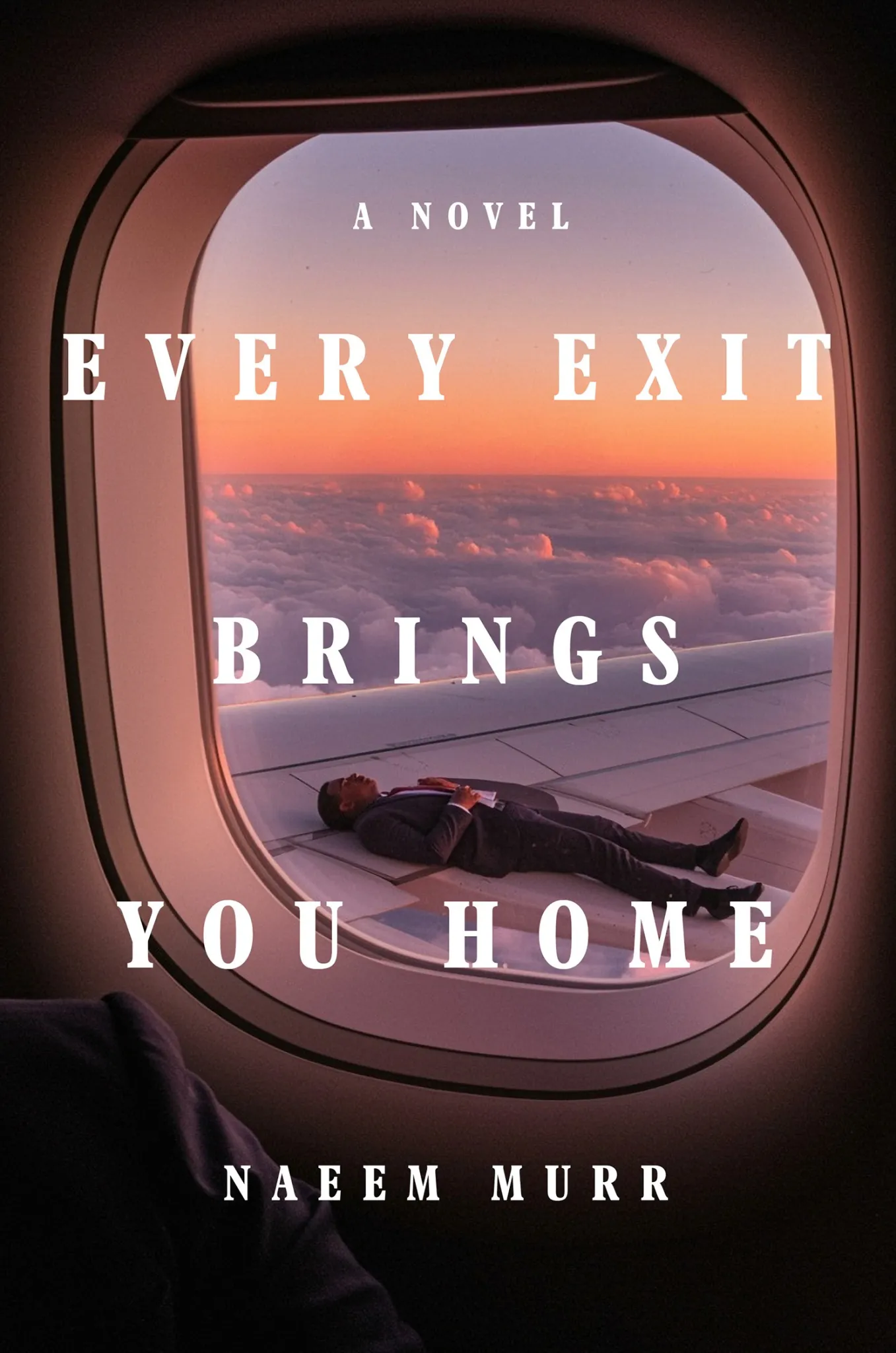
My new novel—my fourth but the first to draw from my Palestinian heritage—is about a Gazan immigrant to Chicago. As I was writing, friends kept referring to it as my Palestinian novel, which sounded strange to me. Very strange. Was I writing a Palestinian novel?
My paternal family came from Haifa, fleeing into Lebanon to escape the fighting during Al-Nakba in 1948. Because they were Christian, they received Lebanese citizenship within a few years. The majority of Muslim refugees were not so lucky, and to this day many remain, like those in Gaza, stateless—barred from social services, from owning property, and from most desirable jobs. My uncles became civil engineers in the Gulf and Libya, booming because of the oil industry, making their fortunes. My father died before he could, and my Irish mother left their home in Beirut to return to London, where she raised me and my brother alone. When I was younger, my father’s family rarely mentioned Palestine, but I remember a couple of my aunts and uncles gathered about the television in Nice one summer. Watching Menachem Begin’s inauguration as Israel’s prime minister, my Aunt Estelle clapped her hands lightly up and down as if clearing them of dust, and said, “Bye-bye, Palestine.” A year later in Beirut, my Aunt Dima mirrored this gesture during the Camp David Accords: “Bye-bye, Palestine.” It was as if they were watching a World Cup soccer game, their tiny country being crushed by one of the European powerhouses. They couldn’t look away, couldn’t turn it off, couldn’t quite lose hope for a miracle comeback.
Uncle Hanna was the uncle I saw most. My brother and I would spend summers with him and his family in Libya or Nice, and a couple of times, during breaks in the civil war, a bombed-out Beirut. As a teenager, I once asked him how he felt about the Nakba. Clearly troubled by my question, he began by qualifying that he’d been active with the Palestinian movement in the early years. Then, quietly, as if afraid he might be overheard, he said that if the Nakba had never happened, he probably would have spent his life running his father’s restaurant and ice cream parlor in Haifa. Instead, he’d experienced a life he could never have imagined, starting his own construction business, travelling the world, becoming a millionaire, and ultimately retiring to Monaco. He rested his hand on my shoulder, concerned for me. “You’re English now,” he said. “Don’t look back.” I never thought of myself as English, Irish, or Lebanese/Palestinian. And being deeply unhappy as a child, it was strange to think of being “English” as an escape or blessing.
Uncle Hanna asked me to not repeat what he’d said to anyone, particularly his brother Faris. The secretiveness of this exchange puzzled me until I came to realize that his shame and circumspection was a combination of survivor’s guilt and a betrayal he felt deeply. Suffering and samood, steadfastness in the face of oppression and violence, has become what it means to be Palestinian. As a Palestinian, he was tied not just to that, but also to Palestinians becoming aligned with anti-colonial revolution or (depending on your politics) terrorism. From a hotel room in Amsterdam on a business trip, he’d watched members of Black September holding hostage and ultimately murdering 11 Israeli athletes at the ’72 Munich Olympics, an experience that felt vertiginously surreal to him, a bad fever dream. In response, Israel launched airstrikes against PLO bases and refugee camps in Syria and Lebanon, killing somewhere between two and three hundred Palestinians, mostly civilians. This was the violent and asymmetrical call and response that continues to characterize the Palestinian/Israeli conflict. If anyone asked, Uncle Hanna told people he was Lebanese.
Uncle Faris, on the other hand, always said he was Palestinian. Far more emotional and reactive than Uncle Hanna, he felt each Palestinian setback like another arrow in his body. At university in America, he got into a shouting match with a Jewish history professor who read aloud Mark Twain’s description of the Holy Land before the arrival of the Jews: a barren wasteland peopled by a squalid swarm of fleabitten humanity. “How they beg! How they whine! How they lie! How they curse! How they cling!” For a political science course with another Jewish professor, every student had to produce a paper to be read out in the auditorium before the lecture class. Faris decided to write what he felt was the truth about the Israeli/Palestinian situation. He was in an America that believed Israel was a plucky David standing up to an Arab Goliath, where “Palestinian” and “terrorist” would soon become synonymous, where the biggest bestseller since Gone with the Wind was Leon Uris’s Exodus, adapted into a blockbuster movie with Paul Newman. The professor warned him to change his topic, but he delivered his paper anyway, the professor shouting him down, accusing him of being a Nasserite propagandist (for this, read Nazi), and demanding he return to his seat.
He told me these stories in his vast and sepulchral marble-floored villa in the Beirut mountains, the two of us sitting in green leather chesterfield armchairs in a kind of display room. It held antique qanuns, ouds, and buzuqs beneath photographs of him with Fairuz, Thekra Mohammad, and the Rahbani brothers; in glass display cases hung beautiful thobes or jillayeh, with exquisite embroidery unique to specific Palestinian towns. A massive taxidermized swordfish arched over a wall displaying photographs of his fishing triumphs. Another wall held pictures of his family, fading daguerreotypes of his grandparents during their village weddings beside glossy glamor shots of his grandchildren. Though an old man now, sitting in a room that might have been his own pharaonic funerary chamber, these memories of defending Palestinians still evoked his anger, remaining like a dolorous wound at the heart of all this joy and success. I mentioned the Oslo Accords. He shook his head, disgusted. “It’s just theater. Nothing will get better for the Palestinians.” He said the treatment of the Palestinians, their continued sacrifice and demonization, was unjust. Rubbing his generously proportioned stomach dyspeptically, he concluded: “Injustice: you can’t digest it. You just can’t.”
Uncle Hanna, determinedly looking forward, and Uncle Faris, who remained afflicted by the past (and present) suffering of the Palestinians, combine into a Janus, that Roman god with two heads looking in opposite directions.
As a young person, I absorbed this Janus as a particularly Palestinian predicament, one very much at the heart of my Palestinian novel. And yet, such a Janus lives in many of us—escape your past, you cannot escape your past; escape who you are, you cannot escape who you are. This is especially true if we have a traumatic history or are torn between identities; if our pasts are too full of love to cauterize, too full of pain to integrate. But even when this is not the case, our past experiences shape how we emotionally respond to—and initially categorize—new people and situations. We all negotiate a way to our futures through our pasts.
This applies equally to nations. Consider Israel, also a Janus, torn between looking back at two millennia of antisemitism culminating in the Holocaust, and looking forward—but to what? What is the dream of Israel? A light unto all nations, or a fortress, a final refuge? Theodore Herzl’s utopian novel, whose title, Altneuland (Old New Land), is perfectly expressive of the Janus, dreamed of an Israel where Arabs and other ethnicities enjoy equal rights with Jews, a multicultural and pacifist paradise. The novel’s antagonist is the backward-looking Rabbi Dr. Geyer, a populist politician who seeks to exclude Arabs and other minorities from the new society. Is Herzl’s dream still viable? Was it ever? Was Herzl’s more practical sense that a few Arabs might have to be “spirited away” to establish his new Zion the serpent in his Edenic vision?
I was born in England, a stratified society where excessive ambition was frowned upon. In my early twenties, I emigrated to an American culture obsessed with dreams: the dream of a nation rooted in inalienable rights, of a shining city on a hill, dreams as the means to personal transformation, the American dream. But a dream appropriated by those without imagination quickly petrifies into a plan. In his essay, “Myth and Education,” Ted Hughes describes the danger of a person without imagination. He speaks of this person as having to work on principle, or orders, or by precedent, a person marked by extreme rigidity, because they’re moving in the dark. If they have strong temperaments, Hughes says, they end up destroying their environment and everybody near them. The terrible thing about those without imagination, he claims, is “that they are planners, and ruthless slaves to the plan—which substitutes for what they do not possess. And they have the will of desperation: where others see alternative courses, these people see only a gulf.”
Herzl had a dream that was Israel. Do those in charge now hope to maintain that dream? Or have they replaced it with a plan? Religious and ethnic fundamentalists on both sides of this conflict, it seems to me, are those with a plan, one that imprisons the very animating force of the imagination that created their cultures and faiths, just as the Grand Inquisitor in Dostoyevsky’s Brothers Karamazov imprisons the returned messiah. The brutality that created and then sustained the Palestinian/Israeli conflict has destroyed imagination, just as any individual’s imagination, that most fragile of human faculties, can be repressed or destroyed by trauma, fear, or anger. Without imagination, there is no capacity for empathy or intimacy.
At Stanford many years ago, I attended a question-and-answer session with Philip Roth. A student from a Jewish religious organization on campus asked the writer what his Jewishness meant to him: An ethnicity, a culture, a faith? Roth shook his head, shrugging sadly, and said, “It’s my predicament.” Some people remain deeply rooted in the identities into which they were born, echoing God’s declaration at the burning bush: I am what I am. For others, such inherited identities are their predicament: I am not what I am. This latter is a destabilizing declaration. Shakespeare placed it in the mouth of Iago. It’s why the Devil is protean. It’s why gay or transgender people are demonized. It’s why artists are a threat to authoritarians. I am not what I am undermines not only the stability of a person, but of a society, a nation, challenging those differentiations that began when God split the first human, his “earthling,” into two.
The story of Adam and Eve in the West is the foundational myth of human consciousness and all that derives from it: our separation from God, from each other, and from ourselves. The Fall is the origin story of human estrangement, beginning with the first man and woman becoming shamefully aware of each other’s nakedness. Once that original couple were flung out of Eden, this separation by sex ramified into every other division of self from other, us from them: tribe, race, religion, ethnicity, culture, and nationality. And yet the Fall is also the origin story of human intimacy. Any moment of real intimacy, whether between young lovers trying to merge their bodies, or with a stranger you connect to briefly on a train, or in that instant your eye is drawn by a drift of milkweed floss illuminated by the sun, is a surfacing of the Eden that exists beneath every moment of our lives, the sacred ever pressuring up through the profane. We are always in Paradise.
And we are always in Hell. While some might declare I am not what I am, none of us can escape the historical, cultural, and political context in which we live. Since I arrived in the U.S. in the mid-’80s, this country has felt, more or less, like a democracy. But, as I write this now, I’m living in a Chicago “occupied” by ICE. When Gaza was entirely under Israeli occupation following the 1967 war, the Israelis took over an administrative building in Gaza City, the Majlis, turning it into a kind of fortress, their center of operations. For the Palestinians, this was an ominous f hive, out of which Israeli patrols would emerge in their oversized jeeps to assert control. Chicago now has its own small version of the Majlis, the ICE facility in Broadview, a dozen miles west of downtown Chicago. The various federal agents there are an absurdity, heavily burdened with camo military gear no doubt left over from our various desert wars, carrying pistols in holsters and machineguns, their faces often masked. Such are the men used not to fulfil a dream but to execute a plan.
ICE patrols beetle around Chicago’s streets in fleet vehicles with shaded windows, ready to invade apartment buildings, churches, and schools, searching for people they suspect to be undocumented, whom they arrest often with extreme violence. In Palestinian villages before 1948, the villagers used to respond to any member of their village being attacked with what was called taṭwīq, “encirclement,” meaning that everyone in the village charged out of their homes encircling and threatening the attacker to protect their fellow villager. This tradition continued in the Gazan refugee camps. IDF soldiers chasing someone into the camps would find themselves suddenly surrounded by the camp women (the men being too much at risk). This is exactly what’s happening in Chicago. When ICE patrols arrested landscapers or mothers picking up their children from kindergarten, they were instantly surrounded by Chicagoans filming, blowing whistles, and calling to the arrested person for their name, date of birth, and the number of someone they can contact on their behalf, reassuring them that they will receive help, that their community is with them. Being played out right here in Chicago is the eternal battle between estrangement, manifested in hatred for and oppression of the “Other,” and intimacy, connectedness, expressed in communities who welcome and know themselves to be enriched by the other.
The Palestinian/Israeli conflict is a prime contemporary example of the horror of absolute human estrangement resulting in complete dehumanization. At the writing of this, over 70,000 Palestinians, most of them civilians, 20,000 of them children, have been killed as a result of Israel’s response to the killing of 1,195 Israeli civilians and soldiers, and the kidnapping of 149 by Hamas and other militant groups. Now, more than ever, I feel a sickening and helpless sadness about the blind cruelty and madness of the Palestinian/Israeli conflict. But even before I knew that my father and his family were Palestinian, I experienced a species of sadness that isn’t at heart different from this one. The sadness I would be afflicted by so often as a boy in the working-class London neighborhood where I grew up in the ’70s and ’80s. One invoked simply by the human condition. The sadness I felt when I saw what lay in the shopping basket of the old lady standing in front of my mother and me in the supermarket line: the can of Heinz baked beans, the bar of Cadbury Fruit & Nut, the bottle of Whitbread barley wine; an image of lonely nights with a tray on her lap in front of the television. A sadness about how ultimately alone we all are, how easily and irrevocably damaged, how trapped in the identities we are born into, how ill-equipped so many people are to connect to others, how cruel life is, how unfair in its apportioning of beauty, opportunity, intelligence, courage, and perhaps most crucially, imagination.
As a boy, I examined that old lady, noticing the stain on her tight babushka, the uncontrollable shaking of her left hand, the belligerent misery of her face as she chewed the cud of her ill-fitting National Health dentures. My mother, as she always did if we were in line somewhere with anyone who looked sad, lonely, or down on their luck, engaged her by making some comment about the weather or the slowness of the queue. As the old lady turned to my mother, it was like watching the time-stop film of a wilted plant given water. Within moments, she and my mother were in a conspiratorial confab, the two of them clutching each other, laughing. As a boy, I hated it when my mother talked to strangers. I found it embarrassing and boring. It never struck me, not until decades later, not until I began to write, that I was witnessing a miracle. Have I written a Palestinian novel? In a more specific sense, yes: Just to bring to life a nuanced Palestinian character is to push back against three quarters of a century of ignorance about or outright demonization of Palestinians in America. However, whether my novel is about a Palestinian or not, the writing process is the same. I write through all the difficulties of this human life, of our failures of courage, of connection, of community, of empathy, of love, toward the narrow gate of that miracle.



Click here to subscribe today and leave your comment, or log in if you’re already a paid subscriber.