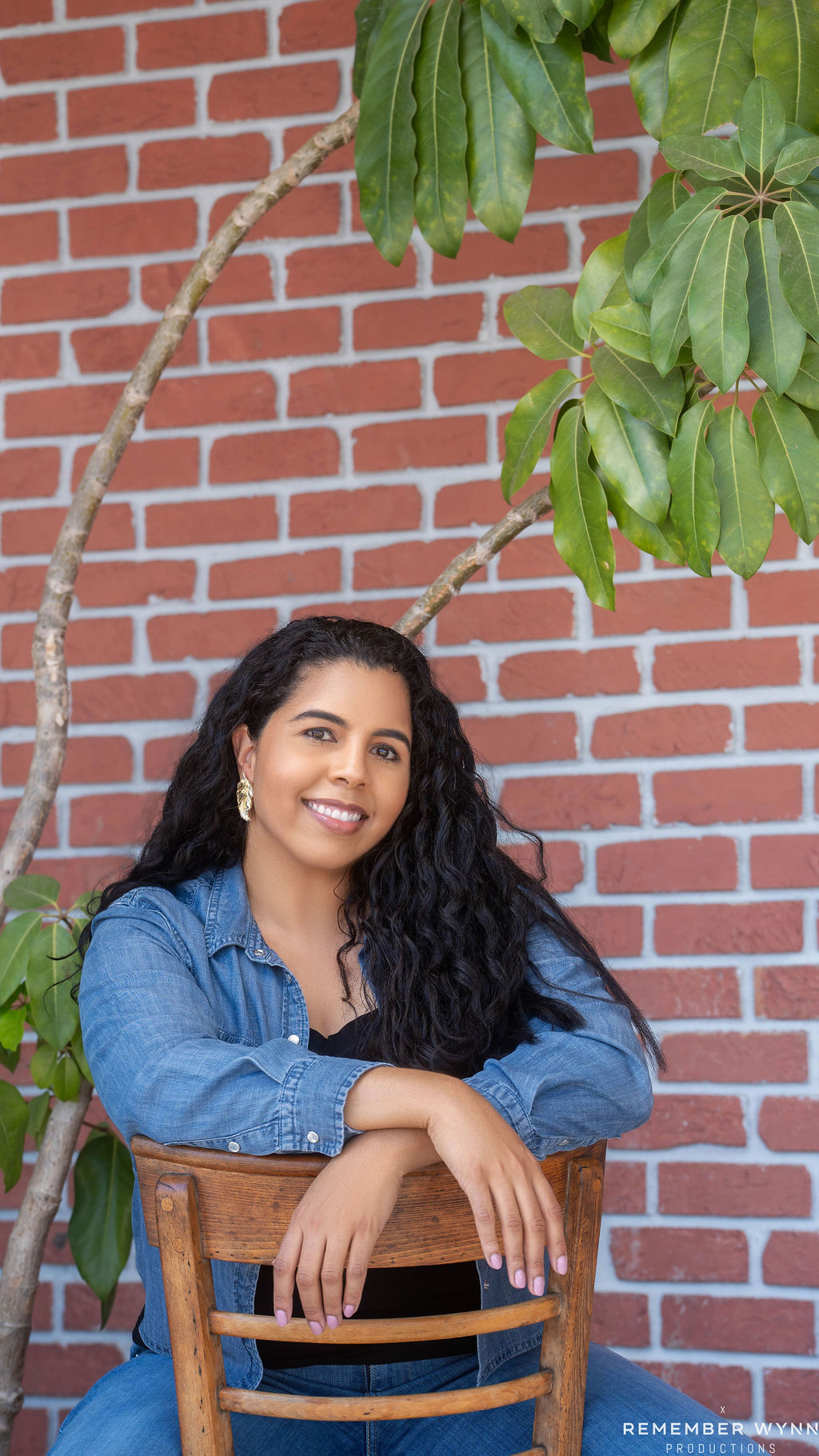
Floridians from all different Caribbean and Latin American countries of origin make regular pilgrimages for hard-to-find food and other products that remind them of their homelands. Amaris Castillo sets her keen journalist’s eye on her own parents’ store in her debut nonfiction collection, Bodega Stories (University Press of Florida 2026). In this series of vignettes, Castillo observes the Orlando Latin Market as the beating heart of community between hot meals from the kitchen, phone cards to call home, and playful debates over which color Fabuloso is best to clean your home (purple). Castillo interviewed not only her parents and extended family who help at the shop, but other employees, and several regular customers, to paint a portrait of the bodega as a bridge, and bodegueros as belonging to a longstanding tradition of connecting people to a home and time to which they no longer have regular access. Bodega Stories is ultimately a gorgeous tribute to the sacrifices so many people have made to build a new life in America—most especially her parents, Freddy and Damaris, who immigrated from the Dominican Republic when they were teenagers.
I recently met with Castillo over Google Meet and we discussed, among other things, writing creative non-fiction after more than a decade of journalism, tackling issues of class and labor through true stories from her community, and how being the child of immigrants informs her creative practice and career.
This interview has been edited for length and clarity.

The Rumpus: How did this project first come to be?
Amaris Castillo: Years before Bodega Stories the book, I had a multimedia project, bodegastories.com. At the time I was a reporter at the Bradenton Herald and I worked nights. This was pre-marriage, pre-kids, when I had a lot more time on my hands. I would go to my parents’ bodega, Orlando Latin Market in St. Petersburg, Florida, and I would interview whoever was willing to give me the time of day. I would take their portrait and publish these short vignettes along with [it] on the website and I would share it on social media. It was a passion project that brought me a lot of fulfillment because I was covering crime at my newspaper, and [this] was just something that I did for me.
I was able to collect bodega stories in Honduras when I went on a reporting trip there, and New York as well (I’m originally from New York). But years later, I put the project on hiatus indefinitely because life has a way of life-ing.
In 2023, I had written an article about journalists who write books for my full-time job at the Poynter Institute for Media Studies. An acquiring editor at the University Press of Florida (who ended up being my editor for Bodega Stories) read the article [because] I had interviewed the director of their press. She found my original bodega stories website and she asked if I’d be interested in a meeting via Zoom. We met and I talked her ear off and at the end she said, “We’re starting a new creative nonfiction genre track at the press and I’d love to work on a book with you.”
I thought about it for almost a year before I realized: You know what, now is the time to work on this book. My parents are in their sixties. They’re both nearing retirement. If I don’t work on this book, I think I would regret it for the rest of my life.
I submitted the book proposal and less than a week later they offered me an advance contract. We set a deadline before I signed the contract. I asked for a year to work on the draft. I thought at first that was a reasonable timeframe because I work full time. I have two young children. Little did I know how much work it would be and there were several moments where I thought, “Damn, I should have asked for more time for this.”
Rumpus: That’s interesting that you originally profiled other bodegas, too. Did you ever consider including a broader scope of other stores and locations in the collection, or was the book always going to be about your parents’ store?
Castillo: I knew from the beginning that the focus was going to be on my parents’ store specifically because I had access and it was the most doable. My job is ten minutes away from the bodega. I knew that if I dropped off my kids early enough at school, I would have at least fifteen or twenty minutes before my work shift, before my day begins, to stop by the store and see if I could collect one story.
There were times during that year when I was drafting the manuscript that I would go on my lunch break. And then there were times where I would go on a Saturday or Sunday, and I’d be there for two to three hours. It is busier on the weekends and people are more relaxed. They have their list ready for their compra and they get the carrito. [I thought], “I could probably follow them through the aisles,” and that’s exactly what I did.
Whenever I ask my parents when they’re going to retire, they never have the answer. You’re not going to give me the answer? Okay, so let me write this book before you [do]. As an author, you have to ask your “why,” and mine was [to create] a written record of my parents’ store.
Rumpus: So you never considered a fictionalized version?
Castillo: I never considered that because I knew: This is creative nonfiction. The stories will be true. But creative nonfiction is such a broad genre that I almost had to learn more about the genre itself, like how much can I play with these stories? I’m very much a journalist and that’s my profession and I don’t mix it up in my regular job. In this genre, I can use literary techniques, literary flair, but the stories remain true.
As far as fictionalization, I do have ideas in my head of a novel based in or around a bodega, that’s definitely something I see in my future. I just need the time. I wish there were more than twenty-four hours in the day.
Rumpus: As you became more comfortable with creative nonfiction, how did you navigate the tension of how much to reveal of yourself in the text, coming from a journalism background?
Castillo: One of the most prominent comments I got on the early draft of the manuscript that went before my two peer reviewers—both of whom are incredible authors and ended up being two of my blurbs—was: “We want to know more about the author. Why is she working on this book? Can we hear more from her on her ‘why?’” And I was not trying to do that! I was trying to make this book about the people and to have the reader be a fly on the wall in the bodega. Yes, it’s about my parents. Yes, I’m their daughter. But for some reason, I thought, “Let’s disregard my role and let’s focus on the people.”
I realized I can’t write a book about my parents’ store without inserting myself and describing my relationship to the store, and why I’m working on this. So I finally wrote myself in a little bit more. There are some stories in the book where it was fun to follow the customer around and I unwittingly became part of the story.
Rumpus: The story where I felt this unique tension in particular was, “Can They Be a Witness?” There was a couple you met who were Jehovah’s Witnesses and you are also brought into that story as well, right?
Castillo: That was perhaps one of my favorite stories.
I have been seeing this man go to the bodega for years and I didn’t even know his name. Hermenegildo was just one of those customers you always wave hi and bye to. There’s this funny moment where I asked for his age and he kind of bristles at the question. [As] a journalist, I ask people their ages, but I realized then that not all my questions are going to be received well. He’s 88, in good shape. I ask, “How do you feel?” He’s like, “Well, how do you feel at your age?” Damn, okay. He starts doing these squats. This is a man who usually has a very serious demeanor. It was a humbling moment.
At the end he’s like, “You know, you think you’re interviewing me, but I’m interviewing you.” He asked for my number to pass to his wife, and then his wife started calling me every Friday at 9:00 a.m. I totally respect all faiths, but really it was one of those situations where I think as the author, you want to make it clear to the subject that this is for a book. But people feel this closeness to you and then they want to … I mean, I ended up at their house, right? Vitalia told me the story of Adam and Eve because she wants to share her word—the word of God—with me, which I totally respect. I grew up Catholic. So [I said] “Let’s see if she’s down to have it in the book.” That way readers can hear Vitalia, too.
Rumpus: At the end of your conversation with Hermenegildo, he compares his testimony of God to you testifying about your father, and how you both would only want to share the good things about them. I found it a beautiful parallel to draw between the dedication of the religious and this book being a work of dedication to your parents.
Castillo: When he said that, I got goosebumps. This entire book is, like, me trying to show my parents that I see all the work they’ve done. I’m not looking at the store through rose-colored glasses, and no parents are perfect, but [when he said that] it was just like, “Whoa.” This entire project is a testimony about them.
Being a child of immigrants is very complicated, and I don’t think I can ever repay my parents for all they’ve done for me. Because of the bodega—and they didn’t have to do this—but they cleared my graduate student loans from Columbia when I kept deferring. I am [free of] student loan debt, and I have the bodega to thank. I have my parents to thank. They didn’t have to do that.
Rumpus: Did you expect that religion would come up so often in people’s stories? How important was it in informing this particular setting in Florida, and shedding light on these people as characters in the narrative?
Castillo: I definitely expected religion to come up. I know that religion is a huge part of the Latinx community. Oftentimes I let people lead me. Sometimes they bring up God and their religion. If they’re going to speak it out loud, it’s because it means something to them.
There were so many stories where they’re bringing up God or their faith and I want to honor that. Maybe I’m speaking in generalities here, but it’s hard to find a book about Latinx characters without any tension of religion, unless perhaps they’re atheists.
You know, I’ll tell my mom about my future plans or something I’m excited about. And she’ll be like, “Si Dios quiere.” If God wants. Like, leaving it all in God’s hands. It’s very much part of our culture and everyday life, even if you’re first-generation. I was born here, so religion is just not as prominent in my personal life as older generations, but papá Dios is still around.
Rumpus: Can you tell me a little about how you chose when to include Spanish in the text of your interviews, and when to translate?
Castillo: Playing with language was a lot of fun and at times challenging because—yes, I hope that Latinx readers will pick this up and read it and feel like there’s something in it for them and that it’s resonant. But I was also aware that this book is set in Florida and there are going to be readers who don’t speak any Spanish and I didn’t want to be a gatekeeper to Spanish either. I tried when I felt it was appropriate to include contextual translation, but there were a few times where I was like, “You know what? People can look this up.” And that’s okay. I wanted to honor the dialects of people, specifically the Dominican dialect. It was just a case-by-case basis where I decided this sounds [okay] or this is hard for me to translate.
Rumpus: You mentioned your parents’ looming retirement at the beginning of our conversation. It is an overarching concern throughout the book as well, raising questions about who gets to retire, and what does rest really mean, especially for the working class. What has writing this book taught you about hard work, opportunity, and the importance of community in achieving a theoretical work-life balance?
Castillo: Hearing the stories of the workers and my parents, it feels as though there is not really a work-life balance for the working class.
The culture in the US doesn’t treat its workers well and it has a way of just grinding you down. The priority then becomes to work and work and work because the rent needs to be paid, and I need to feed my kids, and I have to send money back home to Cuba because my family members are there: aging parents or the kids I left behind, who need money, need food.
Especially with all the energy shortages there—now Puerto Rico obviously has their water crisis. There’s still a lot of need in the places and countries that many of these people featured in the book left behind. And for me, it reinforced the way that many of us still view the US: This is where you go to work your bones off.
In one specific story with Alberto the cook, I asked, “Do you like your job?”
I wondered if I should even be asking him this because he’s technically my parents’ employee. But he was like, “I don’t know anyone who says they like their job.” He said humans are basically here to work. I felt sad hearing that. But the other side of that is he’s very content with his life. He’s here with his daughter. She has started her own family. He has his grandkids here. Yes, life is harder because he left Cuba at a very advanced age. But the circumstances in which he finds himself in this country are a lot better than when he was in Cuba. It’s bittersweet.
I would say I’m a little bit of a workaholic and I get that from my parents. While I am now valuing the work-life balance more, there’s always that little beat in the back of my brain like I should be doing more. It’s really hard to shake that, especially as a first-generation American because our people are just so used to grinding.
Even when I have a very productive day, [I feel like] I’m dropping the ball somewhere. I need to also prioritize myself and my health and my rest because there’s only twenty-four hours in the day and it’s very hard. It’s like we don’t know how to rest. When we’re resting, [it] feels wrong somehow and it shouldn’t be like that.
Rumpus: Can you share advice for other mother-writers who are struggling to create amidst the demands of caregiving?
Castillo: I have sometimes fantasized about later on when my kids are older, I may be able to be a full-time author and what would that look like? What if it’s not as productive as I think and I end up losing the stamina? With Bodega Stories, I was on a deadline. I was determined to do it justice, and I had a year to do that. I just put my all in the cracks and crevices of time that I had and I was able to miraculously make all my deadlines.
Of course, the cost was stress, anxiety—all the things. You know, mental health-wise, it was not great. It was challenging to write this book, but it’s such a joy to see. This is something that I did outside of motherhood, outside of my full-time job. I was able to make it happen with an incredible team, but I wrote those words. It’s like a dream come true.
My advice is what I have heard from other mother writers, like Angie Cruz, Cleyvis Natera, and Toni Morrison: There’s not going to be an optimal time. There’s not going to be the perfect setup. Just write when you can, and take care of yourself. This book was a lot of work, but I just had to write when I could. Sometimes that was when my kids were glued to the TV. Sometimes my husband would be with the boys and I’d sneak off to a café to write. It was in the crevices of time. That’s the only way you’re going to get it done, especially for moms who have full-time jobs. Mad respect to them.