
Features & Reviews
-

A Devotee of the Interconnectedness of Time: A Conversation with Ariel Delgado Dixon
“When I teach, my biggest hobby horse is specificity . . . Even boring people are specifically boring.”
-
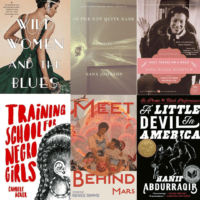
What to Read When Celebrating Black History
Rumpus editors share a list of books to celebrate Black History Month!
-

Hope is the Best Strategy: A Conversation with Sharman Apt Russell
As we start seeing the effects of climate change, of people struggling with drought and struggling with erratic weather patterns and flooding, we have to accept our responsibility.
-
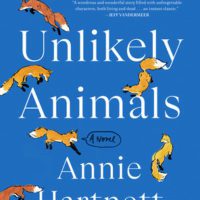
A Gentle Touch: Annie Hartnett’s Unlikely Animals
What’s special about Hartnett’s chorus of the dead, though, is that they stress the tension between overlapping realities.
-
Revelation is Absurd: A Conversation with Adrian Nathan West
…we live in a culture that’s at once euphemistic and profoundly hyperbolic, where people try as hard as possible to not actually be saying anything so that they can never be accused of holding any position. Whereas it’s important to…
-

The Woman in My Head: A Conversation with Emily Maloney
There’s a lot of rules or feelings about how writing a book should be, but very little of that actually corresponds with reality.
-
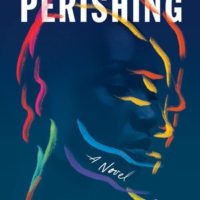
What It Means to be Human: Natashia Deón’s The Perishing
A review of THE PERISHING: “[H]ope keeps you in the ring, pushing off the ropes. Hope keeps you in the fight.”
-
Letter to a Poet: Matthew Olzmann on Writing Humor & Befriending Whales
Matthew Olzmann: [S]uddenly the poem becomes this meditation on mortality, but at no point do you think, “Oh my gosh, Yusef, why is he talking to a maggot or how does he know this maggot? Or what kind of relationship…
-

Celebrate Everything: A Conversation with Kim Fu
An interview with Kim Fu about writing the collection Lesser Known Monsters of the 21st Century.
-

A Palimpsest of Art and Memory: Pollak’s Arm by Hans von Trotha
Jean Huets reviews Hans von Trotha’s historical novel, Pollak’s Arm.
-
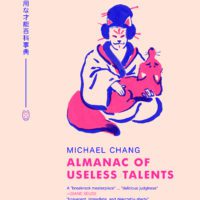
Poetry, Performance and the Little Black Dress: An Interview with Michael Chang
A conversation with Michael Chang, “the bad boy of poetry.”
-
Before the First Book: A Roundtable Discussion
with Jai Hamid Bashir, Joshua Burton, and Nanya Jhingran