
Nabokov
-

Lolita in the Seventh Grade
Over at the Paris Review, Nick Antosca writes what it felt like to read Nabokov’s Lolita as a 12-year-old boy: Even if I didn’t quite grasp the nature of my radical misreading of the novel—Humbert’s a predator, not a competitor—I understood that for the majority of…
-
Lolita Landmarks
Over at Lit Hub, Rebecca Brill has traced Lolita’s 62 years of history “from transgressive lit to pop iconography,” from inception to Kubrick to Lana Del Ray’s obsession on Born to Die. Maybe we’re just a little closer to understanding the…
-
The End of Literature
The rapid rise of “trigger warnings” is starting to impact literature curriculums. For instance, Columbia University students lobbied to include warnings on Ovid’s Metamorphoses, a core text in Western Literature syllabi. Columbia refused to include warnings, but essentially capitulated by…
-
Read and Then Read Again
How do we reread and is it necessary? Tim Parks demystifies the art of going back to a text for the third, fourth and fifth time.
-
The Moral of the Story
At the New York Times, Alice Gregory and Pankaj Mishra discuss the role of moralism in the novel—and conclude that authors should seek to question and provoke rather than preach: Not only does moral preoccupation corrupt the artfulness of fiction, but…
-
An American Writer from Russia
At the New Yorker, John Colapinto explores Nabokov’s quintessentially American classic, Lolita, and just how a Russian-born writer could so perfectly capture American culture as an emigre, working specifically with Robert Roper’s new biography on the great writer, Nabokov in…
-
Word of the Day: Oblivescence
(n.); the process of forgetting; “Curiously enough, one cannot read a book: one can only reread it. When we read a book for the first time, the very process of laboriously moving our eyes from left to right, line after…
-
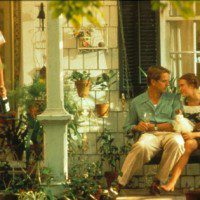
The Saturday Rumpus Essay: Stepfatherhood
“He was my real dad,” she says. “I just happened to have two.”
-
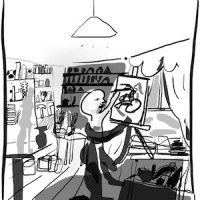
Where I Write #29: Ten Werecantos
We think of our brains as a place. We surround thoughts with metaphors of environment.
-
The Games Writers Play
The Guardian looks at the different games writers play to take their minds off of their work, including chess, poker, and Minecraft.
-
Better than the Book
Film adaptations can take their source novels in a million different directions, some innovative, others painfully off the mark. John Colapinto evaluates the movie versions of different Nabokov stories for the New Yorker, exploring their various formal challenges and triumphs.
-

The Rumpus Interview with Steph Cha
Steph Cha talks about her new novel, Beware Beware, writing compelling and complex Korean American characters, and what reading a book has in common with a level in a video game.