
Reviews
-
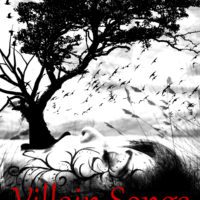
Reclamation and Redemption: Villain Songs by Tammy Robacker
Robacker’s language, steeped in religion and myth, creates an avenue for her own salvation while invoking a timelessness that gives voice to all whose song has been suppressed.
-
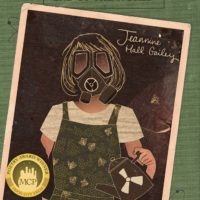
Both Companion and Guide: Jeannine Hall Gailey’s Field Guide to the End of the World
I recommend you pull over now. Better yet, I recommend you call in sick and turn your car around. You’re going to want to read this book in one solitary burst…
-
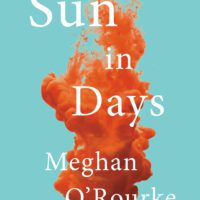
Imagination Is Like Grace: Meghan O’Rourke’s Sun in Days
A poem doesn’t bring the dead back to life, but a memory has a touch of immortality: it’s a sort of recompense—forever isn’t exactly a lie, even if it’s not completely true.
-
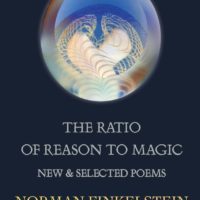
Let Us Be Singing Fools: Norman Finkelstein’s The Ratio of Reason to Magic: New & Selected Poems
If poetry is to remain a bulwark against the flagrant coarseness and cruelty at work in this moment of history, Norman Finkelstein’s work belongs right here with us.
-

A Tour de Force of Grief: Sun & Urn by Christopher Salerno
The winner of the 2016 inaugural Georgia Poetry Prize, Sun & Urn is gloomy and luminous, nostalgic and hopeful, moribund yet brimming with life.
-
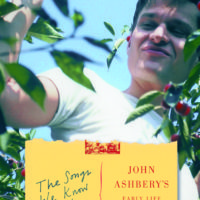
Coursing Byways and Biographical Thoroughfares: Karin Roffman’s The Songs We Know Best: John Ashbery’s Early Life
I’ve long found that when reading Ashbery’s poetry it’s easy to lose track of just who the poet is.
-
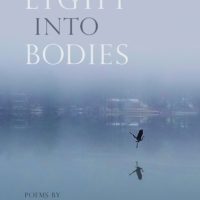
Glimpsing the Colors of the World: Nancy Chen Long’s Light Into Bodies
As a white mother of biracial children myself, this book became for me an opportunity to glimpse, for a moment, the colors of the world, and of skin, as my children might.
-
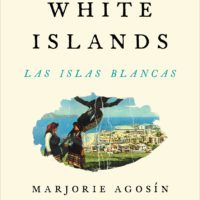
Entering an Open Doorway: Marjorie Agosín’s Las Islas Blancas / The White Islands
Agosín’s poems, though quiet and seemingly simple, linger with an interior elasticity that does not break.
-

A Reluctant Chronicling: Natalie Shapero’s Hard Child
“I typically hate discussing the past,” the speaker admits in the title poem, “Hard Child,” then a few poems later, a little more defensively—“I swear to God I hardly think of the past.”
-

More Than Vicarious: Conflation and ALOHA / irish trees
In this intimate, auditory format, you can hear the poets’ pages crinkling as they turn them—such a reassuring sound—turning pages instead of scrolling screens!
-

Both Beauty and Horror: Water & Salt by Lena Khalaf Tuffaha
Tuffaha harnesses the legerdemain of lyric to link love and grief, anger and hope.
-

Navigating Empathy: Camille T. Dungy’s Guidebook to Relative Strangers: Journeys into Race, Motherhood, and History
Luckily for us, Dungy’s increase in empathy and experience coincides with her embrace of the braided essay: her thinking crashes people, places, and ideas against each other in unexpected and adventurous ways.