
My grandmother died this past January, and I did not attend her funeral.
I live in Boston now and she lived in Hisarya, Bulgaria, and I could not afford the plane ticket. This is the equation every emigrant tries to solve: distance times the cost of travel equals helplessness equals heartache equals guilt.
I carried my grief like a bruise on a part of my body hidden from others. I told my husband about my grandmother’s passing but did not want to discuss it, and I didn’t tell any of my friends except one, weeks after the fact, in a text message. I could not bring myself to talk about losing my last living grandparent, because talking about her would mean talking about the literal and figurative ocean between where I come from and where I am now.
*
When my sister and I were growing up, from kindergarten all the way through high school, we visited Grandma at least once a year, usually for spring break but sometimes in the summer too. From my hometown in northwestern Bulgaria it took three trains and the better part of a day to get to Hisarya. My mom packed salami-and-cucumber sandwiches and taught us the names of the rivers we saw along the way.
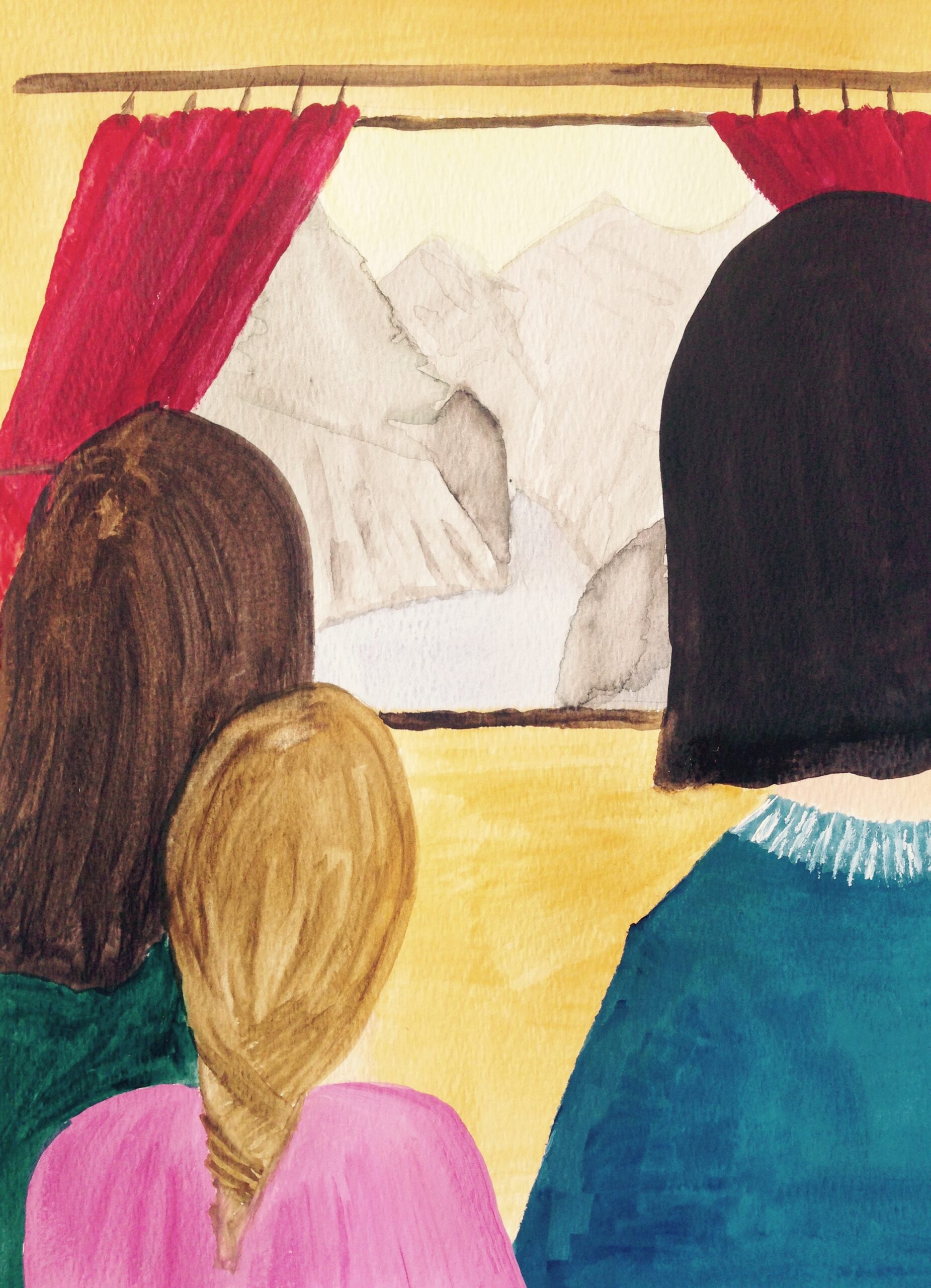 I loved the smell of Grandma’s messy house. Inside it was soft cheese draining in the cheesecloth and the stale darkness of the curtained pantry. Outside it was her sheep and goats, the neighbor’s sheep and goats, the warm musty air of animals in every yard in the neighborhood.
My cousins and my sister and I were a resourceful and tireless prank brigade: the fantastic four with grass-stained knees and violet-flavored candy in our pockets. We rearranged the food in the pantry. We snuck under the table during lunch and hung clothespins on Grandma’s flour-streaked apron. We hid spoons, apples, clocks, buckets, shoes, laundry. Driving the adults to exasperation was endlessly amusing, and for days the house rang with our laughter. It’s a wonder we didn’t get into more trouble.
We were hungry, hungry, always hungry from so much mischief, and everything tasted better when Grandma made it. It felt like I hadn’t eaten anything the rest of the year, saving myself for her cooking.
Sour cabbage with blood sausage. Uneven slabs of crusty white bread spread with butter and liutenitsa—a tomato and roasted-pepper relish. Crepes rolled with pear jam and a crumble of cheese. Thick homemade yoghurt drizzled with honey. Tutmanik—an eggy cheesy bread that Grandma studded with small squares of lardo. We ate it still hot, tore it with our hands, the lardo deliciously translucent, the crust crumbling perfectly into our laps.
*
When I was in my early teens, a fortune-teller told Grandma that either my sister or I would marry a foreigner.
At the time my sister was already majoring in English at the language high school, and I, three years her junior, was determined to follow in her path. We weren’t generally competitive with each other, but we both claimed this hypothetical husband and the hypothetically exotic future he would deliver us to. The idea of marrying a foreigner sounded no more absurd than the idea of getting married at all. I bet it’ll be me. No, me. Me.
I don’t remember how I imagined myself as a foreigner’s bride. No doubt I had some laughably naïve vision of luxury. I knew nothing of foreigners or of living abroad, but that prophecy was a comfort. It could be me. One day I could live in a different country.
*
My grandmother was short and round-faced, her skin perpetually browned from being outside so much. My mother and my sister and I all have her small forehead, but none of us got her gray eyes or her biting wit. She wore the requisite kerchief of all elderly Eastern European women and in the winter she sometimes put on woolen socks over her galoshes so she wouldn’t slip.
She lived in poverty. She was uneducated and her income came from working the land owned by the local agricultural co-op: tobacco fields, corn fields, wheat, potatoes, beans. She also raised a few cows, goats, and sheep and grew fruit and vegetables in her garden.
Things weren’t that bad when I was younger, but it got harder every year. Her retirement pension from the government was ridiculously small (as are almost all pensions in Bulgaria), and she was also supporting my cousins, and later my younger cousin’s child. As her health deteriorated, she could no longer work in the fields. One by one she slaughtered the animals and did not replace them.
Her landline was disconnected many years ago because of unpaid bills, so she could only receive calls, not dial out. Sometimes her electricity was cut off for months at a time too, until she could pay to have it restored. The house was starting to fall apart, and after my grandfather and my great-grandmothers died, she lived in a single room. A woodstove, a sink, a table, a bed.
I knew some of this. My mom sent small sums of money whenever we could spare it. She also sent old clothes, paid to have firewood delivered. She wanted to do more but couldn’t; we didn’t have a lot of money either, and she had to contend with other complicated family relationships.
I didn’t know the worst of it. In my family we don’t talk about bad things unless we absolutely must, so the subject rarely came up. I didn’t ask.
*
The last time I spoke to my grandmother, she thought it was my sister on the phone.
I didn’t realize at the time that she had not recognized me—my mom told me a week later. The shame was powerful and lasting. I should have been a better granddaughter. I should have made an effort over the years to be closer with her instead of calling only on holidays, and even then reluctantly. How did we get to this place where we could talk for half an hour and have nothing meaningful to say to each other?
She was hard of hearing by then, and I had to yell into the phone, the same words over and over. Large chunks of her vocabulary were no longer within her reach, and she used “the thing” to refer to anything from her swollen knee to the stove to the neighbor’s yapping dog. “Thing” was also a verb and an adjective, a talisman against admitting utter defeat to language.
*
I moved to the States when I was twenty-three. I came to Massachusetts for grad school, and here I still am, ten years later. I don’t know that I planned to stay this long, but things fell into place. One night in a dark bar with a low ceiling I met a guy who made my heart race. We got married two years later. (“Do you remember what that psychic told Grandma years ago?” my sister asked when I told her Justin and I were going to tie the knot.) I got my master’s degree. I found a good job with generous benefits.
I am comfortable here. I say this knowing that comfort does not equal happiness, but comfort is a freedom not afforded to so many. I feel safe. I am married to a great man who spoils me. We are not cold or hungry. I do not take this for granted.
*
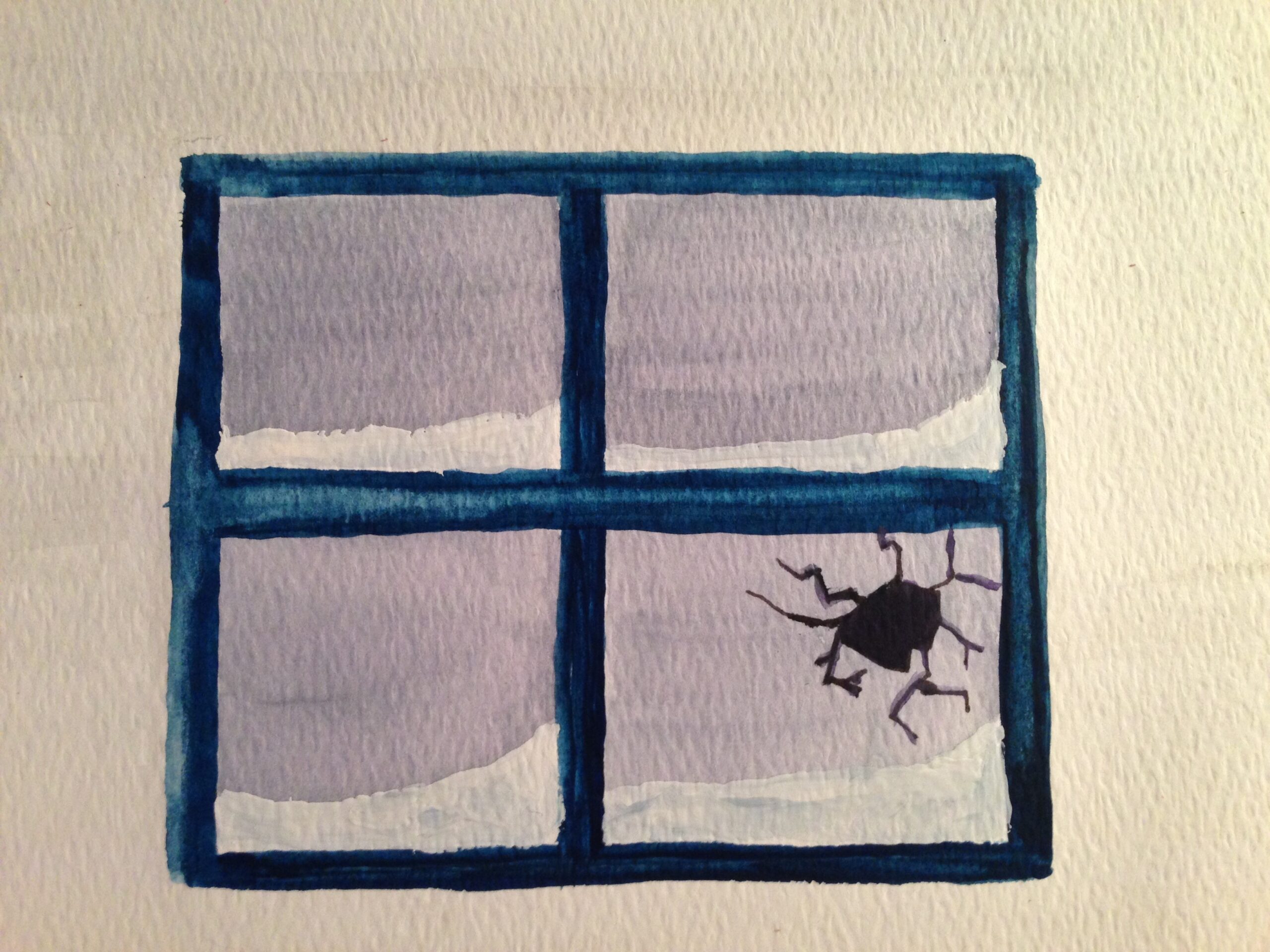 My grandmother died in the middle of winter in an unheated room with a broken window.
I fight to not be undone by this knowledge as I go about my life. As I order a ten-dollar cocktail. As I linger under a hot shower. As I buy ice cream, a red necklace, a novel about teenage werewolves, mouthwash.
Such small, heartbreaking luxuries.
*
Justin and I visit my family in Bulgaria once every year or so, but I have no desire to move back there permanently. Twenty-five years after the fall of Communism the economy is still in shambles, corruption is rampant, and the people are defeated. The country is bleeding, and I am too selfish to move back and be a tourniquet.
And yet.
I am well adjusted here in Boston. Most days I can convince others and myself that I belong. I am a citizen now. I voted for Obama in 2012, I cheer for the Celtics, I eat peanut butter and jelly sandwiches. My English is good—good enough for me to proofread books written by native speakers. I’ve made pumpkin pie. I’ve said, “How are you” to people without waiting for an answer.
And yet.
Some days I am still the foreign girl with the funny accent, and my American life fits like a dress I’ve borrowed from somebody with a very different shape.
On the train one night a song comes on Spotify, and within seconds I am crying because it sounds like the Balkans, like a dusty street in summer, like three generations of women barefoot in the yard halving peaches at the stone sink.
It wasn’t even a Bulgarian song, just a rhythm that sounded like a place my blood knew.
*
There are seven time zones between Boston and Bulgaria. Here is a story for every one:
 My grandmother was born with her left arm shorter than the right. My mom was afraid that my sister or I would have the same birth defect because these things often skip a generation, but her fear did not materialize.
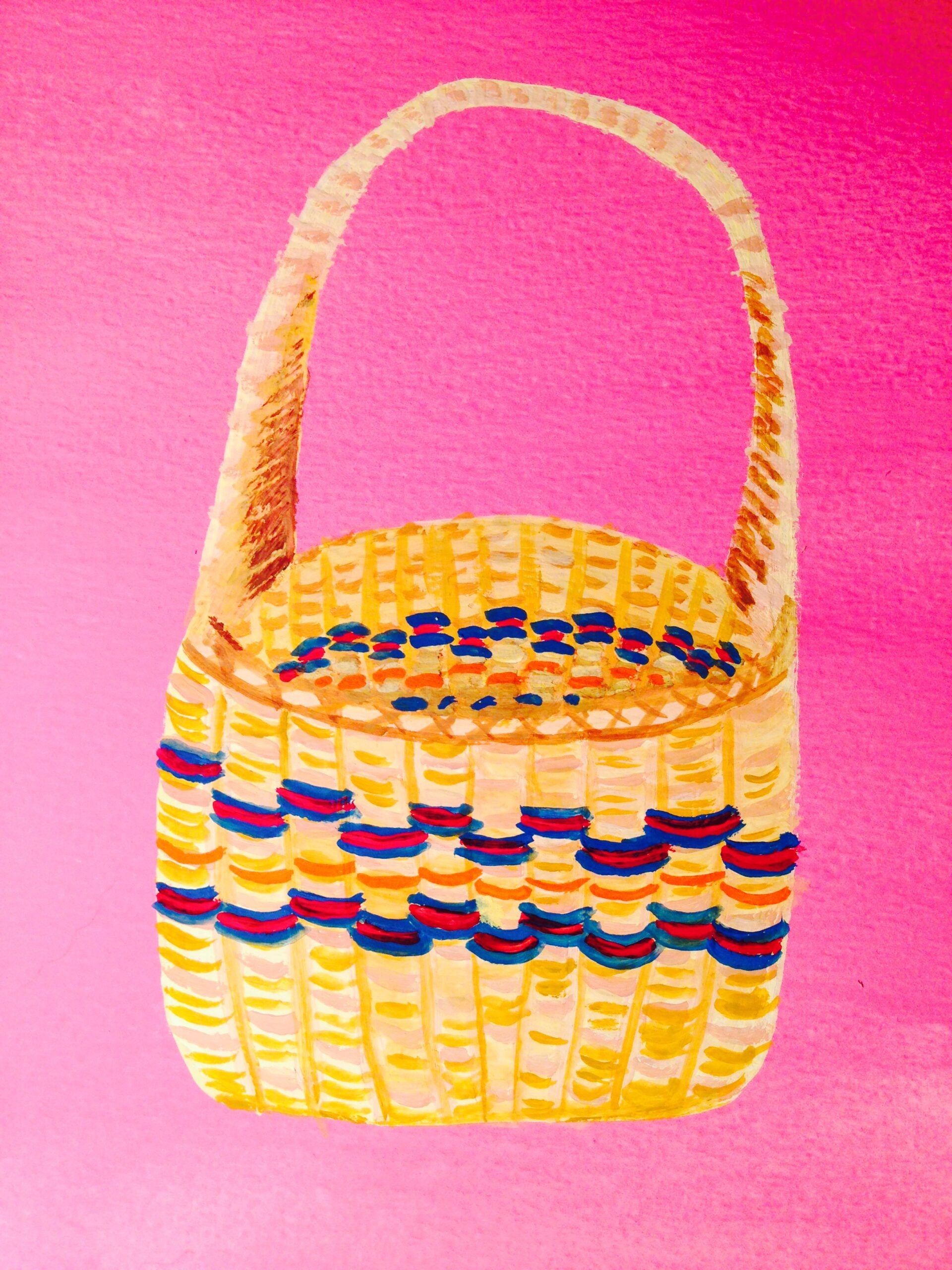
Saturday was market day in Hisarya. I loved market day. Rows and rows of small metal booths where people brought the work of their hands to sell: produce, knitted hats, horseshoes, kites, wooden spoons. We must have bought many things over the years, but the only thing I remember is a little basket Grandma got for me one summer, pale straw woven through with bright yarn.
My grandmother wore her straight hair in two braids tied together at the ends with a scrap of black cloth so they would stay on her back. I never once in my life saw her hair down.
In the summer she spread beans of all colors and sizes on the windowsill to dry. I wanted so much to bead them into a necklace.
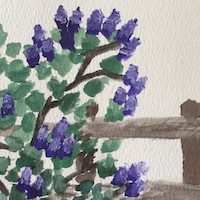
One year she had a little goat. Adorable white thing meeehing and shoving its tiny ghost-horns into the barn walls. We took breaks from our pranks to pet it and watch it trying to climb up the lilac bush by the fence. And one morning a high-pitched wail filled the yard, and 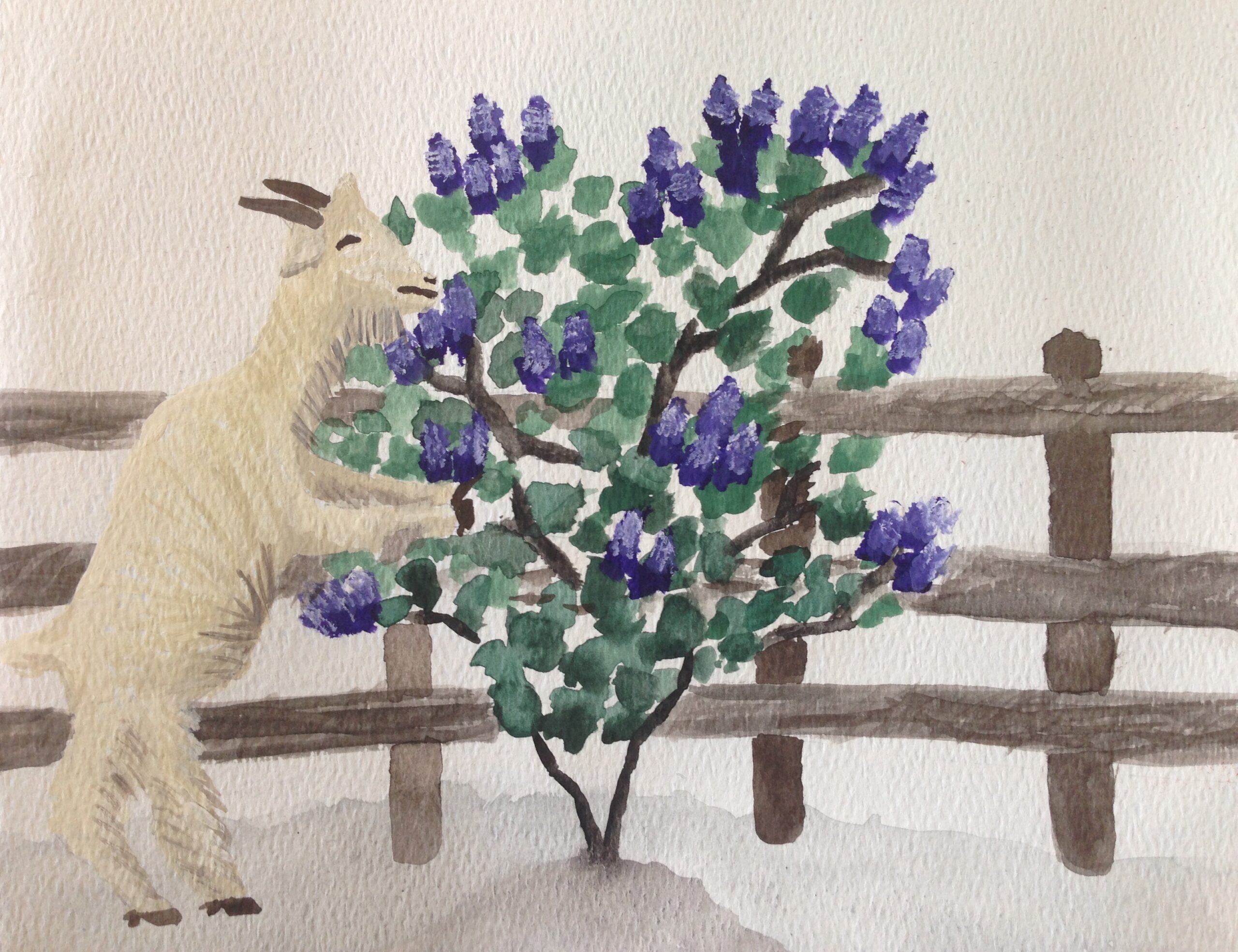 there was a long knife, and blood pooled on the cement, and Grandma made goat stew for lunch. My sister and my cousins and I, we all cried and ate only bread that day. Not our first lesson in where meat comes from, but a memorable one.
She was good at cross-stitching. At my parents’ house we had pillowcases, doilies, and tablecloths she had embroidered with delicate if geometrically improbable flowers. There was also a bag she had woven, black with yellow and green stripes. When I first started to suspect Santa Claus did not exist, it was because the Christmas presents were “delivered” in Grandma’s bag.
My grandmother’s name was Mina. Her mother was named Nenka, and her mother-in-law was also Mina. My mom’s name is Nenka too. Fierce women with earth on their hands who were not good at saying “I love you” but held you hard enough so you knew.
*
When I told my grandmother I was getting married to an American, her response was, “Couldn’t you find a guy somewhere closer?” I’m not sure she even knew how far America was, but the exact distance wasn’t the point.
“Now you will see what it’s like to send a daughter away,” she said to my father, a note of joyless vindication in her voice.
I have a photo from the day I last saw her. It’s October 2009, a beautiful sunny day. We are on the sidewalk in front of her house, about to say goodbye and drive away. Grandma is standing between me and my sister; Mom is on my other side. My sister and I are the only ones smiling.
***
Rumpus original art by Elizabeth Schmuhl.
10 responses
this broke my heart. i’m crying on the kitchen floor. thank you for writing this.
My current background on my phone states “there isn’t a person you wouldn’t love if you could read their story.” Thank you thank you thank you for sharing yours. It is absolutely beautifully written, and created such vivid images that I. while miles and miles away, still felt deeply. You touched on emotions I feel when speaking to my own grandmother and that is a powerful thing. Thank you again.
Thank you for writing this lovely piece on what it is like to have oceans between you and your loved ones, you and where you came from, you and who you once were and will never be again. Your essay/story beautifully captures the longing, the guilt, the everything of living a life away. Many thanks from a fellow distance-er.
I am so sorry for your loss. This was absolutely beautiful!
This is stunning.
Thank you.
I am so sorry for your loss. :-/ Thank you for sharing your absolutely beautiful and powerful story. I am close to my grandma and she is my last living grandparent, so this hit home for me. I, too, live far away from her, for many of the same reasons as you and struggle with the guilt of being away while trying to make something of myself. Thank you for writing this moving piece. It will stay with me for a long time.
Adi, you don’t know what a deep and painful chord you’re striking with this. Thank you for your beautiful piece. I think you need to write a novel about Bulgaria of your childhood. I would be the first to buy it.
I can’t read this. It’s so close to home. My grandfather died and I never got to say goodbye. I couldn’t go to the funeral and haven’t been home since. My mom has been battling cancer for 3 years. I am no closer to going home now than I was 5 years ago when my grandfather died. Your writing is so beautiful. I’ll save this and maybe finish reading it one day when it won’t pouch me in the gut as much.
So touching! I almost feel you wrote my thoughts down! I’m from Etropole, another rustic Bulgarian town, I married a Brazilian and we both live in the States. I haven’t been home for 3 years now. My grandfather died last year on my birthday and I had no idea he had been with cancer. My family saved that from me because they didn’t want to get me upset. We weren’t that close, but my grandma has been my best friend for all my conscious life. I miss her so much that just by the thought I might lose her, my heart breaks. I hope people realize that we don’t leave home and family for the luxury of saying that you live abroad. We do it because we don’t want to live the misery that our ancestors have lived and are living. Loved your essay, Adriana!
Dear Adriana,
I live in your beautiful country of Bulgaria, and have been to Hisarya many times. I am from Colorado, so I guess you and I sorta traded places! I could relate to a lot of what you said in this piece about your grandmother. Incidentally, my grandmother died the day before I was on my way to Bulgaria for my first time.
May God comfort your heart over the loss of this one you held so dear to your heart. I know what is like to be so far from all that is familiar!
Cecily
PS The next time you come to Bulgaria, come to see me here in Kazanlak!
Click here to subscribe today and leave your comment, or log in if you’re already a paid subscriber.