


Let us all listen to the brilliant writer Claudia Rankine, discussing race, white liberals, and her book Citizen, in a recent interview with BuzzFeed:
BuzzFeed: You mentioned liberal subjectivity in an interview last year.There’s a distancing that takes place in many liberal circles, a lot of “we’re not like that”. I’m interested in the space between how many white liberals see themselves, separate to “the bad people”.
Claudia Rankine: Well, this is why I wanted the book to exist in the space of the white liberal. Because people like to say “oh, it’s the South”, “it’s ignorance”, “it’s white supremacist Fox News”. And I’m like, no, no, no. It’s white alliance with all of those things. So that these moments are happening in our offices, with our so-called friends, in the Congress, among highly educated people who apparently know better. So it was a very conscious thing to move the book away from scandal and towards white alliance. The use of the second person – that “you” – was meant to say, “Step in here with me, because there is no me without you inside this dynamic.”
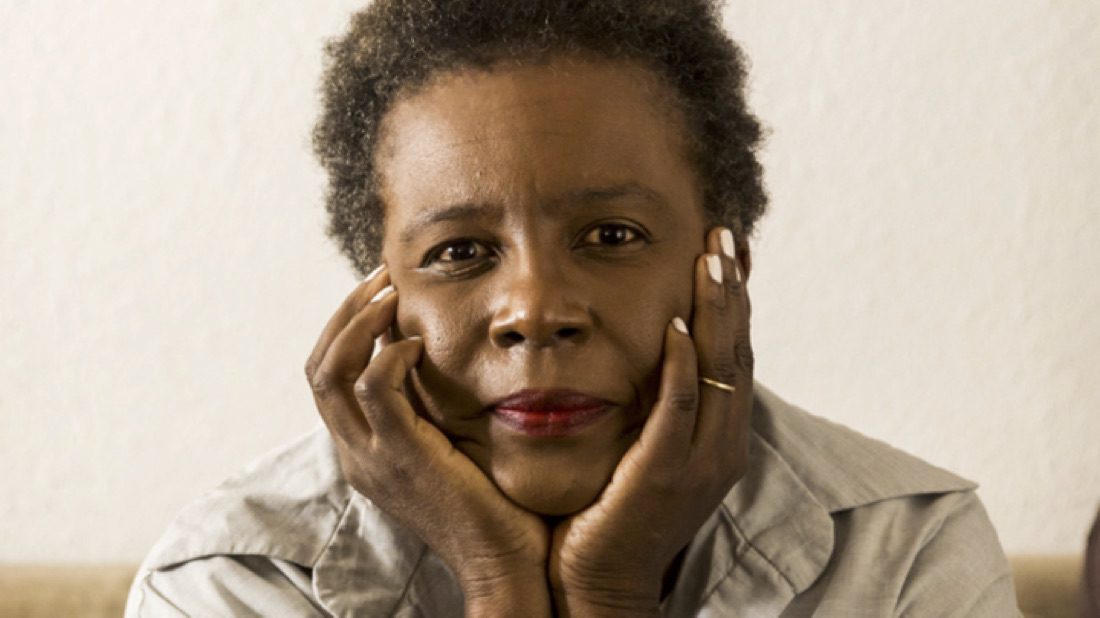
Claudia Rankine
“Step in here with me…” Yes. Yes, I will. Yes.
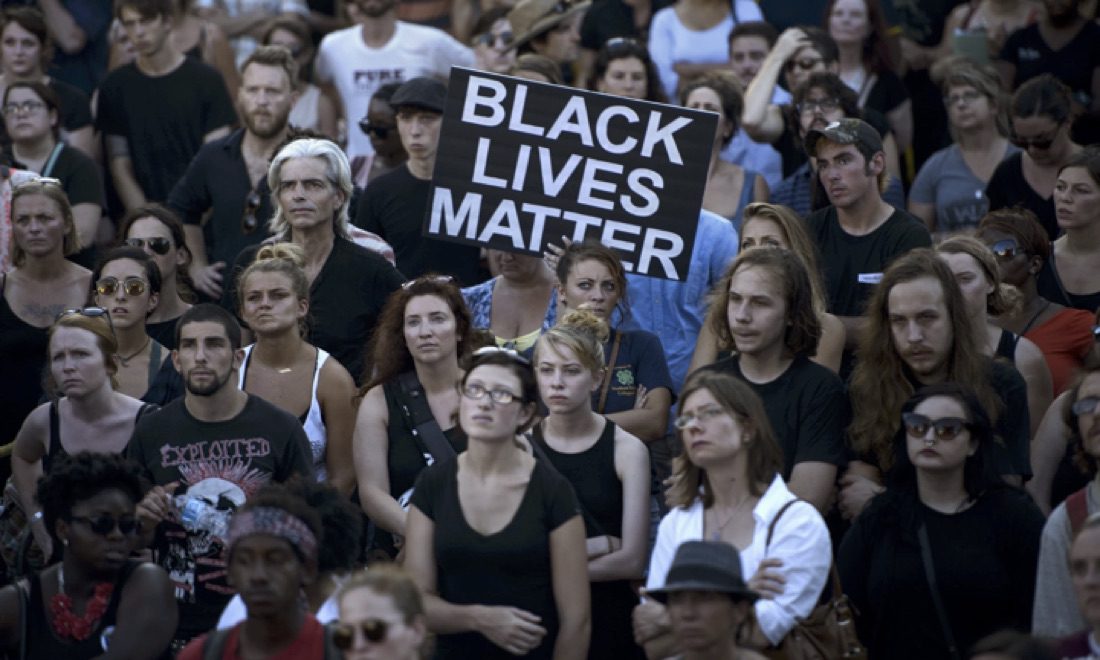
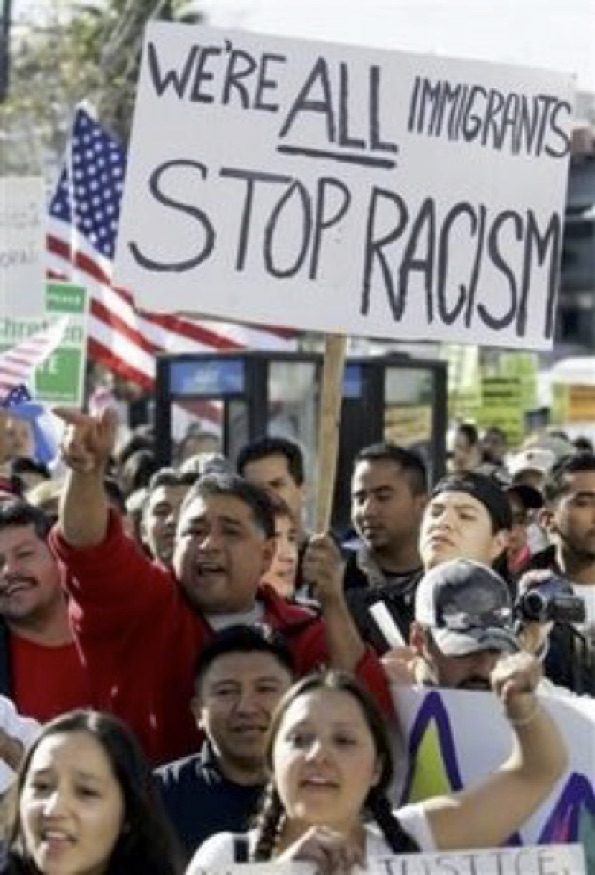
Let us listen to people of color. Let us educate ourselves. Let us move and agitate and stand with people of color and do the hard work to make this world a just, equitable place. Yes.
Our silence is racist. Our inaction is racist.
Let us be in the fight.
Yes.
Fiction
- The Story of My Teeth by Valeria Luiselli, translated by Christina MacSweeney
- Possessing the Secret of Joy by Alice Walker
- The Time of Our Singing by Richard Powers
- Somebody’s Daughter: A Novel by Marie Myung-Ok Lee
- The Book of Unknown Americans by Cristina Henriquez
- How the Garcia Girls Lost Their Accents by Julia Alvarez
- Everything I Never Told You by Celeste Ng
- What the Body Remembers: A Novel by Shauna Singh Baldwin
Poetry
- Citizen by Claudia Rankine
- Gathering of My Name by Cornelius Eady
- Head Off and Split by Nikki Finney
- Martín and Meditations on the South Valley: Poems by Jimmy Santiago Baca
- Slow Dance With Trip Wire by Camille Rankine
- This is What Happened in Our Other Life by Achy Obejas
- The Flood by Chiwan Choi
- Coal by Audre Lorde

Yuri Kochiyama, Asian-American Movement Leader
Anthologies
- This Bridge Called My Back by Cherrie Moraga
- Queer Brown Voices: Personal Narratives of Latina/o LGBT Activism by Uriel Quesada
- Queer and Trans Artists of Color: Stories of Some of Our Lives by Nia King

Non-Fiction
- The New Jim Crow: Mass Incarceration in the Age of Colorblindness by Michelle Alexander
- On Lynchings by Ida Wells-Barnett
- Bury My Heart at Wounded Knee by Dee Brown
- Narrative of the Life of Frederick Douglass by Frederick Douglass
- The Everyday Language of White Racism by Jane H. Hill
- Between the World and Me by Ta-Nehisi Coates
- Ain’t I a Woman by bell hooks
- Custer Died for Your Sins by Vine Deloria
- The Black Notebooks: An Interior Journey by Toi Derricotte
- Incidents in the Life of a Slave Girl by Harriet Jacobs
- The Warmth of Other Suns by Isabel Wilkerson
- The Sisters Are Alright: Changing the Broken Narrative of Black Women in America by Tamara Winfrey Harris
- Arab America: Gender, Cultural Politics, and Activism by Nadine Naber
- The Fire Next Time by James Baldwin
- The Woman Warrior: Memoirs of a Girlhood Among Ghosts by Maxine Hong Kingston
- A History of Prejudice: Race, Caste, and Difference in India and the United States by Gyanendra Pandey
- Rosa Lee: A Generational Tale Of Poverty And Survival In Urban America by Leon Dash
- Fresh Fruit, Broken Bodies Migrant Farmworkers in the United States by Seth Holmes
Support your favorite independent bookseller or shop:



***
Original logo art by Esme Blegvad.




8 responses
Rankine’s absolute obsession with race (and her consistent praise from a literary establishment that’s so far out in left field it’s absurd) is hilariously self-congratulatory, self-righteous and self-aggrandizing. The way she speaks of “white people” is the most egregious act of racism there is. Once you stop viewing people as individuals and view them as merely part of larger groups, you are part of the problem, not the solution. Don’t Let Me Be Lonely is an incisive and capacious work, an actual poet with something to say about America in a way that is hardly ever didactic or simplified. Her new stance in and around Citizen has lost me (a staunch skeptic and centrist) and other sane rationalists entirely.
She is no longer a poet, an artist, she is a demagogue, a wannabe Angela Davis, a caricature of the angry black lady. People crying racism in 2015 with a person of color in the White House, more black millionaires than ever in the history of the world, more black professors than have ever existed in the history of the world, more interracial couples and interracial children than ever before, more black CEOs, more black police officers, more black people working for Fortune 500 companies, and on and on and on, with vast improvements in race relations and integration in every single aspect of society, and yet people feel compelled to play that race card with one hand and receive their guilt-based handout with the other hand (ie: Rankine’s ridiculously unearned place as Keynote Speaker at the upcoming AWP).
The vast majority of white people are not racist. They don’t “think” they’re not racist, they’re actually not racist. Just watch some films to see what racism actually was as recently as fifty or sixty years ago (Todd Haynes’ Far From Heaven is a brilliant place to start, maybe follow that up with Mississippi Burning). Silence and inaction and indifference are NOT racism, they’re freedom, they’re liberty, they’re what make life worth living. No one owes you anything, you’re not obligated to care about anyone else’s problems, stop looking to get something for free without working for it. Read books other than those which support your ideology. Stop looking for excuses and revel in how un-racist America actually is.
Thank you, Sean, for proving Rankine’s point.
I wish someone over at The Rumpus would write an article called “For White People Who Are Tired of Blanket Statements Regarding Their So-Called Racism.” Ah. White guilt. Who knew it would come to this? Sniff out the supposed racists and shame them until they change. It’s the American way.
You should probably look for that article over at the National Review. It’s not going to appear here.
Sean, I agree with you that America used to be even more racist than it is now. But that doesn’t mean we’re not racist at all. Do you run a marathon and “finish” after one mile, once you’re further away from where you started?
I might go ahead and publish an article called “For White People Who Are Tired of Blanket Statements Regarding Their So-Called Racism” on this site. It will link directly to this article.
What would your article “For White People Who Are Tired of Blanket Statements Regarding Their So-Called Racism†be about, Bryan Hurley? Do tell…
I’m up for diversifying the literature I read. The lists above are great suggestions (thanks for providing it). I’m up for educating myself. Of course Black Lives Matter. I listen and interact with people of color. I live and breathe with people of color. Every day. We all do.
What I don’t believe in, though, is the public shaming of those people who don’t “agitate and stand with people of color and do the hard work to make this world a just, equitable place” (in this article and others with similar messages).
Why is it necessary to call those people who are silent or inactive racists? That’s a heavy word to bandy about. Why is it not enough for Anna March (and others) to simply do the work of making this world a just, equitable place? Why point the finger at others?
I just don’t understand why anyone would want expose those who don’t educate themselves? Why is it necessary to point the finger at one particular race and say, “You need to do this. Otherwise, none of us will make it.” Because that’s simply not true. We’re making progress as a human rave. Every day. Women. People of color. Gay rights. Civil rights. The movement is there. Why finger point? It just detracts from the original message, which is the real key here.
This may be a bit reductive, and obviously I’m having fun here, but it makes me think of that Seinfeld episode where Kramer is in the AIDS walk. Of course he’s against AIDS. He’s there walking. But he’s called out because he doesn’t want to wear the pink ribbon. My only point here is that there are some of us who aren’t exactly going to make a sign and march on the Capitol steps. It’s just not in our makeup. But that doesn’t make us racists, does it?
Sean, You are creating a false dichotomy — you can take action and stop being silent without making a sign and marching on the Capitol steps. Thee are lots of ways — including voting — to take a stand against racism. I do believe people are either part of the problem or part of the solution and that if you’re not taking action — speaking out, calling out racism you encounter away from the keyboard and at it, donating even tiny amounts (almost everyone can afford at least $1 a month more than they are doing) and voting — well, yes, you are being racist. My intent was not shaming — but I do think people should be ashamed of racism and again, I do believe inaction is racism. Thanks for reading. Best, Anna
Also be sure to read the recent war glorification writer Gallagher’s interview in these pages for an example of veiled racism. I’d love to hear someone else’s take.
Click here to subscribe today and leave your comment, or log in if you’re already a paid subscriber.