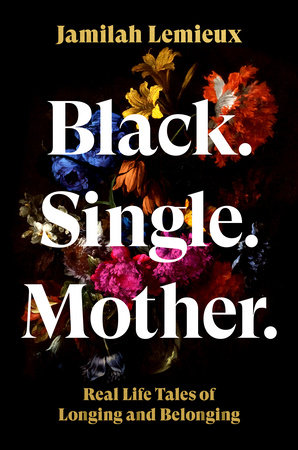
The title “Black. Single. Mother.” is clear. Three words, each punctuated to be sat with individually. Against a cover softened with flowers, the contrast is striking. The delicate blooms seem at odds with titles that society has long treated as a verdict of struggle, inequity, and limitation on their own, and even more so together. If we were to judge a book by its cover, we might expect a book about hardship, especially after being conditioned to see those three words as a sentence rather than an identity.
Black. Single. Mother.: Real Life Tales of Longing and Belonging (Roc Lit 101, 2025) is not a book that centers struggle. Instead, it offers context, insisting on humanity where stereotypes have flattened lives into assumptions. It is a celebration of Black motherhood, joy, complexity, love, and the fullness of lives too often defined by what they may lack instead of all that they are. By the end, it’s apparent that its author, Jamilah Lemieux, didn’t choose the boldness of the title as a warning, but as an invitation to confront our expectations and leave them behind.
Throughout Black. Single. Mother. Lemieux details her personal experience being and being raised by a Black single mother. She separates her personal experiences into two sections, “Longing” and “Belonging”, before the collection shifts to other Black single mothers’ experiences, interviews turned into essays by Lemieux.
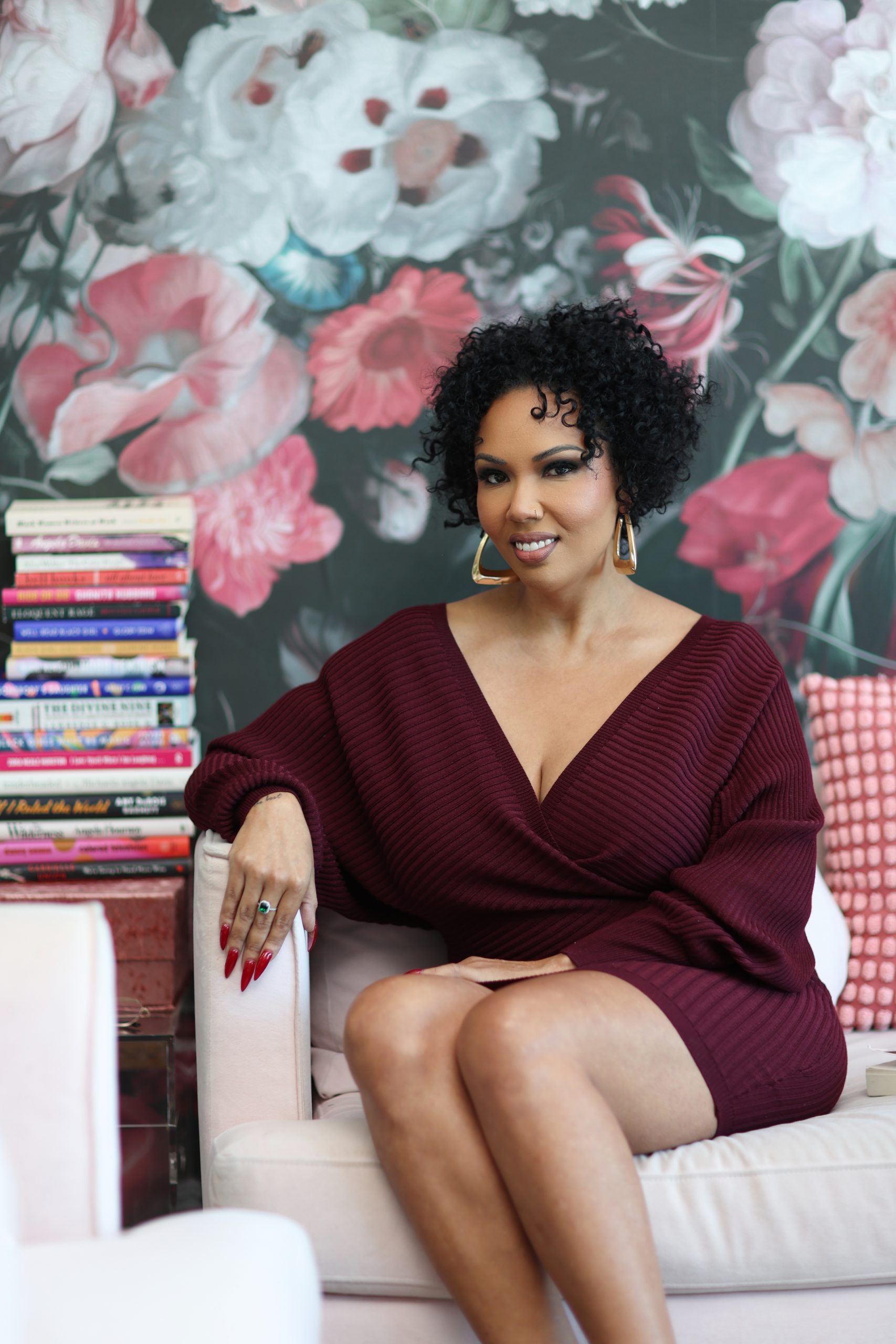
Lemieux is a writer, cultural critic, and editor, well known for her blog, The Beautiful Struggler. In addition to working for Ebony and writing a parenting column for Slate, she also co-hosts Mom & Dad Are Fighting—a podcast discussing family dynamics and parenting advice.
In this interview, we discuss the ways Black. Single. Mother has been received, taking pride in parents of “unconventional” family structures, the rifts and triumphs in how Black. Single. Mother. came to be, Black familial dynamics, and perceptions surrounding the nuanced identities of being a Black single mother.
This interview has been edited for length and clarity.
The Rumpus:
How do you feel now that Black. Single. Mother. is out in the world?
Jamilah Lemieux:
It’s been a complicated experience—overwhelmingly positive. Every day since the book has come out, at least one person has told me that it’s touched them in some way—that it made them feel seen and acknowledged as a single mother, or it made them better understand their mother, or their child’s mother, or their friends who are single mothers. That’s really gratifying. Every book event I’ve done has been a success by my metric of success… So I feel really good about that. And my family was pleased with it: my parents—whose relationship I talk about in the book—my daughter’s father, my child’s stepmother, my sisters. My core loved ones were happy with it and felt comfortable with how I picture them, and that was really important to me.
But I will say there’s been some resistance in terms of media coverage in terms of some of the spaces where I’ve been able to present the book. There are people who don’t want to talk about Black single motherhood. There are people who feel like Black single mothers are not Black excellence. Some individuals and institutions and publications have really broken my heart a little bit over the past couple of months—places where I would have expected support. But I’ve also gotten support from places that I wouldn’t have counted on. So it’s been an overwhelmingly positive experience, and I do think this book will get into the hands it needs to be in.
Rumpus: Do you feel that pushback is because they [might] feel Black. Single. Mother. is trying to understand a perspective, or justify something they see as negative?
Lemieux: Yes. All of the above. I think there are people who feel like single motherhood, particularly Black single motherhood, should not be encouraged or celebrated in any way, and that any discussion we have of it needs to be critical. There are also people who might believe, just based on the title, that it’s going to be a sad, woe-is-me [book], or [an] “It’s-so-hard, I’m-so-downtrodden” story—which it’s not. Or that it’s going to bash men—which it doesn’t, or suggest that Black fathers are not important. It does not do that at all. So yeah, I definitely think there are preconceived notions that folks are meeting the book with, and they’re not giving it the chance it deserves.
Rumpus: What are ways that you’ve noticed your community holds space while promoting this book? What personal experiences do you have of people approaching you about the impact of Black. Single. Mother. has had for them?
Lemieux: It’s been wonderful. I’ve had a couple of women open their homes for private events. I’ve had people order three, four, and five copies of the book so they could give it to loved ones. I even had a guy who says I went off on him on Twitter years ago and he still came to my book event and bought four copies of the book for women in his life. It’s been really beautiful. I threw myself a party in New York to celebrate and my friends chipped in and helped. I’ve had two organizations—Sister Song and Black Mom Connection—donate funds for my travel and refreshments for a couple of tour stops. I’m hearing from Black single mothers—which as a Black woman supremacist, is just the air that I breathe. Anytime I feel that I’ve done right by a Black mom, I feel great. I’ve also heard from a number of white moms who said that even though their experiences were not the same, they felt reflected on this in ways that they hadn’t in other things they’ve read about single parenthood.
Rumpus: Your book is separated into [sections] “Longing” and “Belonging.” It makes me think about how community is completely pivotal for Black single mothers. People who don’t have communities have a more difficult experience than people who don’t. How else was the community involved in putting this book together?
Lemieux: I interviewed twenty-one other Black single moms and turned the interviews into essays. I know there are elements of my Black single motherhood and my experiences as the child of a Black single mother that are common and familiar to many people. Then there are parts that are not like my mom—who was very much a full-time single mom. My dad did not live in the house, but my dad was over [at] the house all the time. He was very present. It was a big point of pride for me as a kid to have what I thought was such an active father by ’90s standards.
Rumpus: He was active in his community, which also seemed like a sense of pride for you.
Lemieux: Absolutely. My dad is a pretty well-known guy in the activist circles of Black Chicago folks of a certain age, and people were generally impressed by him. That was something I felt proud about. I [also] have a fully participatory, wonderful co-parent in my daughter’s father. I’m also a college-educated, middle class, light complexion, mostly heterosexual, able-bodied woman, so I’ve had some advantages. I am a light-skinned woman with a light-skinned daughter… I’m not getting treated in some spaces the same way as my friend, who has six children, has a darker complexion and is heavyset, when she has her children. People’s perception of her versus me [is different]. I felt like it was important to include the voices of other Black single moms, because there is no singular single mom experience. It’s a spectrum and I wanted to capture as much of that as I could.
Rumpus: What do you think Black. Single. Mother. helps people to understand about men’s role in our communities?
Lemieux: Chapter Four is all about the relationships that Black women and girls have with Black men and boys throughout our lives and certain elements in those relationships. It is a little bit of a departure from the Black single mother theme of it all, but I think for us to get to the place that most of us want, where there are more so-called “traditional families”—and most importantly, healthy, happy households of any size and shape—we have to reckon with the dynamic between Black men and Black women. Not many of us are honest about what that is.
As I say in the book, there’s this pervasive notion that Black men are so much more disenfranchised than Black women, and that disenfranchisement has made it so that we cannot hold them accountable for their behavior towards others, [or] we can’t hold them to a standard; that we can’t have the same expectations of them that we’ve had for Black women. We have always had very high expectations of Black women. We have always had to do more, be more, give more than most groups of people in this country. So if we can talk openly and honestly about that, I think we can heal. We can instruct our men and boys to treat us in the way we deserve to be treated. Unfortunately, what is widely considered man-bashing is women telling their experiences, so I was very careful to try to make it as clear as possible that this was not an attack on men. I love Black men, but we’ve got some work to do, and they have some work they have to do, as it relates to not just their relationships themselves and the world around them, but specifically their relationship to Black women.
Rumpus: One of my favorite quotes from you is how you mention that dynamic in relation to slavery. You said, “Since we arrived in this country in bondage, we’ve never had a clear path into each other’s arms.” That’s just such a beautiful, poetic way to express some of the issues, miscommunications, and [difficulties forming] familial bonds. These things don’t have to look like a nuclear family structure, but even community bonds, communication, and understanding of one another. I feel that quote sums it up well.
Lemieux: Thank you.
Rumpus: You also talked about how men and partnerships were not your mom’s priority, and I think it’s difficult for some people to perceive that. There’s just so much media I can think of, from “Girlfriends” to Tyler Perry movies, and many ’90s movies start with the premise of trying to find a man. What does that mean for you and how [the media] perceives Black women’s agency?
Lemieux: Women, I think, of all races are up against this idea that women are largely judged based on their relationship to a man. In our community, it starts with your father and the idea of fatherlessness. [We hear:] “Don’t date a woman who didn’t have a father.” Or, “She’s gonna have issues, because she didn’t have a father.” Then it’s whether a man has chosen you or not. I think for women of all races, it can drive you crazy. I think for Black women it’s particularly cruel to apply that. It’s just sexist and wrong to assess any woman based on her relationship to a man, but for Black women, it’s very difficult for us to find each other in healthy, happy situations. It’s not easy.
And for Black women, the men in our community have been socialized by the media and popular culture to see us as less attractive and less valuable than women of other races at times. Throughout our entertainment, the idea that a woman not having a man is the worst thing that can happen to her has been so pervasive. I think women are finally waking up and realizing that’s not true and that’s why we’re seeing less women choosing marriage and more women choosing single motherhood by choice because it’s not necessarily the thing we need to fight for. If you’ve tried and you’ve looked and you’ve dated and had negative experience after negative experience, I understand why people [think] “I’m good” on this. That’s not the choice that I’ve made, but I understand it.
Rumpus: [Throughout the book] you discuss some stats surrounding Black motherhood, family structures, and give a lot of qualitative evidence for things like love, understanding, and positive experiences. What other things surrounding Black motherhood do you feel like statistics don’t account for?
Lemieux: Statistics do not account for how fiercely Black single mothers love their children. We move heaven and earth to make sure they have the things they need, and that they don’t go without. Starting with my mom throughout my life, I’ve watched Black single moms create wonderful worlds for their kids no matter what they had going on. I think that Black women overall are the most capable, competent group of people in the country—really in the world, I think we’re the most high performing group of people around, in terms of what we are able to do and achieve, sometimes under really devastating, complicated circumstances. Black single mothers are perhaps one of the best examples of that.
Rumpus: You discuss living in Hyde Park, and having interacted with white people, while having the comforts and infinite other benefits of interacting with Black people, which I appreciate, because it centers the Black experience as something of privilege, which I feel like not a lot of sources talk about—being Black, being a woman, or being a mother—much less the crux of all three as its own area of privilege. I’d love to hear more about the other ways that Black single motherhood is a privilege.
Lemieux: I think that I was so fortunate that I was raised by parents who really taught me to love being Black. I was in a very Black city, in Black spaces that have Black experiences. I had Black principals and Black male teachers, and all the things that made me feel good about who I was and where I came from. As far as single motherhood being a privilege, I think [Black women] have figured out single parenting perhaps better than any other group of people, because so many of us have had to do it with limited resources to a certain extent. That experience for us starts on the plantation when we were not given the ability to choose who we partnered with, or to have long-term committed relationships in most instances. We often had to breed against our will with whomever masters saw fit for us to have children with. Oftentimes, Black enslaved women were taking care of children who were not their own without the support of a partner, and that’s not to say that men weren’t there, or that they weren’t useful to the enslaved family, but the core of that family was always women. So the caring labor is performed by women. I think that having a Black mom is a privilege. Having a Black mom is a flex. Having a Black single mom may come with some challenges, but it likely comes with having a mother who does whatever it takes to give you the best experience possible. That’s not to say that that’s every child of a Black single mother’s experience. I definitely don’t want to neglect the fact that some of us are not loving, caring, capable, or competent, but I think overwhelmingly we are.
Rumpus: Was there a defining moment where you thought, “I need to turn this [experience] into a book.”
Lemieux: So actually, no. I worked with a literary agent for about five years and wanted to write a book, but couldn’t figure out what to write about. She kept nudging me towards [writing about being a] single mother, and I didn’t want to write about that for a number of reasons. I’ve always been the type of person that has little weird superstitions and rules that I create. I believed that if I wrote a book about being a single mother, that I would be a single mother forever—that I would somehow make that my identity, and that it would be the rest of my life. It took some convincing, and it took a lot of time. It wasn’t the book I set out to write. I did not intend to invoke so much memoir. It was supposed to be me talking to experts and interviewing other people, and when I sat down to write, I realized that one of the best ways that I could talk about single motherhood is to talk about the experiences I had with my own mother and the experiences that I’ve had as a mother.
Rumpus: Do you feel like in that process you were kind of destigmatizing things for yourself?
Lemieux: Writing this book cured any residual shame, guilt, or fear that I had around single motherhood. It helped me get to a place where I realized even if I were to be a single mom for life, that’s not doom. If I’m being completely honest with myself about the life that I’ve had as my mother’s daughter and as my daughter’s mother, it’s been a good life. So, if my family expands, that’s great, but if not, what I have is sufficient. What I’ve had has always been sufficient. I’ve been a single mom for thirteen years, and people used it in the past [as] their number one go-to insult… But that’s just a detail about me that’s not really much of a descriptor other than my marital status, and me having a child. It doesn’t tell a [complete] story at all. [Now] I feel so much more unaffected by that. You can’t use that to shake me.
Rumpus: Overall, what can people expect or take away from this collection?
Lemieux: One of the primary goals of this book is to give Black single mothers their flowers. That’s why we chose flowers for the cover. I’m inviting people of all backgrounds and identities to reconsider their thoughts on Black single mothers, whether they’re a Black single mother themselves, whether they have one in their family, their village, whether they created a Black single mother. And asking them to recognize us for the leaders—and sometimes heroes—that we are. Also, asking them to commit themselves to being supportive, and helping us to have the resources that we need and deserve to parent our children.